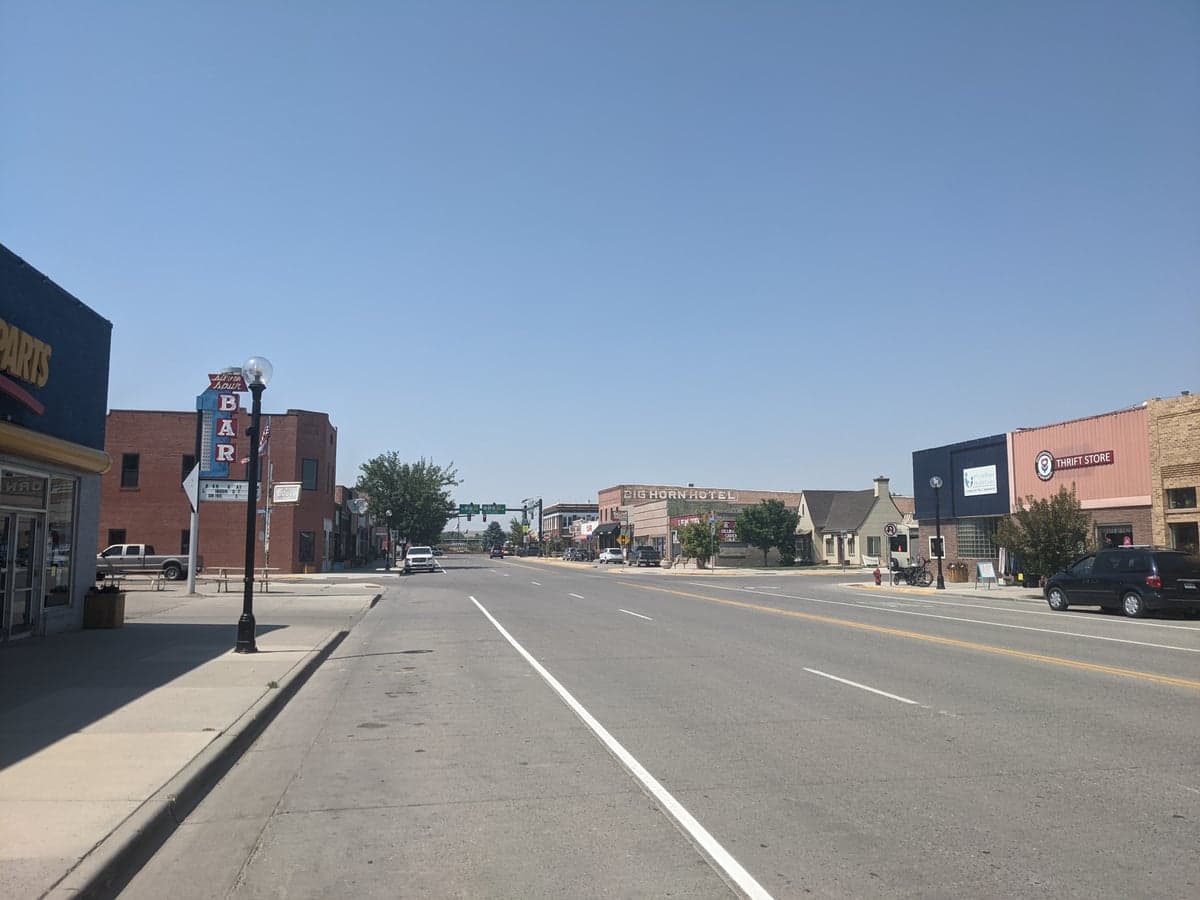
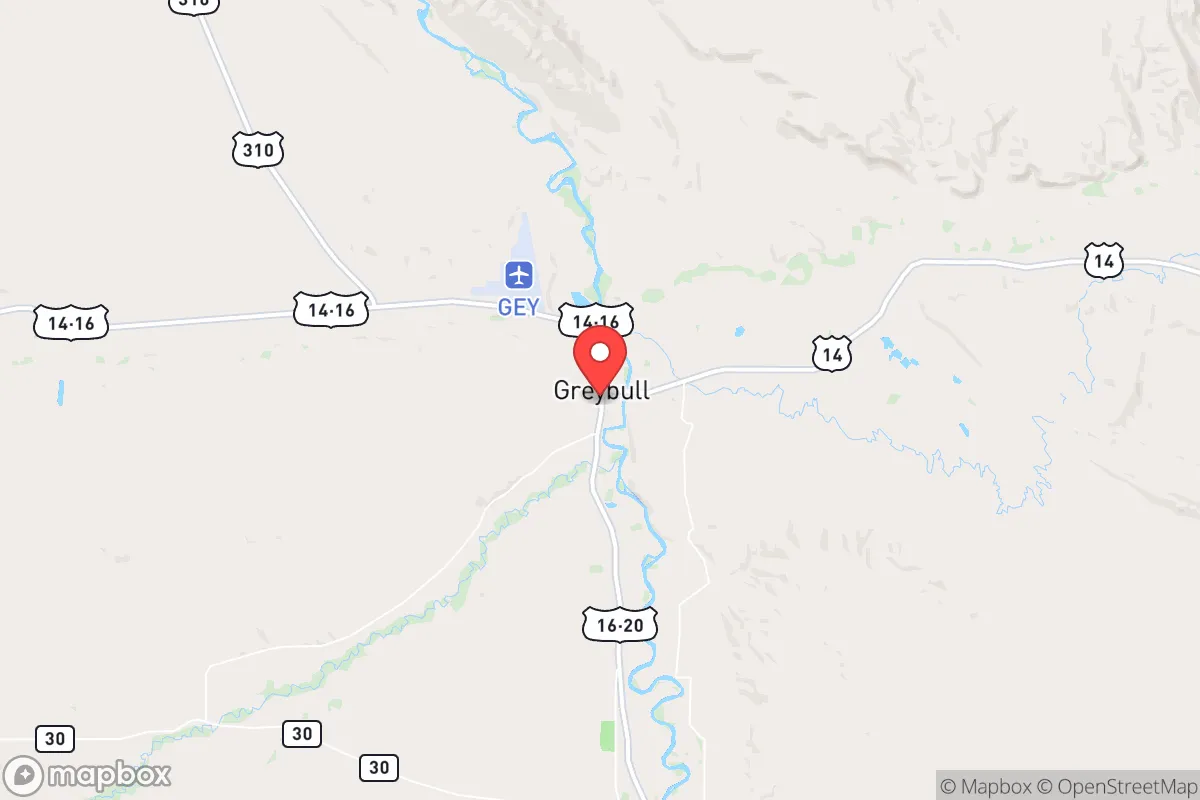
Photo: Wikipedia
Political ClimatePolitical Climate in Greybull, WY
District shown is the primary district for this city’s centroid. Cities may span multiple districts.
Inherited from parent state — no local data available.
Local Political AnalysisPolitical Analysis of Greybull, WY
Greybull, Wyoming, is about as rock-ribbed conservative as it gets, with a Cook PVI of R+23 that tells you exactly where things stand. This isn't a place that's flipped or drifted; it's been reliably red for generations, and the local culture reflects that deep-rooted preference for limited government and personal responsibility. You don't see much hand-wringing over politics here—folks just live their lives, and the voting patterns show a consistent rejection of progressive overreach.
How it compares
If you drive an hour east to Sheridan, you'll start to feel a different vibe—it's still conservative, but there's a more polished, resort-town feel with a smattering of out-of-state transplants who sometimes bring different ideas. Head south to Thermopolis, and you get a similar small-town, no-nonsense attitude, but Greybull feels more insulated from the kind of growth that dilutes local values. The contrast is sharpest with Jackson Hole, a couple hours west, where the politics are practically a different country—progressive policies, heavy tourism influence, and a cost of living that prices out the very people who built the place. Greybull, by contrast, hasn't been gentrified or politically softened. The county commission and school board here still reflect the old-school Wyoming ethos: keep taxes low, stay out of people's business, and don't let the state or federal government tell you how to run your ranch or your family.
What this means for residents
For someone living here, the political climate translates into a lot of day-to-day freedom. You don't have to worry about overbearing zoning laws telling you what color to paint your shed, or mask mandates that drag on for months. The local government tends to take a hands-off approach, which is exactly what most people want. That said, there's a quiet concern among long-time residents about the slow creep of federal regulations—things like BLM land-use restrictions or environmental rules that can choke a small ranching operation. The real worry isn't a sudden leftward shift in Greybull itself, but rather that state-level or national policies might start to override local control. If you value being left alone to raise your family, run your business, and keep your own counsel, this is still one of the best places in the country to do it.
One cultural distinction that sets Greybull apart is the strong sense of self-reliance. You won't find a lot of people looking to the government for solutions. When the local economy takes a hit—like when the sugar beet plant closed years back—folks adapt, they don't demand bailouts. There's also a palpable skepticism of any "progressive" initiatives that pop up, whether it's diversity training in the schools or new gun restrictions. The prevailing attitude is that if it isn't broken, don't fix it, and most people here don't see their way of life as broken. Looking ahead, the biggest threat to this political climate isn't a change in local hearts and minds—it's the possibility that outside forces, from federal agencies to corporate ESG mandates, will try to impose a different set of values on a community that's perfectly happy with its own.

State Political ClimatePolitical Climate in Wyoming
State Political AnalysisPolitical Environment in the State
Wyoming is the most reliably Republican state in the nation by raw partisan margin, with a Cook Partisan Voting Index of R+25 and a 2024 presidential vote of roughly 70% for Donald Trump. The dominant coalition is a blend of rural ranchers, energy-sector workers, and second-home conservatives who have kept the state deeply red for decades, though the trajectory over the last 20 years shows a slight hardening of that lean as the state’s small Democratic presence has all but collapsed in rural counties. If you’re looking for a place where the political culture matches the landscape—wide open, independent, and skeptical of federal authority—Wyoming is the real deal, but it’s not without its own internal tensions.
Urban vs. rural divide
The political map of Wyoming is straightforward: the state’s few population centers lean slightly more moderate, while the vast rural expanse is deeply conservative. Cheyenne, the capital and largest city (pop. ~65,000), is the most politically competitive area—Laramie County voted about 58% for Trump in 2024, down from 62% in 2020, reflecting a modest suburban shift toward the center. Casper (Natrona County) is reliably red at 65% Trump, driven by energy workers and a strong ranching base. The real firepower comes from the rural counties: Sublette County (80%+ Trump), Lincoln County (78%), and Park County (76%) are among the most conservative in the nation. Teton County, home to Jackson Hole, is the lone blue outlier—it voted 60% for Kamala Harris in 2024, driven by wealthy second-home owners and a tourism-based economy. That’s a stark contrast: Jackson’s liberal enclave is a world apart from the rest of the state, and locals in the rest of Wyoming view it with a mix of amusement and suspicion. The divide isn’t just political—it’s cultural, with Teton County’s high property taxes and land-use restrictions clashing with the free-market ethos elsewhere.
Policy environment
Wyoming’s policy environment is a conservative’s dream on paper, but with some practical wrinkles. There is no state income tax—a huge draw for relocators—and property taxes are among the lowest in the nation, averaging about 0.6% of assessed value. Sales tax is 4% statewide, with local options pushing it to 6% in some counties. The regulatory posture is light-touch: no state-level occupational licensing for many trades, minimal environmental permitting for energy development, and a right-to-work law that keeps unions weak. Education policy is a mixed bag: Wyoming spends more per pupil than most states (roughly $17,000 annually), but outcomes are mediocre, and the state has resisted curriculum battles seen elsewhere—no critical race theory bans or explicit parental rights laws have passed as of 2026. Healthcare is a sore spot: the state did not expand Medicaid under the ACA, leaving a coverage gap for low-income adults, and rural hospital closures are a recurring issue. Election laws are solidly conservative: voter ID is required, no same-day registration, and mail-in voting is restricted to those with an excuse. The state also has a strong firearm preemption law (Wyoming Statute 6-8-401), preventing local governments from enacting their own gun restrictions.
Trajectory & freedom
Wyoming has been on a trajectory of expanding personal liberty in several key areas, but with some recent backsliding that bears watching. On the plus side, the state passed a constitutional carry law in 2021 (SF 79), allowing concealed carry without a permit—a clear expansion of Second Amendment rights. In 2023, the legislature passed a “medical freedom” bill (HB 100) prohibiting vaccine mandates by private employers and government entities, a direct response to COVID-era overreach. Parental rights got a boost with a 2024 law requiring school districts to notify parents of any curriculum changes involving sexuality or gender identity (SF 109). However, there are concerning trends: the state’s reliance on federal mineral royalties (about 40% of the budget) creates a vulnerability to federal policy shifts, and the 2023 “data privacy” law (HB 0132) actually expanded government surveillance of online transactions under the guise of protecting minors. Property rights remain strong—Wyoming has no statewide zoning, and counties generally defer to landowners—but Teton County’s strict land-use regulations are a local exception that could spread if in-migration pressures continue. The biggest freedom concern is the state’s growing reliance on federal funds: as energy revenues decline, Wyoming is becoming more dependent on Washington, which could erode its independent streak over time.
Civil unrest & political movements
Wyoming is not a hotbed of civil unrest, but there are visible political movements that a new resident would notice. The most prominent is the “Wyoming Freedom Caucus,” a hardline conservative faction in the state legislature that has pushed for nullification of federal gun laws and a state-level “Second Amendment Preservation Act” (HB 0127 in 2023), which would prohibit state cooperation with federal firearms enforcement. This movement has real grassroots support, especially in counties like Fremont and Carbon, where anti-federal sentiment runs deep. On the left, the only organized activism is in Teton County, where environmental groups like the Jackson Hole Conservation Alliance have successfully blocked energy projects and pushed for wildlife corridors—a source of tension with rural counties. Immigration politics are muted: Wyoming has a tiny foreign-born population (about 3%), and the state has no sanctuary policies—in fact, a 2024 law (HB 0148) requires local law enforcement to cooperate with ICE detainers. Election integrity controversies flared briefly in 2020 when a few counties reported minor ballot-counting errors, but no major fraud was found, and the state has since tightened its election laws. The most visible flashpoint is the ongoing fight over federal land management: the Bureau of Land Management controls 48% of Wyoming, and local frustration with federal restrictions on grazing and energy development is a constant undercurrent in political discourse.
Projection
Over the next 5-10 years, Wyoming is likely to remain deeply conservative, but demographic shifts could introduce new fault lines. In-migration is modest but growing, driven by remote workers and retirees from blue states—Laramie (Albany County) and Sheridan (Sheridan County) are seeing an influx of newcomers who are culturally conservative but may push for more services and higher taxes. The energy transition is the wild card: as coal and oil revenues decline, the state will face pressure to diversify its economy, which could mean more tourism (and more Teton County-style liberalism) or a pivot to tech and data centers (which tend to attract a more moderate workforce). The Freedom Caucus is likely to grow in influence, pushing for more nullification-style laws and a harder line on federal overreach. However, the state’s fiscal reality—a projected $1 billion budget shortfall by 2030 if energy prices stay low—could force compromises that erode the current low-tax, low-service model. For a new resident, the next decade will likely bring more of the same culturally, but with increasing tension between the state’s independent ethos and its financial dependence on Washington. If you’re moving here for freedom, you’ll find it—but keep an eye on the budget.
For a conservative relocator, Wyoming offers the most aligned political environment in the country: no income tax, strong gun rights, minimal regulation, and a culture that values self-reliance. The practical takeaways are simple: you’ll have wide latitude to live as you see fit, but you’ll also need to accept limited services, a struggling healthcare system, and a state that is increasingly fighting to maintain its independence from federal control. If you’re coming from a high-tax, high-regulation state, Wyoming will feel like a breath of fresh air—just don’t expect the government to do much for you. That’s the trade-off, and most locals consider it a good one.
* Values derived from national, state, county, city and local statistics and may differ in a specific area. Last updated: 2026-04-21T11:25:07.000Z
Narrative content on this page is AI-generated and may contain mistakes. Verify any details that matter before acting on them.
ReloMaps may earn a commission from affiliate links at no extra cost to you.

