Political ClimatePolitical Climate in Gretna, NE
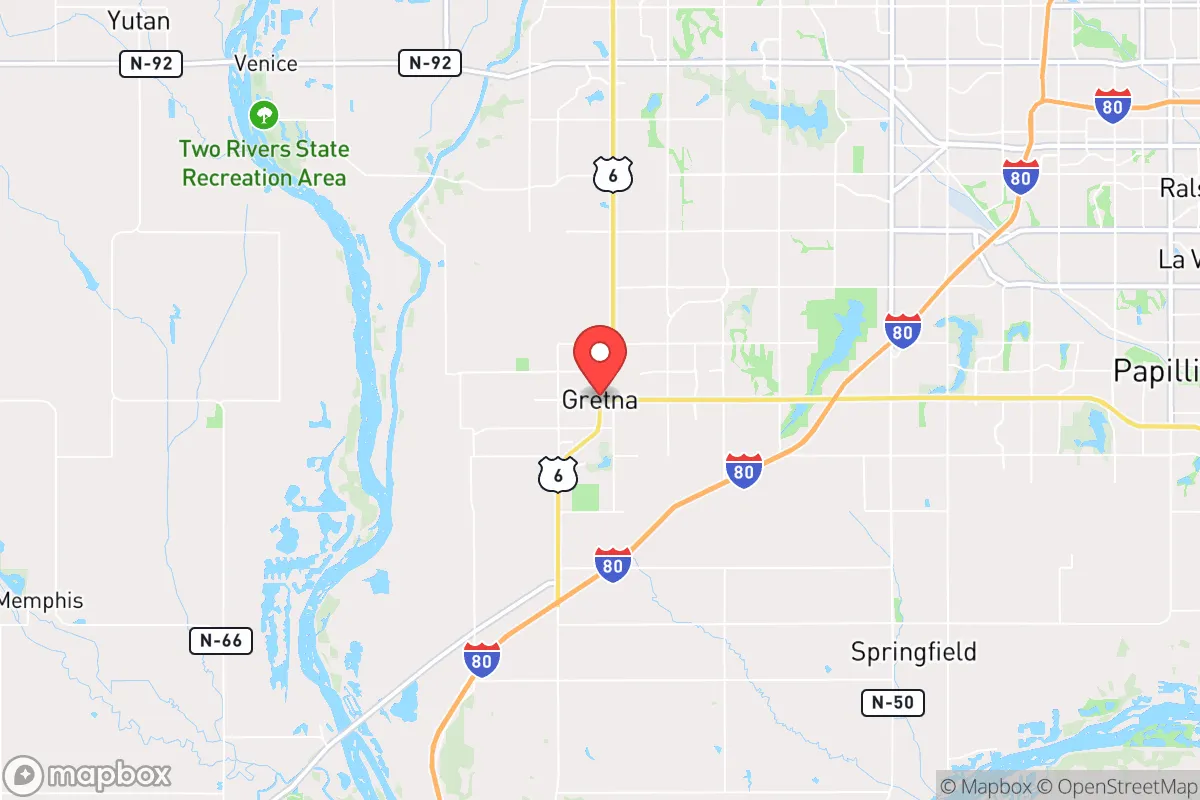
District shown is the primary district for this city’s centroid. Cities may span multiple districts.
Local Political AnalysisPolitical Analysis of Gretna, NE
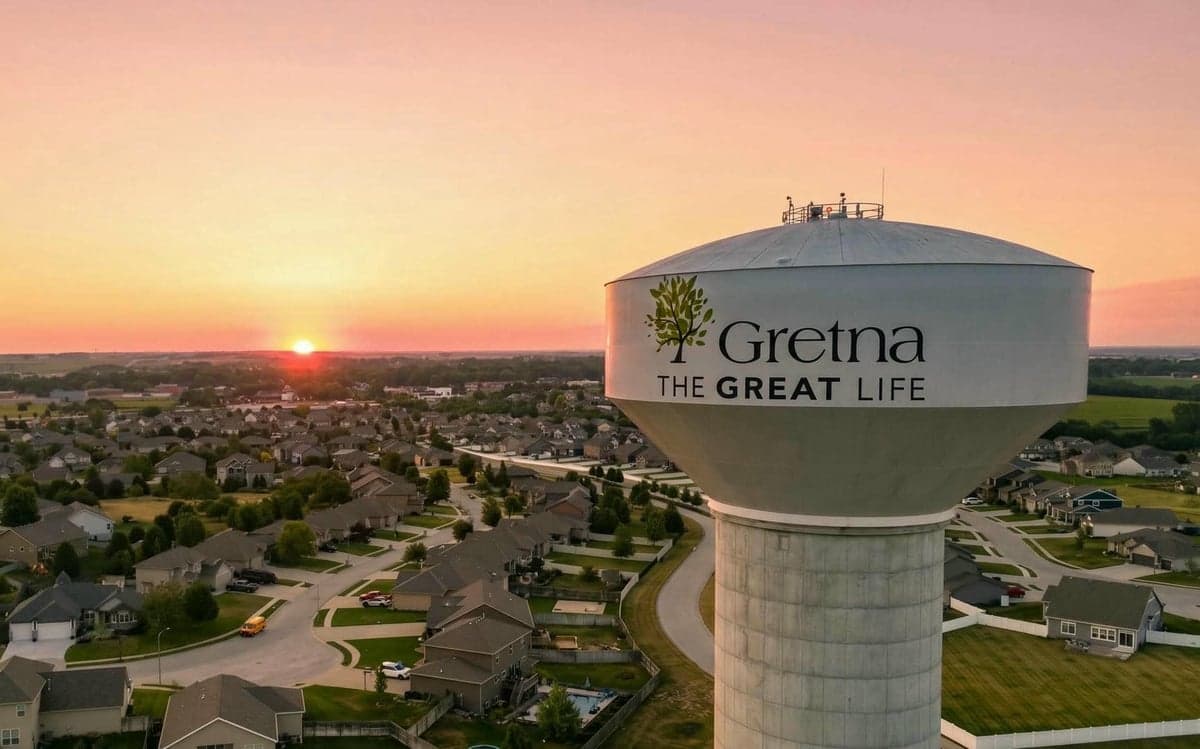
Gretna, Nebraska, sits in a bit of a political tug-of-war, and honestly, it’s a place that’s starting to feel the squeeze. While the surrounding Sarpy County has long been a reliable conservative stronghold, the city itself has a Cook PVI of D+3, meaning it leans slightly Democratic compared to the national average. That’s a relatively recent shift, driven by an influx of folks from Omaha and Lincoln who bring more progressive voting habits with them. For those of us who remember when Gretna was a quiet farming community, the change feels like a slow but steady drift away from the common-sense, limited-government values that built this area.
How it compares
Drive ten minutes north into Omaha, and you’re in a deep blue urban core where taxes and regulations are a way of life. Head south toward Lincoln, and it’s a similar story—college-town politics that lean heavily on government solutions. But look west to places like Ashland or Wahoo, and you’ll find the kind of conservative bedrock Gretna used to have: lower taxes, fewer zoning headaches, and a general distrust of overreach from the state capitol. Even within Sarpy County, Gretna stands out as the one spot where the political winds have shifted. The county as a whole still votes reliably Republican, but Gretna’s D+3 rating means local elections can be tight, and policy debates often split along new-versus-old resident lines.
What this means for residents
For a long-time resident, the biggest red flag is how this political shift affects daily life. Property taxes in Sarpy County have crept up as the area grows, and there’s more pressure from the county board to adopt progressive zoning rules that limit what you can do with your own land. School board meetings have gotten heated, with some pushing for curriculum changes that feel more like indoctrination than education. The freedom to run a small business without a mountain of paperwork is getting harder to hold onto. If you value personal liberty—like the right to keep and bear arms without extra hoops, or the ability to make healthcare choices without government interference—Gretna’s trajectory is something to watch closely. The near-term outlook is mixed: the old guard still holds some influence, but the long-term trend points toward more regulation and higher costs as the progressive wave continues.
Culturally, Gretna still has a small-town feel, but the policy distinctions are becoming sharper. Unlike Omaha, which has embraced sanctuary city policies and higher business taxes, Gretna has so far resisted most of that. The city council has kept property tax levies relatively low compared to the metro area, and there’s a strong local push to protect Second Amendment rights. But the pressure is mounting. If you’re considering a move here, keep an eye on the next few election cycles—they’ll decide whether Gretna stays a place where personal freedom comes first, or becomes another suburb where the government’s hand feels a little too heavy.

State Political ClimatePolitical Climate in Nebraska
State Political AnalysisPolitical Environment in the State
Nebraska has long been a reliably conservative state, but its political landscape is more nuanced than the deep-red label suggests. The state’s dominant coalition is a mix of rural, agricultural conservatives and a growing suburban and exurban base that leans right, but the urban centers of Omaha and Lincoln inject a persistent, and increasingly assertive, progressive minority. Over the last 10-20 years, Nebraska has seen a slow but steady rightward shift in its rural and exurban areas, even as the cities have become more Democratic, creating a widening urban-rural chasm that defines nearly every statewide race.
Urban vs. rural divide
The political map of Nebraska is a study in contrasts. The state’s two major population centers—Omaha (Douglas County) and Lincoln (Lancaster County)—are the engines of Democratic votes. Omaha, home to the University of Nebraska Medical Center and a diverse service economy, has trended blue for years, with Douglas County voting for Joe Biden in 2020 by about 10 points. Lincoln, anchored by the University of Nebraska–Lincoln, is similarly Democratic, though slightly more moderate. These two counties alone account for roughly half the state’s population, meaning any Republican statewide candidate must run up massive margins in the rest of the state to win. That’s exactly what happens: the rural, agricultural counties in the Panhandle, Sandhills, and eastern Nebraska—places like Scottsbluff, Norfolk, and Columbus—routinely deliver 70-80% Republican votes. The suburban ring around Omaha, particularly in Sarpy County (home to Offutt Air Force Base and growing bedroom communities like Papillion and La Vista), has become a critical battleground. Sarpy County voted for Trump by about 15 points in 2020, but its rapid growth and influx of younger families could make it more competitive in the coming cycles. The real outlier is the 2nd Congressional District (Omaha and its suburbs), which has split its electoral vote in 2020 and 2024, a unique feature that makes Nebraska the only state besides Maine to award electoral votes by congressional district.
Policy environment
Nebraska’s policy environment is broadly conservative, with a strong emphasis on limited government and low taxes. The state has a unicameral, nonpartisan legislature, which often blunts the most extreme partisan impulses but also means that conservative priorities can advance without the typical gridlock. On taxes, Nebraska has a flat income tax rate of 5.58% (as of 2025), with ongoing efforts to reduce it further. Property taxes are a perennial flashpoint, with rural landowners and farmers pushing for relief; the state has responded with a mix of property tax credits and increased state aid to schools, but the issue remains unresolved. The regulatory posture is business-friendly, with a right-to-work law and minimal zoning restrictions outside of Omaha and Lincoln. Education policy is a major battleground: Nebraska has seen a surge in school choice advocacy, with the legislature passing a school voucher program (LB 753) in 2023, which provides tax credits for donations to scholarship-granting organizations. This is a win for parental rights and educational freedom, but it faces ongoing legal challenges from teachers’ unions. On healthcare, Nebraska expanded Medicaid under the Affordable Care Act in 2018 via a ballot initiative, a rare progressive victory that has been largely accepted. Election laws are relatively secure: the state requires voter ID (passed in 2021), has no-excuse absentee voting, and maintains a clean voter roll system. There is no state-level sanctuary policy; Nebraska is firmly in the “rule of law” camp on immigration.
Trajectory & freedom
Nebraska is trending toward more personal freedom in several key areas, but with notable exceptions. The most significant recent expansion of liberty is in gun rights: in 2023, the legislature passed LB 77, which eliminated the requirement for a permit to carry a concealed handgun (constitutional carry). This was a major win for Second Amendment advocates. On parental rights, the state passed LB 1084 in 2023, which prohibits instruction on sexual orientation and gender identity in K-3 classrooms and requires schools to notify parents of any changes in a child’s mental or physical health. This is a strong step toward keeping government out of family matters. On medical autonomy, Nebraska has not gone the way of some states in restricting COVID-19 vaccine mandates or treatments, but the issue has faded. The biggest concern for freedom-minded residents is property rights: the state’s use of eminent domain for pipeline projects (like the Keystone XL route) has been controversial, though that specific project was canceled. On taxation, the trajectory is positive—the flat tax rate has been gradually lowered from 6.84% in 2020 to 5.58% in 2025, with a goal of 4.99% by 2027. However, the state’s reliance on property taxes remains a drag on economic freedom, especially for rural landowners.
Civil unrest & political movements
Nebraska is not a hotbed of civil unrest, but there have been flashpoints. The most visible was the 2020 George Floyd protests in Omaha and Lincoln, which saw some property damage and clashes with police, but were relatively small compared to larger cities. The state has a small but active progressive activist scene, centered in Omaha and Lincoln, that pushes for racial justice, LGBTQ+ rights, and environmental causes. On the right, the Nebraska Republican Party has seen a surge of grassroots activism, particularly around election integrity and school board races. The 2022 election integrity controversy in Dodge County (Fremont) saw a local official accused of mishandling ballots, leading to a state investigation and new security protocols. Immigration politics are a live issue, especially in Grand Island and South Sioux City, where meatpacking plants have drawn a significant immigrant workforce. There have been local debates over sanctuary policies, but no city has adopted one. The secession/nullification rhetoric is minimal, though some rural counties have floated the idea of joining South Dakota or Wyoming in response to perceived urban dominance in the legislature. Overall, the political climate is stable, but the cultural divide between urban and rural areas is palpable—a new resident in Omaha will experience a very different political environment than someone in Kearney or North Platte.
Projection
Over the next 5-10 years, Nebraska is likely to remain a solidly red state, but the margins will tighten as Omaha and Lincoln continue to grow and diversify. The 2nd Congressional District will remain a swing seat, and could flip permanently blue if suburban Sarpy County trends further left. The rural areas will continue to vote overwhelmingly Republican, but their population is stagnant or declining, meaning their electoral weight will shrink. The biggest wildcard is in-migration: Nebraska is seeing a modest influx of people from California and Colorado, drawn by lower housing costs and a more conservative culture. These newcomers tend to be more moderate than native Nebraskans, and could shift the suburbs toward the center. On policy, expect continued pressure to lower taxes, expand school choice, and protect gun rights. The unicameral legislature’s nonpartisan structure will likely prevent any dramatic swings, but the conservative majority will hold. The biggest threat to freedom is the potential for federal overreach on environmental regulations (especially on agriculture) and the ongoing property tax burden. A new resident moving in now should expect a state that is stable, safe, and increasingly free, but with a growing cultural tension between the urban core and the vast rural expanse.
Bottom line for a new resident: Nebraska offers a high degree of personal freedom, low crime, and a business-friendly environment, especially if you choose a rural or suburban location. The state’s political trajectory is broadly positive for conservatives, but you’ll need to be aware of the urban-rural divide—your experience in Omaha will be very different from that in Fremont or Beatrice. If you value limited government, strong Second Amendment protections, and a community that respects traditional values, Nebraska is a solid bet. Just keep an eye on property taxes and the ongoing fight over school choice—those are the battles that will define the next decade.
* Values derived from national, state, county, city and local statistics and may differ in a specific area. Last updated: 2026-05-03T20:29:47.000Z
Narrative content on this page is AI-generated and may contain mistakes. Verify any details that matter before acting on them.
ReloMaps may earn a commission from affiliate links at no extra cost to you.

