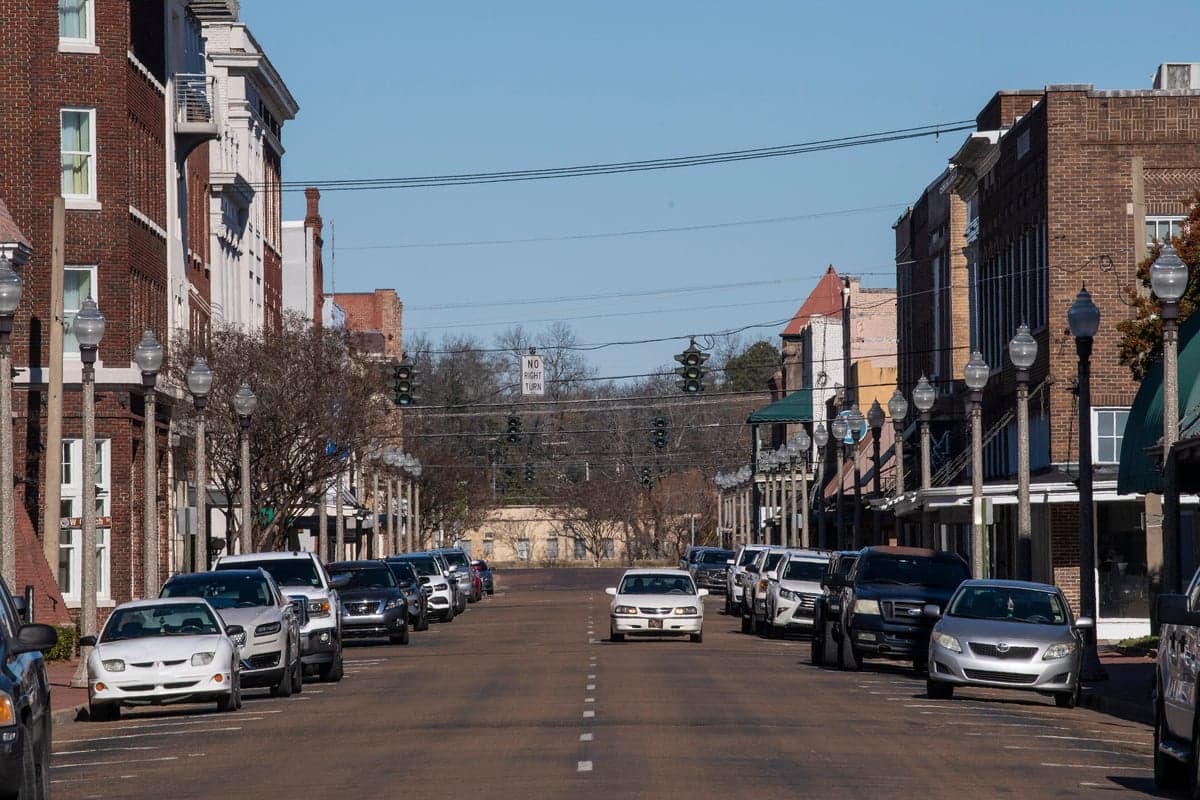
Photo: Wikipedia
Strategic Assessment of Greenwood, MS
Workable tactical position. Some exposure to population density or targets, but generally defensible in a crisis.
What does the Strategic Assessment tell us?
Our Strategic Assessment grades tactical survivability of an area. Major population centers, military targets, fallout zones, natural disasters, and border exposure all drive risk — lower exposure means a more defensible position in a crisis.
This is heavily inspired by Joel Skousen's Strategic Relocation book. Highly recommended you checkout the book ($)What does this tell us?
Our Strategic Assessment grades tactical survivability of an area. Major population centers, military targets, fallout zones, natural disasters, and border exposure all drive risk — lower exposure means a more defensible position in a crisis.
This is heavily inspired by Joel Skousen's Strategic Relocation book. Highly recommended you checkout the book ($)Strategic Pillars

Key Distances
Regional Safe Places
Below is our recommended "safe zones" in Mississippi and the surrounding area based on our strategic heuristics. For most people, it's unrealistic to live in a “safe zone” full-time due to work, family or other personal reasons. They tend to be more rural. However, many of these areas are perfect for second homes and retreat properties that double as a vacation home or even a short-term rental.
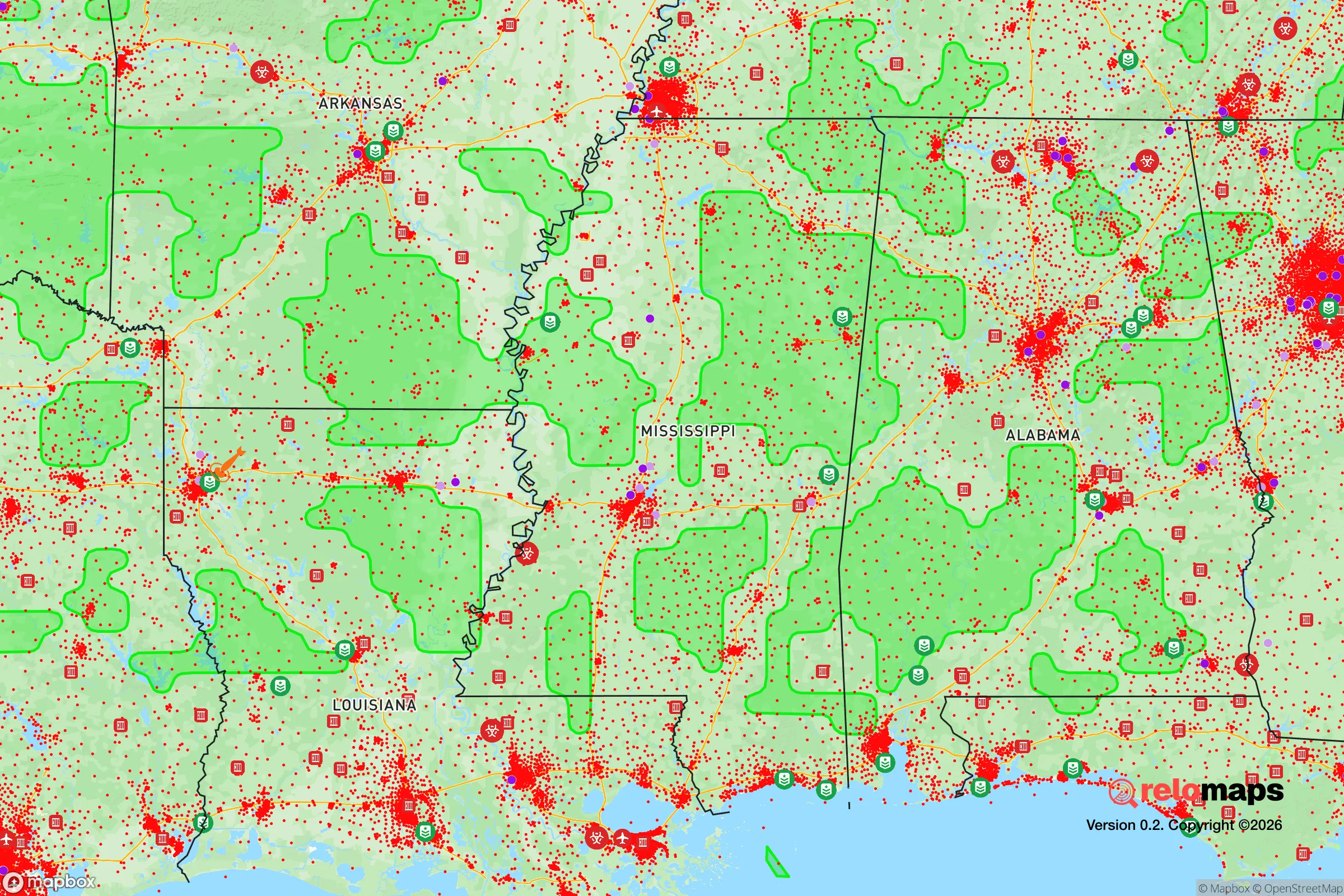
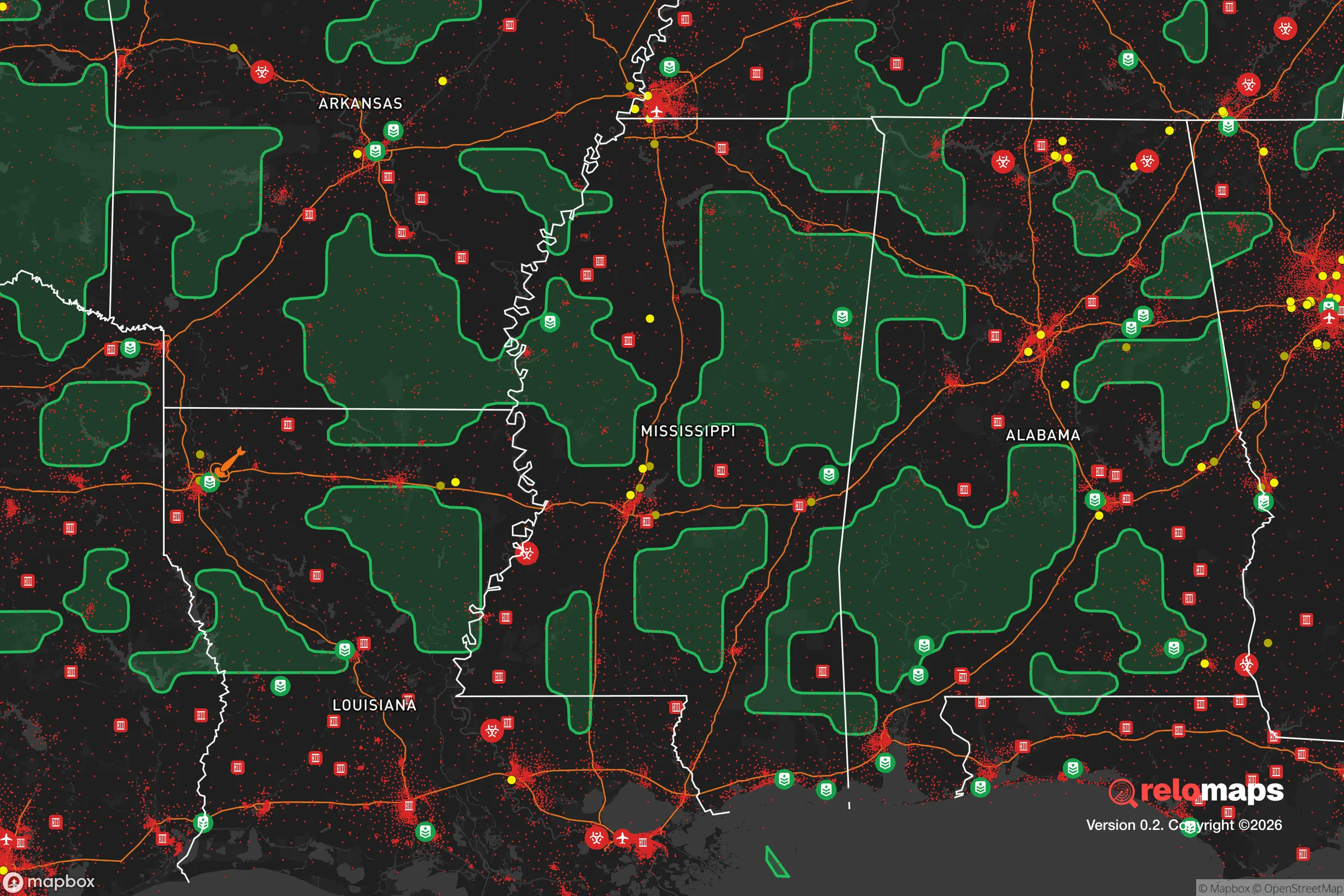


Important Note: For informational purposes only. This does not mean nothing bad ever happens in the green zones. Please use common sense. This is based on public data and modeled with AI. We tried to take a conservative approach but mistakes happen. We update this regularly as new information becomes available.
Solar Generator Recommendations
Backup power matters more here than in safer locations. We've picked three solar generators across budgets and capacity tiers — start with the budget unit if you only need a few essentials, or step up if you want to run a fridge and HVAC for days at a time.

Jackery Portable Power Station Explorer 300
Budget OptionPower on the Go: Weighing only 11 lbs, it's convenient to set up and store with book-sized foldable solar panels

BLUETTI Portable Power Station AC180
Designed for both indoor and outdoor scenarios, AC180 is highly capable as it has a robost capacity and continuous output power.

EF ECOFLOW DELTA Pro Ultra Power Station
Upgraded PickEcoFlow DELTA Pro Ultra is a whole-home energy system designed to grow with your family. Integrated with the Smart Home Panel 2, it scales to meet your evolving energy needs — keeping your home powered, intelligent, and secure through every stage of life.
We earn a commission, at no additional cost to you.
Strategic Assessment Analysis
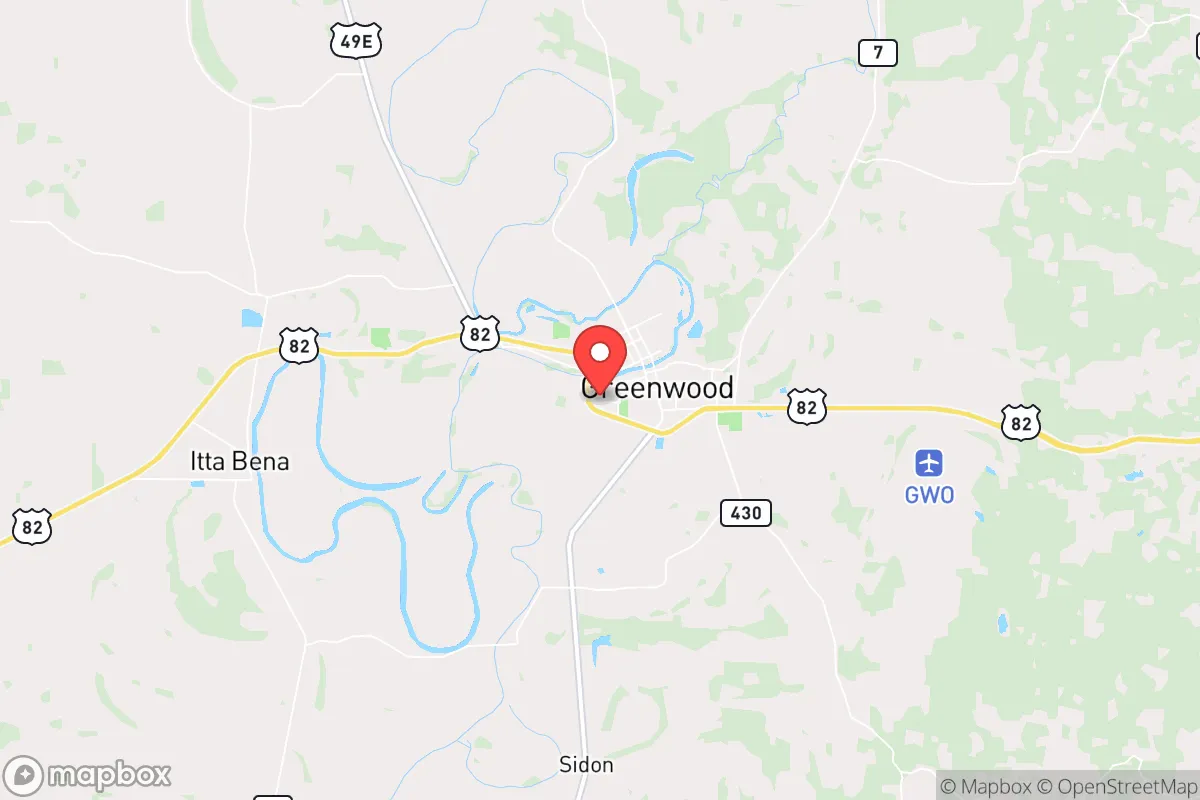
Greenwood, Mississippi, offers a surprisingly resilient strategic position for those prioritizing self-sufficiency and distance from major population centers, though it comes with distinct trade-offs. Located in the heart of the Mississippi Delta, roughly 100 miles from Memphis, 130 miles from Jackson, and 140 miles from Little Rock, the city sits outside the immediate blast and fallout zones of any major metropolitan target. Its location along the Yazoo River and proximity to the Mississippi River provide both a natural barrier and a potential waterborne escape route, while the surrounding flat, agricultural landscape offers limited defensible terrain but abundant land for food production. For a relocator with a prepper mindset, Greenwood represents a low-profile, semi-remote option that avoids the high-risk corridors of the Interstate 55 and Interstate 20 corridors, though it is not without its own vulnerabilities.
Geographic position and natural advantages for long-term survival
Greenwood’s geographic isolation is its primary strategic asset. The city is not a major transportation hub, meaning it is unlikely to be a primary target in a conflict or a chokepoint for refugee flows during a collapse. The surrounding Delta region is sparsely populated relative to the rest of the state, with Leflore County’s population density at roughly 35 people per square mile—far lower than the national average. This low density reduces competition for resources during a crisis. The Yazoo River, which runs through the city, provides a reliable water source for drinking, irrigation, and transportation, though it requires filtration and treatment. The region’s alluvial soil is among the most fertile in the world, making it ideal for small-scale farming, livestock, and permaculture. For a relocator willing to invest in land, acreage in Leflore County can be purchased for under $2,000 per acre, well below national averages. The flat terrain also simplifies construction of earth-sheltered or bermed structures, which offer passive thermal regulation and protection from severe weather. However, the lack of natural cover—few forests, no hills—means that visual concealment is poor, and any defensive position would require deliberate landscaping or structural hardening.
Risks, exposures, and proximity to fallout-relevant landmarks
The most significant risk for Greenwood is its proximity to the Mississippi River and the New Madrid Seismic Zone. A major earthquake along that fault line—which scientists consider overdue—could cause catastrophic liquefaction across the Delta, collapsing levees, destroying infrastructure, and making roads impassable for weeks. Greenwood sits roughly 150 miles from the epicenter of the 1811-1812 New Madrid earthquakes, and a repeat event would likely cut the city off from outside aid entirely. Additionally, the city is within 100 miles of the Tennessee Valley Authority’s Browns Ferry Nuclear Plant in Alabama and the Grand Gulf Nuclear Station in Mississippi, both of which are potential targets or accident sites. While Greenwood is not in the immediate fallout plume of either facility, prevailing winds from the southwest could carry contamination into the region. The city’s location along the Yazoo River also makes it vulnerable to flooding; the 2019 Mississippi River floods inundated large portions of the Delta, and climate models suggest increased precipitation intensity in the coming decades. For a prepper, these risks mean that any property should be elevated, flood-insured, and equipped with redundant water and power systems. The city’s reliance on a single major highway—U.S. Route 82—for east-west travel is a critical vulnerability; a bridge failure or road blockage would effectively isolate Greenwood from the rest of the state.
Practical resilience for a relocator: food, water, energy, and defensibility
For a relocator focused on practical self-sufficiency, Greenwood offers a mixed picture. Food production is the strongest asset: the Delta’s growing season runs from March to October, and the soil requires minimal amendment for vegetables, grains, and legumes. Local farmers’ markets and agricultural supply stores are common, and the region’s hunting culture means that deer, turkey, and small game are abundant. Water is readily available from the Yazoo River and shallow groundwater aquifers, but well drilling is essential—municipal water treatment plants are vulnerable to power loss and contamination. Energy is a weak point: the local grid is aging and prone to outages during storms, and natural gas service is limited. Solar is viable, with the region averaging 5.2 peak sun hours per day, but battery storage is necessary for nighttime and cloudy periods. Defensibility is challenging due to the flat terrain; a rural property with a long driveway, perimeter fencing, and a clear field of fire would be ideal, but such setups are rare in the Delta’s open landscape. The nearest major medical facility is Greenwood Leflore Hospital, a 208-bed facility that would be overwhelmed in a mass casualty event. For serious trauma care, residents must travel to Jackson or Memphis, both of which are 90+ minutes away under normal conditions. Stockpiling medical supplies and learning basic emergency medicine is non-negotiable for anyone relocating here with a survivalist mindset.
Overall, Greenwood presents a viable but imperfect strategic relocation option for those prioritizing low population density, agricultural potential, and distance from major targets. Its greatest strengths—fertile soil, low land costs, and isolation—are balanced by significant vulnerabilities: seismic risk, flood exposure, limited medical infrastructure, and poor defensible terrain. For a single individual or family willing to invest in hardening a property, drilling a well, and building a food forest, the Delta offers a quiet, low-profile base of operations. But for those seeking a truly hardened, off-grid retreat with natural cover and multiple egress routes, the region’s flat, flood-prone geography may prove a liability. Greenwood is best suited for the prepper who values land and water access over concealment and who is prepared to mitigate the region’s natural and infrastructural risks through proactive planning and redundancy. It is not a bug-out location for a weekend warrior, but it could serve as a long-term homestead for those committed to the work of building resilience from the ground up.

* Values derived from national, state, county, city and local statistics and may differ in a specific area. Last updated: 2026-04-30T13:22:52.000Z
Narrative content on this page is AI-generated and may contain mistakes. Verify any details that matter before acting on them.
ReloMaps may earn a commission from affiliate links at no extra cost to you.

