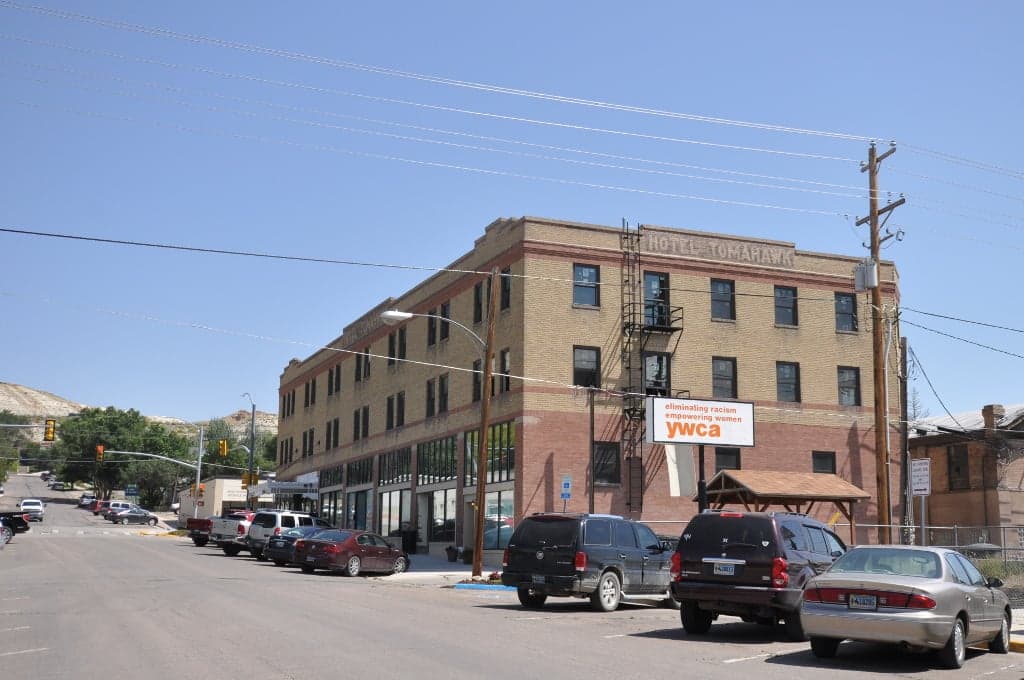
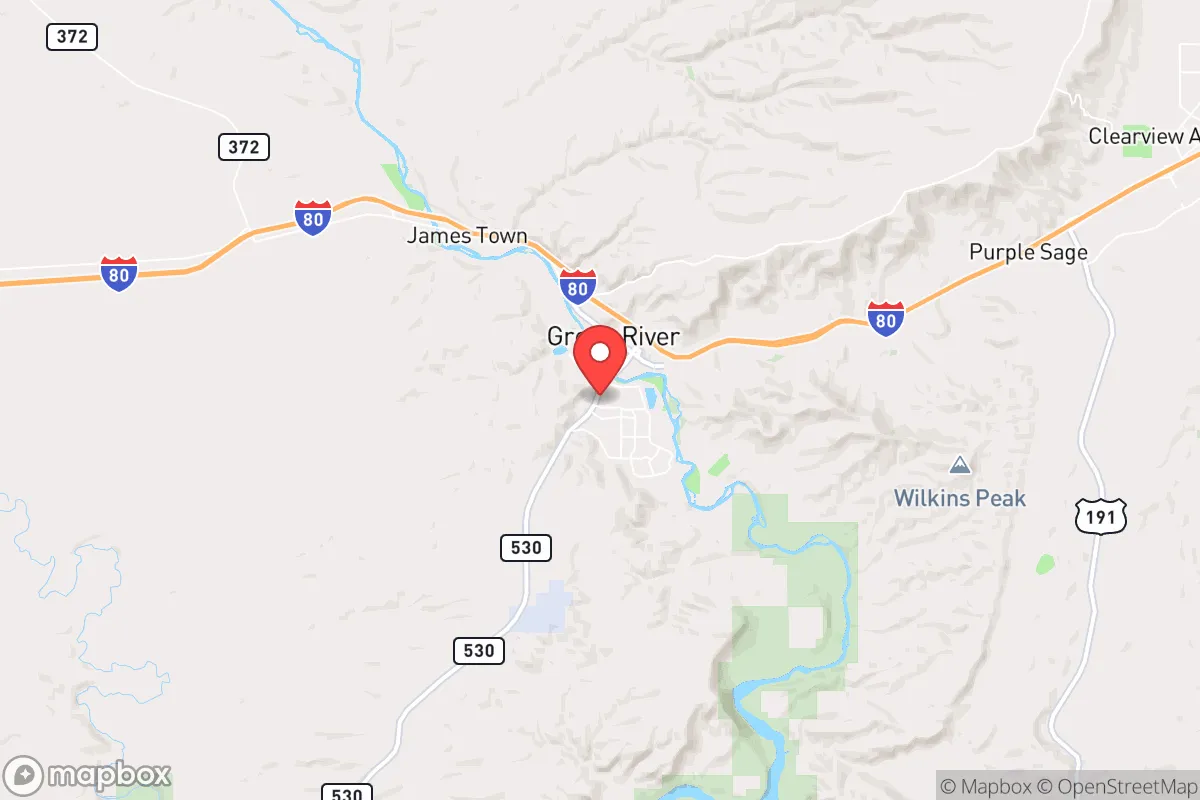
Photo: Wikipedia
Strategic Assessment of Green River, WY
Strong survivability profile. Good buffer from population centers, with manageable environmental and tactical risks.
What does the Strategic Assessment tell us?
Our Strategic Assessment grades tactical survivability of an area. Major population centers, military targets, fallout zones, natural disasters, and border exposure all drive risk — lower exposure means a more defensible position in a crisis.
This is heavily inspired by Joel Skousen's Strategic Relocation book. Highly recommended you checkout the book ($)What does this tell us?
Our Strategic Assessment grades tactical survivability of an area. Major population centers, military targets, fallout zones, natural disasters, and border exposure all drive risk — lower exposure means a more defensible position in a crisis.
This is heavily inspired by Joel Skousen's Strategic Relocation book. Highly recommended you checkout the book ($)Strategic Pillars

Key Distances
Regional Safe Places
Below is our recommended "safe zones" in Wyoming and the surrounding area based on our strategic heuristics. For most people, it's unrealistic to live in a “safe zone” full-time due to work, family or other personal reasons. They tend to be more rural. However, many of these areas are perfect for second homes and retreat properties that double as a vacation home or even a short-term rental.
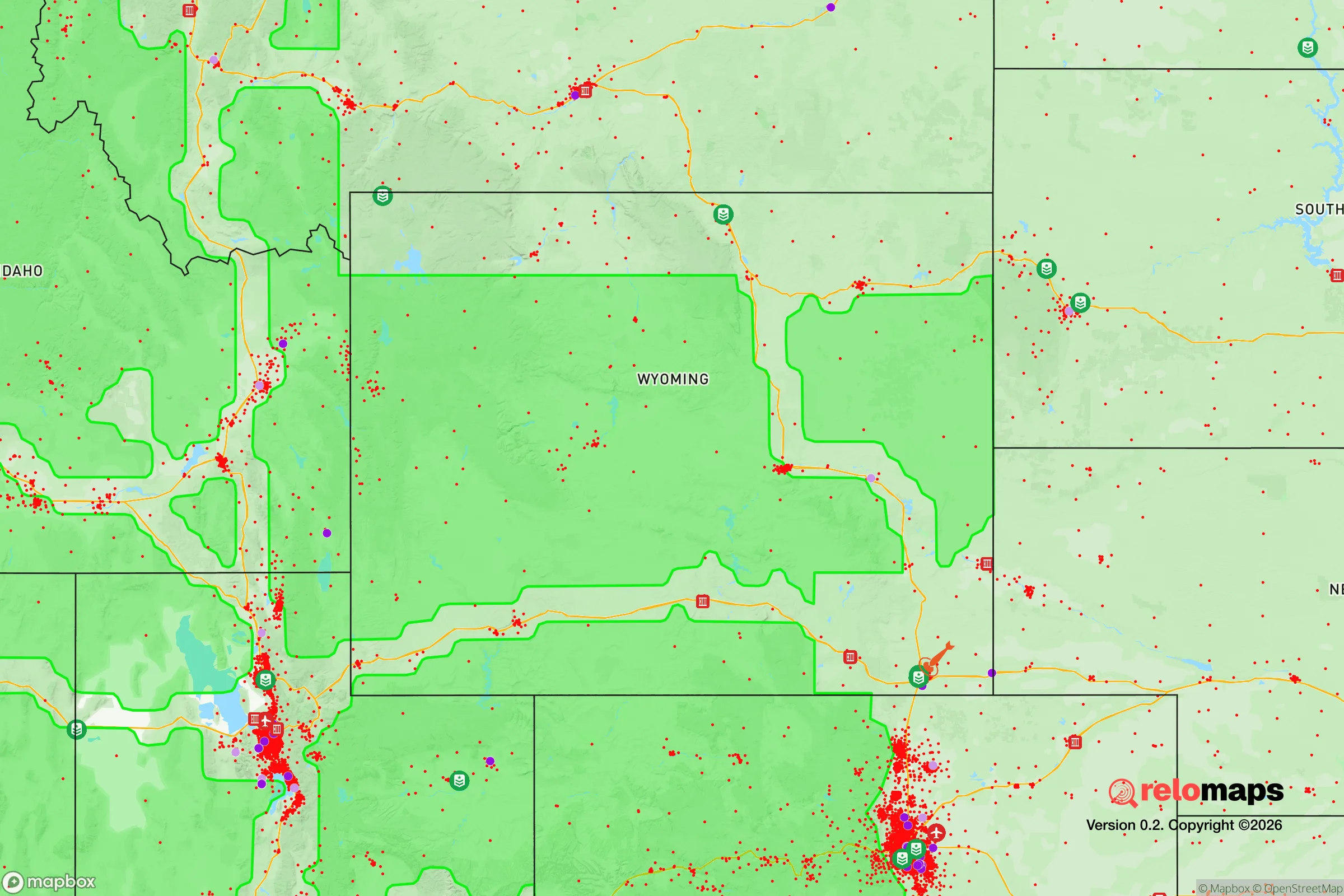
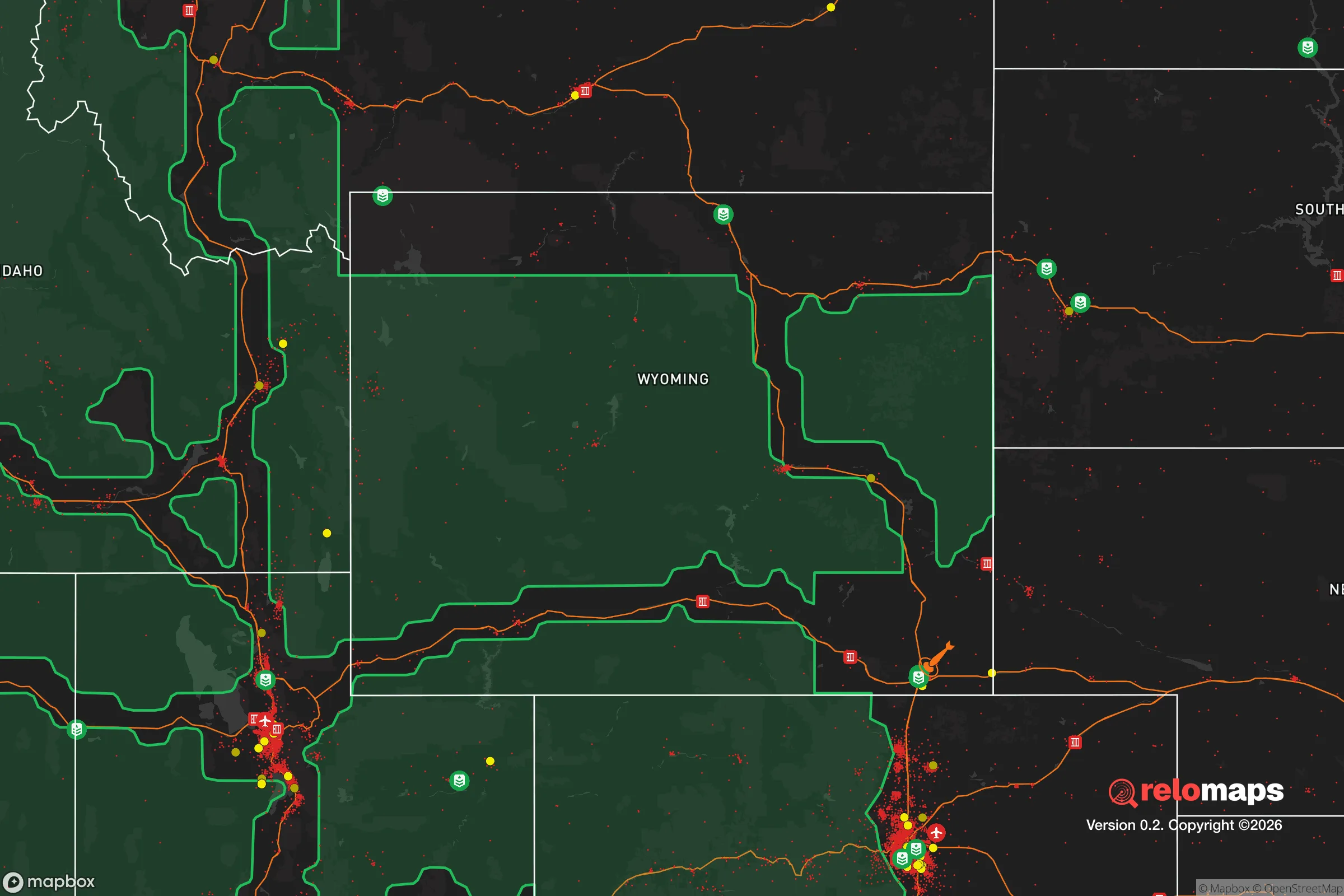


Important Note: For informational purposes only. This does not mean nothing bad ever happens in the green zones. Please use common sense. This is based on public data and modeled with AI. We tried to take a conservative approach but mistakes happen. We update this regularly as new information becomes available.
Solar Generator Recommendations
Backup power matters more here than in safer locations. We've picked three solar generators across budgets and capacity tiers — start with the budget unit if you only need a few essentials, or step up if you want to run a fridge and HVAC for days at a time.

Jackery Portable Power Station Explorer 300
Budget OptionPower on the Go: Weighing only 11 lbs, it's convenient to set up and store with book-sized foldable solar panels

BLUETTI Portable Power Station AC180
Designed for both indoor and outdoor scenarios, AC180 is highly capable as it has a robost capacity and continuous output power.

EF ECOFLOW DELTA Pro Ultra Power Station
Upgraded PickEcoFlow DELTA Pro Ultra is a whole-home energy system designed to grow with your family. Integrated with the Smart Home Panel 2, it scales to meet your evolving energy needs — keeping your home powered, intelligent, and secure through every stage of life.
We earn a commission, at no additional cost to you.
Strategic Assessment Analysis
Green River, Wyoming, offers a compelling strategic position for those prioritizing resilience and self-sufficiency, largely because it sits far from the coastal population centers and major geopolitical targets that define most relocation risk assessments. The town’s location along the I-80 corridor provides a critical transportation link without the density or vulnerability of larger hubs like Salt Lake City or Denver, both of which are over 150 miles away. For a prepper or survivalist, this distance from major metropolitan areas is a significant advantage, reducing exposure to civil unrest, supply chain disruptions, and the fallout risks associated with high-value targets. The surrounding landscape—high desert, open range, and the Green River itself—offers natural buffers and resources that align with a conservative, self-reliant mindset, making it a viable base for long-term strategic living.
Geographic position and natural advantages for long-term security
Green River’s geography is its strongest asset for a relocation strategy focused on isolation and resource access. The town sits in Sweetwater County, a region characterized by vast, sparsely populated terrain that provides natural defensibility. The Green River, which runs through the town, is a reliable water source—critical for any long-term survival scenario—and the surrounding Flaming Gorge National Recreation Area offers additional water reserves and hunting opportunities. The area’s elevation (around 6,100 feet) and arid climate reduce the risk of flooding and many weather-related disasters common in other parts of the country, though winter preparedness is essential. For a relocator, the proximity to the Uinta and Wind River mountain ranges also means access to timber, game, and remote retreat locations if the town itself becomes compromised. The I-80 corridor, while a potential evacuation route, is also a double-edged sword—it connects Green River to Rock Springs (just 12 miles east) and larger markets, but its low traffic volume relative to coastal interstates means it’s less likely to become a chokepoint during a crisis. Overall, the natural layout favors small-scale, independent living over reliance on fragile urban infrastructure.
Risks, exposures, and proximity to fallout-relevant landmarks
No location is without vulnerabilities, and Green River’s risks are tied to its industrial and energy infrastructure rather than population density. The town is near the Jim Bridger Power Plant (about 30 miles east) and the Trona mining operations that dominate the local economy—both potential targets for sabotage or accidents during a national crisis. The power plant, a coal-fired facility, could be a point of failure for regional electricity, though its remote location reduces the likelihood of a coordinated attack. More concerning is the Union Pacific rail line running through town, which transports hazardous materials (including crude oil and chemicals) from the Bakken fields and other sources. A derailment or spill could contaminate the Green River watershed, a primary water source for the area. Additionally, the Farson-Eden area (about 40 miles north) has active oil and gas fields, meaning well blowouts or pipeline ruptures are possible. On the positive side, Green River is far from any major military installations, nuclear facilities, or large-scale government hubs that would draw a first-strike scenario. The nearest significant target is Hill Air Force Base near Ogden, Utah, over 150 miles southwest—well outside the immediate fallout zone for most plausible events. For a relocator, the key takeaway is that the risks here are industrial and manageable with proper planning (e.g., water filtration, alternative energy sources), not the existential threats of urban collapse or nuclear war.
Practical resilience for a relocator: food, water, energy, and defensibility
For someone serious about self-sufficiency, Green River offers a mixed but workable foundation. Water is the strongest asset: the Green River provides a year-round surface water source, and the local aquifer is generally reliable, though it’s wise to test for trona-related mineral content. Food production is limited by the short growing season (about 100 frost-free days) and alkaline soil, but raised beds, greenhouses, and hydroponics can extend yields—many locals successfully grow cold-hardy crops like potatoes, carrots, and kale. The area supports hunting and fishing (mule deer, elk, trout in the Green River and Flaming Gorge), which can supplement stored supplies. Energy is a mixed bag: the grid is tied to the coal plant, but natural gas is abundant from local fields, and solar potential is decent (over 200 sunny days per year) despite the high altitude. For defensibility, the town’s layout—narrow valleys and limited road access—makes it easier to monitor approaches, but the open terrain also means a determined group could approach from multiple directions. The local population (around 11,000) is small and largely employed in energy and mining, which tends to foster a conservative, self-reliant culture—neighbors are more likely to band together than to become a threat. However, the lack of a strong local food supply chain means you’ll need to stockpile at least 6-12 months of staples, as grocery stores rely on I-80 deliveries that could be disrupted. Medical facilities are basic: the local hospital (Memorial Hospital of Sweetwater County) can handle emergencies, but serious trauma or chronic care requires a 2-hour drive to Salt Lake City or a 3-hour drive to Denver—a vulnerability in a prolonged crisis. For a relocator, the practical approach is to treat Green River as a base camp rather than a fortress: secure water, build a greenhouse, establish a solar backup, and maintain a vehicle capable of navigating winter roads for resupply or evacuation.
The overall strategic picture for Green River is one of calculated trade-offs. It’s not a bug-out paradise with year-round growing seasons or impenetrable terrain, but it offers a rare combination of isolation, water access, and a like-minded community that many preppers prioritize. The distance from coastal chaos and major targets is a real advantage, and the industrial risks (rail lines, mining) are manageable with basic preparedness—unlike the systemic collapse risks of a city like Denver or Salt Lake City. For a conservative relocator concerned about the state of the country, Green River provides a defensible, resource-rich anchor point that doesn’t require abandoning modern life entirely. The key is to arrive with a plan: secure your water source, build a resilient food system, and establish relationships with local ranchers and miners who share your values. In a world where urban centers are increasingly fragile, this Wyoming outpost stands out as a place where you can hunker down, ride out the storm, and still have a shot at a decent life when the dust settles.

* Values derived from national, state, county, city and local statistics and may differ in a specific area. Last updated: 2026-04-21T11:23:41.000Z
Narrative content on this page is AI-generated and may contain mistakes. Verify any details that matter before acting on them.
ReloMaps may earn a commission from affiliate links at no extra cost to you.

