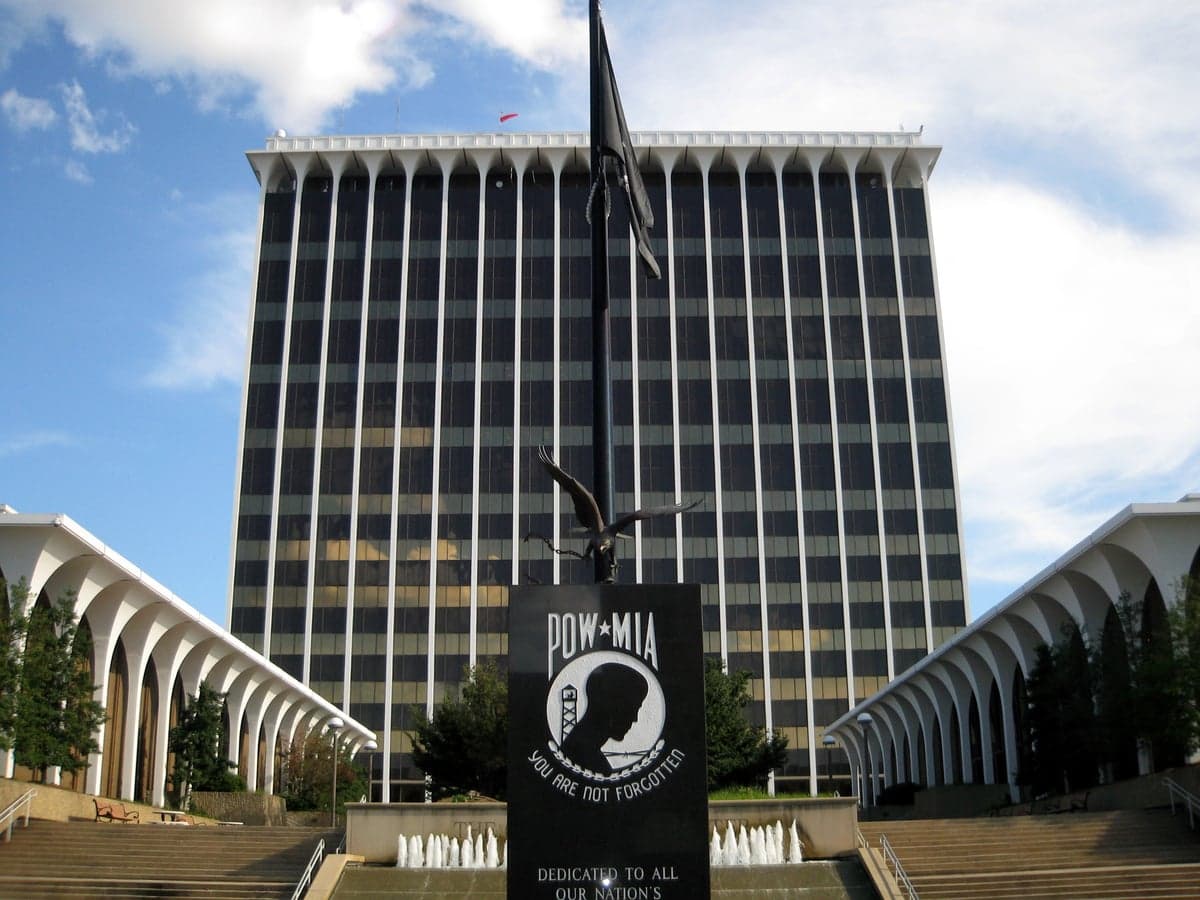
Photo: Wikipedia
Personal Sovereignty in Muscogee County
Viable for self-reliance. Generally workable, though some barriers may limit total independence.
What does Personal Sovereignty tell us?
Personal Sovereignty measures your capacity for self-reliance and independence with minimal government friction. Higher scores mean fewer barriers between you and the way you want to live... but it assumes you have the space you need and good neighbors.
What does this tell us?
Personal Sovereignty measures your capacity for self-reliance and independence with minimal government friction. Higher scores mean fewer barriers between you and the way you want to live... but it assumes you have the space you need and good neighbors.
State Policy
Energy independence: Importer (12% of energy produced in-state)
Personal Liberty
Homesteading

Personal Liberty Analysis
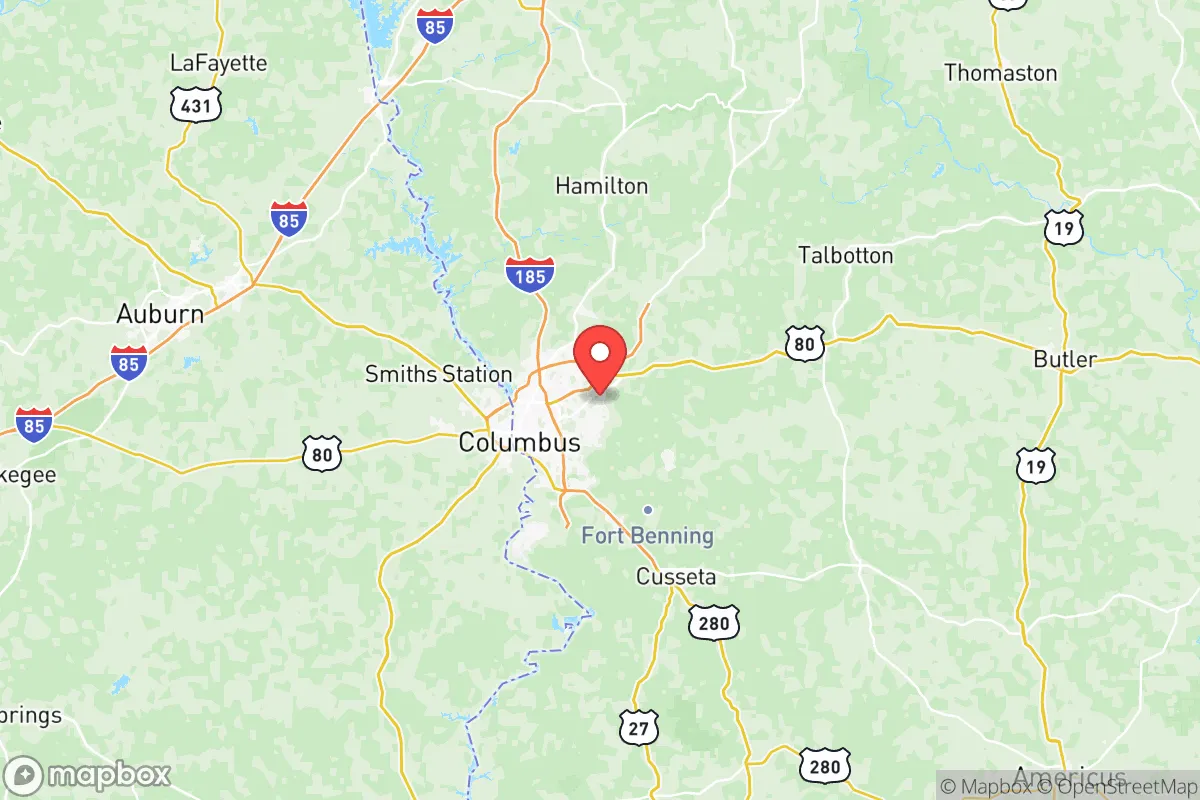
Muscogee County, anchored by Columbus, presents a mixed but generally favorable environment for personal sovereignty, balancing Georgia’s relatively light-touch state framework with a more urbanized, county-level regulatory apparatus. While the state’s preemption laws and constitutional carry provisions provide a solid baseline for individual autonomy, the county’s denser population centers impose more constraints than the rural fringes, making location within the county a critical factor for those prioritizing self-reliance. For a relocation-minded individual or family, the key trade-off is between the economic opportunities of Columbus and the greater personal freedom found in the county’s unincorporated areas and smaller communities like Fortson and Midland.
Tax burden and regulatory posture in Muscogee County
Georgia’s state-level tax climate is a clear asset for personal sovereignty, featuring a flat 5.49% income tax and no state-level estate or inheritance tax. Muscogee County adds a local sales tax of 8%, which is moderate for the region, and property taxes are assessed at a county-wide millage rate that is competitive with neighboring counties but higher than in deep-rural Georgia. The regulatory posture in Columbus is more active than in the county’s unincorporated areas; the city enforces zoning codes, building permits, and business licensing with a moderate degree of scrutiny. For example, starting a home-based business in Columbus proper requires a business license and adherence to zoning restrictions, whereas in Cusseta (Chattahoochee County, adjacent) or the rural parts of Fortson, such oversight is far lighter. The county’s overall regulatory burden is best described as moderate—not oppressive, but not as hands-off as the most libertarian-leaning counties in north Georgia. Property tax assessments have risen with home values, but Georgia’s homestead exemption provides some relief for primary residences, a small but meaningful buffer for homeowners.
Self-defense and gun law specifics in Muscogee County
Georgia is a constitutional carry state, meaning no permit is required to carry a concealed firearm for anyone 21 or older who can legally possess a gun. This applies uniformly across Muscogee County, including within Columbus city limits. The county’s sheriff’s office, under Sheriff Greg Countryman, has historically been supportive of Second Amendment rights, and permitless carry is widely practiced. However, local restrictions exist: firearms are prohibited in government buildings, courthouses, and schools, and private businesses in Columbus—particularly in the Uptown district and along the Victory Drive corridor—may post “no guns” signs, which carry the force of law in Georgia if properly displayed. The gun culture in Muscogee County is robust but not extreme; shooting ranges like the Columbus Indoor Gun Range and the Fort Moore (formerly Fort Benning) facilities are accessible, and the military presence in the area normalizes firearm ownership. For a family prioritizing self-defense, the county offers a strong legal foundation, though the practical reality is that urban Columbus has more restricted zones than the rural areas around Ellerslie or Upatoi, where property owners can shoot on their own land with fewer neighbors to worry about.
Self-reliance and homesteading viability in Muscogee County
Homesteading and off-grid living are viable in Muscogee County, but only in specific pockets. The county’s minimum lot size in unincorporated areas is generally 1 acre, though some agricultural zones allow larger parcels. In Fortson and Midland, properties of 5 to 20 acres are common, providing space for gardens, small livestock, and rainwater collection. Zoning in these areas is less restrictive than in Columbus, where lot sizes shrink to 0.25 acres or less and homeowners’ associations (HOAs) often impose covenants that limit chickens, sheds, or solar panels. Off-grid feasibility is constrained by Georgia’s building codes, which require a septic system and well permit for any habitable structure; completely disconnecting from the grid is technically possible but requires navigating county health department regulations for water and waste. The county does not explicitly ban solar panels, but HOAs in subdivisions like Green Island Hills or Wynnton may restrict their placement. For a family seeking true self-reliance, the rural western edge of the county—near the Alabama line around Fortson—offers the best balance of land availability and regulatory leniency, while the eastern side near Bibb City is too dense for any meaningful homesteading.
Personal liberties in Muscogee County: parental rights, medical autonomy, speech, and property
Georgia’s state laws provide a strong baseline for personal liberties, and Muscogee County generally reflects that. Parental rights are protected under state law, with no county-level ordinances that override a parent’s authority over their child’s education or medical decisions. The county’s school system, Muscogee County School District, offers limited school choice—there are magnet programs and a few charter schools—but homeschooling is legal and relatively straightforward, requiring only a declaration of intent and annual standardized testing. Medical autonomy is a mixed picture: Georgia has not expanded Medicaid, which limits low-income healthcare options, but the county has no local mandates for vaccines or medical procedures beyond state requirements. Speech and assembly are protected under the First Amendment, and Columbus has seen both conservative and liberal protests without significant local suppression. Property rights are generally respected, but the county’s zoning board has authority to enforce land-use regulations, and variances can be difficult to obtain in the more developed parts of Columbus. For a reader who values the ability to make decisions without government interference, Muscogee County offers a solid but not exceptional environment—better than deep-blue metro Atlanta counties, but not as free as the most rural Georgia counties like Glascock or Taliaferro.
Overall, Muscogee County provides a moderate-to-strong environment for personal sovereignty, with Georgia’s state-level protections—constitutional carry, low flat income tax, and parental rights—forming the backbone. The county’s urban core in Columbus introduces more regulatory friction, particularly in zoning, business licensing, and HOA restrictions, while the rural areas around Fortson, Midland, and Ellerslie offer a much lighter touch. For a family or individual who prioritizes autonomy, the smart move is to locate in the county’s unincorporated western or southern fringes, where land is cheaper, regulations are fewer, and the military-adjacent culture reinforces self-reliance. Compared to the rest of Georgia, Muscogee County ranks in the middle tier for personal freedom—a pragmatic choice for those who want access to a mid-sized city’s economy without surrendering the core liberties that make self-directed life possible.

* Values derived from national, state, county, city and local statistics and may differ in a specific area. Last updated: 2026-08-04T04:25:05.000Z
Narrative content on this page is AI-generated and may contain mistakes. Verify any details that matter before acting on them.
ReloMaps may earn a commission from affiliate links at no extra cost to you.

