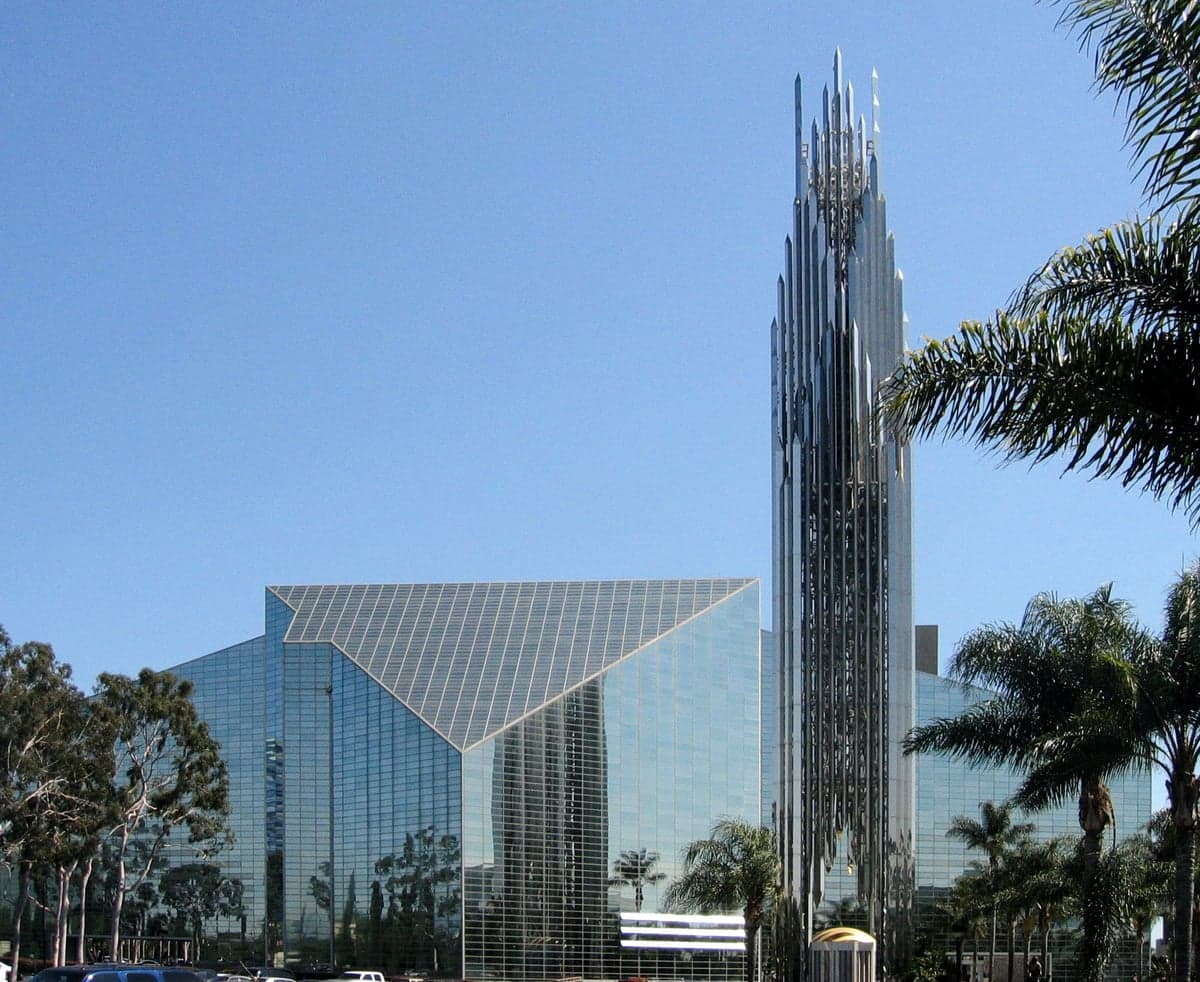
Photo: Wikipedia
Political ClimatePolitical Climate in Garden Grove, CA
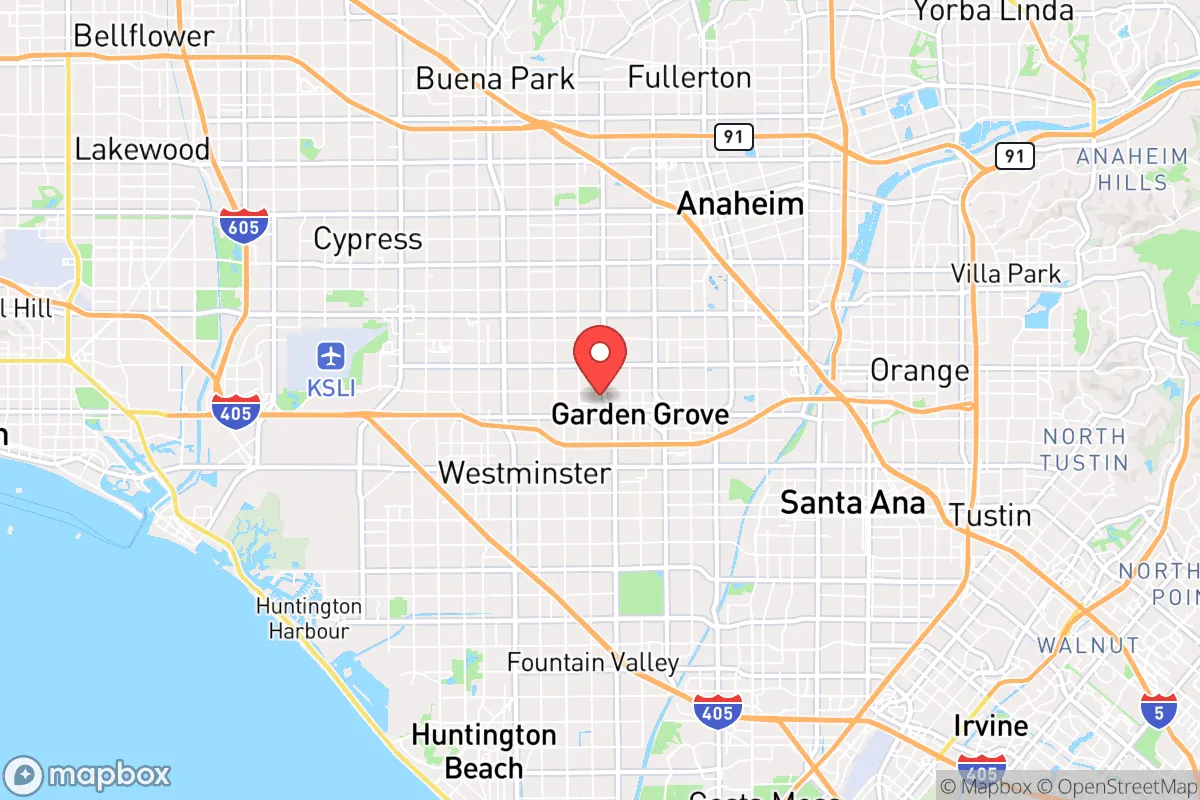
District shown is the primary district for this city’s centroid. Cities may span multiple districts.
Local Political AnalysisPolitical Analysis of Garden Grove, CA
Garden Grove, California, sits in a politically tricky spot these days. Its Cook PVI of D+1 tells you it’s a true swing district, but if you’ve lived here as long as I have, you know that label masks a slow, steady shift leftward that’s been picking up steam since the early 2010s. The city was once a reliable conservative stronghold in Orange County, with a strong base of veterans, small business owners, and Vietnamese-American families who fled communism and valued personal liberty above all else. Today, that old guard is being outnumbered by younger transplants and renters who seem more comfortable with bigger government and progressive social experiments. The trajectory is clear: Garden Grove is trending bluer, and not because folks here suddenly love higher taxes or new regulations on their property.
How it compares
To really feel the shift, you only need to look a few miles in any direction. Drive north to Westminster or Fountain Valley, and you’ll find communities that still lean more conservative, with older populations and a stronger small-business culture that pushes back on new mandates. Head south to Santa Ana, and you’re in a deep-blue stronghold where progressive policies on housing and policing have been fully embraced. Garden Grove sits right in the middle, but it’s losing its balance. The city council has seen a noticeable tilt toward left-leaning candidates in recent cycles, and ballot measures on rent control and homeless services have passed with increasing margins. Compare that to nearby Huntington Beach, which has become a vocal conservative holdout on issues like mask mandates and sanctuary policies, and you see the contrast: Garden Grove is quietly following the regional trend toward government expansion, not resisting it.
What this means for residents
For those of us who value keeping government out of our lives, the changes are real and personal. The push for stricter rent control ordinances means landlords—many of them mom-and-pop owners—are selling off properties, reducing housing supply and making it harder for families to find a place without a bureaucratic approval process. New zoning rules have made it easier to build high-density apartments in single-family neighborhoods, which changes the character of streets that were quiet for decades. And the local school board has started adopting curriculum materials that emphasize social justice themes over core academics, which has some parents worried about what their kids are being taught about personal responsibility and American history. These aren’t hypotheticals; they’re policies that directly affect your property rights, your children’s education, and your ability to run a business without a stack of new permits.
Culturally, Garden Grove still holds onto some of its old identity. The annual Strawberry Festival remains a beloved tradition, and the Korean and Vietnamese business districts along Garden Grove Boulevard are thriving with family-run shops that don’t ask for handouts. But the policy direction is unmistakable. The city has embraced “sanctuary” policies that limit cooperation with federal immigration enforcement, which some see as a matter of compassion but others view as a dangerous overstep of local authority. In the long term, if the current trajectory holds, Garden Grove could become another Santa Ana—a place where progressive governance is the norm and the conservative voices that built the community are drowned out by new arrivals who see government as a solution, not a threat. For now, it’s still a place where you can have a real conversation about freedom over a plate of pho, but that window is closing faster than most people realize.

State Political ClimatePolitical Climate in California
State Political AnalysisPolitical Environment in the State
California is a one-party Democratic state where registered Democrats outnumber Republicans by nearly 2-to-1, and the last Republican presidential candidate to carry the state was George H.W. Bush in 1988. Over the past 20 years, the state has shifted from a competitive purple state—where Arnold Schwarzenegger won a recall election in 2003—to a deep blue stronghold where Democrats now hold every statewide office and supermajorities in both legislative chambers. The shift accelerated after 2016, driven by coastal metro growth and Republican losses in once-competitive suburbs like Orange County and the Inland Empire.
Urban vs. rural divide
The political map of California is a tale of two states. The coastal metros—Los Angeles, San Francisco, San Diego, and San Jose—are the engine of Democratic dominance, delivering margins of 60-85% for Democratic candidates. The Bay Area alone produces more Democratic votes than the entire Central Valley and inland regions combined. In contrast, the interior is heavily Republican: Bakersfield, Fresno, Redding, and the Central Valley reliably vote 55-65% Republican. The most conservative counties are in the far north and the Sierra foothills—Modoc, Lassen, and Siskiyou counties routinely vote 70%+ Republican. The suburbs that once made California competitive have flipped: Orange County, once a national GOP stronghold, voted for Biden by 9 points in 2020, and San Diego County has trended blue since 2016. The only remaining Republican-leaning suburban areas are in Riverside and San Bernardino counties, where growth has been slower and housing more affordable.
Policy environment
California’s policy environment is among the most progressive in the nation, with a state income tax that tops out at 13.3%—the highest in the country—and a sales tax that can exceed 10% in many cities. Property taxes are capped at 1% of assessed value under Proposition 13, but annual increases and transfer taxes can still bite. The regulatory posture is aggressive: California has its own environmental review process (CEQA) that can delay or kill housing and infrastructure projects for years. Education policy is dominated by the California Teachers Association, with per-pupil spending around $15,000 but outcomes that rank near the bottom nationally in reading and math. Healthcare is heavily regulated, with a state-run insurance exchange (Covered California) and a recent push toward single-payer that has stalled. Election laws are among the most liberal: universal mail-in voting, same-day registration, and no voter ID requirement. The state also has some of the nation’s strictest gun laws, including an assault weapons ban, a 10-day waiting period, and a “may issue” concealed carry regime that effectively bans carry in most urban counties.
Trajectory & freedom
California is becoming less free by nearly every measure, especially for conservatives. The trajectory is unmistakable: since 2020, the legislature has passed laws restricting parental rights in education (AB 1955, which prohibits schools from notifying parents if a child changes gender identity), expanding abortion access to out-of-state residents (SB 245), and creating a state-funded reparations task force. On gun rights, the state passed SB 2 in 2023, which effectively bans concealed carry in most public places by creating “sensitive places” that cover nearly all urban areas. On speech, the state has criminalized “hate speech” in certain contexts and expanded the definition of harassment. On medical autonomy, California mandated COVID-19 vaccines for schoolchildren (later paused) and maintained mask mandates longer than any other state. Property rights have been eroded by rent control expansions (AB 1482) and a 2024 ballot measure that allows local governments to impose rent control on single-family homes. The only area where freedom has expanded is marijuana legalization, which was approved by voters in 2016.
Civil unrest & political movements
California has been a flashpoint for civil unrest and political movements on both sides. The 2020 George Floyd protests in Los Angeles, San Francisco, and Oakland were among the largest and most destructive in the nation, with looting and arson causing billions in damage. The state’s sanctuary law (SB 54) limits cooperation between local law enforcement and federal immigration authorities, making California a de facto safe haven for illegal immigration. The secession movement—CalExit—has fizzled but still has a small following. On the right, the “Recall Newsom” movement in 2021 gathered 1.7 million signatures and forced a special election, though Newsom survived by a 24-point margin. Election integrity is a live issue: the state’s universal mail-in voting system, implemented permanently after 2020, has been criticized for lax signature verification and the counting of ballots received up to 7 days after Election Day. Visible flashpoints include homeless encampments in San Francisco and Los Angeles, which have become political symbols of failed progressive governance, and the ongoing crisis of fentanyl overdoses in San Diego and the Central Valley.
Projection
Over the next 5-10 years, California will likely become more Democratic and more progressive, driven by continued in-migration from abroad and out-migration of conservatives to Texas, Arizona, and Idaho. The state’s population has actually declined since 2020—losing about 500,000 residents—but the people leaving are disproportionately Republican-leaning, while new arrivals from Asia and Latin America tend to vote Democratic. The state’s electoral college votes will remain safely blue, but the real action will be in local races: expect more progressive prosecutors, school board members, and city councilors in coastal cities, while inland areas like Bakersfield and Redding become even more conservative. The most likely scenario is that California continues to pass laws that expand government control over housing, healthcare, and education, while the cost of living drives out the middle class. A new resident moving in now should expect to pay higher taxes, deal with more regulation, and live in a state where conservative views are increasingly marginalized in public life.
Bottom line for a new resident: If you value low taxes, gun rights, parental control over education, and a government that stays out of your life, California is a tough place to call home. The state’s political trajectory is firmly toward more government intervention, not less. You’ll find like-minded communities in the Central Valley, the far north, and parts of the Inland Empire, but you’ll be swimming against a powerful blue tide. If you’re moving here for a job or family, be prepared to pay a premium for freedom—and to fight for the rights you take for granted elsewhere.
* Values derived from national, state, county, city and local statistics and may differ in a specific area. Last updated: 2026-04-24T07:53:42.000Z
Narrative content on this page is AI-generated and may contain mistakes. Verify any details that matter before acting on them.
ReloMaps may earn a commission from affiliate links at no extra cost to you.

