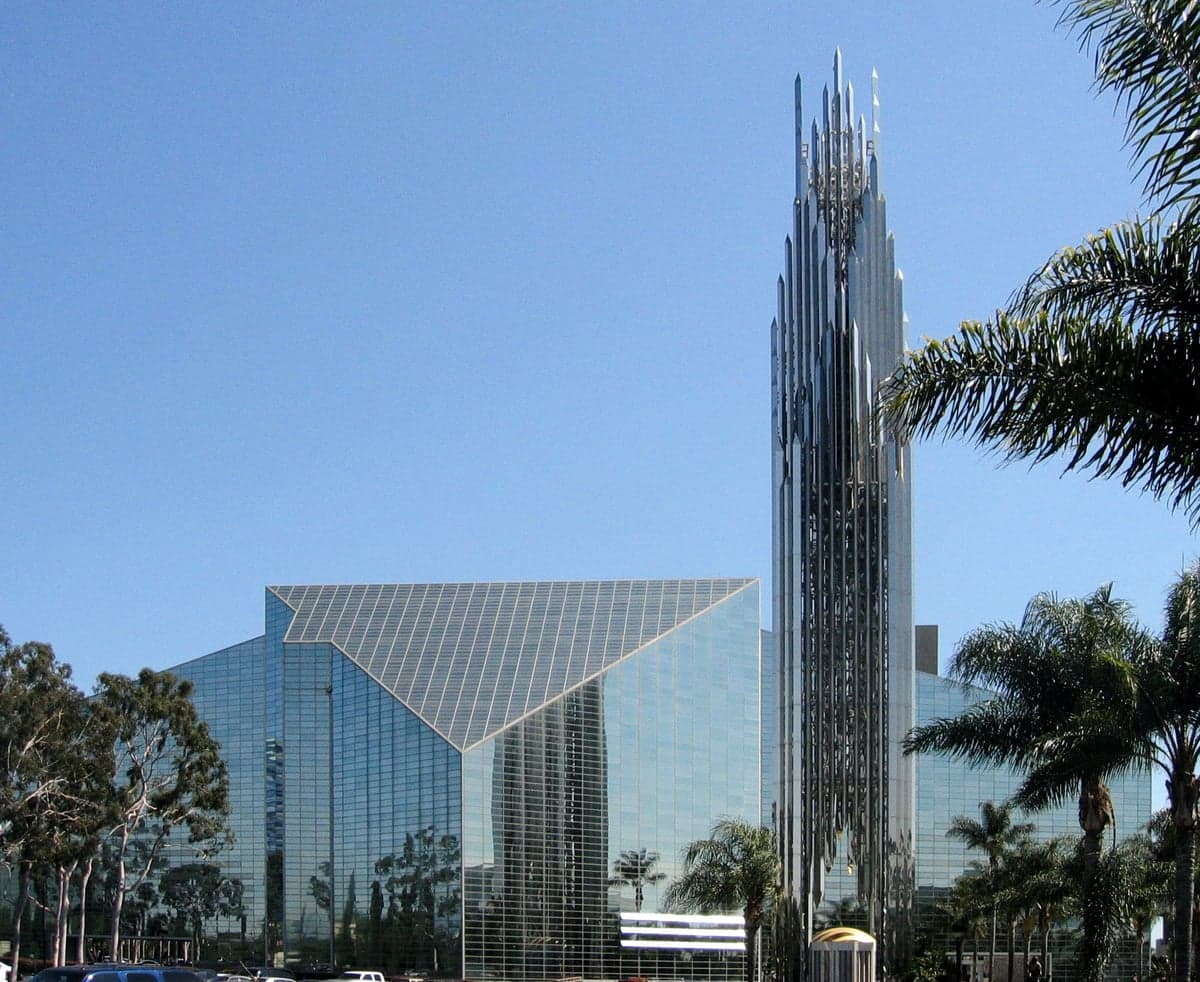
Photo: Wikipedia
Personal Sovereignty in Garden Grove, CA
Moderate friction. Expect trade-offs in some aspect of personal liberty and independence.
What does Personal Sovereignty tell us?
Personal Sovereignty measures your capacity for self-reliance and independence with minimal government friction. Higher scores mean fewer barriers between you and the way you want to live... but it assumes you have the space you need and good neighbors.
What does this tell us?
Personal Sovereignty measures your capacity for self-reliance and independence with minimal government friction. Higher scores mean fewer barriers between you and the way you want to live... but it assumes you have the space you need and good neighbors.
State Policy
Energy independence: Importer (33% of energy produced in-state)
Personal Liberty
Homesteading

Personal Liberty Analysis
Garden Grove, California, presents a complex and often contradictory environment for personal sovereignty, where the state's expansive regulatory framework and high tax burden significantly constrain individual autonomy, yet the city's dense, suburban layout and proximity to diverse economic opportunities offer a degree of practical self-reliance for those willing to navigate the system. For a conservative-leaning individual or family prioritizing freedom from government overreach, this Orange County city demands a clear-eyed assessment: the state-level political climate imposes heavy costs on self-determination, but local conditions can be managed with strategic planning. The overarching reality is that California’s progressive governance—from tax policy to gun control—creates a baseline of reduced sovereignty compared to states like Texas or Arizona, but Garden Grove’s specific mix of zoning, community resources, and economic activity allows for a measured, if constrained, pursuit of autonomy.
Tax burden and regulatory posture in California and Orange County
The tax and regulatory environment in Garden Grove is a direct reflection of California’s state-level policies, which rank among the most restrictive in the nation for personal and economic freedom. The state’s progressive income tax tops out at 13.3% for high earners, and the sales tax in Garden Grove is 7.75%, with additional local assessments pushing effective rates higher. Property taxes, while capped at 1% of assessed value under Proposition 13, are based on purchase price, meaning long-term homeowners face lower burdens than new buyers—a critical factor for relocation timing. Regulatory costs are pervasive: California’s strict environmental laws (CEQA), labor mandates (e.g., AB 5 for independent contractors), and energy codes (Title 24) add layers of compliance that can stifle small business startups and home-based enterprises. For a prepper or survivalist, this means any attempt at self-sufficiency—like running a small farm, a home workshop, or a side business—faces bureaucratic hurdles and fees that would be minimal in freer states. The state’s gasoline tax is among the highest in the U.S. (currently over $0.60 per gallon), directly impacting transportation costs and supply chain resilience. While Orange County’s local governance is more business-friendly than Los Angeles or San Francisco, the state’s regulatory tentacles reach deep, making Garden Grove a location where personal sovereignty is constantly negotiated against a powerful government apparatus.
Self-defense and gun law specifics in California
California’s gun laws are among the most restrictive in the country, and Garden Grove residents must comply with a dense web of state-level regulations that severely limit the right to keep and bear arms. The state requires a 10-day waiting period for all firearm purchases, a background check through the California Department of Justice, and a Firearm Safety Certificate. Assault weapons are banned by name and feature, and magazines are capped at 10 rounds. The state’s “may-issue” concealed carry permit system was effectively replaced by a “shall-issue” framework after the Bruen decision, but Orange County’s sheriff has historically been more permissive than coastal counties—though applicants still face a rigorous process including training, interviews, and fees. For a prepper, this means building a defensive arsenal is expensive, time-consuming, and legally constrained. Self-defense in the home is legally protected under the Castle Doctrine, but there is no “stand your ground” law; a duty to retreat applies in public spaces. Ammunition purchases are tracked, and online sales are restricted. The practical takeaway: Garden Grove is not a location for those who view firearms as a primary pillar of personal sovereignty. The state’s regulatory posture treats gun ownership as a heavily managed privilege, not a right, and any survivalist strategy must account for these limitations—perhaps by focusing on less-regulated tools like knives, physical security systems, and community networks.
Self-reliance and homesteading viability in a dense suburban setting
Garden Grove’s urban density and zoning laws make traditional homesteading—raising livestock, growing substantial food, or living off-grid—nearly impossible, but creative self-reliance is still achievable within tight constraints. The typical single-family lot in Garden Grove is 6,000 to 7,000 square feet, with many homes on smaller parcels. Zoning codes restrict livestock to chickens (hens only, no roosters) and limit the number of structures. Backyard gardening is feasible, with many residents growing vegetables, herbs, and fruit trees, but the Mediterranean climate requires significant water use—a vulnerability in drought-prone California. Off-grid living is effectively illegal: all homes must connect to municipal water, sewer, and electricity, and solar panel installation requires permits and grid interconnection. Rainwater harvesting is allowed but regulated. For a prepper, the focus shifts to urban homesteading: maximizing small spaces with vertical gardening, food preservation (canning, dehydrating), and building a deep pantry. The city’s proximity to the Port of Long Beach and Los Angeles means access to bulk goods and emergency supplies, but reliance on supply chains is high. The average lot size and zoning restrictions mean that true self-sufficiency in food or energy is not realistic; instead, residents must prioritize financial resilience, skill-building, and community mutual aid networks to compensate for the lack of land-based autonomy.
Personal liberties in practice: parental rights, medical autonomy, speech, and property
California’s progressive policies significantly impact personal liberties in Garden Grove, particularly in areas of parental rights and medical autonomy, while free speech and property rights face more nuanced constraints. On parental rights, California law grants minors the right to consent to certain medical treatments (including mental health and reproductive care) without parental notification, and schools are prohibited from requiring parental disclosure of a student’s gender identity. This creates a direct conflict for conservative parents who view family authority as paramount. Medical autonomy is similarly constrained: vaccine mandates for school attendance (though currently relaxed) and strict public health orders during emergencies (as seen with COVID-19) demonstrate the state’s willingness to override individual choice. Free speech is protected under the First Amendment, but California’s “hate speech” laws and workplace harassment regulations can chill expression, particularly on controversial topics. Property rights are heavily regulated: zoning, rent control (statewide caps on annual rent increases), and environmental restrictions limit what owners can do with their land. For a survivalist, the key concern is the erosion of parental authority and the potential for government overreach during crises. The state’s emergency powers are broad, and Garden Grove’s local government has shown willingness to enforce state mandates. Property taxes, while capped, can still rise with reassessment upon sale, creating a long-term financial anchor. The overall picture is one of reduced personal sovereignty compared to states with stronger protections for family autonomy, medical choice, and property use.
In the broader context of relocation options for those prioritizing personal sovereignty, Garden Grove represents a trade-off: it offers the economic and logistical advantages of Southern California—diverse job markets, international access, and a large, like-minded conservative community in Orange County—but at the cost of living under one of the most interventionist state governments in the Union. For a prepper or survivalist, the city’s dense, regulated environment forces a shift from land-based self-reliance to financial and skill-based resilience, with a constant awareness that state-level policies can override local autonomy. Compared to states like Idaho, Montana, or Texas, Garden Grove scores low on metrics of personal freedom—tax burden, gun rights, parental control, and regulatory simplicity. However, for those who must remain in California for family or career reasons, the city’s suburban infrastructure, access to emergency services, and community networks offer a platform for a measured, defensive approach to sovereignty. The bottom line: Garden Grove is a location for strategic adaptation, not liberation, where personal autonomy must be actively defended against a powerful state apparatus.

* Values derived from national, state, county, city and local statistics and may differ in a specific area. Last updated: 2026-04-24T07:53:42.000Z
Narrative content on this page is AI-generated and may contain mistakes. Verify any details that matter before acting on them.
ReloMaps may earn a commission from affiliate links at no extra cost to you.

