 Popular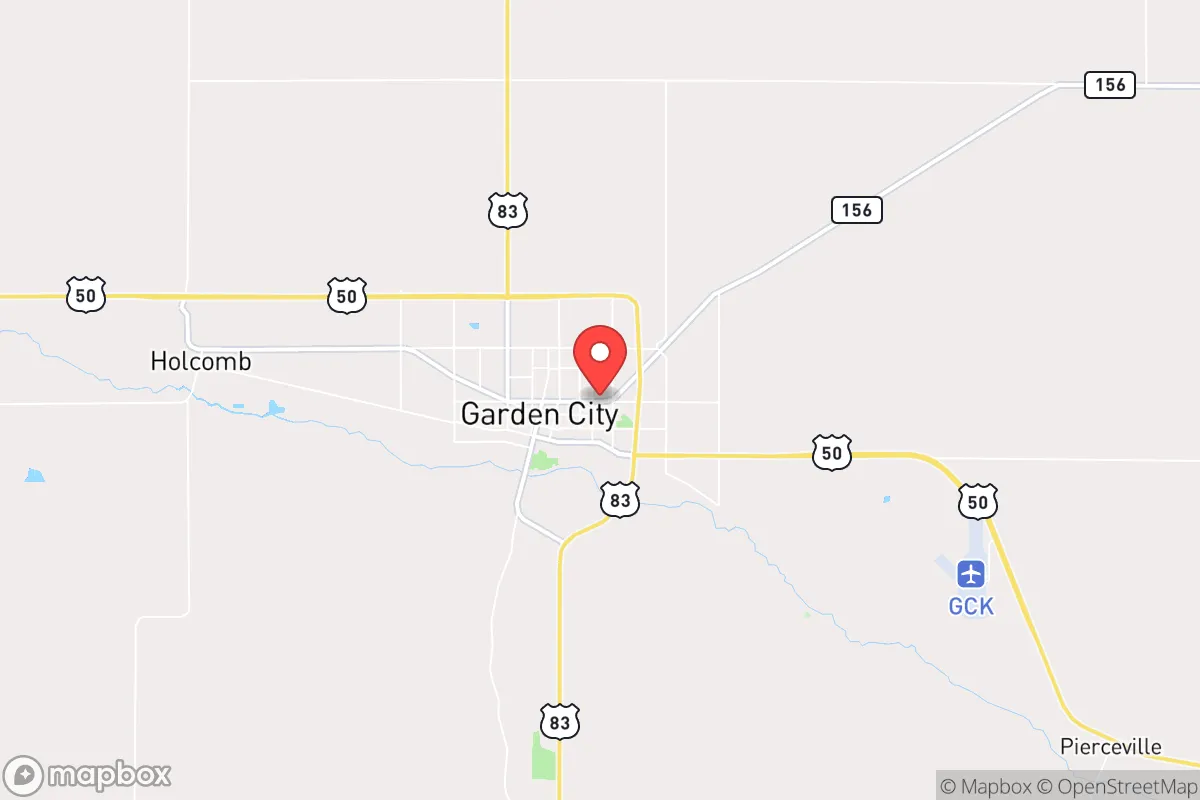
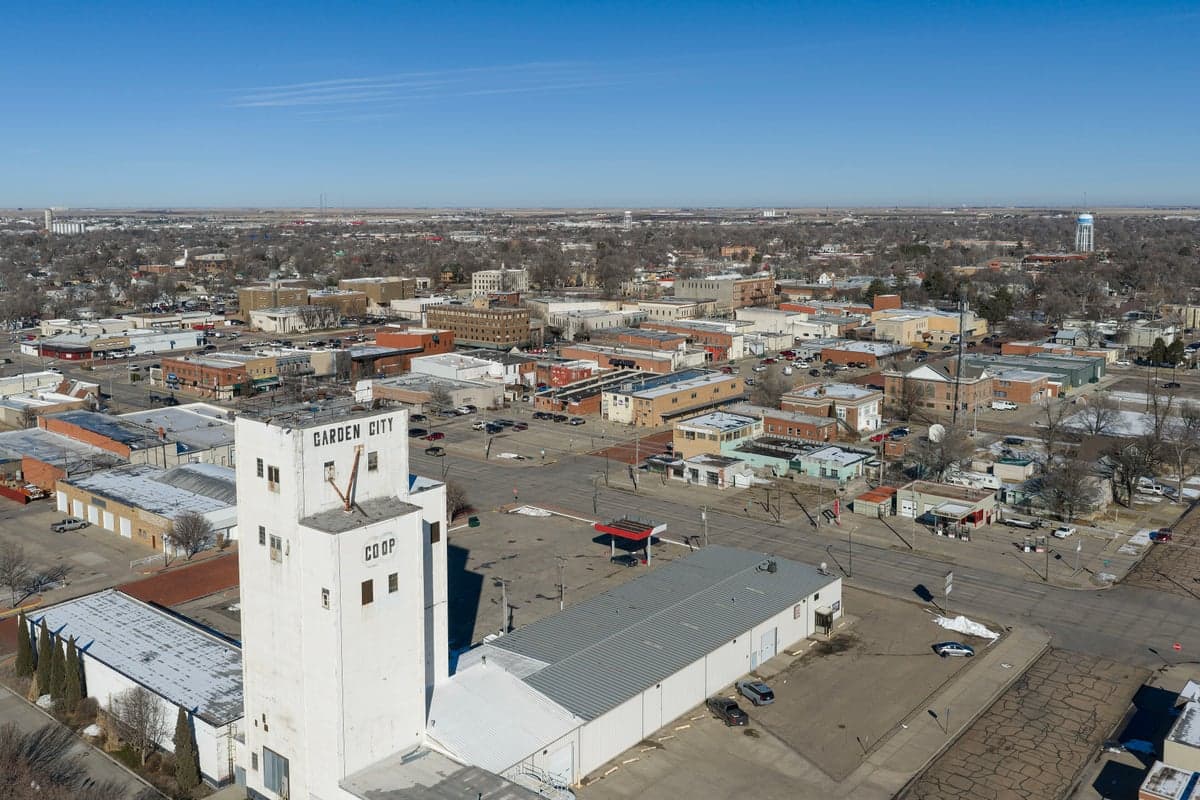
Photo: Wikipedia
Strategic Assessment of Garden City, KS
Workable tactical position. Some exposure to population density or targets, but generally defensible in a crisis.
What does the Strategic Assessment tell us?
Our Strategic Assessment grades tactical survivability of an area. Major population centers, military targets, fallout zones, natural disasters, and border exposure all drive risk — lower exposure means a more defensible position in a crisis.
This is heavily inspired by Joel Skousen's Strategic Relocation book. Highly recommended you checkout the book ($)What does this tell us?
Our Strategic Assessment grades tactical survivability of an area. Major population centers, military targets, fallout zones, natural disasters, and border exposure all drive risk — lower exposure means a more defensible position in a crisis.
This is heavily inspired by Joel Skousen's Strategic Relocation book. Highly recommended you checkout the book ($)Strategic Pillars

Key Distances
Regional Safe Places
Below is our recommended "safe zones" in Kansas and the surrounding area based on our strategic heuristics. For most people, it's unrealistic to live in a “safe zone” full-time due to work, family or other personal reasons. They tend to be more rural. However, many of these areas are perfect for second homes and retreat properties that double as a vacation home or even a short-term rental.
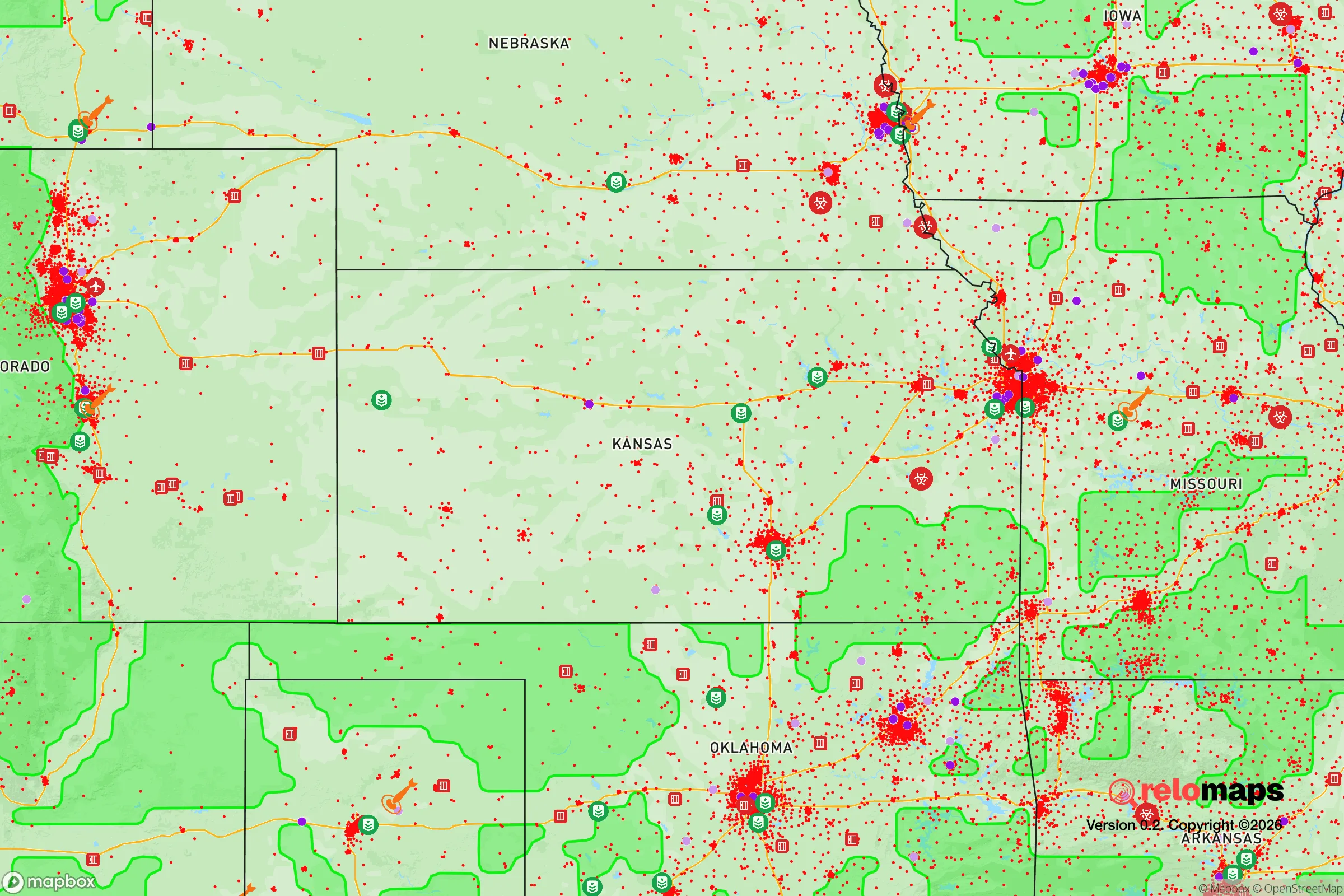
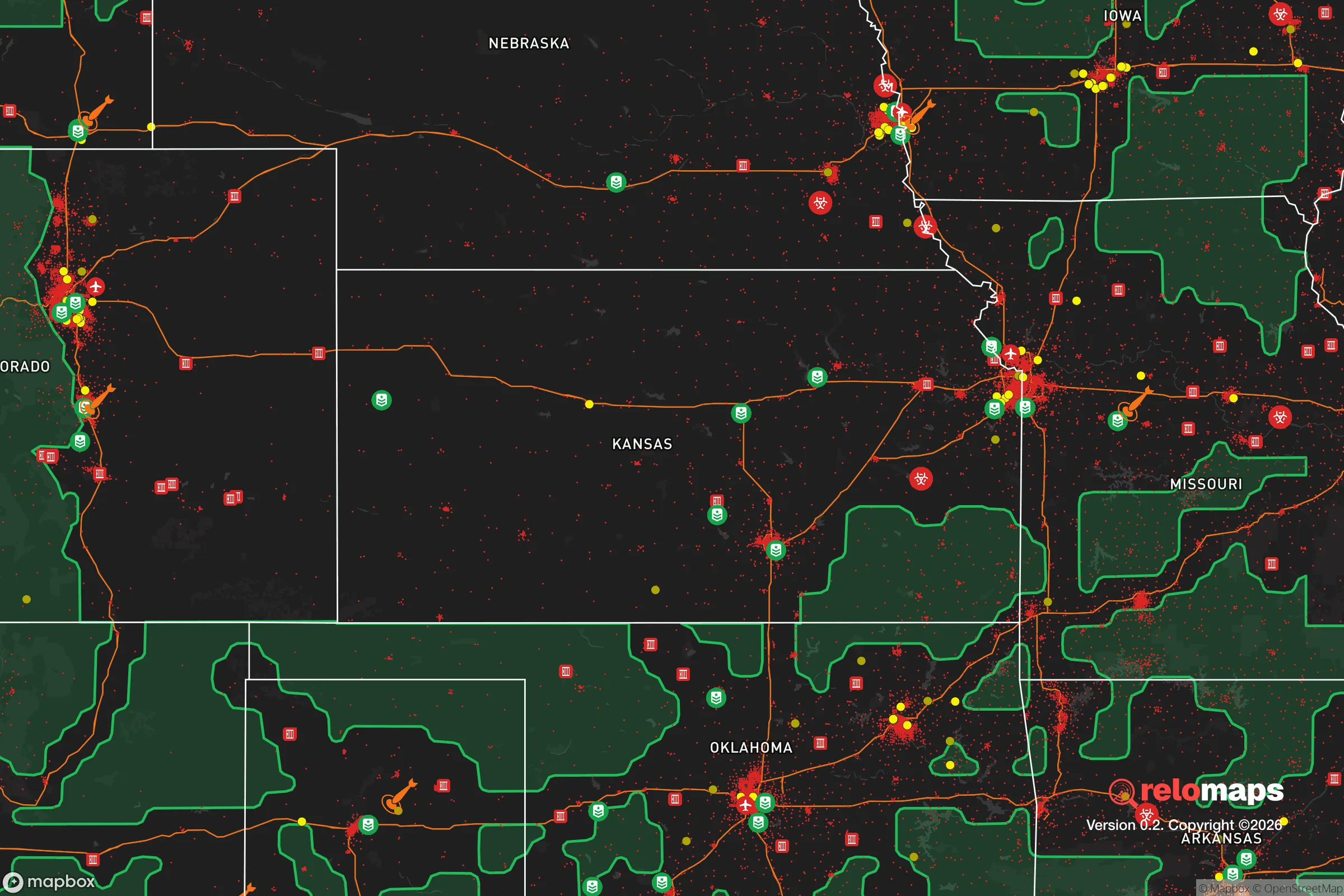


Important Note: For informational purposes only. This does not mean nothing bad ever happens in the green zones. Please use common sense. This is based on public data and modeled with AI. We tried to take a conservative approach but mistakes happen. We update this regularly as new information becomes available.
Solar Generator Recommendations
Backup power matters more here than in safer locations. We've picked three solar generators across budgets and capacity tiers — start with the budget unit if you only need a few essentials, or step up if you want to run a fridge and HVAC for days at a time.

Jackery Portable Power Station Explorer 300
Budget OptionPower on the Go: Weighing only 11 lbs, it's convenient to set up and store with book-sized foldable solar panels

BLUETTI Portable Power Station AC180
Designed for both indoor and outdoor scenarios, AC180 is highly capable as it has a robost capacity and continuous output power.

EF ECOFLOW DELTA Pro Ultra Power Station
Upgraded PickEcoFlow DELTA Pro Ultra is a whole-home energy system designed to grow with your family. Integrated with the Smart Home Panel 2, it scales to meet your evolving energy needs — keeping your home powered, intelligent, and secure through every stage of life.
We earn a commission, at no additional cost to you.
Strategic Assessment Analysis
Garden City, Kansas, sits in the southwestern corner of the state, roughly 200 miles from any major metropolitan area, which is its single greatest strategic asset for a prepper or survivalist. This isolation, combined with a robust agricultural economy and a surprisingly resilient local infrastructure, makes it a serious contender for relocation if your primary concern is riding out civil unrest, supply chain collapse, or a mass casualty event. The area’s position in the High Plains aquifer region and its status as a regional trade hub for a multi-county area mean it has a level of self-sufficiency that most small towns in flyover country simply don’t possess.
Geographic isolation and natural resource advantages for long-term survival
Garden City’s location is defined by distance. It is over 200 miles from Denver, Wichita, and Oklahoma City, placing it well outside the immediate chaos radius of any major urban collapse. The surrounding landscape is flat, open, and sparsely populated—Finney County has about 38,000 people, and the next county over, Gray County, has fewer than 6,000. This low population density means fewer desperate people competing for resources in a crisis. The area sits atop the Ogallala Aquifer, one of the largest freshwater aquifers in the world, which is the lifeblood of the region’s massive irrigation-based agriculture. For a relocator, this means local water is not a question of municipal supply but of well depth and pumping capacity. The Arkansas River also runs through town, though it’s often dry or reduced; the real water story is underground. The climate is semi-arid, with hot summers and cold, windy winters, but the growing season (about 170 days) is long enough for serious gardening if you can manage irrigation. The flat terrain is a double-edged sword: it offers excellent visibility and long-range lines of sight for security, but provides zero natural cover or defensible terrain. You are not hiding here; you are relying on distance and low population to be your shield.
Risks, exposures, and proximity to fallout-relevant infrastructure
While Garden City is far from major cities, it is not a blank slate. The most significant risk is its proximity to the Holcomb nuclear power plant, located just 10 miles west of town. This is a single-unit pressurized water reactor that came online in 1984. In a worst-case scenario—a major earthquake (unlikely here), a terrorist attack, or a catastrophic failure—you are within the plume exposure pathway. The plant’s emergency planning zone extends 10 miles, meaning Garden City itself is on the edge of the most dangerous zone. For a prepper, this is a non-negotiable negative. You need to know the evacuation routes and have a plan to be 30+ miles upwind (generally north or east) within hours of any alert. Beyond the nuke plant, the area is a major rail and highway junction (US-50, US-83, and US-400 converge here), which in a crisis could become a funnel for refugees or looters moving through the region. The town also has a large meatpacking plant (Tyson Foods) and a major beef processing facility (Cargill), which are critical infrastructure for food supply but also potential targets for sabotage or civil unrest. The local airport (Garden City Regional) is small but could be a vector for evacuation or resupply. There are no major military bases within 100 miles, which is a positive—you are not near a likely target for a first strike or a staging area for martial law enforcement.
Practical resilience for a relocator: food, water, energy, and defensibility
For a serious prepper, Garden City offers a rare combination of immediate food security and long-term water access. The local economy is built on agriculture—wheat, corn, sorghum, and cattle. You can buy a small acreage (5-20 acres) within 15 minutes of town for a fraction of what it costs in Colorado or the Front Range. Many of these properties already have irrigation wells or access to groundwater rights. The local farm supply stores (e.g., Farm & Ranch, Co-op) stock everything from seed to fencing to diesel generators. Energy is a mixed bag: the grid is served by Sunflower Electric Power Corporation, which relies heavily on coal and natural gas. In a prolonged grid-down scenario, you will need your own solar, wind, or propane backup. The area is windy enough for small-scale wind turbines, and solar insolation is good (about 5.5 peak sun hours per day). Defensibility is poor in the traditional sense—no hills, no forests, no chokepoints. But the low population density and the sheer distance from urban centers are your real defense. A well-stocked rural property with a good well, a garden, and a few like-minded neighbors can be effectively invisible to the chaos that will consume the cities. The local gun culture is strong; you will not be an outlier for owning firearms or storing supplies. The county sheriff’s office is professional but small (about 40 deputies for the whole county), so you cannot rely on them for protection in a widespread event. You are your own first responder here.
The overall strategic picture for Garden City is one of trade-offs. You gain extreme geographic isolation, abundant water and food production capacity, and a low-cost, low-regulation environment that is friendly to self-reliance. You accept the risk of being within 10 miles of a nuclear power plant, the lack of natural defensive terrain, and the reality that you are in a flat, exposed region where any organized threat could see you coming from miles away. For a single individual or a family who wants to be far from the chaos of the coasts and the big cities, who is willing to invest in their own water, power, and food systems, and who understands that preparedness here means building community with a few trusted neighbors rather than hiding in a bunker, Garden City is a strong candidate. It is not a bug-out location for a weekend; it is a place to build a life that is inherently resilient because the land and the people are already wired for self-sufficiency. If you can handle the wind, the isolation, and the nuclear plant risk, this is one of the better bets in the central United States for riding out the storm.

* Values derived from national, state, county, city and local statistics and may differ in a specific area. Last updated: 2026-04-30T04:39:56.000Z
Narrative content on this page is AI-generated and may contain mistakes. Verify any details that matter before acting on them.
ReloMaps may earn a commission from affiliate links at no extra cost to you.

