 Popular
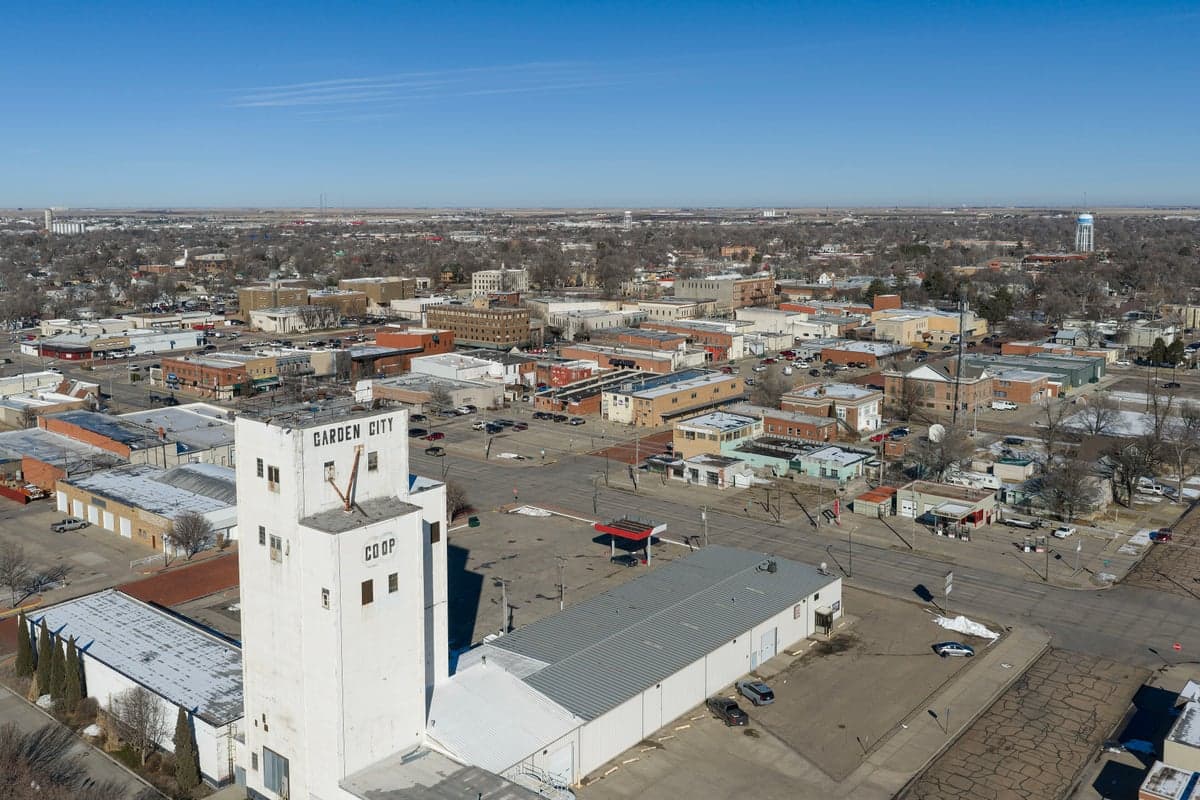
Photo: Wikipedia
Political ClimatePolitical Climate in Garden City, KS
District shown is the primary district for this city’s centroid. Cities may span multiple districts.
Local Political AnalysisPolitical Analysis of Garden City, KS
Garden City, Kansas, is about as reliably conservative as they come, with a Cook PVI of R+16 that tells you pretty much everything you need to know about the local voting patterns. This place has been a Republican stronghold for decades, and while the national winds have shifted a bit, the core here has stayed steady. You'll find that the local elections, county commissions, and school boards all tend to lean heavily toward limited government and traditional values, which is a big part of why a lot of folks moved here or stayed put in the first place. The trajectory, honestly, is a bit of a mixed bag—there's a quiet but persistent push from some newer residents and younger folks who want to see more progressive policies, but the old guard still holds the line pretty firmly.
How it compares
If you drive an hour east to Dodge City, you'll find a similar conservative vibe, though maybe a bit more influenced by the agricultural and energy industries. Head west to Liberal, and it's much the same—solid red, with a focus on local control and low taxes. The real contrast comes when you look at places like Lawrence or Kansas City, where the politics are a whole different animal. Those areas are where you see the kind of government overreach that makes folks here nervous—things like heavy-handed zoning, strict environmental regulations that hurt small businesses, and a general attitude that the state knows better than the people. Garden City, by contrast, still values the idea that you should be able to run your own life without a bureaucrat looking over your shoulder. The surrounding Finney County is also deeply conservative, so there's no real urban-rural split here like you see in other parts of the state.
What this means for residents
For the people living here, the political climate means a few concrete things. First, taxes stay relatively low, and there's a general resistance to new fees or regulations that might crimp your personal freedom. You won't see the kind of overreaching mask mandates or business shutdowns that became common in blue areas during the pandemic—local leaders here trusted people to make their own choices. Second, the school system tends to focus on basics and local control, not pushing a national agenda. That said, there's a growing concern among long-time residents about the slow creep of progressive ideas, especially in the local media and some civic groups. The worry is that if we're not careful, we could end up with the same kind of top-down nonsense that's ruining places like Denver or Austin. So far, though, the community has been pretty good at pushing back.
One thing that sets Garden City apart is its strong sense of self-reliance and a deep distrust of federal overreach. You'll hear folks talk about the Second Amendment not as a talking point, but as a practical right they exercise regularly. There's also a notable cultural distinction in how the community handles immigration—it's a major agricultural hub with a large Hispanic population, and while there's a practical, live-and-let-live attitude on the ground, the politics around it still lean toward border security and rule of law. The long-term outlook is a bit uncertain, as the younger generation gets more exposed to national trends through social media and college, but for now, Garden City remains a place where conservative values aren't just a label—they're how people actually live their lives.

State Political ClimatePolitical Climate in Kansas
State Political AnalysisPolitical Environment in the State
Kansas has long been a reliably red state in presidential elections, voting Republican in every contest since 1968, but its internal politics are far more nuanced than that streak suggests. The dominant coalition is a mix of rural conservatives, suburban moderates, and a growing libertarian-leaning wing, though a persistent progressive minority in the eastern metros keeps the state from being a lock for the GOP in statewide races. Over the last 20 years, the state has swung from a moderate Republican stronghold under governors like Kathleen Sebelius to a more conservative posture under Sam Brownback’s tax experiment, then back to a divided government under Democrat Laura Kelly, leaving the state in a tug-of-war between fiscal restraint and social conservatism.
Urban vs. rural divide
The political map of Kansas is a textbook study in the urban-rural split. The eastern third of the state, anchored by Kansas City (Wyandotte County) and Lawrence (Douglas County), is the Democratic stronghold, with Johnson County (Overland Park, Olathe) trending purple as suburbanites drift left on social issues. In 2020, Johnson County voted for Joe Biden by a narrow margin, a seismic shift from its 20-point Republican lean in 2000. Meanwhile, the vast rural expanse—places like Garden City, Dodge City, and Hays—votes heavily Republican, often by 70-80% margins. The Wichita metro (Sedgwick County) is a bellwether: it went for Trump in 2020 but by a much smaller margin than in 2016, reflecting the suburbanization of its outskirts like Andover and Derby. The real action is in the exurbs—Gardner and Spring Hill in Johnson County are growing fast and remain reliably red, but their voters are more focused on low taxes and school choice than culture war issues.
Policy environment
Kansas’s policy environment is a mixed bag for a conservative. On the plus side, the state has no income tax on Social Security benefits and a flat income tax rate of 5.7% after the 2024 tax cuts, which phased out the previous three-bracket system. Property taxes are moderate but vary wildly by county—Johnson County’s rates are higher due to school funding demands, while rural counties like Sherman County are much lower. The state is a right-to-work state, and its regulatory posture is generally business-friendly, with no state-level minimum wage above the federal $7.25. However, the Brownback-era tax cuts (2012) were largely reversed in 2017 after budget crises, leaving a lingering distrust of aggressive tax experiments. On education, Kansas has a robust school choice landscape—the Tax Credit for Low-Income Students Scholarship Program allows donations to private school scholarships, and homeschooling is lightly regulated. Healthcare is a sore spot: the state rejected Medicaid expansion, but a 2024 legislative push to allow direct primary care contracts and health sharing ministries has gained traction. Election laws are solid—voter ID is required, and the state has a clean voter roll maintenance program that survived a 2024 court challenge.
Trajectory & freedom
Kansas is in a strange place on freedom: it’s expanding in some areas and contracting in others. On the positive side, the 2024 Second Amendment Preservation Act reaffirmed that state law preempts local gun ordinances, preventing cities like Lawrence from enacting their own bans. Constitutional carry has been law since 2015, and the state has a strong castle doctrine. Parental rights got a boost with the 2023 Parents’ Bill of Rights, which requires school districts to notify parents of curriculum changes and allows them to opt their kids out of sex ed. Medical freedom saw a win with the 2024 Medical Freedom Act, which prohibits vaccine mandates for state employees and contractors. But there are red flags: the state’s tax burden, while improved, is still higher than neighboring Oklahoma or Missouri, and the 2023 expansion of the state’s anti-discrimination law to include sexual orientation and gender identity in housing and employment—while popular with corporations—worries conservatives about government overreach into private business decisions. The biggest concern is the creeping influence of federal dollars: Kansas accepted billions in COVID-era aid, and the strings attached have led to more state oversight of local health departments.
Civil unrest & political movements
Kansas has seen its share of political flashpoints, but they’re more localized than in coastal states. The most visible movement is the anti-abortion activism around Wichita, home to the late Dr. George Tiller’s clinic, which was the site of protests and violence in the 1990s and early 2000s. Today, the state has a near-total abortion ban (the 2022 “Value Them Both” amendment was rejected by voters, but the legislature passed a ban anyway, currently tied up in court). Immigration politics are hot in western Kansas: Garden City and Dodge City have large meatpacking plant workforces, and local law enforcement has resisted becoming de facto ICE agents, leading to tension with the state’s 2024 law requiring cooperation with federal immigration authorities. Election integrity controversies flared in 2022 when the state’s top election official, a Republican, was sued for purging voter rolls too aggressively—a move conservatives saw as necessary but that drew ACLU lawsuits. The most visible protest in recent memory was the 2023 “Parents’ Rights” rally at the state capitol in Topeka, which drew thousands opposing critical race theory and LGBTQ curriculum in schools. On the left, the 2020 George Floyd protests in Kansas City and Lawrence saw property damage but were smaller than in larger metros.
Projection
Over the next 5-10 years, Kansas is likely to become more politically divided, not less. The in-migration pattern is key: people moving to Kansas are coming from California, Colorado, and Illinois, and they’re settling in Johnson County and the Kansas City suburbs. These newcomers tend to be fiscally conservative but socially moderate or liberal, which is already shifting Johnson County from red to purple. Meanwhile, the rural population is aging and shrinking, meaning the state’s political center of gravity is moving eastward. The state legislature will likely remain Republican-controlled due to gerrymandering, but the governor’s race will be a toss-up every cycle. The biggest wildcard is the state’s budget: if the 2024 tax cuts lead to revenue shortfalls, expect a repeat of the Brownback-era battles, with moderates pushing for tax hikes and conservatives holding the line. On social issues, expect continued fights over abortion, transgender rights, and school curriculum, with the legislature passing bills that the governor vetoes and the courts eventually decide. For a conservative moving in now, the state will feel familiar for the next decade, but the cultural drift in the suburbs is real—what was a safe Republican vote in 2000 is now a swing district.
For a new resident, the bottom line is this: Kansas offers a low-cost, family-friendly environment with strong gun rights and school choice, but you need to pick your county carefully. If you want a reliably conservative community, look at the exurbs of Olathe or Gardner, or small towns like Hays or McPherson. If you move to Lawrence or Kansas City, you’ll be in a blue bubble with higher taxes and more progressive policies. The state’s political trajectory is toward a more divided, suburban-driven politics, but the core conservative values of low regulation and personal liberty remain intact—for now. Keep an eye on the 2026 governor’s race and the court battles over abortion and education; those will tell you which direction the state is really heading.
* Values derived from national, state, county, city and local statistics and may differ in a specific area. Last updated: 2026-04-30T04:39:56.000Z
Narrative content on this page is AI-generated and may contain mistakes. Verify any details that matter before acting on them.
ReloMaps may earn a commission from affiliate links at no extra cost to you.

