Photo: Wikipedia
Strategic Assessment of Garden City, ID
Workable tactical position. Some exposure to population density or targets, but generally defensible in a crisis.
What does the Strategic Assessment tell us?
Our Strategic Assessment grades tactical survivability of an area. Major population centers, military targets, fallout zones, natural disasters, and border exposure all drive risk — lower exposure means a more defensible position in a crisis.
This is heavily inspired by Joel Skousen's Strategic Relocation book. Highly recommended you checkout the book ($)What does this tell us?
Our Strategic Assessment grades tactical survivability of an area. Major population centers, military targets, fallout zones, natural disasters, and border exposure all drive risk — lower exposure means a more defensible position in a crisis.
This is heavily inspired by Joel Skousen's Strategic Relocation book. Highly recommended you checkout the book ($)Strategic Pillars

Key Distances
Regional Safe Places
Below is our recommended "safe zones" in Idaho and the surrounding area based on our strategic heuristics. For most people, it's unrealistic to live in a “safe zone” full-time due to work, family or other personal reasons. They tend to be more rural. However, many of these areas are perfect for second homes and retreat properties that double as a vacation home or even a short-term rental.
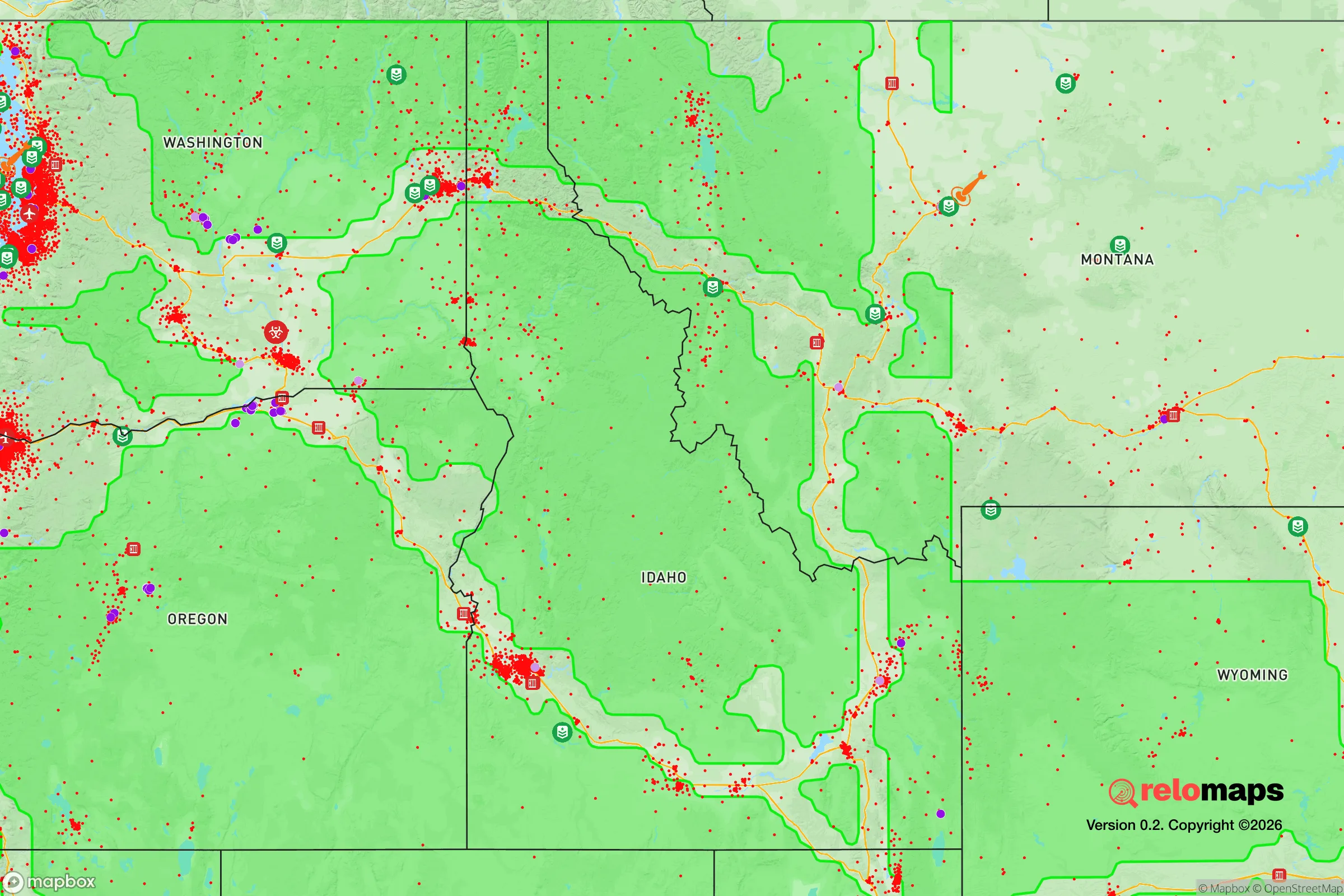
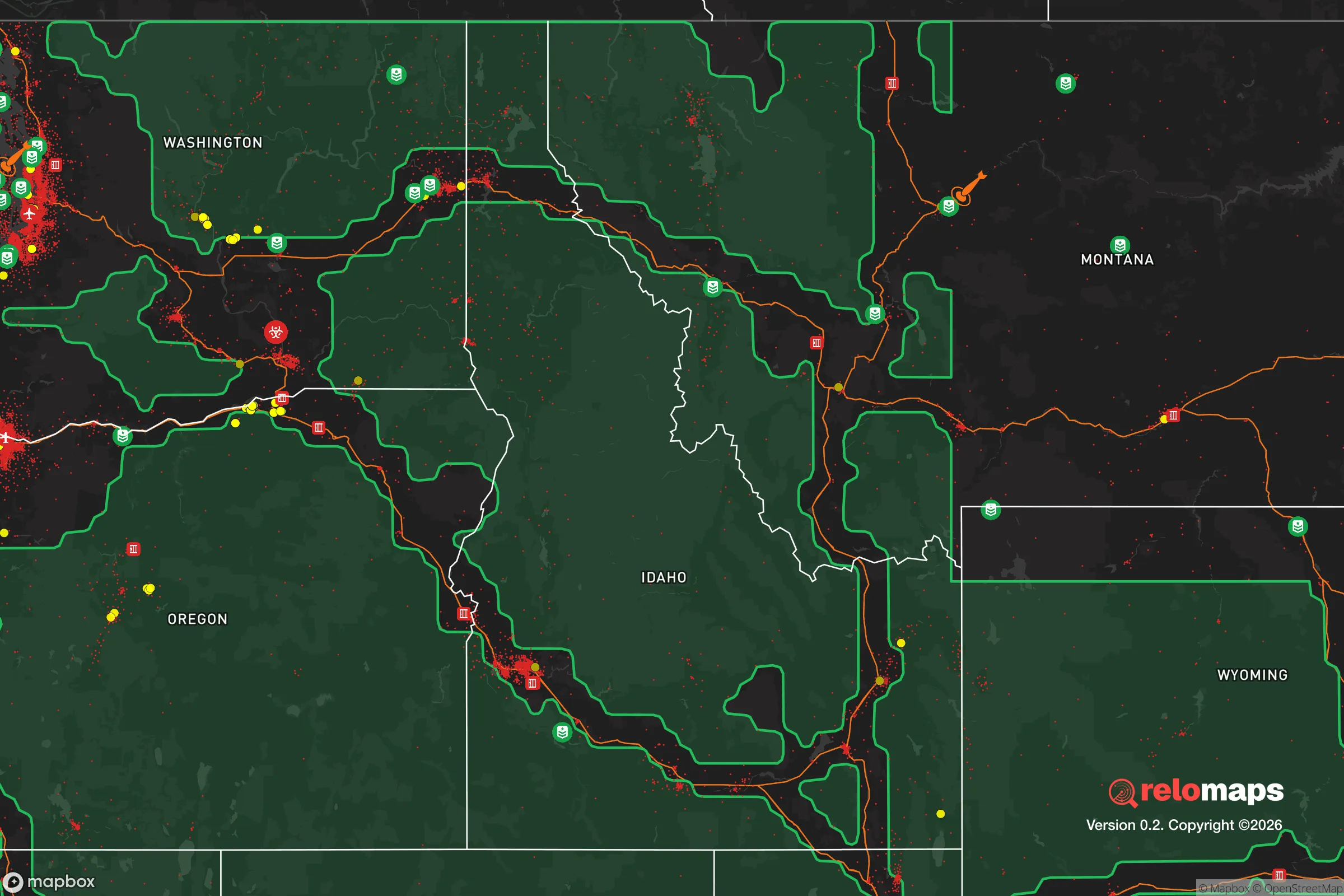


Important Note: For informational purposes only. This does not mean nothing bad ever happens in the green zones. Please use common sense. This is based on public data and modeled with AI. We tried to take a conservative approach but mistakes happen. We update this regularly as new information becomes available.
Solar Generator Recommendations
Backup power matters more here than in safer locations. We've picked three solar generators across budgets and capacity tiers — start with the budget unit if you only need a few essentials, or step up if you want to run a fridge and HVAC for days at a time.

Jackery Portable Power Station Explorer 300
Budget OptionPower on the Go: Weighing only 11 lbs, it's convenient to set up and store with book-sized foldable solar panels

BLUETTI Portable Power Station AC180
Designed for both indoor and outdoor scenarios, AC180 is highly capable as it has a robost capacity and continuous output power.

EF ECOFLOW DELTA Pro Ultra Power Station
Upgraded PickEcoFlow DELTA Pro Ultra is a whole-home energy system designed to grow with your family. Integrated with the Smart Home Panel 2, it scales to meet your evolving energy needs — keeping your home powered, intelligent, and secure through every stage of life.
We earn a commission, at no additional cost to you.
Strategic Assessment Analysis
Garden City, Idaho, presents a nuanced strategic picture for the conservative prepper or survivalist. Its primary advantage is its location within the Boise metro area, which provides immediate access to resources and economic stability, but this very proximity to a major population center is its most significant vulnerability in a collapse scenario. The city’s resilience hinges on leveraging its position as a buffer zone—close enough to benefit from infrastructure, yet far enough from the urban core to offer a viable retreat corridor into the surrounding wilderness. For a relocator prioritizing long-term survivability, Garden City is less a final destination and more a strategic staging ground, requiring a clear-eyed assessment of its risks and a plan for deeper withdrawal if necessary.
Geographic position and natural advantages for a strategic retreat
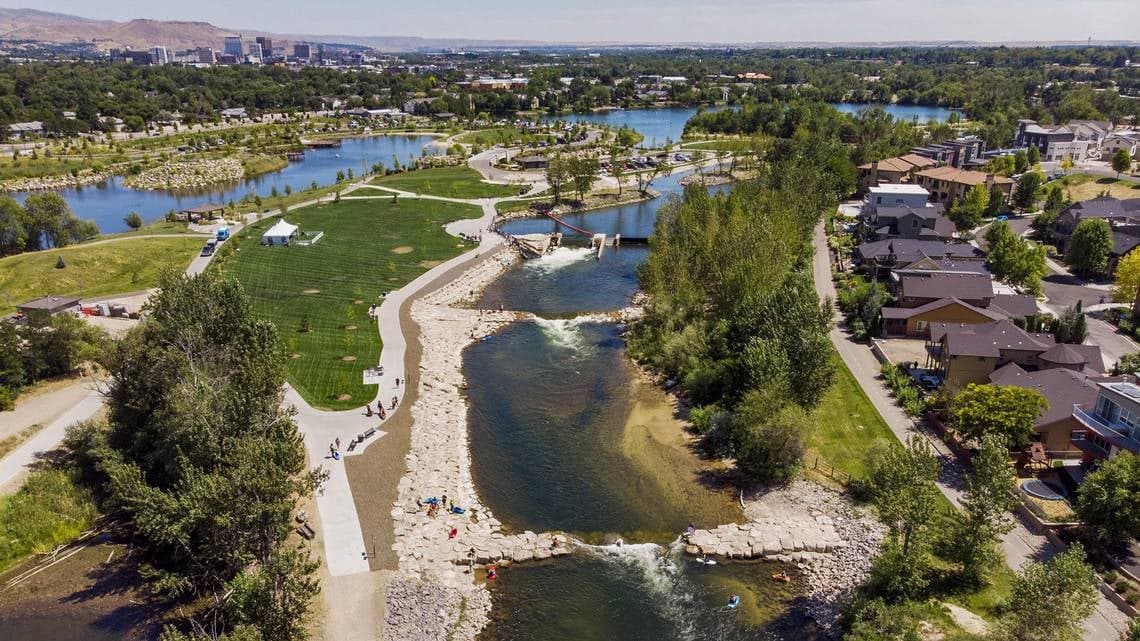
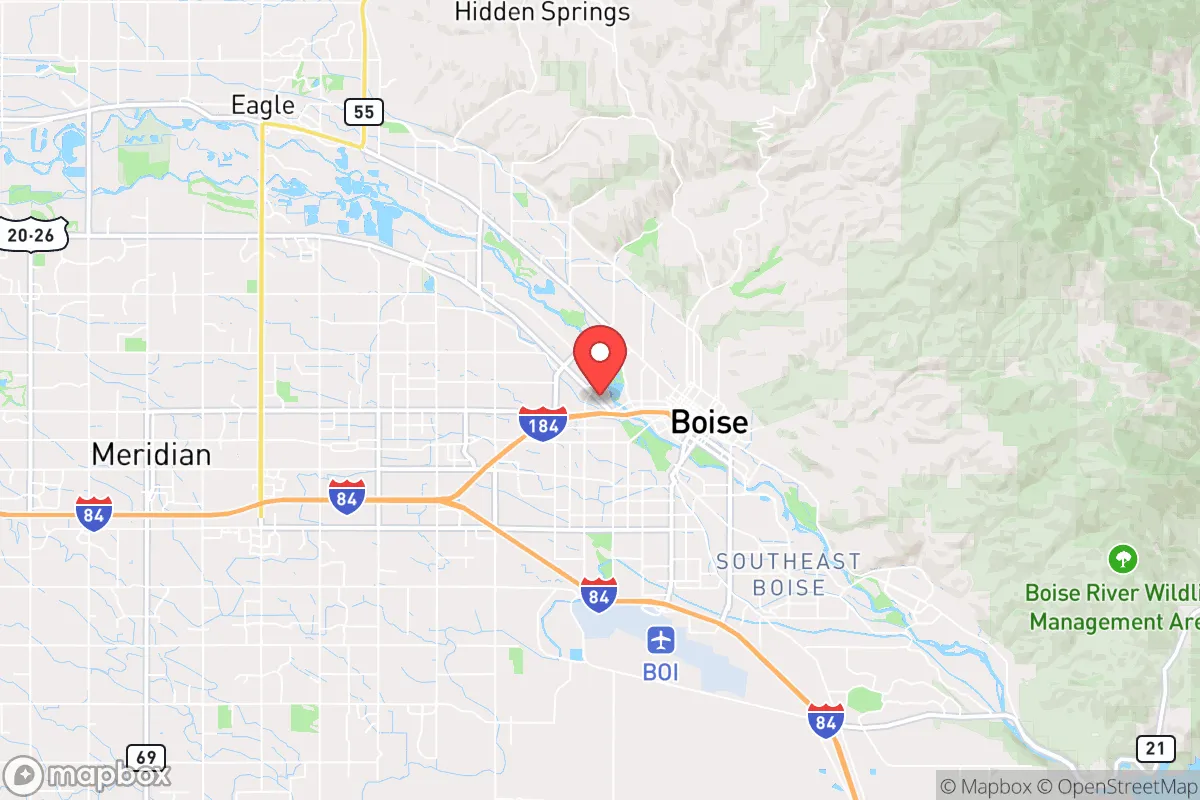
Garden City sits in a narrow strip along the Boise River, directly adjacent to Boise proper and the city of Eagle. This location offers a unique blend of access to the Boise River’s water supply and the fertile Treasure Valley farmland, which could be critical for local food production in a prolonged disruption. The nearby Boise National Forest and the Sawtooth National Recreation Area to the northeast provide vast, sparsely populated terrain for a potential bug-out location, with the Payette River system offering additional water sources. The area’s elevation (around 2,700 feet) and semi-arid climate reduce the risk of flooding and hurricanes, though wildfire is a recurring seasonal threat. The natural defensibility is moderate: the Boise Front mountains create a natural barrier to the east, but the city itself is flat and exposed, with limited chokepoints for controlling access. For a relocator, the key advantage is the ability to move quickly into high-country refuges within a few hours’ drive, making Garden City a viable forward operating base rather than a hardened redoubt.
Risks, exposures, and proximity to fallout-relevant landmarks
The most glaring risk for Garden City is its direct adjacency to Boise, a city of roughly 240,000 people that serves as Idaho’s political and economic hub. In a scenario of civil unrest or mass casualty events, the Boise metro area (population over 750,000) would become a focal point for looting, resource competition, and potential federal intervention. Garden City’s main thoroughfare, Chinden Boulevard, is a major arterial that would likely become a contested route during an evacuation or supply run. Additionally, the city lies within 50 miles of the Mountain Home Air Force Base, a strategic military installation that could be a target for foreign or domestic adversaries in a conflict scenario. The Boise Airport and the nearby rail yards are also potential choke points for logistics and targets for disruption. While Idaho is not a primary nuclear target state, the presence of the Idaho National Laboratory (about 200 miles east) and the region’s hydroelectric dams (like the Lucky Peak Dam upstream) represent secondary risks—dam failure or a lab incident could contaminate the water supply or cause downstream flooding. For the prepper, the takeaway is clear: Garden City is within the blast radius of Boise’s collapse, and any long-term survival plan must account for the city becoming a dangerous, resource-depleted zone within weeks of a major event.
Practical resilience for a relocator: food, water, energy, and defensibility
For a single individual or family looking to establish a resilient foothold, Garden City offers mixed prospects. Water access is the strongest asset: the Boise River runs directly through the city, and groundwater is generally plentiful, though well permits are tightly regulated. A rainwater catchment system is viable given the region’s 12-15 inches of annual precipitation, but storage capacity must be substantial to cover dry summer months. Food production is feasible but land-constrained: most residential lots are small (0.1-0.25 acres), limiting garden space, but community gardens and nearby agricultural land in Eagle and Kuna offer opportunities for barter or cooperative growing. The Treasure Valley’s growing season (roughly April to October) supports staple crops like potatoes, beans, and squash. Energy resilience is a challenge: the grid is reliable in normal times, but Idaho Power’s reliance on hydroelectricity (over 50% of supply) means a drought or dam failure could cause prolonged blackouts. Solar is a strong option, with the area averaging over 200 sunny days per year, but homeowners associations (HOAs) in some neighborhoods may restrict panel installation. Defensibility is poor at the city level: Garden City is flat, with no natural high ground, and its street grid is easily navigable by vehicles. A single-family home with a solid fence, reinforced doors, and a basement (common in older homes) offers basic protection, but a determined group could overwhelm it. The best strategy is to treat the property as a temporary hold—stockpile supplies for 90 days, maintain a vehicle with a full tank and a bug-out bag, and have a pre-planned route to a rural property in the mountains (e.g., near Cascade or McCall). Medical access is excellent in normal times, with St. Luke’s and Saint Alphonsus hospitals within 15 minutes, but in a crisis, these facilities would be overwhelmed, making a trauma kit and training non-negotiable.
The overall strategic picture for Garden City is one of calculated compromise. It is not a survivalist’s paradise—it is too close to a major city, too exposed, and too dependent on fragile infrastructure to be a standalone redoubt. However, for the relocator who values economic opportunity, community resources, and a launchpad into Idaho’s vast wilderness, it can serve as a viable base of operations. The conservative prepper should view Garden City as a transitional asset: a place to build skills, network with like-minded individuals, and accumulate gear while maintaining the mobility to relocate deeper into the backcountry when the situation demands it. The key is to avoid complacency—the city’s comforts can lull one into a false sense of security. If you are willing to treat Garden City as a forward operating base rather than a final destination, and you have the discipline to prepare for a rapid withdrawal into the mountains, it offers a strategic foothold in one of the most resilient states in the Union. If you are looking for a place to dig in and hold out indefinitely, look further east or north, where the population density drops and the defensible terrain begins.

* Values derived from national, state, county, city and local statistics and may differ in a specific area. Last updated: 2026-04-19T06:40:34.000Z
Narrative content on this page is AI-generated and may contain mistakes. Verify any details that matter before acting on them.
ReloMaps may earn a commission from affiliate links at no extra cost to you.

