
Photo: Wikipedia
Personal Sovereignty in Garden City, ID
Moderate friction. Expect trade-offs in some aspect of personal liberty and independence.
What does Personal Sovereignty tell us?
Personal Sovereignty measures your capacity for self-reliance and independence with minimal government friction. Higher scores mean fewer barriers between you and the way you want to live... but it assumes you have the space you need and good neighbors.
What does this tell us?
Personal Sovereignty measures your capacity for self-reliance and independence with minimal government friction. Higher scores mean fewer barriers between you and the way you want to live... but it assumes you have the space you need and good neighbors.
State Policy
Energy independence: Importer (25% of energy produced in-state)
Personal Liberty
Homesteading

Personal Liberty Analysis
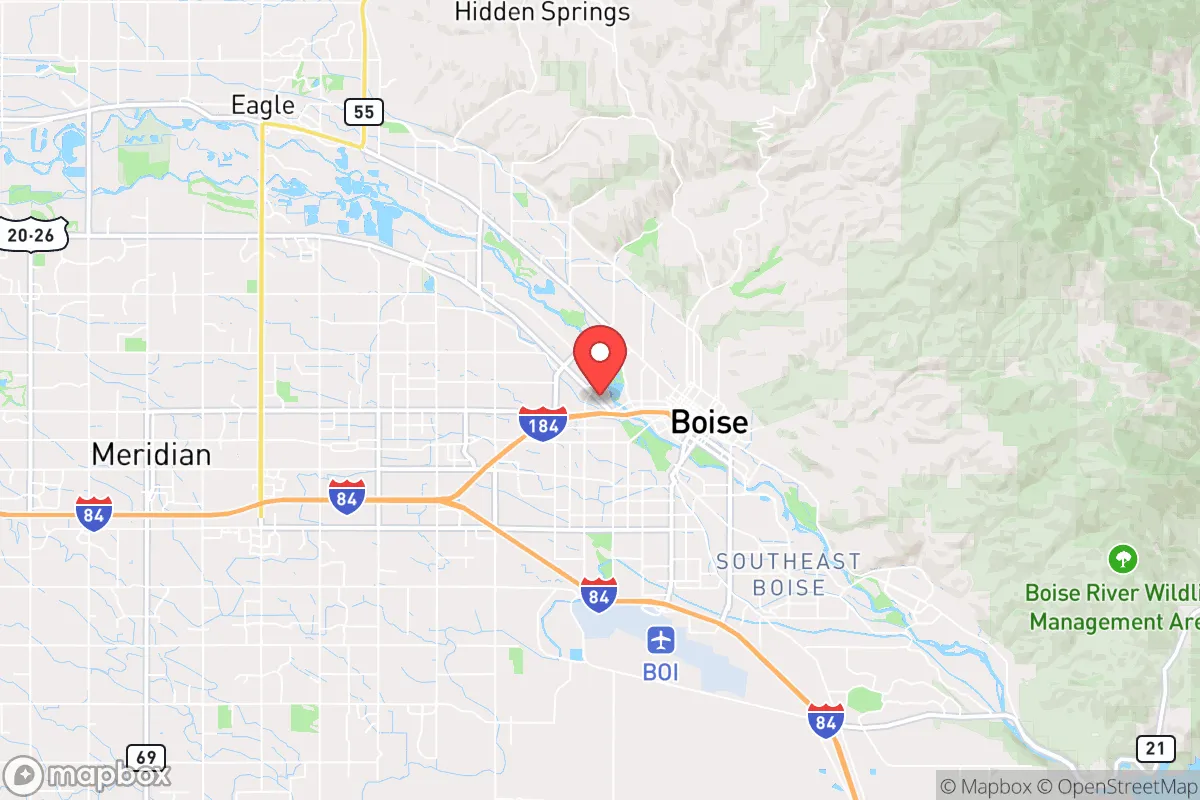
Garden City, Idaho, offers a notably high degree of personal sovereignty, particularly when measured against the encroaching regulatory environments found in many Western states. Nestled against the Boise River and adjacent to the state capital, this small city operates within a state framework that has consistently pushed back against federal overreach, making it a viable option for those prioritizing autonomy. For the survivalist or prepper mindset, the key question isn't whether Idaho is a free state—it is—but how Garden City's unique municipal character and proximity to Boise affect the day-to-day exercise of that freedom. The answer is a mixed bag: you get the legal shield of Idaho's strong constitutional protections, but you must navigate a local zoning code and tax structure that reflect its suburban, riverfront location.
Tax burden and regulatory posture: How Garden City compares to Ada County and the state
Idaho’s overall tax climate is a major draw for those seeking to keep more of their own resources. The state levies a flat income tax of 5.8% (as of 2025), which is moderate but not the lowest in the region. Property taxes in Garden City are set by Ada County, and the effective rate hovers around 0.69% of assessed value—below the national average but slightly higher than more rural Idaho counties. The real advantage for a sovereignty-minded individual is the lack of a state-level estate or inheritance tax, and no tax on groceries. However, Garden City itself has a reputation for being more business-friendly than Boise proper, with a less burdensome permitting process for small-scale commercial activities. For a prepper, the regulatory posture is generally permissive: no state-level building codes in unincorporated areas, but Garden City does enforce local zoning and building codes, which can complicate off-grid modifications like installing a composting toilet or a large rainwater catchment system without a permit. The city’s municipal code is accessible online, and the planning department is small enough that direct conversations are possible—a stark contrast to the faceless bureaucracy of larger cities.
Self-defense and gun law specifics: What the Second Sanctuary status means for daily carry and storage
Idaho is a constitutional carry state, meaning no permit is required to carry a concealed firearm for anyone legally allowed to possess one. Garden City, as part of Ada County, fully falls under this umbrella. The state also has a strong "stand your ground" law with no duty to retreat, and a castle doctrine that presumes a reasonable fear of death or great bodily harm when an intruder unlawfully enters your home or vehicle. For the survivalist, this is bedrock. There are no magazine capacity restrictions, no state-level firearm registration, and no waiting periods for purchases from licensed dealers. Garden City itself has not passed any local ordinances that infringe on these rights, though the city council has occasionally debated "safe storage" resolutions—none of which have become law. The nearest gun ranges are within a 15-minute drive, and the Boise area has a robust community of firearms instructors and gunsmiths. One practical consideration: because Garden City is a small municipality (roughly 12,000 residents) with its own police department, interactions with law enforcement are generally more personal and less adversarial than in a large metro area, but the department is known for being professional and not overzealous on minor firearms-related technicalities.
Self-reliance and homesteading viability: Lot sizes, zoning, and off-grid feasibility in a suburban river corridor
This is where Garden City’s trade-offs become most apparent. The city is largely built out, with typical residential lots ranging from 6,000 to 10,000 square feet—enough for a substantial garden and a few chickens, but not for serious livestock or large-scale food production. Zoning codes allow for backyard chickens (hens only, no roosters) and beekeeping with a simple permit, but goats, pigs, or cattle are prohibited on standard residential lots. Off-grid living is legally challenging within city limits: the city requires connection to municipal water and sewer where available, and solar panels are permitted but must meet building code standards. Rainwater collection is allowed for non-potable uses, but the system must be designed to avoid creating mosquito habitat. For a prepper seeking true self-reliance, Garden City is a compromise—you can have a robust garden, a root cellar, and a backup generator, but you cannot disappear into the woods. The real value is in the legal framework: Idaho’s "Right to Farm" laws protect agricultural activities even near urban areas, and the state has strong laws protecting private property rights against nuisance claims from newcomers who dislike the smell of compost or the sound of a generator.
Personal liberties: Parental rights, medical autonomy, speech, and property protections
Idaho has been a national leader in codifying parental rights. The state’s "Parents’ Bill of Rights" (Idaho Code § 33-5201) gives parents explicit authority over their children’s education, healthcare, and moral upbringing. This means no mask mandates for schoolchildren, no vaccine passports, and a legal presumption that parents—not the state—make medical decisions for their kids. Medical autonomy for adults is also strong: Idaho has no state-level vaccine mandate for employment, and while the state does not have a specific "right to try" law for terminally ill patients, it does allow for the use of investigational drugs under federal law. Free speech protections are robust, with no hate speech laws that could be used to silence political dissent. Property rights are reinforced by Idaho’s "Private Property Protection Act," which requires the government to compensate landowners for any regulatory taking that reduces property value by more than 20%. For the survivalist, this means you can store supplies, build a shop, or maintain a defensive perimeter without fear of a zoning inspector citing you for "unsightly" conditions—as long as you stay within the basic building codes.
In the broader landscape of American personal sovereignty, Garden City occupies a strategic middle ground. It lacks the raw, unregulated freedom of a remote county like Lemhi or Custer, where you can build a cabin with no permits and shoot on your own land. But it also avoids the suffocating regulatory creep of Portland or Seattle. For a single individual or a family who wants the legal protections of a red state, the economic opportunities of a growing metro area, and the ability to live a self-reliant life without constant government interference, Garden City is a solid choice. The trade-off is that you must accept some municipal oversight in exchange for proximity to jobs, healthcare, and supply chains. If your definition of sovereignty includes being left alone to raise your family, keep your firearms, and make your own medical choices, this small city on the Boise River delivers—just don't expect to disappear entirely from the grid.

* Values derived from national, state, county, city and local statistics and may differ in a specific area. Last updated: 2026-04-19T06:40:34.000Z
Narrative content on this page is AI-generated and may contain mistakes. Verify any details that matter before acting on them.
ReloMaps may earn a commission from affiliate links at no extra cost to you.

