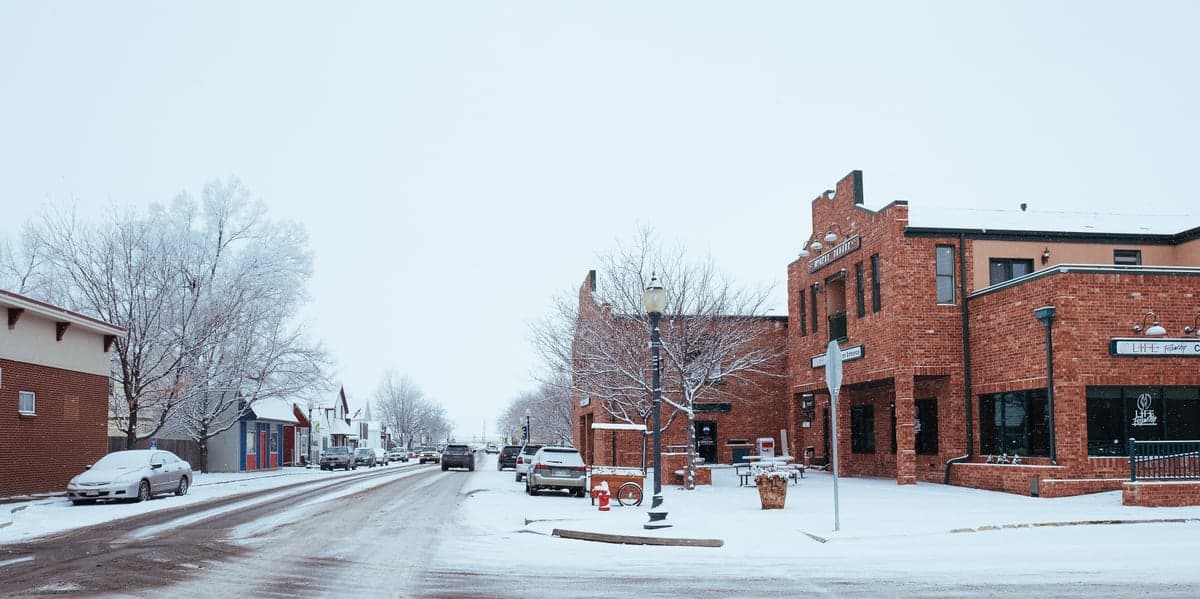
Photo: Wikipedia
Strategic Assessment of Frederick, CO
Meaningful friction. Expect exposure to either population pressure, blast zones, or natural disaster risk. Consider buying a retreat property.
What does the Strategic Assessment tell us?
Our Strategic Assessment grades tactical survivability of an area. Major population centers, military targets, fallout zones, natural disasters, and border exposure all drive risk — lower exposure means a more defensible position in a crisis.
This is heavily inspired by Joel Skousen's Strategic Relocation book. Highly recommended you checkout the book ($)What does this tell us?
Our Strategic Assessment grades tactical survivability of an area. Major population centers, military targets, fallout zones, natural disasters, and border exposure all drive risk — lower exposure means a more defensible position in a crisis.
This is heavily inspired by Joel Skousen's Strategic Relocation book. Highly recommended you checkout the book ($)Strategic Pillars

Key Distances
Regional Safe Places
Below is our recommended "safe zones" in Colorado and the surrounding area based on our strategic heuristics. For most people, it's unrealistic to live in a “safe zone” full-time due to work, family or other personal reasons. They tend to be more rural. However, many of these areas are perfect for second homes and retreat properties that double as a vacation home or even a short-term rental.
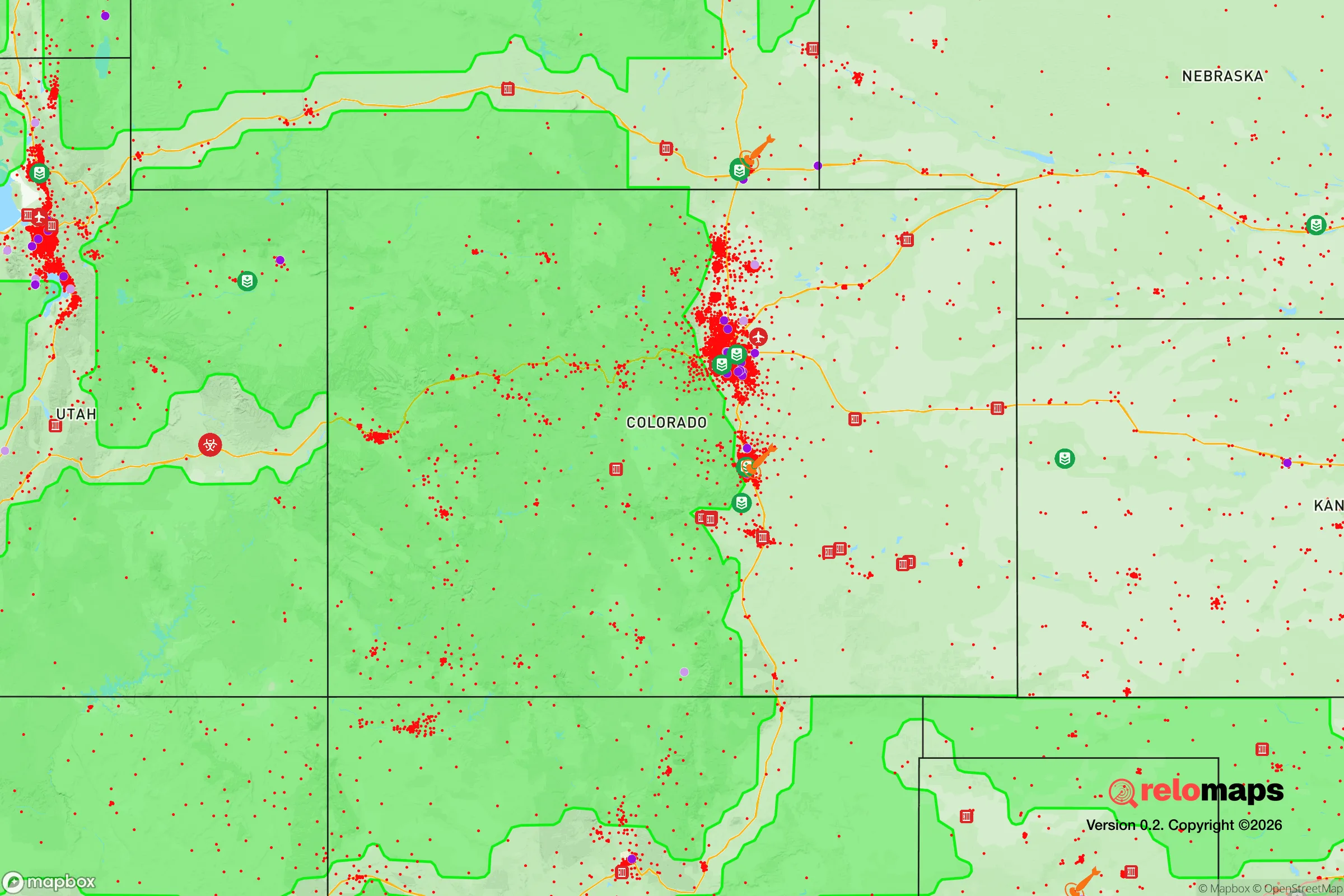
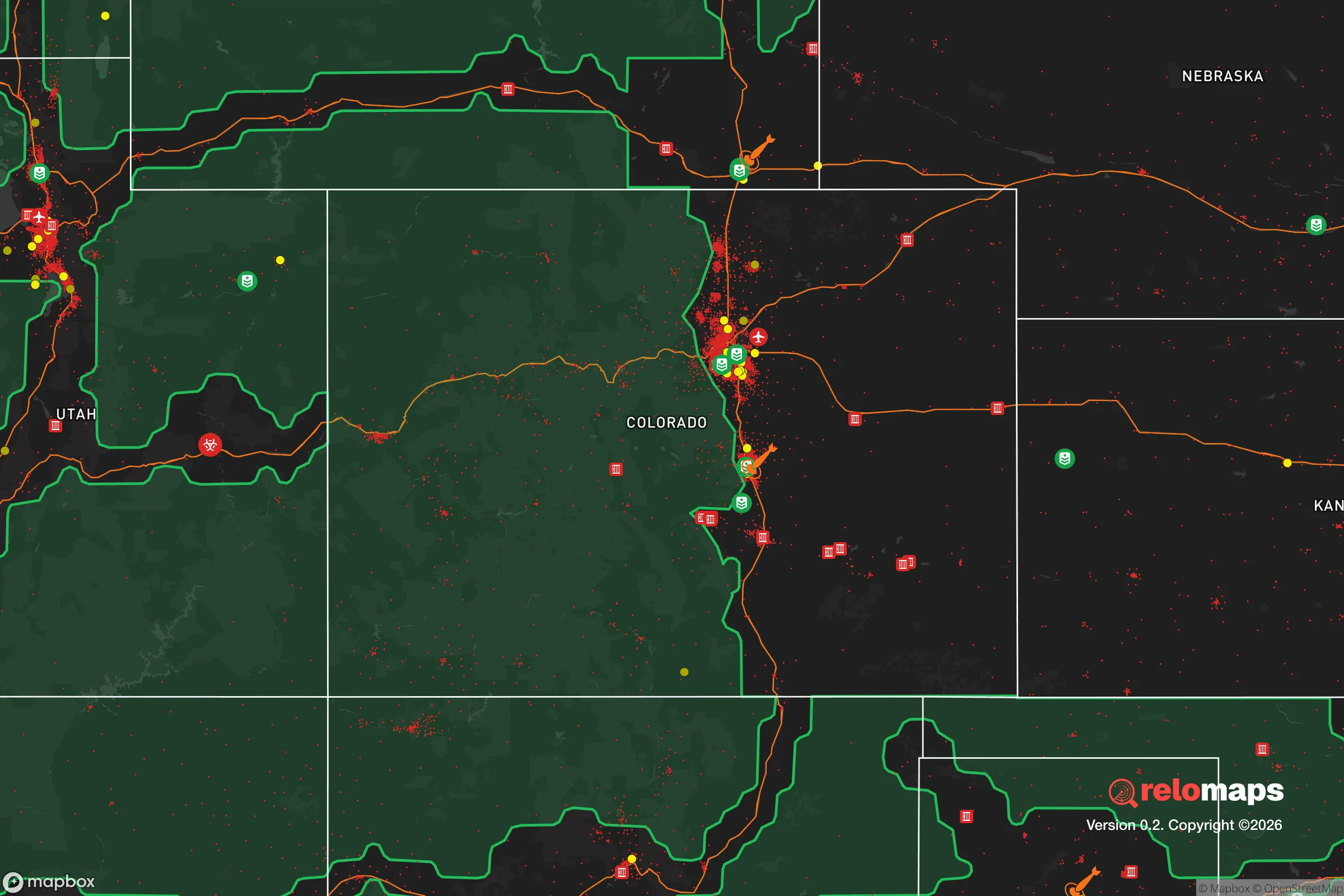


Important Note: For informational purposes only. This does not mean nothing bad ever happens in the green zones. Please use common sense. This is based on public data and modeled with AI. We tried to take a conservative approach but mistakes happen. We update this regularly as new information becomes available.
Solar Generator Recommendations
Backup power matters more here than in safer locations. We've picked three solar generators across budgets and capacity tiers — start with the budget unit if you only need a few essentials, or step up if you want to run a fridge and HVAC for days at a time.

Jackery Portable Power Station Explorer 300
Budget OptionPower on the Go: Weighing only 11 lbs, it's convenient to set up and store with book-sized foldable solar panels

BLUETTI Portable Power Station AC180
Designed for both indoor and outdoor scenarios, AC180 is highly capable as it has a robost capacity and continuous output power.

EF ECOFLOW DELTA Pro Ultra Power Station
Upgraded PickEcoFlow DELTA Pro Ultra is a whole-home energy system designed to grow with your family. Integrated with the Smart Home Panel 2, it scales to meet your evolving energy needs — keeping your home powered, intelligent, and secure through every stage of life.
We earn a commission, at no additional cost to you.
Strategic Assessment Analysis
Frederick, Colorado, offers a surprisingly resilient strategic position for those prioritizing preparedness, sitting at the intersection of agricultural self-sufficiency and relative isolation from the most acute risks of the Front Range. While no location is immune to the cascading failures of a destabilized nation, Frederick’s location in northern Weld County provides a buffer from the immediate fallout of a Denver or Boulder collapse, while still offering access to critical infrastructure and supply chains. For the single individual or family looking to weather civic unrest, supply chain disruptions, or mass casualty events, this town presents a defensible, resource-rich option that balances proximity to necessity with distance from danger.
Geographic position and natural advantages for long-term survival
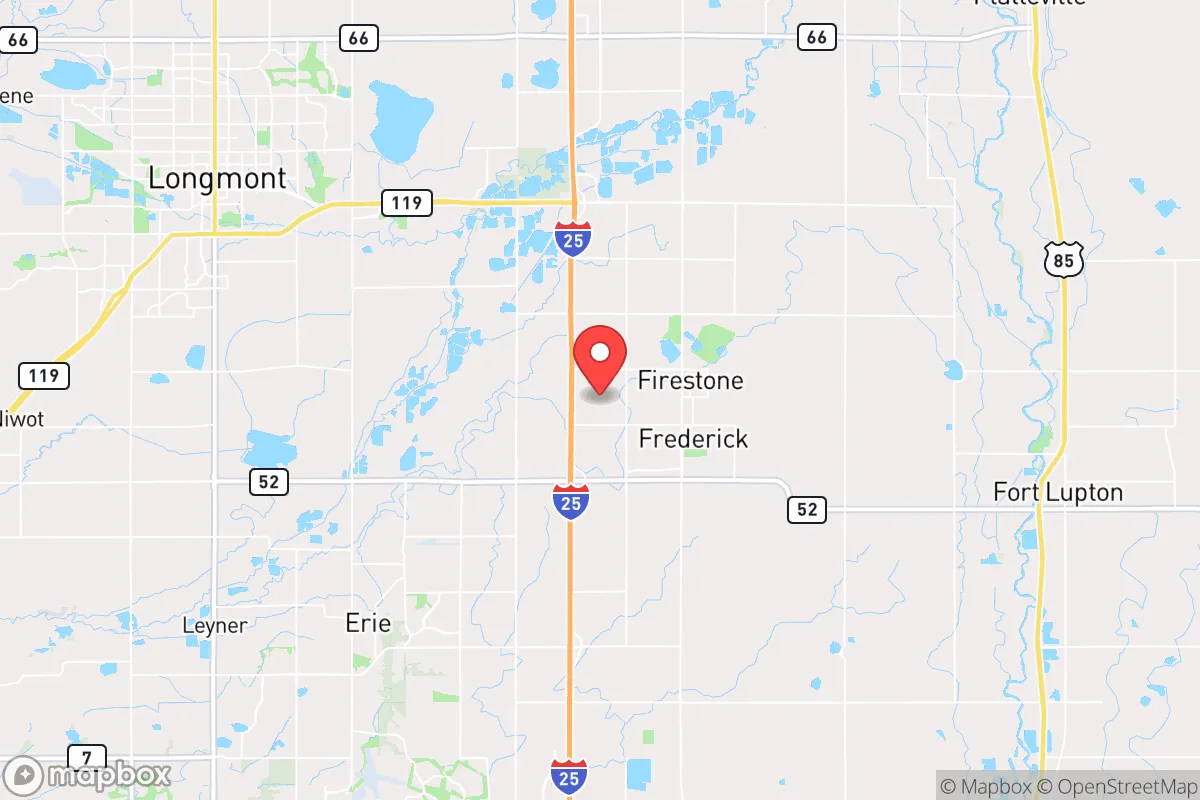
Frederick sits roughly 30 miles north of Denver and 10 miles east of the Rocky Mountain foothills, placing it in a sweet spot for strategic relocation. The town is situated on the high plains at an elevation of about 5,000 feet, which provides a natural defensive advantage: the terrain is open enough to offer long sightlines for security, yet the nearby foothills offer escape routes into the mountains if needed. The area’s agricultural heritage is a major asset—Weld County is one of the most productive farming regions in the state, with extensive irrigation from the South Platte River and groundwater aquifers. This means local food production is not a theoretical exercise; it’s a daily reality. For a prepper, this translates to a robust local food system that could sustain a community even if trucking and grocery chains fail. The climate is semi-arid, with low humidity that reduces mold and decay in stored supplies, and the cold winters naturally slow the spread of disease and pests. The town’s elevation also places it above the inversion layer that traps pollution in the Denver metro, meaning cleaner air and water—a non-negotiable for long-term health in a degraded scenario.
Risks, exposures, and proximity to fallout-relevant landmarks
The most significant strategic weakness of Frederick is its proximity to the Denver-Aurora metropolitan area, a population center of nearly 3 million people that would become a catastrophic liability in a mass casualty event or civil unrest. In a collapse scenario, Denver would likely become a no-go zone: a concentration of desperate populations, depleted resources, and potential military or federal lockdowns. Frederick is close enough—about a 40-minute drive on I-25—that refugee flows could reach the town within hours. The I-25 corridor itself is a double-edged sword: it provides access to supplies and evacuation routes, but it also funnels displaced populations northward. Additionally, the town is within 50 miles of the Rocky Flats National Wildlife Refuge, a former nuclear weapons plant with ongoing contamination concerns. While the site is remediated, any major disaster could disturb buried plutonium waste, creating a long-term exclusion zone. The nearby Platteville and Fort Lupton areas also host significant oil and gas infrastructure, including fracking operations and storage tanks, which could become targets for sabotage or accidental explosions during unrest. On the positive side, Frederick is far enough from the major military installations—like Peterson Space Force Base and Fort Carson, both near Colorado Springs—to avoid being a primary target in a conflict scenario, but close enough to potentially benefit from any military stabilization efforts in the region.
Practical resilience for a relocator: food, water, energy, and defensibility
For the serious prepper, Frederick’s practical resilience hinges on three pillars: water, energy, and community structure. The town’s water supply comes from a mix of groundwater wells and surface water from the South Platte River, which is a reliable source even in drought years. However, the municipal system is vulnerable to contamination or disruption; a well-prepared relocator should plan for a private well or rainwater catchment system. The area’s agricultural zoning means many properties have access to irrigation rights, which is a massive advantage for growing food. The local climate supports cold-hardy crops like potatoes, carrots, and kale, and the growing season is long enough for a single harvest of grains like wheat or oats. Energy resilience is mixed: Frederick is served by Xcel Energy, which relies on a grid that is increasingly strained by population growth and wildfire risks. Solar is viable—the area averages over 300 sunny days per year—but battery storage is essential for grid-down scenarios. Natural gas is widely available for heating, which is a plus for winter survival. Defensibility is where Frederick shines relative to denser suburbs. The town’s layout is a mix of older, walkable neighborhoods and newer subdivisions with cul-de-sacs, which can be secured with minimal effort. The surrounding farmland provides a natural buffer zone—any approaching group would be visible from miles away. The local population skews conservative and self-reliant, with a strong agricultural and oil-and-gas workforce. This means a higher likelihood of neighbors who own firearms, have stockpiles, and are willing to organize for mutual defense. The Weld County Sheriff’s Office is known for a pro-Second Amendment stance and a no-nonsense approach to law enforcement, which could be a stabilizing force in a crisis. For families, the school district (St. Vrain Valley) is well-regarded, and the town has a small but functional hospital (UCHealth) that could serve as a triage point in a disaster—though serious trauma cases would require evacuation to Longmont or Denver.
The overall strategic picture for Frederick is that of a high-potential but not bulletproof relocation target. It offers genuine agricultural self-sufficiency, a defensible layout, and a community that is likely to band together rather than fragment under pressure. The primary risks are its proximity to Denver’s potential collapse and the vulnerability of the I-25 corridor to refugee flows. A relocator here should prioritize hardening their property against intrusion, securing a private water source, and building relationships with local farmers and ranchers before a crisis hits. For the conservative-minded individual or family who wants to be part of a functioning, resilient community rather than a lone wolf in the wilderness, Frederick is a strong candidate—provided they are prepared to defend what they’ve built. The town is not a fortress, but it is a foundation. With proper planning, it could become a sanctuary in a storm.

* Values derived from national, state, county, city and local statistics and may differ in a specific area. Last updated: 2026-05-01T00:51:00.000Z
Narrative content on this page is AI-generated and may contain mistakes. Verify any details that matter before acting on them.
ReloMaps may earn a commission from affiliate links at no extra cost to you.

