Photo: Wikipedia
Political ClimatePolitical Climate in Fort Smith, AR
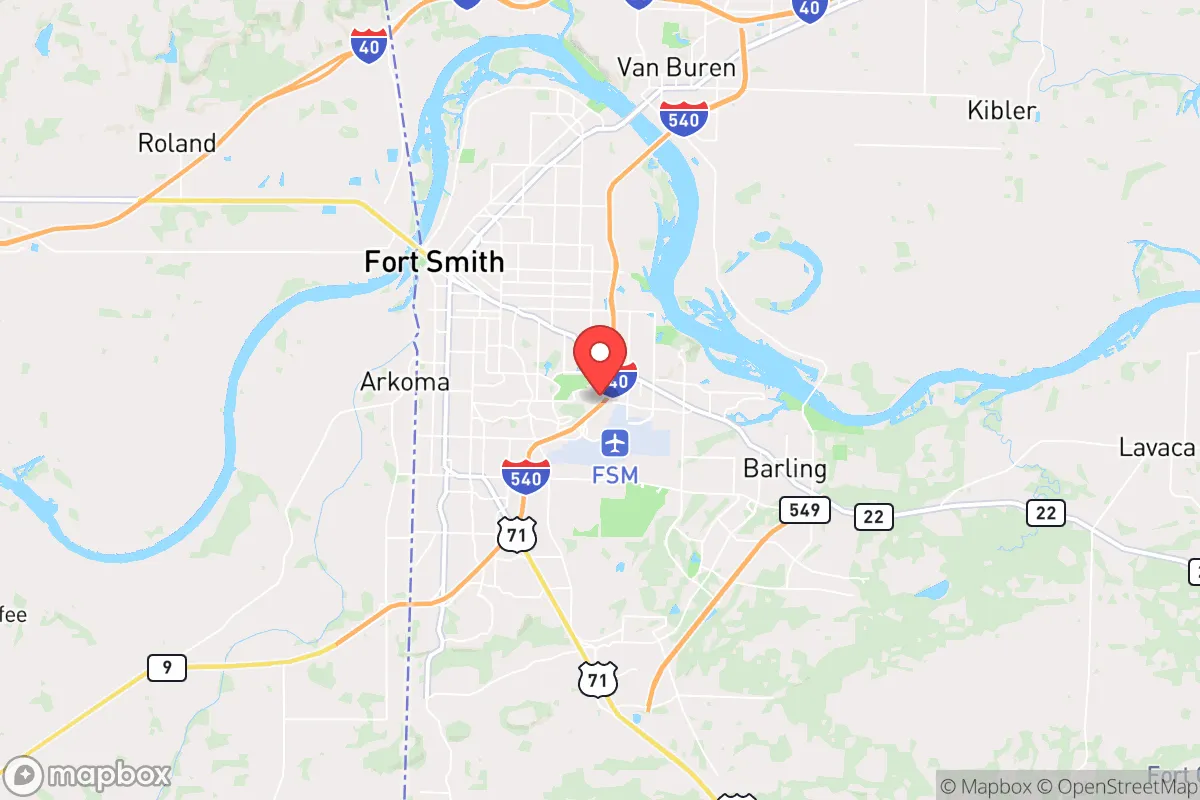
District shown is the primary district for this city’s centroid. Cities may span multiple districts.
Local Political AnalysisPolitical Analysis of Fort Smith, AR
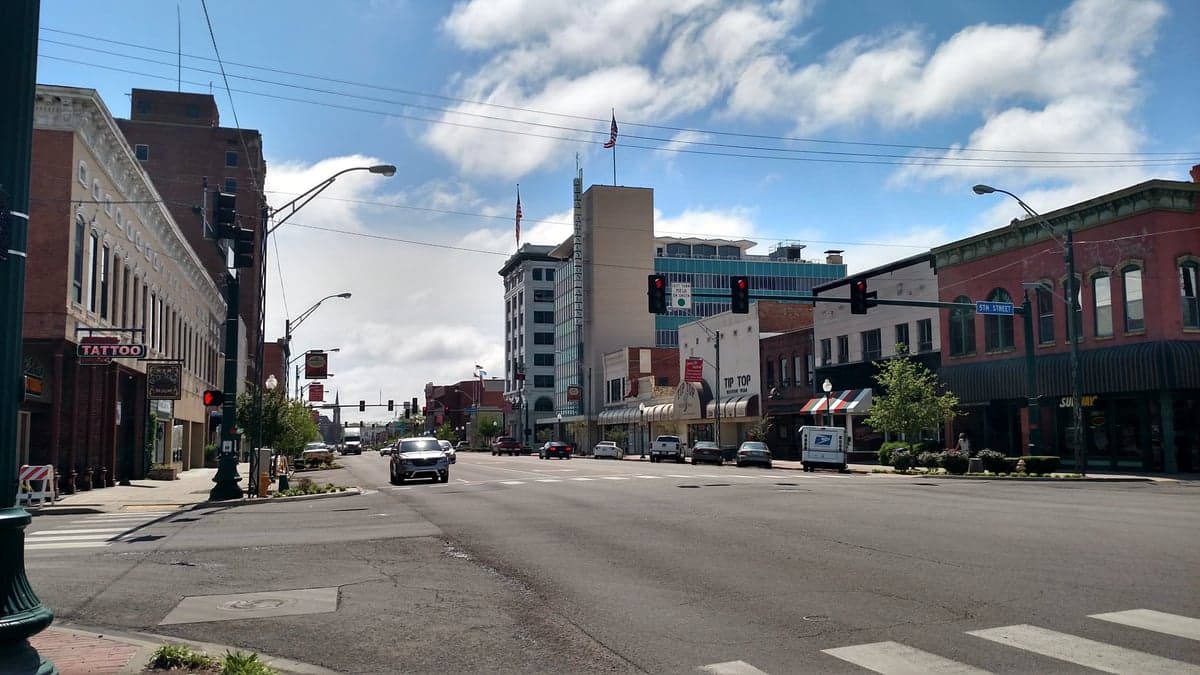
Fort Smith has long been a solidly conservative stronghold, and that hasn't changed much despite some national trends. With a Cook PVI of R+13, the city and surrounding Sebastian County lean heavily Republican in most elections, and you can feel that in the local culture and policy decisions. The last few cycles have shown a slight uptick in Democratic votes in the city proper, especially in the older, more established neighborhoods near the river, but the county as a whole still votes about 60-40 Republican in most statewide races. The real story here is that while the city's core has held steady, the suburban and rural areas around it—places like Greenwood, Barling, and even over into Van Buren—have actually gotten more conservative over the last decade, not less.
How it compares
If you drive 30 minutes south to Poteau, Oklahoma, you'll find a similar conservative vibe, but it's a bit more rural and less economically diverse. The real contrast is heading north or east. Go up to Fayetteville, about an hour away, and you're in a completely different world—Benton and Washington counties have been trending purple, with Fayetteville itself becoming a liberal college town. That's where you see the progressive policies creeping in: higher taxes, more zoning restrictions, and a general acceptance of government meddling in daily life. Fort Smith, by contrast, has largely resisted that shift. The city council and county commission have kept taxes relatively low and have been slow to adopt the kind of overreaching regulations you see in places like Little Rock or even Rogers. The local school board has also held the line on curriculum and parental rights, which is a big deal for families who want to keep government out of their kids' education.
What this means for residents
For the average person living here, the conservative tilt means you're generally left alone to live your life. Property taxes are manageable, there's no city income tax, and the local government isn't constantly trying to tell you what you can do with your own land or business. The downside is that some folks worry about the area becoming too insular, but honestly, that's a small price to pay for keeping the progressive agenda at bay. The biggest concern for the near future is the influx of new residents from places like California and Colorado, who are moving here for the lower cost of living. Some of them bring their old political habits with them, and you can see it in the occasional push for more bike lanes, higher density housing, or "equity" initiatives in local government. So far, those efforts have been beaten back, but it's something to keep an eye on over the next five to ten years.
One thing that sets Fort Smith apart is the strong sense of local identity and self-reliance. People here don't look to the state or federal government to solve their problems. The city has a long history of bootstrapping—whether it's the riverfront revival or the new downtown projects, most of it has been driven by local businesses and private donations, not government grants. That's a cultural distinction you don't see everywhere. The political climate here is stable, but it's not static. If you value personal freedom, low taxes, and a government that stays out of your way, Fort Smith is still a good bet. Just keep an eye on the newcomers and make sure your voice is heard at the ballot box, because the fight to keep this place conservative is ongoing.

State Political ClimatePolitical Climate in Arkansas
State Political AnalysisPolitical Environment in the State
Arkansas has been a reliably red state for decades, but its political climate is more nuanced than a simple partisan label suggests. The state leans solidly Republican at the federal and state level, with every statewide elected official being a Republican and the GOP holding supermajorities in both legislative chambers. However, the trajectory over the last 10-20 years shows a state that was once a Democratic stronghold in the South (Bill Clinton’s home state) that flipped hard red in the 2010s, driven by a combination of rural realignment and the nationalization of politics. Today, the dominant coalition is a mix of conservative rural voters, evangelical Christians, and a growing number of transplants from blue states seeking lower taxes and fewer regulations.
Urban vs. rural divide
The political map of Arkansas is a textbook study in the urban-rural split. The state’s two major metros, Little Rock (Pulaski County) and Fayetteville (Washington County), are the primary blue dots in a sea of red. Pulaski County, home to the state capital, voted for Joe Biden in 2020 by about 10 points, driven by a diverse population and a concentration of government workers and professionals. Washington County, anchored by the University of Arkansas, has trended purple over the last decade, with Biden losing it by only 4 points in 2020—a stark contrast to the 20-point margins Republicans once enjoyed there. Meanwhile, the rest of the state is deeply conservative. Benton County, part of the booming Northwest Arkansas corridor, is reliably red but has seen a slight softening as transplants from California and Illinois move in for jobs at Walmart, Tyson Foods, and JB Hunt. The Arkansas Delta, including towns like Pine Bluff and Helena-West Helena, is overwhelmingly Democratic but has shrinking populations and low turnout, limiting its electoral influence. The rural Ozarks and Ouachita Mountains, including counties like Baxter (Mountain Home) and Polk (Mena), are among the most Republican in the nation, often voting 80%+ for GOP candidates.
Policy environment
Arkansas’s policy environment is aggressively conservative, with a strong emphasis on limited government and low taxes. The state has a flat income tax rate of 4.4% (down from 7% in 2015), with plans to phase it out entirely by 2030 under Governor Sarah Huckabee Sanders. Sales tax rates vary by locality but average around 9.5% in cities like Little Rock and Springdale. Property taxes are among the lowest in the nation, with a median effective rate of 0.53%. The state is a right-to-work state with no state-level minimum wage above the federal floor, though voters approved a $11/hour minimum in 2022. Education policy has been a flashpoint: the LEARNS Act, passed in 2023, created universal school choice, allowing public funds to follow students to private or homeschool settings, and banned “critical race theory” and “indoctrination” in classrooms. Healthcare is a mixed bag—Arkansas expanded Medicaid under the private option model, but the state has some of the strictest abortion laws in the country, with a near-total ban (no exceptions for rape or incest) that took effect after the Dobbs decision. Election laws have tightened: voter ID is required, and the state purged over 100,000 inactive voters from rolls in 2023, citing “list maintenance.”
Trajectory & freedom
On the freedom front, Arkansas is moving decisively in the direction of expanded personal liberty for conservatives, but with some concerning caveats. The state has become a national leader on gun rights: in 2021, it passed constitutional carry (permitless carry for adults 21+), and in 2023, it banned the enforcement of any future federal gun laws deemed unconstitutional by the state legislature. Parental rights were strengthened via the LEARNS Act, which gives parents more control over curriculum and allows them to sue school districts for violating those rights. Medical autonomy has seen a mixed record: the state banned gender-affirming care for minors in 2023 (Act 626), which conservatives view as protecting children, but also passed a law requiring parental consent for minors to access social media, which some see as a privacy overreach. On the downside, the state has expanded government surveillance through a 2023 law requiring age verification for adult websites, which critics argue chills free speech. Property rights remain strong, with no state-level rent control and a homestead exemption that protects up to $1,000 in property taxes. The biggest red flag for liberty-minded residents is the state’s aggressive use of eminent domain for economic development projects, particularly in Northwest Arkansas, where the Walton family’s influence has led to controversial land seizures for infrastructure.
Civil unrest & political movements
Arkansas has seen relatively little civil unrest compared to other states, but there have been notable flashpoints. The Black Lives Matter protests in Little Rock during summer 2020 were largely peaceful, though a few businesses were damaged, and the city imposed a curfew. The state’s response was swift: Governor Asa Hutchinson deployed the National Guard preemptively, and the legislature passed a law in 2021 increasing penalties for rioting and blocking highways. On the right, the Arkansas Freedom Fund and local chapters of Moms for Liberty have been highly active, organizing school board takeovers in Bentonville and Rogers over mask mandates and critical race theory. Immigration politics are relatively quiet, as Arkansas has a small foreign-born population (about 5%), but the state passed a law in 2023 requiring all businesses to use E-Verify, and local sheriffs in Washington County have cooperated with ICE. Election integrity has been a hot topic: after the 2020 election, the state’s Republican secretary of state, John Thurston, conducted a “forensic audit” of the 2020 results, which found no widespread fraud but led to the voter purge mentioned earlier. There is no serious secessionist movement, but nullification rhetoric has surfaced around federal gun laws, with several counties passing “Second Amendment sanctuary” resolutions.
Projection
Over the next 5-10 years, Arkansas is likely to become more conservative, not less, driven by two key trends. First, in-migration from blue states like California, Illinois, and New York is accelerating, particularly to Northwest Arkansas, where the tech and logistics sectors are booming. These transplants tend to be moderate-to-conservative, often moving specifically for lower taxes and cultural alignment, so they reinforce the state’s rightward tilt. Second, the rural population is aging and shrinking, but the remaining voters are becoming even more Republican, meaning the state’s overall partisan lean will likely hold steady or shift slightly redder. The biggest wildcard is the growing Hispanic population in Springdale and Rogers, which is currently conservative-leaning (many are Catholic and small-business owners) but could shift left over time as younger generations become more secular. The state’s tax-cutting trajectory will continue, with the income tax likely eliminated by 2030, making Arkansas even more attractive to high-earners. However, the state’s infrastructure and education systems will face strain from population growth, and the LEARNS Act’s school choice model could exacerbate rural school closures. A new resident moving in now should expect a state that is fiercely independent, low-regulation, and culturally traditional, but with growing pains in its booming metro areas.
For a conservative individual or family considering relocation, Arkansas offers a strong alignment with limited government principles, low taxes, and a culture that values personal responsibility and religious freedom. The state’s political trajectory is stable and predictable—you won’t see sudden policy swings or progressive overreach. The practical takeaways: you’ll have broad gun rights, school choice, and a low tax burden, but you’ll also need to accept that the state’s infrastructure (roads, healthcare access in rural areas) is not as developed as in coastal states. If you’re moving to Bentonville or Fayetteville, you’ll find a vibrant, growing community with a mix of transplants and locals. If you’re heading to Mountain Home or Mena, you’ll get a quieter, deeply conservative lifestyle with fewer amenities. Either way, Arkansas is a state where your vote counts, your voice matters, and the government is generally on your side—for now.
* Values derived from national, state, county, city and local statistics and may differ in a specific area. Last updated: 2026-04-23T02:18:26.000Z
Narrative content on this page is AI-generated and may contain mistakes. Verify any details that matter before acting on them.
ReloMaps may earn a commission from affiliate links at no extra cost to you.

