
Photo: Wikipedia
Quality of Life in Fort Belvoir, VA
Above-average quality of iife. The area offers a reasonable cost of living, decent mobility, and a mix of neighborhood amenities.
What does Quality of Life tell us?
Quality of Life blends cost of living, nearby amenities, socioeconomic signals, and neighborhood character. City-level scores represent the whole municipality; individual neighborhoods can differ.
What does this tell us?
Quality of Life blends cost of living, nearby amenities, socioeconomic signals, and neighborhood character. City-level scores represent the whole municipality; individual neighborhoods can differ.
Cost of Living
100% above national average
The Real Cost of Living in Fort Belvoir, VA for 2026
| Tier | Individual | Family (4) |
|---|---|---|
| Survival | $28k | $53k |
| Comfortable | $47k | $70k |
| Luxury | $117k+ | $181k+ |
| Elite (Top 5%) | $138k+ | $213k+ |
145%
The Area Signal
A metric tracking the socioeconomic signals of the area.
Hobbies
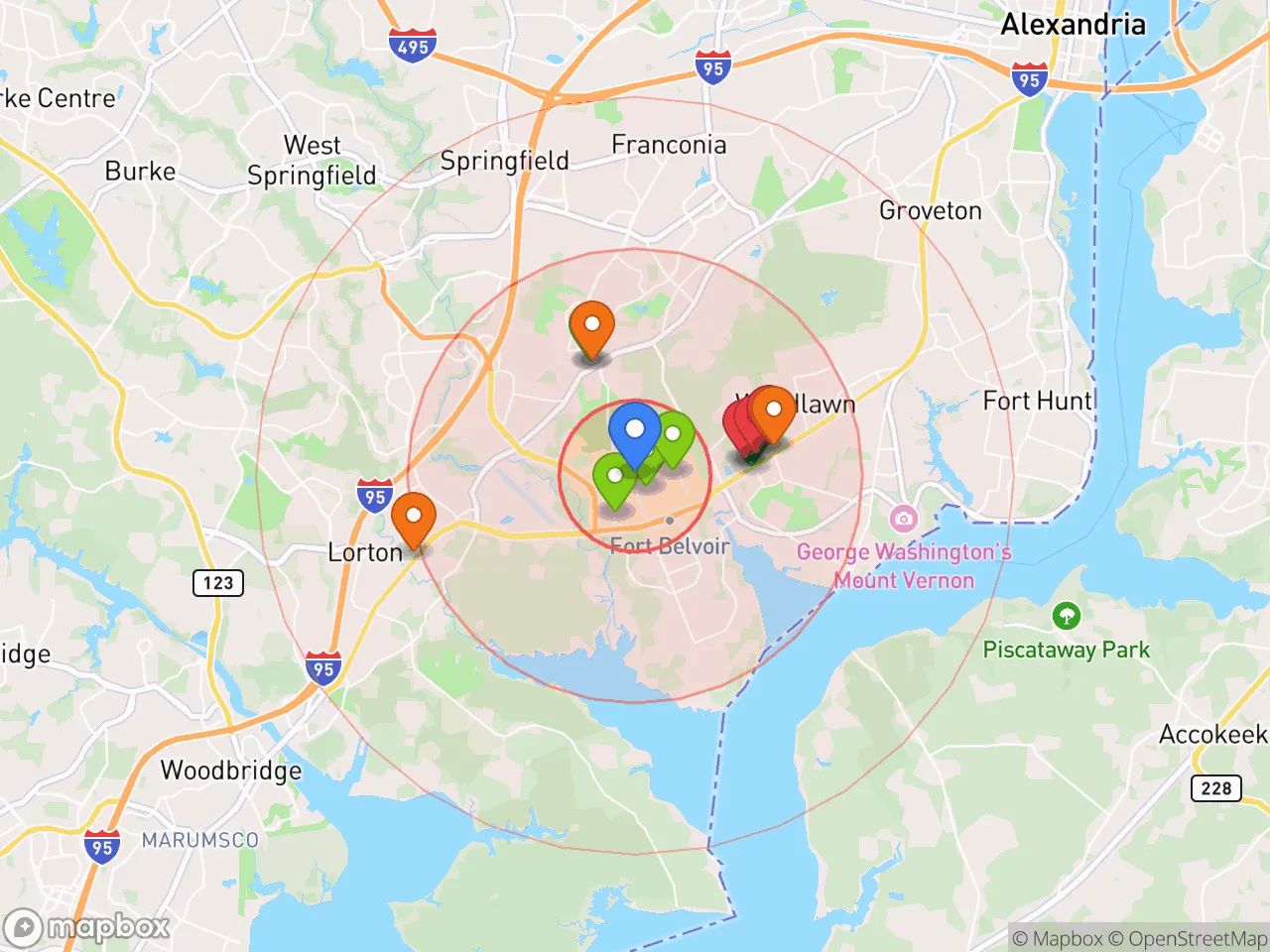
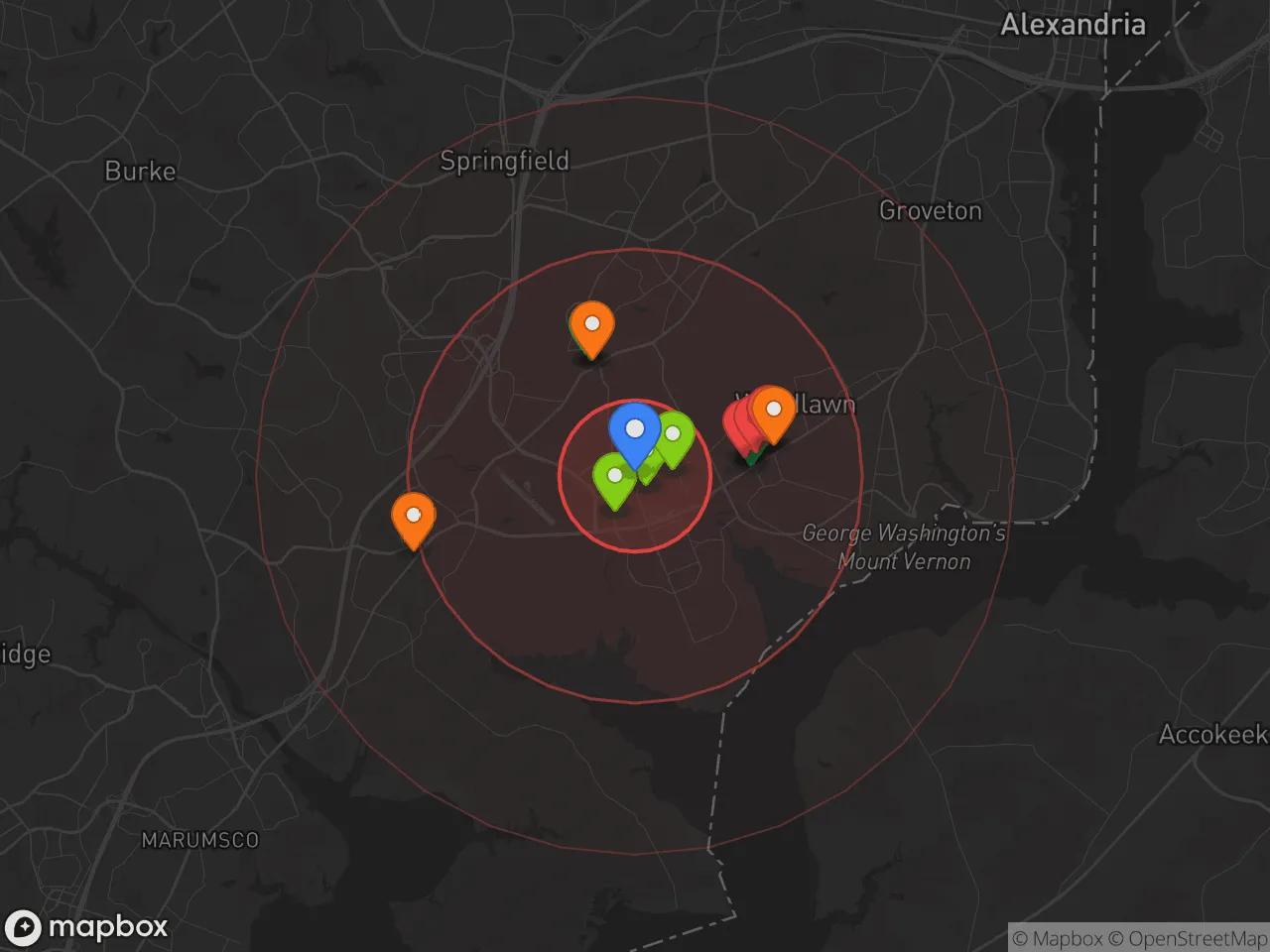
Explore the areaGroceries
7 within 10 miles
Gas
20 within 10 miles
Hospital
20 within 20 miles
Airport
DCA — Ronald Reagan Washington National
Post Office
USPS — Fort Belvoir, VA
Critical Amenities
Quality-of-Life Analysis
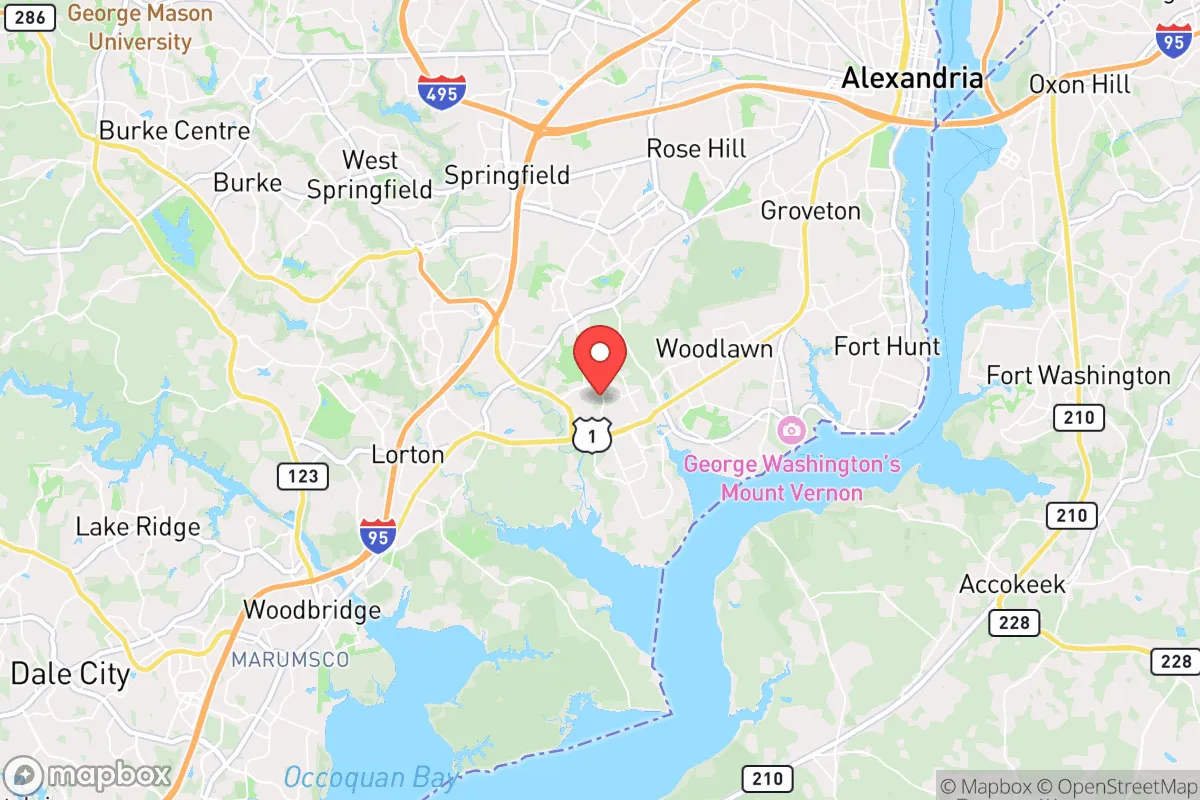
Fort Belvoir, Virginia, is an affluent, military-centric community located in Fairfax County, approximately 15 miles south of Washington, D.C. The area is defined by its large active-duty and retired military population, civilian Department of Defense employees, and defense contractors, creating a highly educated and transient demographic with a median household income well above the national average. With a cost of living index of 200—double the U.S. baseline—residents pay a premium for proximity to the Pentagon, federal agencies, and the base’s extensive support infrastructure.
Cost of living, housing, and affordability compared to nearby areas
Fort Belvoir’s cost of living index of 200 is roughly 30% higher than the average for Fairfax County as a whole, driven primarily by housing constraints on and off base. The median home value of $244,400 is misleadingly low because it includes on-base military housing (often subsidized or government-owned); off-base homes in surrounding communities like Mount Vernon, Lorton, and Woodbridge typically range from $450,000 to $700,000. Median rent stands at $3,212 per month, which is comparable to Arlington and Alexandria but significantly higher than Prince William County (where median rent is roughly $2,100). The average commute of 23.97 minutes is shorter than the D.C. metro average (34 minutes), thanks to direct access to I-95, the Fairfax County Parkway, and the base’s internal road network. However, traffic on I-95 during peak hours can push commutes to 45–60 minutes for those traveling to downtown D.C. or the Pentagon. Utility costs and grocery prices are roughly 10–15% above national averages, while property taxes in Fairfax County are moderate at about 1.07% of assessed value.
Schools, amenities, and what daily life is like for families
Daily life in Fort Belvoir revolves around the base’s self-contained ecosystem, which includes the Fort Belvoir Exchange, a commissary, multiple dining facilities, and the Fort Belvoir Community Hospital (a major military medical center). Public schools are zoned through Fairfax County Public Schools, with nearby elementary schools like Fort Belvoir Elementary and Woodlawn Elementary rated 7–8 out of 10 on GreatSchools. High school students typically attend Mount Vernon High School or West Potomac High School, both offering Advanced Placement and International Baccalaureate programs. For recreation, residents use the base’s Belvoir Lanes Bowling Center, two golf courses (including the 18-hole Fort Belvoir Golf Club), and the Fort Belvoir Outdoor Recreation Center for equipment rentals. Off-base amenities include the Potomac River waterfront at Mason Neck State Park (15 minutes away) and the National Museum of the United States Army (opened 2020). The area lacks a vibrant nightlife scene, but residents can reach Old Town Alexandria’s restaurants and bars in 20 minutes. The rhythm of life is heavily influenced by deployment cycles, PCS (permanent change of station) moves, and base operating hours, making it a stable but transient environment for military families.
Fort Belvoir is best suited for active-duty military personnel, DoD civilians, and defense contractors who value a short commute to work and access to base amenities over urban diversity. Retirees and veterans also thrive here due to the Fort Belvoir Retirement Services Office and proximity to the Washington D.C. VA Medical Center. Families with school-aged children benefit from strong Fairfax County schools and the safety of a gated community, but the high rent and limited off-base housing inventory make it a poor fit for budget-conscious civilians or those seeking a walkable, nightlife-oriented lifestyle. The area’s high cost of living is offset by the stability of federal employment and the convenience of having most daily needs met within a 10-minute drive of the base gates.

Crime in Fort Belvoir, VA
Generally safer than 60% of comparable U.S. locations.
Violent CrimeViolent Crime Analysis
Property CrimeProperty Crime Analysis
Crime Analysis
Fort Belvoir, Virginia, reports a violent crime rate of 209.8 incidents per 100,000 residents and a property crime rate of 1,392.4 per 100,000, placing it in a complex safety landscape shaped by its status as a major U.S. Army installation and its proximity to the Washington, D.C. metropolitan area. While the base itself benefits from military police and controlled access, the surrounding Fairfax County environment—and the broader Northern Virginia region—introduces crime dynamics that warrant careful consideration, particularly given the area's progressive judicial and prosecutorial trends.
Crime in context
Fort Belvoir's violent crime rate is roughly half the national average of approximately 380 per 100,000, reflecting the protective effect of a military installation with restricted entry and a high concentration of security-conscious personnel. However, the property crime rate sits notably above the national median of about 1,200 per 100,000, driven largely by vehicle break-ins, package theft, and larceny from vehicles in residential and commercial zones near the base. When compared to Virginia's statewide violent crime rate of roughly 200 per 100,000, Fort Belvoir is essentially on par, but the property crime figure is elevated relative to the state average of approximately 1,100 per 100,000. This gap is partly attributable to the base's location within Fairfax County, a jurisdiction that, like many large metro areas, has adopted progressive criminal justice reforms—including reduced pretrial detention and diversion programs for property offenders—which critics argue contribute to higher recidivism and embolden serial property criminals.
What residents experience
For military families and civilian employees living on or immediately adjacent to Fort Belvoir, the day-to-day reality is one of low violent crime risk but persistent property crime nuisance. Most violent incidents involve domestic disputes or acquaintance assaults within the military community, with stranger-on-stranger violence being rare. Property crime, however, is a routine concern: unlocked vehicles in base housing areas and parking lots near the Commissary and Exchange are common targets. The base's military police and the Fairfax County Police Department share jurisdiction, but the county's district attorney's office has been noted for a lenient approach to non-violent property offenses, including plea deals that avoid jail time for repeat offenders. This creates a perception among residents that the justice system prioritizes offender rehabilitation over victim restitution, leading some to invest in private security cameras and neighborhood watch programs.
Neighborhood-level variation is significant. On-base housing areas like Woodlawn and the North Post benefit from 24/7 gate security and military patrols, resulting in the lowest crime rates. Off-base communities such as Kingstowne and Franconia, while still relatively safe, experience higher rates of vehicle crime and package theft, with some residents reporting that police response times have lengthened as the county shifts resources toward social services. For those considering relocation, the safest choice is on-base housing, but off-base options in the western portions of Fairfax County—closer to the base's back gate—offer a reasonable compromise with slightly lower property crime than the eastern corridor near I-95.
* Values derived from national, state, county, city and local statistics and may differ in a specific area. Last updated: 2026-08-25T00:25:02.000Z
Narrative content on this page is AI-generated and may contain mistakes. Verify any details that matter before acting on them.
ReloMaps may earn a commission from affiliate links at no extra cost to you.

