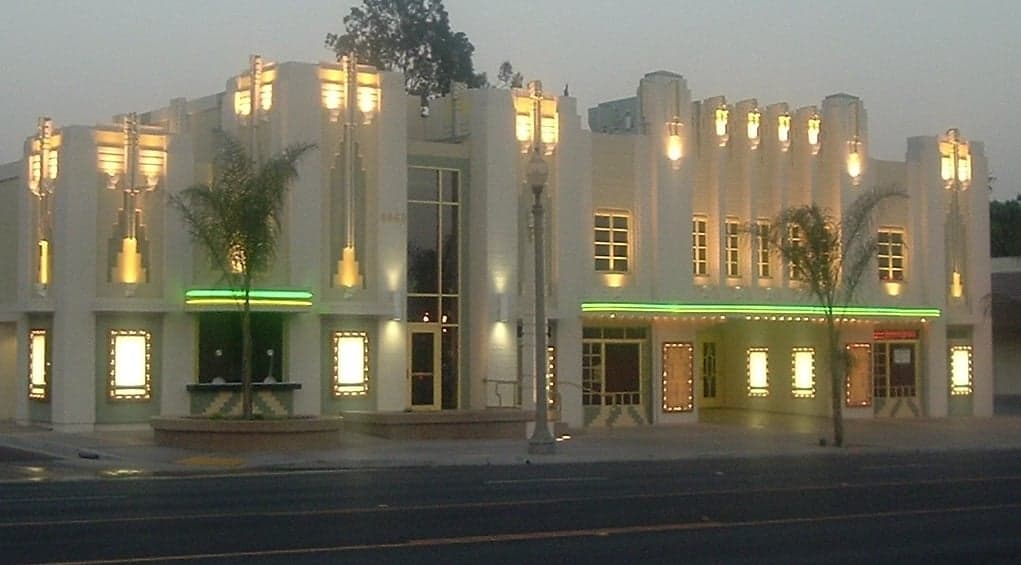
Photo: Wikipedia
Political ClimatePolitical Climate in Fontana, CA
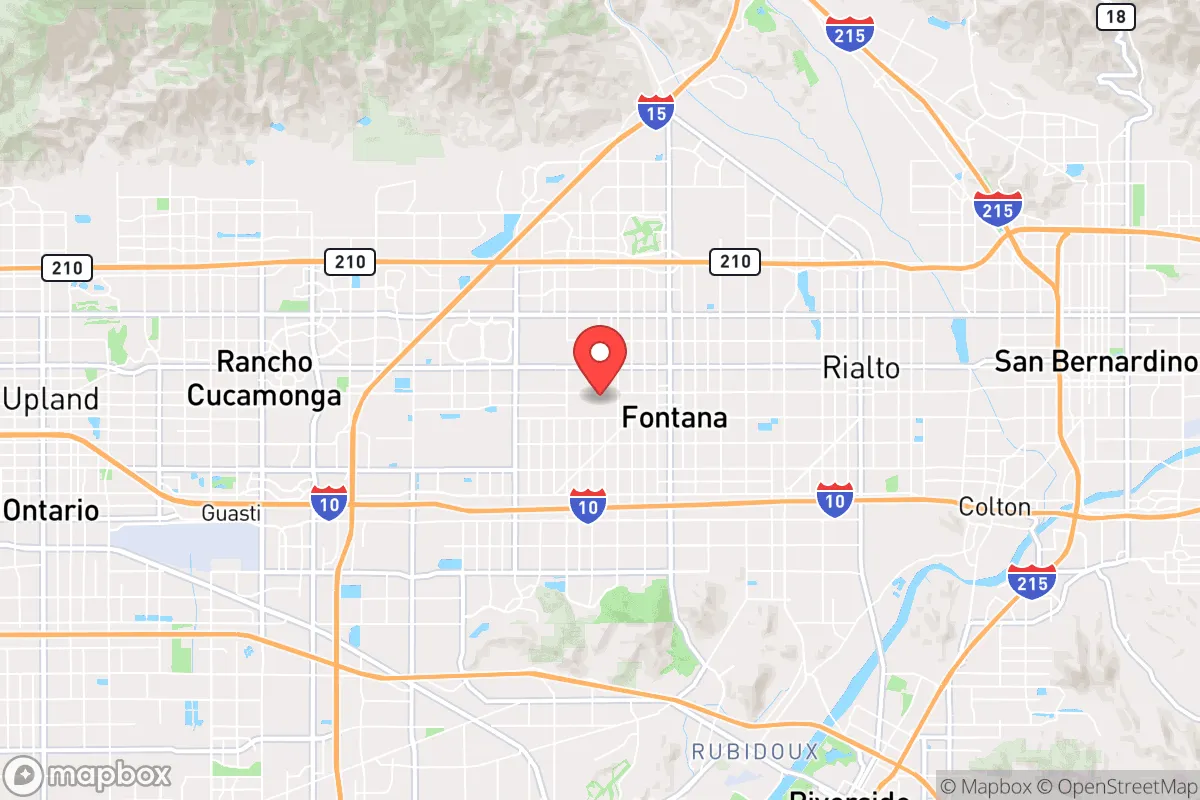
District shown is the primary district for this city’s centroid. Cities may span multiple districts.
Local Political AnalysisPolitical Analysis of Fontana, CA
Fontana’s political climate has shifted noticeably over the last decade. While the city’s Cook PVI of D+8 might make it look like a solid blue stronghold, that number masks a more complicated reality. Longtime residents will tell you this was once a working-class, union-heavy town where folks kept their politics to themselves and expected the government to stay out of their lives. Today, you’re seeing a steady drift toward progressive policies, especially on housing and policing, that feels less like community consensus and more like top-down pressure from Sacramento and county party insiders. The real story isn’t just the partisan lean—it’s how much of that shift is being driven by new arrivals and outside money, not by the families who’ve been here for generations.
How it compares
Fontana sits in a political sandwich. Drive west into Rancho Cucamonga or Upland, and you’ll find reliably Republican suburbs where property rights and lower taxes are still sacred. Head east toward Rialto or San Bernardino, and you hit deeper blue territory with higher poverty rates and more aggressive government intervention. Fontana itself used to be a swing town—it voted for George W. Bush in 2004 and then flipped to Obama in 2008. Since then, the Democratic margin has widened, but it’s not because the old-timers changed their minds. It’s because the city’s population has grown fast, and many of the newcomers are renters or young families who lean left on social issues. The result is a city where local elections are often decided by a few thousand votes, and where a conservative candidate can still win a council seat if they run on public safety and fiscal restraint. That’s getting harder every cycle, though, as the county party machinery pours resources into turning Fontana into a reliable progressive base.
What this means for residents
For someone who values personal freedom and limited government, the trend in Fontana is genuinely concerning. The city council has been flirting with rent control measures and “just cause” eviction rules, which sound nice in theory but end up tying property owners’ hands and driving up costs for everyone. There’s also been a push to defund or redirect police resources toward social workers—a move that feels disconnected from the reality of gang activity and property crime that still plagues parts of town. On the plus side, Fontana hasn’t gone full progressive like Los Angeles or San Francisco. You can still buy a home here without a six-figure down payment, and the city hasn’t banned gas stoves or mandated electric-only construction. But the long-term trajectory is clear: if you want to keep your rights to own a firearm, run a small business without endless permits, or send your kid to a school that teaches traditional values, you’re going to have to stay politically engaged and vote in every local election. Complacency is how you wake up with a city council that thinks it knows better than you do.
One cultural distinction worth noting: Fontana still has a strong sense of community rooted in its agricultural and auto-industry past. The annual Route 66 Rendezvous and the Fontana Days Parade draw crowds that cross political lines. But the policy battles are real. The city’s recent decision to allow high-density apartment zoning near the Metrolink station was sold as “smart growth,” but it felt to many like a backdoor way to change the neighborhood’s character without a vote. If you’re considering moving here, keep an eye on the school board races and the city council meetings. That’s where the future of Fontana’s freedom is being decided, one ordinance at a time.

State Political ClimatePolitical Climate in California
State Political AnalysisPolitical Environment in the State
California is a one-party Democratic superstate where Republicans have been reduced to a permanent minority, holding zero statewide offices and losing ground in the legislature every cycle. The state’s political engine is the coastal metroplex of Los Angeles, San Francisco, and San Diego, which together produce enough votes to override any conservative resistance from the Central Valley, Inland Empire, or far north. Over the last 20 years, the GOP has gone from competitive (Gray Davis was recalled in 2003) to nearly irrelevant—voter registration has flipped from roughly 35% Republican to just 24% today, while Democrats hold a 22-point registration advantage. For a conservative considering relocation, the question isn’t whether California is liberal—it’s how much of that liberalism you can tolerate or avoid by picking the right pocket of the state.
Urban vs. rural divide
The political map of California is a tale of two states. The coastal urban corridor—from San Francisco down through Los Angeles to San Diego—votes 65-80% Democratic and controls 80% of the state’s population. These metros drive every statewide election and legislative supermajority. In contrast, the Central Valley (think Bakersfield, Fresno, Visalia) and the far north (Shasta County, Redding) are solidly red, often voting 60-70% Republican. The Inland Empire around Riverside and San Bernardino is a true battleground—it voted for Trump in 2020 but has been trending blue as ex-LA residents move east. The most striking flip is Orange County, once the GOP’s California stronghold, which went from R+18 in 2012 to D+9 by 2024, driven by Asian-American and Latino voters shifting left. If you’re a conservative, your best bets are the Central Valley farm towns, the Sierra foothills (like Placerville), or the far north—but even there, state policy overrides local preferences on nearly everything that matters.
Policy environment
California’s policy environment is aggressively progressive and heavily regulated. The state has the highest income tax rate in the nation (13.3%), a 7.25% sales tax floor (often 9-10% locally), and some of the highest gas taxes and property transfer costs anywhere. Proposition 13 caps property tax increases at 2% annually, but only for existing homeowners—new buyers face reassessed values that can be crushing. On education, California spends over $20,000 per pupil but ranks near the bottom nationally in reading and math proficiency; school choice is virtually nonexistent, with no voucher program and strict charter caps. Healthcare is dominated by the state’s massive Medi-Cal expansion and a push toward single-payer, though it hasn’t passed yet. Election laws are among the most permissive in the country: universal mail-in voting (made permanent in 2021), same-day registration, and no voter ID requirement. For a conservative, the policy environment feels like a slow-motion ratchet—every year brings new mandates, higher taxes, and less local control, with no political mechanism to reverse course.
Trajectory & freedom
California is becoming less free by almost any measure, and the trend is accelerating. On gun rights, the state has the nation’s strictest laws—an “assault weapons” ban, a 10-day waiting period, a “may issue” concealed carry regime that was only slightly loosened by the Bruen decision, and a 2023 law (SB 2) that effectively bans carry in most public places. On parental rights, the state passed AB 1955 in 2024, which prohibits schools from notifying parents if a child changes their gender identity—a direct assault on family authority. On speech, California’s AB 587 (2023) forces social media platforms to disclose their content moderation policies, a de facto pressure campaign against conservative viewpoints. Medical autonomy took a hit with the state’s COVID-19 vaccine mandates for schoolchildren (still on the books, though unenforced) and a 2023 law allowing non-citizens to serve on juries. Property rights are eroded by the California Environmental Quality Act (CEQA), which lets anyone sue to block development, and by rent control laws that cap annual increases at 5% plus inflation. The only area where freedom expanded is abortion—Proposition 1 (2022) enshrined it in the state constitution—but for conservatives, that’s cold comfort. The overall trajectory is toward more state control, less local discretion, and fewer individual rights.
Civil unrest & political movements
California has been a flashpoint for political unrest for a decade. The 2020 George Floyd protests in Los Angeles and San Francisco caused over $1 billion in damage, with minimal police response—a pattern that repeated in 2024 during pro-Palestinian encampments at UCLA and UC Berkeley. The state’s sanctuary law (SB 54, 2017) prohibits local law enforcement from cooperating with federal immigration authorities, making California a de facto safe haven for illegal immigration. This has fueled a backlash: the “California exodus” narrative is real, with net domestic outmigration of over 700,000 people since 2020, many citing crime, taxes, and politics. On the right, the “State of Jefferson” movement in the far north (Shasta, Siskiyou, Modoc counties) has pushed for secession from California, though it’s purely symbolic. Election integrity is a live issue—the 2020 and 2022 elections saw widespread use of ballot drop boxes and universal mail-in voting, which conservatives view as ripe for fraud, though no major scandals have been proven. What a new resident will notice is the visible homelessness crisis (over 180,000 unsheltered people statewide), the open-air drug markets in San Francisco and Los Angeles, and the constant presence of political signage—both progressive and, in red areas, defiantly conservative. It’s a state that feels perpetually on edge.
Projection
Over the next 5-10 years, California will likely become more Democratic, more regulated, and more expensive. Demographic trends are relentless: the state’s white population is shrinking, while Latino and Asian populations—who vote Democratic by 2-to-1 margins—are growing. The GOP’s only hope is a massive backlash against crime and homelessness, but even then, the legislature’s supermajority can override any governor. In-migration from other states is negative, but international immigration (legal and illegal) keeps the population stable. The most realistic scenario is that California becomes a laboratory for progressive policy—universal healthcare, wealth taxes, reparations—while the Central Valley and far north become even more isolated redoubts. For a conservative moving in now, expect to pay more in taxes every year, see your children exposed to progressive curricula without parental opt-out, and watch your property rights erode further. The only upside is that if you can afford it, the climate and economy are still world-class—but the political trajectory is unmistakably leftward.
Bottom line for a new resident: If you’re a conservative, don’t move to California expecting to change it—move to a specific red pocket (Bakersfield, Redding, or a Central Valley farm town) and accept that state policy will override your local preferences on guns, taxes, education, and parental rights. The state is beautiful, diverse, and economically powerful, but it is also increasingly hostile to traditional values and individual liberty. If you value low taxes, school choice, gun rights, and local control, California is likely a poor fit—unless you’re wealthy enough to insulate yourself from the worst of it. For everyone else, the exodus is likely to continue.
* Values derived from national, state, county, city and local statistics and may differ in a specific area. Last updated: 2026-04-30T01:07:56.000Z
Narrative content on this page is AI-generated and may contain mistakes. Verify any details that matter before acting on them.
ReloMaps may earn a commission from affiliate links at no extra cost to you.

