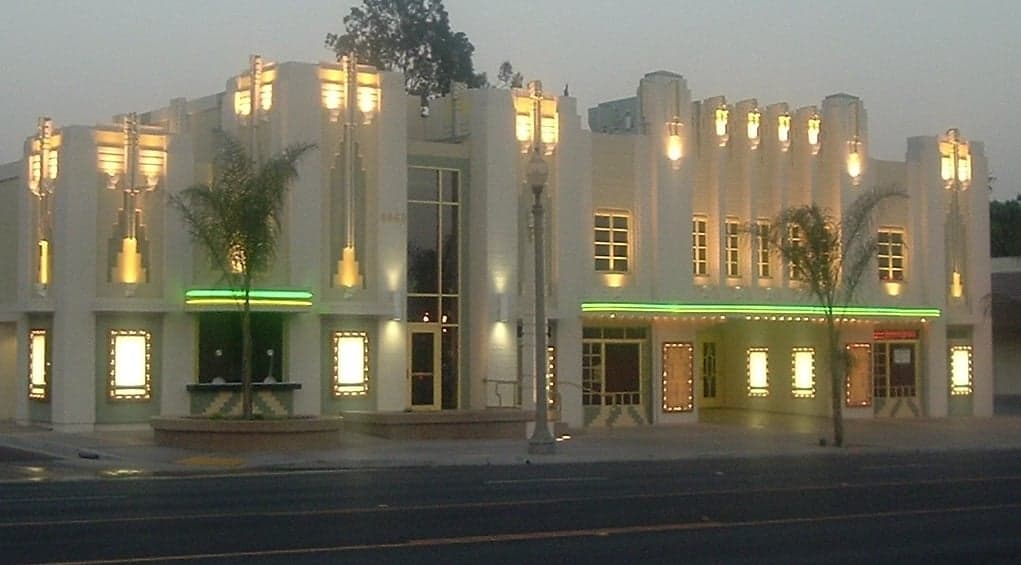
Photo: Wikipedia
Demographics of Fontana, CA
Affluence Level in Fontana, CA
A middle-class area roughly in line with national averages across income, home values, education, and employment.
People of Fontana, CA
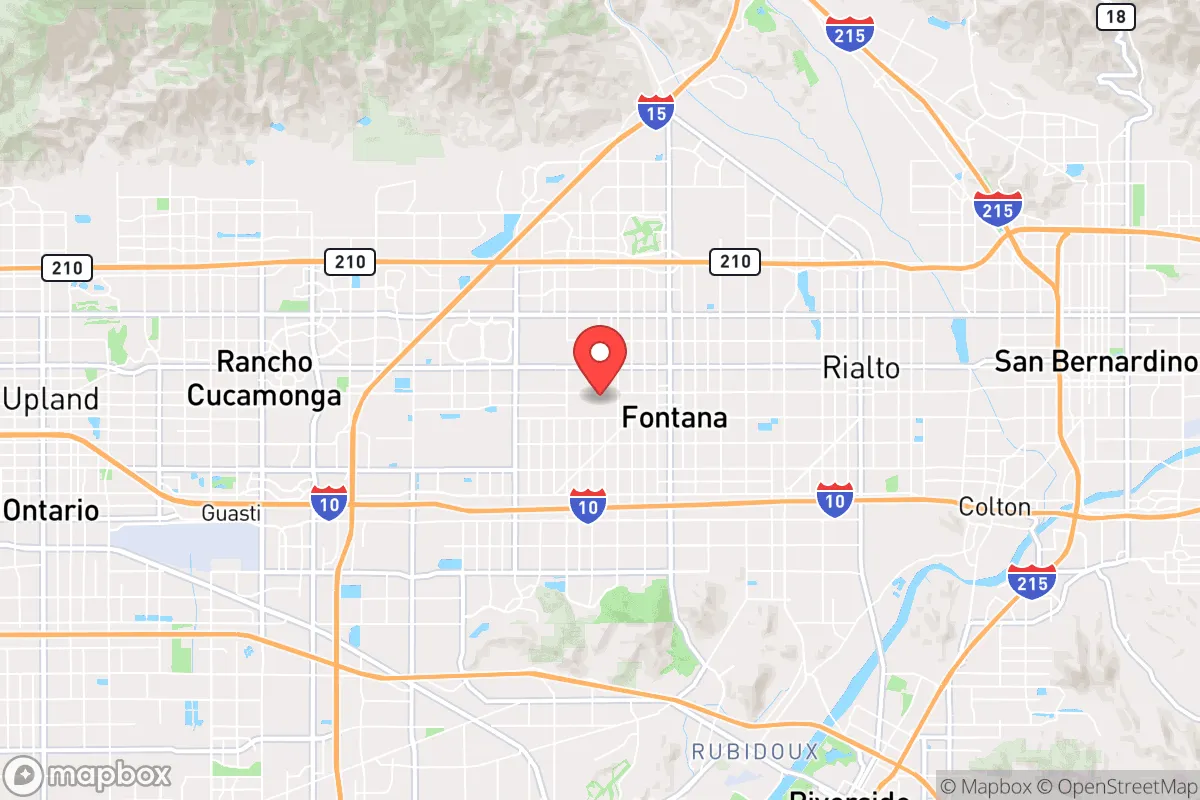
Fontana, California, is a majority-Hispanic working-class city of 211,921 residents, where 67.9% of the population identifies as Hispanic or Latino, 12.5% as non-Hispanic White, 8.2% as Black, and 7.0% as East or Southeast Asian. The city’s identity is rooted in its history as a blue-collar industrial hub and a gateway for successive waves of domestic and international migrants seeking affordable housing and manufacturing jobs. With a foreign-born population of 13.4% and a college attainment rate of 20.4%, Fontana remains a place where economic opportunity, not higher education, has historically drawn and held its people.
How the city was settled and grew
Fontana was founded in 1913 as a planned agricultural colony by A.B. Miller, a developer who subdivided the land into small farms and sold parcels to Midwestern farmers and European immigrants. The original settlers were largely White Protestants from the Midwest and Italian and Portuguese immigrants who worked the citrus and walnut groves. The historic Fontana Park neighborhood, near the original townsite along Sierra Avenue, was the first residential area, housing these early farming families. The city’s character shifted dramatically in 1942 when Kaiser Steel opened a massive mill in the North Fontana area, drawing tens of thousands of workers from across the United States. During World War II and the postwar boom, Black families from the South and White migrants from the Dust Bowl states (Oklahoma, Arkansas, Texas) settled in neighborhoods like Southridge and Village of Heritage, building a multiracial working-class community around the steel plant. By 1960, Fontana’s population had grown from a few thousand to over 14,000, with the steel mill employing more than 10,000 people at its peak.
Modern era (post-1965)
The 1965 Immigration and Nationality Act opened the door for new waves of migration, and Fontana’s population began its transformation from a predominantly White and Black industrial town to a majority-Hispanic city. Mexican and Central American immigrants arrived in large numbers during the 1970s and 1980s, drawn by construction and warehouse jobs as Kaiser Steel declined (the mill closed in 1983). These families settled in the West Fontana and Jurupa Hills neighborhoods, where affordable single-family homes and proximity to the 10 Freeway made the area attractive. The Hispanic share of the population rose from roughly 20% in 1970 to over 50% by 1990, and has continued climbing to 67.9% today. East and Southeast Asian communities—primarily Filipino and Vietnamese—began arriving in the 1980s and 1990s, clustering in the North Fontana and Summit Heights areas near the Kaiser Permanente hospital and the auto dealership corridor. The Black population, which peaked at around 12% in the 1990s, has declined slightly to 8.2% as many families moved to the Inland Empire’s newer suburbs. The non-Hispanic White share has fallen from over 60% in 1970 to 12.5% today, concentrated in older neighborhoods like Fontana Park and the gated communities of Heritage.
The future
Fontana’s population is likely to continue its Hispanic majority trend, with the Hispanic share projected to reach 75-80% by 2040, driven by both natural increase and continued immigration from Mexico and Central America. The East/Southeast Asian share (7.0%) is stable, with Filipino and Vietnamese families aging in place but not seeing large new arrivals. The Indian subcontinent population (1.0%) is small but growing slowly, primarily professionals working in logistics and healthcare. The Black population is expected to remain around 8%, with some out-migration to more affordable Inland Empire cities like Moreno Valley. The non-Hispanic White population will likely continue its slow decline, falling below 10% within a decade. Fontana is not tribalizing into distinct ethnic enclaves—most neighborhoods are mixed, with Hispanic families present in every area—but the city is homogenizing in the sense that its civic and commercial life is increasingly Spanish-language dominant. The city’s future is one of a stable, working-class Hispanic suburb, with a growing logistics and warehousing economy replacing the old industrial base.
For someone moving to Fontana today, the city offers affordable housing and a strong sense of community among its Hispanic majority, but limited economic mobility for those without warehouse or trade skills. The population is young (median age 31), family-oriented, and politically moderate-to-conservative on social issues. New arrivals should expect a Spanish-English bilingual environment, a city that values hard work and homeownership, and a demographic trajectory that points toward an even more Hispanic, working-class future.

* Values derived from national, state, county, city and local statistics and may differ in a specific area. Last updated: 2026-04-30T01:07:56.000Z
Narrative content on this page is AI-generated and may contain mistakes. Verify any details that matter before acting on them.
ReloMaps may earn a commission from affiliate links at no extra cost to you.

