Photo: Wikipedia
Demographics of Folsom, CA
Affluence Level in Folsom, CA
An upper-middle-class area. Household wealth, education levels, and homeownership run ahead of national benchmarks.
People of Folsom, CA
The people of Folsom, California, today number 82,140, forming a predominantly white-collar, family-oriented community with a notably high college attainment rate of 54.7%. The city’s population is characterized by a strong professional and tech-sector presence, a significant and growing Indian-subcontinent community (10.9%), and a substantial East/Southeast Asian population (8.5%), alongside a Hispanic share of 14.1% and a Black share of 5.0%. With a foreign-born population of just 7.8%, Folsom is less diverse by nativity than many neighboring Sacramento suburbs, but its racial and ethnic composition has shifted markedly in the last two decades, driven by high-skilled immigration and domestic migration into newer master-planned neighborhoods.
How the city was settled and grew
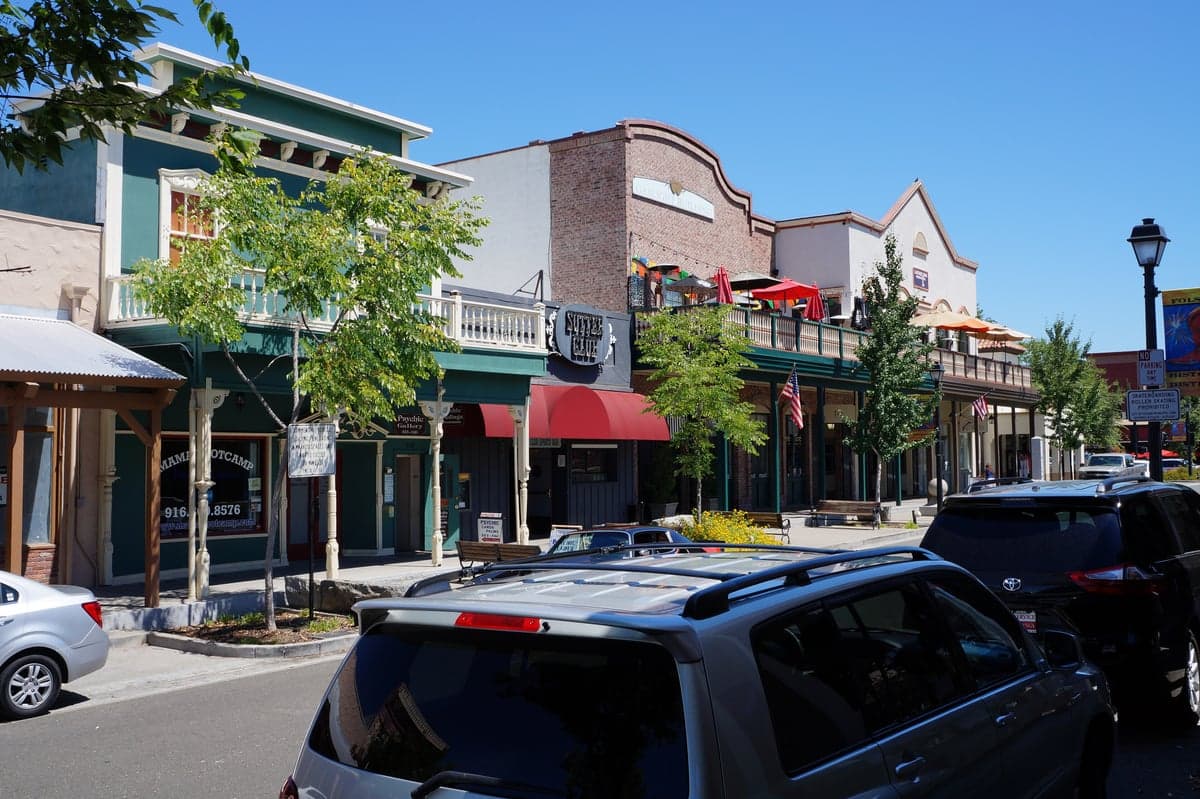
Folsom’s original population was drawn by the California Gold Rush, with the city founded in 1855 as a railroad terminus for the Sacramento Valley. The historic Sutter Street district and the surrounding Historic District were built by a mix of Anglo-American miners, merchants, and a small number of Chinese laborers who worked on the railroad and later established a short-lived Chinatown near the levee. By the early 20th century, the population remained overwhelmingly white and working-class, anchored by the Folsom State Prison (opened 1880) and local agriculture. The post-World War II era saw modest growth, but Folsom remained a small town of roughly 5,000 residents through the 1960s, with most families living in the older grid streets around Sutter Street and the Natoma Station area.
Modern era (post-1965)
The modern demographic transformation of Folsom began in earnest after the 1965 Immigration and Nationality Act and accelerated with the city’s master-planned expansion from the 1980s onward. The opening of Intel’s Folsom campus in 1984 and the subsequent arrival of other tech employers (including Micron and later Apple) drew a highly educated, largely white and Asian workforce from across the United States and abroad. The Empire Ranch area, developed from the 1990s through the 2010s, became the primary landing zone for these professional families, with its large single-family homes and top-rated schools. The Broadstone neighborhood, built around the same period, attracted a mix of white and East/Southeast Asian families, while the newer Palladio and Folsom Ranch developments (post-2010) have seen a particularly strong influx of Indian-subcontinent families, many working in tech and engineering roles in Folsom and nearby Rancho Cordova. The Hispanic population, while smaller than in neighboring communities, is concentrated in older parts of the city, including the Historic District and some multifamily areas near East Bidwell Street. The Black population, at 5.0%, is dispersed but has a modest presence in the Broadstone and Empire Ranch areas. The white share has declined from roughly 75% in 2000 to 55.4% today, reflecting the city’s growing racial and ethnic diversity, though the foreign-born share remains low by California standards.
The future
Folsom’s population is projected to continue growing, driven by the build-out of the Folsom Ranch master plan, which will add thousands of new homes and is expected to attract a continued mix of white, Indian-subcontinent, and East/Southeast Asian families. The city’s demographic trajectory points toward a more diverse but still highly educated and affluent population, with the Indian-subcontinent share likely to rise further given the tech employment base and the presence of established community networks. The Hispanic and Black shares are expected to grow modestly but remain below regional averages, as housing costs in Folsom (median home price above $700,000) limit affordability for lower-income households. The cultural identity of the city is evolving from a historically white, suburban character toward a more multiethnic, professional-class community, with increasing visibility of Indian and East/Southeast Asian cultural institutions, restaurants, and religious centers in the Palladio and Folsom Ranch corridors.
For someone moving to Folsom now, the city offers a stable, family-oriented environment with strong schools and a growing tech economy, but it is becoming more expensive and more diverse than its reputation suggests. New arrivals will find a community where the old Sutter Street historic core coexists with sprawling master-planned neighborhoods, and where the population is increasingly defined by professional achievement and educational attainment rather than by a single ethnic or cultural identity.

* Values derived from national, state, county, city and local statistics and may differ in a specific area. Last updated: 2026-08-23T00:50:34.000Z
Narrative content on this page is AI-generated and may contain mistakes. Verify any details that matter before acting on them.
ReloMaps may earn a commission from affiliate links at no extra cost to you.

