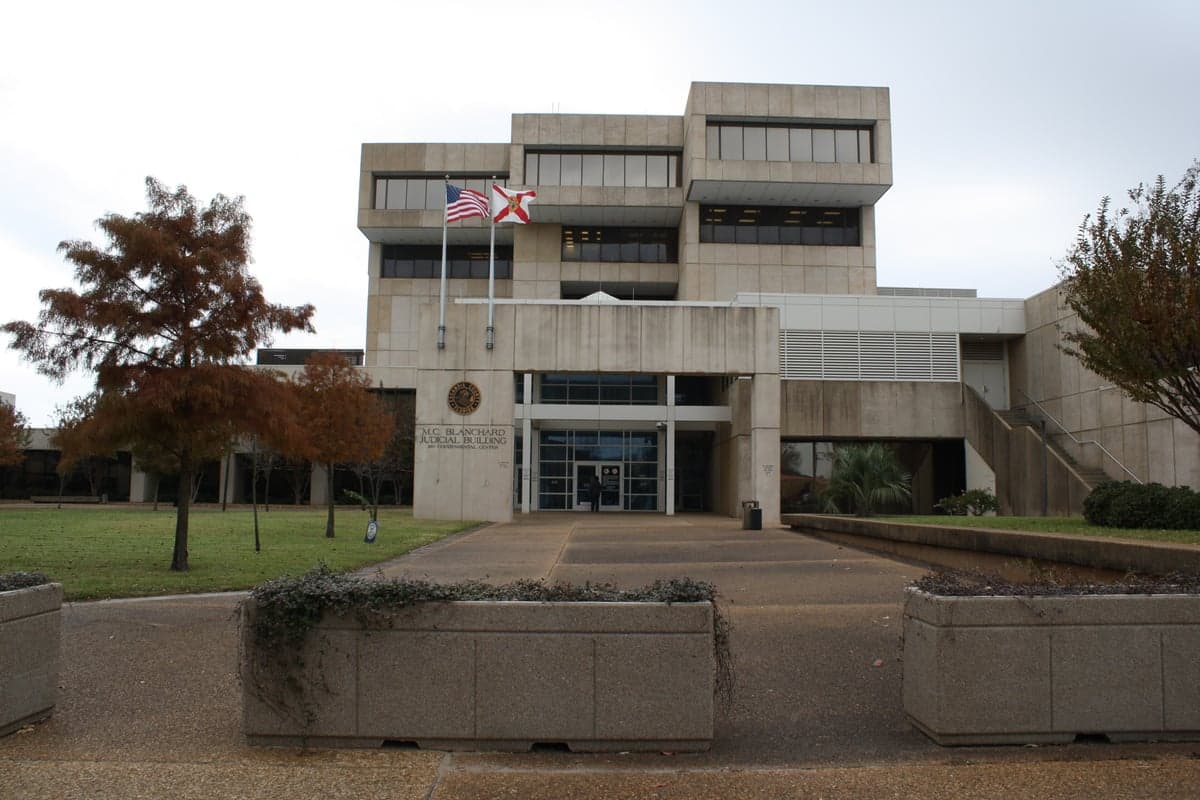
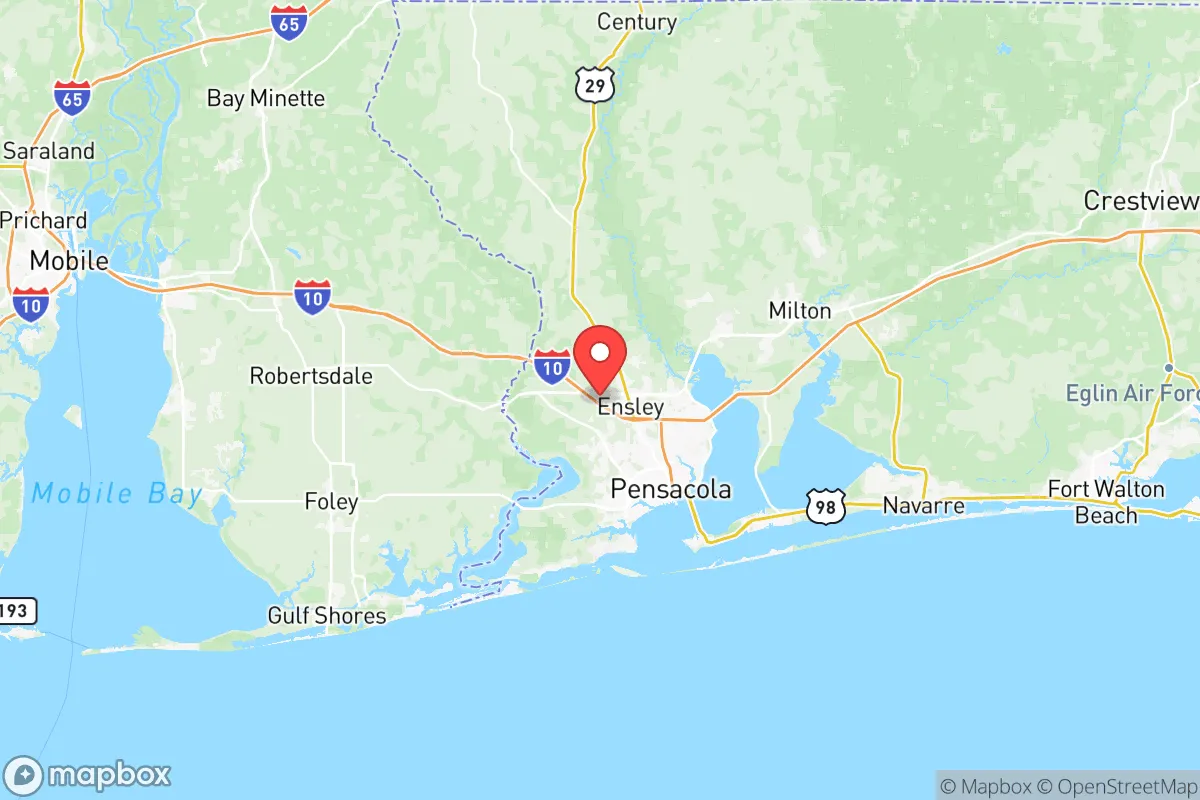
Photo: Wikipedia
Personal Sovereignty in Escambia County
Viable for self-reliance. Generally workable, though some barriers may limit total independence.
What does Personal Sovereignty tell us?
Personal Sovereignty measures your capacity for self-reliance and independence with minimal government friction. Higher scores mean fewer barriers between you and the way you want to live... but it assumes you have the space you need and good neighbors.
What does this tell us?
Personal Sovereignty measures your capacity for self-reliance and independence with minimal government friction. Higher scores mean fewer barriers between you and the way you want to live... but it assumes you have the space you need and good neighbors.
State Policy
Energy independence: Importer (10% of energy produced in-state)
Personal Liberty

Personal Liberty Analysis
Escambia County, Florida, offers a notably high degree of personal sovereignty, anchored by Florida’s strong preemption laws and a state-level commitment to limiting local overreach. While the county itself is a mix of dense suburban pockets and rural stretches, the overall environment leans toward individual autonomy, particularly in areas like Pensacola, Cantonment, and Molino, where regulatory touch is lighter than in more urbanized parts of the state. For a relocation audience that values self-reliance, Escambia County presents a landscape where state law consistently shields personal choices from local interference, though the degree of practical freedom varies depending on whether you are inside Pensacola city limits or out in the unincorporated county.
Tax burden and regulatory climate in Escambia County
Florida’s lack of a state income tax is the headline benefit, and Escambia County residents enjoy that fully. The county’s combined sales tax rate is 7.5% (6% state, 1% county discretionary, 0.5% local option surtax), which is standard for the Panhandle. Property taxes are moderate: the county’s millage rate for 2025 is roughly 5.2 mills, with additional levies for schools and fire districts pushing the effective rate to around 10-11 mills depending on the specific jurisdiction. Pensacola’s city limits add about 2.5 mills on top of that, making unincorporated areas like Cantonment or Bellview more attractive for cost-conscious residents. Regulatory posture is generally light: Florida’s strong preemption laws prevent local governments from enacting their own wage, rental, or environmental ordinances that exceed state standards. Escambia County does not have its own building code beyond the state’s Florida Building Code, and there are no county-level rent control or minimum wage ordinances. Permitting for home renovations or small-scale construction is straightforward in unincorporated areas, though Pensacola’s city permitting process is slightly more involved, with typical single-family permit review taking 2-4 weeks. Business licensing is minimal: no county-level occupational license is required for most home-based businesses, though a Pensacola business tax receipt is needed if operating within city limits.
Self-defense and gun law specifics in Escambia County
Florida is a shall-issue state for concealed carry, and Escambia County fully reflects that. No permit is required for open carry of firearms in most circumstances (with exceptions for certain locations like schools and government buildings), and concealed carry permits are issued by the Florida Department of Agriculture, not local authorities. The county sheriff’s office in Escambia processes fingerprints and applications for the state, but does not impose additional local restrictions. Stand-your-ground law applies statewide, and Escambia County courts have consistently upheld that standard in self-defense cases. There are no county-level gun show or ammunition purchase restrictions, and private firearm sales between individuals are legal without a background check, as state law preempts local regulation. Gun ranges are plentiful: the Escambia River Gun Club near Cantonment offers a public range, and several private clubs operate in the Molino area. For residents who want to carry without a permit, Florida’s permitless carry law (effective July 2023) allows lawful possession of a concealed firearm without a license, though a permit is still recommended for reciprocity when traveling. Pensacola’s city council has occasionally discussed local gun ordinances, but state preemption makes those unenforceable, so the entire county remains uniformly gun-friendly.
Self-reliance and homesteading viability across Escambia County
Homesteading potential varies significantly by location within Escambia County. Unincorporated areas like Molino, Century, and Walnut Hill offer the best opportunities, with minimum lot sizes of 1 acre in most agricultural zoning districts and no county-level restrictions on keeping chickens, goats, or even small livestock on parcels of 1 acre or more. The county’s land development code allows for accessory dwelling units (ADUs) on lots of at least 5,000 square feet in unincorporated areas, which supports multi-generational living or rental income. Off-grid feasibility is moderate: Florida’s building code requires connection to the electrical grid for new construction, but solar panels with battery storage are permitted and net metering is available through Gulf Power (now Florida Power & Light). Rainwater collection is legal without a permit for non-potable uses, and composting toilets are allowed under the state’s plumbing code for properties without sewer access. Well drilling is straightforward: a permit from the Florida Department of Environmental Protection is required, but the process is streamlined for single-family homes. In contrast, Pensacola’s city limits impose stricter zoning: minimum lot sizes are typically 5,000 square feet, livestock is prohibited, and ADUs are limited to owner-occupied properties. Century, at the county’s northern edge, is the most rural and affordable, with land prices around $3,000-$5,000 per acre and minimal code enforcement.
Personal liberties: parental rights, medical autonomy, speech, and property
Florida’s state-level policies strongly protect parental rights in education and healthcare. Escambia County School District follows the state’s Parental Bill of Rights, which gives parents the right to review instructional materials and opt their children out of any curriculum they object to. Medical autonomy is similarly robust: Florida law prohibits local mask or vaccine mandates for private businesses or individuals, and Escambia County has not attempted to impose any such requirements. No county-level health orders have been issued since 2021, and the local health department operates under state guidance. Free speech is protected by state preemption as well: Escambia County has no local ordinances restricting political signage, leafleting, or public assembly beyond standard time-place-manner rules. Property rights are strong: Florida’s Private Property Rights Protection Act limits the use of eminent domain for economic development, and Escambia County’s comprehensive plan does not include any inclusionary zoning or rent control provisions. Short-term rental regulations are minimal in unincorporated areas, though Pensacola requires a city business tax receipt and limits vacation rentals in residential zones to owner-occupied properties. For residents who value the ability to make medical decisions without government interference, Escambia County offers a permissive environment, with no local restrictions on alternative medicine or direct primary care arrangements.
Overall, Escambia County ranks among the more sovereignty-friendly areas in Florida, particularly for those who choose to live outside Pensacola’s city limits. The combination of no state income tax, strong preemption laws, permissive gun culture, and minimal local regulation creates an environment where personal autonomy is the default. Compared to counties in the Northeast or West Coast, Escambia’s regulatory burden is exceptionally light, and even within Florida, it is less restrictive than Miami-Dade or Orange County. For a conservative-leaning individual or family seeking a place where self-reliance is not just tolerated but structurally supported, Escambia County—especially its rural towns like Molino, Century, and Walnut Hill—offers a compelling balance of freedom and affordability.

* Values derived from national, state, county, city and local statistics and may differ in a specific area. Last updated: 2026-08-02T10:22:54.000Z
Narrative content on this page is AI-generated and may contain mistakes. Verify any details that matter before acting on them.
ReloMaps may earn a commission from affiliate links at no extra cost to you.

