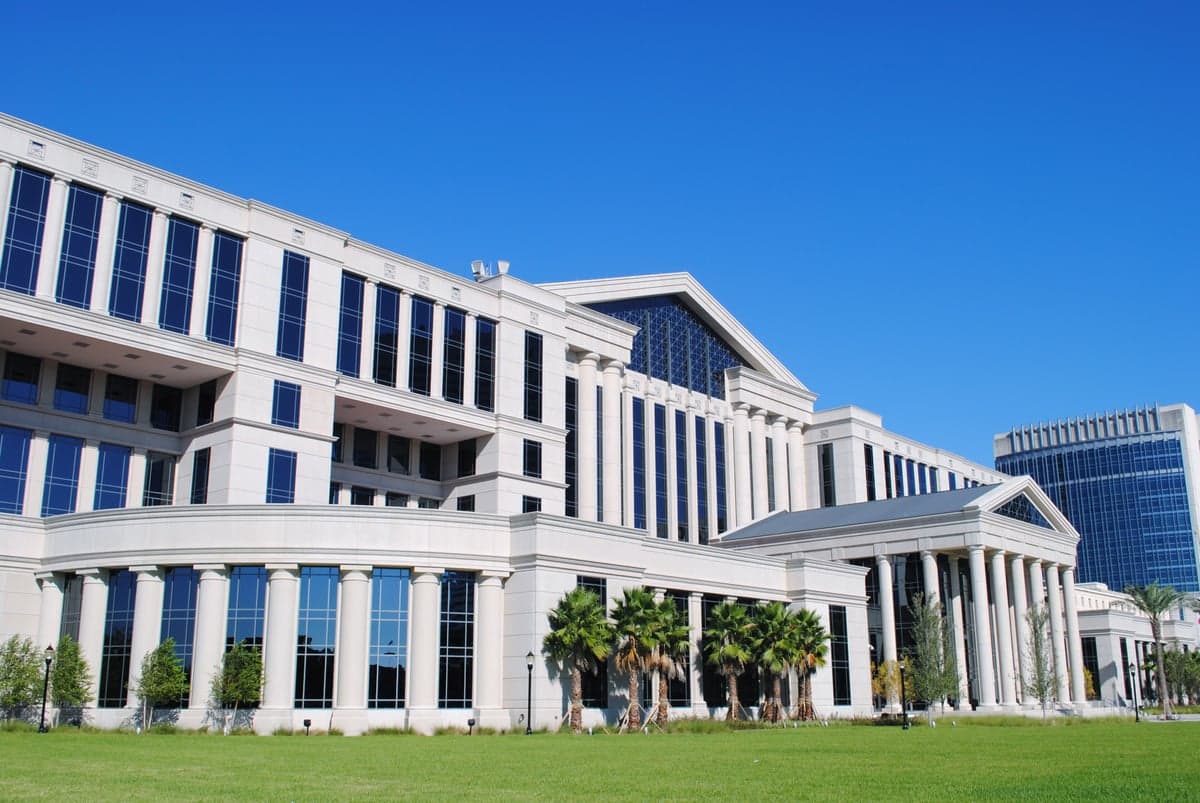
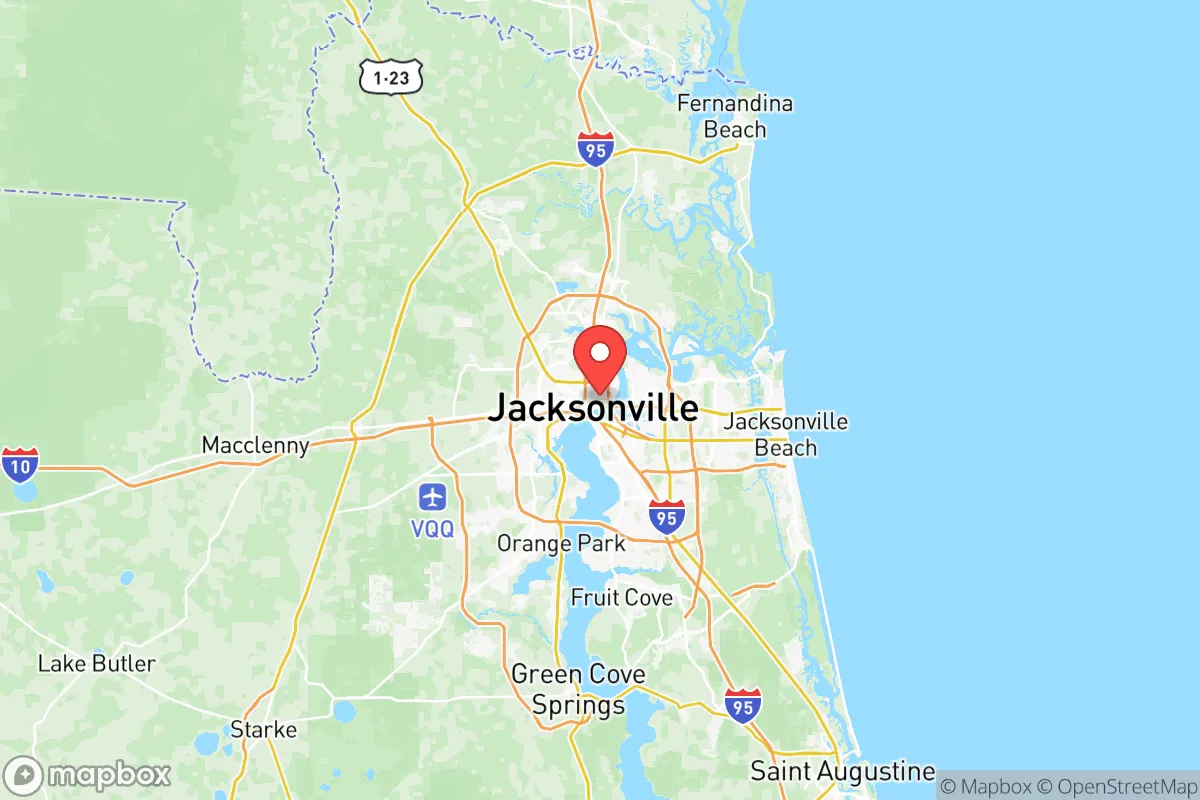
Photo: Wikipedia
Personal Sovereignty in Duval County
Viable for self-reliance. Generally workable, though some barriers may limit total independence.
What does Personal Sovereignty tell us?
Personal Sovereignty measures your capacity for self-reliance and independence with minimal government friction. Higher scores mean fewer barriers between you and the way you want to live... but it assumes you have the space you need and good neighbors.
What does this tell us?
Personal Sovereignty measures your capacity for self-reliance and independence with minimal government friction. Higher scores mean fewer barriers between you and the way you want to live... but it assumes you have the space you need and good neighbors.
State Policy
Energy independence: Importer (10% of energy produced in-state)
Personal Liberty
Homesteading

Personal Liberty Analysis
Duval County, Florida, anchored by Jacksonville, presents a complex personal sovereignty environment where state-level protections for individual rights intersect with a large, urbanized municipal government that imposes its own regulatory layer. While Florida’s constitutional preemption laws shield residents from many local overreaches seen in other states, Jacksonville’s size and history as a consolidated city-county government mean that personal autonomy in Duval is more constrained than in Florida’s rural counties, yet significantly freer than in comparable urban centers like Miami-Dade or Broward. For a conservative-leaning individual or family, the county offers a solid baseline of personal freedom, but the specific neighborhood—from the suburban sprawl of Fleming Island to the more rural fringes of Baldwin and Oceanway—determines how much of that sovereignty is practically felt.
Tax burden and regulatory posture in Duval County
Florida’s lack of a state income tax is the single most powerful pro-sovereignty feature for Duval County residents, allowing individuals to keep 100% of their earned wages. The county’s combined sales tax rate is 7.5% (6% state, 1% county discretionary), which is standard for Florida and not burdensome compared to high-tax states. Property taxes are governed by the Save Our Homes amendment, capping annual assessed value increases at 3% for homesteaded properties, a critical protection for long-term homeowners against inflationary tax hikes. However, Jacksonville’s regulatory posture is notably heavier than in surrounding counties like Nassau or St. Johns. The city enforces a strict Land Development Code that governs everything from fence heights to home-based business operations. For example, operating a small engine repair shop from a residential garage in Arlington requires a business tax receipt and must comply with noise and parking ordinances that are more restrictive than in unincorporated areas of Baker County just west. The city’s Tree Protection Ordinance also requires permits for removing certain trees on private property, a regulation that rankles homeowners seeking full control over their land. While Florida preempts local rent control and most occupational licensing, Jacksonville’s zoning and environmental rules create a moderate regulatory ceiling that residents must navigate.
Self-defense and gun law specifics in Duval County
Florida is a shall-issue state for concealed carry permits, and Duval County’s Sheriff’s Office processes applications efficiently, typically within 30-60 days. The state’s Stand Your Ground law provides a strong legal presumption that a person using deadly force in self-defense had a reasonable fear of death or great bodily harm, with no duty to retreat in any place where they are lawfully present. This applies uniformly across Duval County, including in Jacksonville’s urban core. The county does not have any local gun store or range restrictions beyond state law, and open carry of long guns is legal, though rarely practiced in the city. For practical self-defense training, Gun Gallery in Jacksonville and Florida Gun Center on the Southside offer ranges and classes. The political culture in Duval is mixed: while the city council is more moderate than the state legislature, the county consistently votes Republican in statewide races, and the Sheriff’s Office is generally supportive of Second Amendment rights. However, residents should note that Jacksonville’s gun-free zones (schools, government buildings, airports) are strictly enforced, and the city’s higher population density means that a defensive gun use is more likely to face scrutiny from the State Attorney’s Office than in a rural county like Union or Bradford to the north. For those prioritizing maximum legal latitude in self-defense, the rural western parts of Duval County—near Baldwin—offer a culture where firearms are more integrated into daily life, with fewer neighbors to question a shot fired in defense.
Self-reliance and homesteading viability: lot sizes, zoning, and off-grid feasibility
Homesteading and off-grid living in Duval County are heavily constrained by Jacksonville’s urban zoning, but pockets of possibility exist. The minimum lot size in most residential zones is 5,000 to 7,000 square feet, making substantial food production or livestock keeping impractical in the city. Keeping chickens is allowed on lots of 5,000 square feet or more, but roosters are prohibited, and coop setbacks apply. Beekeeping is permitted with registration, but hives must be 10 feet from property lines. For larger animals like goats or horses, residents must be in the Agricultural (A) zoning district, which is primarily found in the far west near Cecil Commerce Center and in the rural north around Baldwin. Off-grid water and sewer are theoretically possible on parcels of one acre or more, but Jacksonville’s building code requires connection to municipal water and sewer where available, which covers most of the county. Solar panels are permitted and encouraged, but net metering with JEA (the municipal utility) is capped, and battery storage is the only way to achieve true energy independence. The Northside and Westside fringes offer the best balance of larger lots (1-5 acres) and lower land costs, with some properties near Baldwin still zoned for agricultural use. For serious homesteading, residents often look to neighboring Nassau County (Callahan area) or Baker County (Glen St. Mary), where zoning is far looser and land prices are 30-50% lower than in Duval. Within Duval, the Oceanway area near the Nassau line offers some larger parcels, but the county’s stormwater management regulations and building setbacks still impose significant costs on any self-built structure.
Personal liberties: parental rights, medical autonomy, speech, and property
Florida’s Parental Rights in Education Act and the Parental Bill of Rights give Duval County families strong legal standing to direct their children’s upbringing, including the right to opt out of school curricula and medical treatments. Duval County Public Schools is the 20th largest district in the nation, and while the school board is elected, it has been a battleground over curriculum transparency and parental notification policies. Homeschooling is straightforward: parents file a notice of intent and maintain a portfolio, with no standardized testing requirement. Medical autonomy is protected by state law prohibiting vaccine passports and mandating informed consent for medical procedures, but Jacksonville’s hospital systems (UF Health, Baptist Health, Mayo Clinic) are large institutions that generally follow standard protocols. Speech protections are strong under Florida’s constitution and state preemption laws, which prevent local governments from regulating signs, leafleting, or public assembly more restrictively than state law allows. Property rights are bolstered by the Bert J. Harris Jr. Private Property Rights Protection Act, which allows landowners to seek compensation if a government regulation reduces property value by more than 50%. However, Jacksonville’s Downtown Investment Authority and Community Redevelopment Agencies exercise eminent domain powers for redevelopment projects, a concern for property owners in areas like LaVilla or Brooklyn. The county’s short-term rental regulations require a license and limit rentals to 30 days or more in residential zones, a restriction that homeowners in San Marco or Riverside find burdensome compared to the laxer rules in unincorporated St. Johns County.
Overall, Duval County offers a moderate-to-high personal sovereignty environment relative to other major U.S. metropolitan areas, but it falls short of the near-total autonomy found in Florida’s rural counties. The state’s preemption laws and tax structure provide a strong foundation, but Jacksonville’s municipal code, zoning density, and utility monopoly create friction for those seeking maximum self-reliance. For a conservative individual or family, the best strategy is to locate in the county’s rural fringe—Baldwin or the Northside near the Nassau line—where lot sizes are larger, neighbors are fewer, and the practical experience of freedom is closer to that of Baker County or Union County. In the urban core, personal sovereignty is more about legal rights than lived autonomy, with the city’s regulatory apparatus acting as a constant, if manageable, constraint. For those willing to trade some convenience for independence, Duval County is a viable compromise; for those who prioritize absolute freedom, the adjacent rural counties are a clearer choice.

* Values derived from national, state, county, city and local statistics and may differ in a specific area. Last updated: 2026-08-19T21:21:33.000Z
Narrative content on this page is AI-generated and may contain mistakes. Verify any details that matter before acting on them.
ReloMaps may earn a commission from affiliate links at no extra cost to you.

