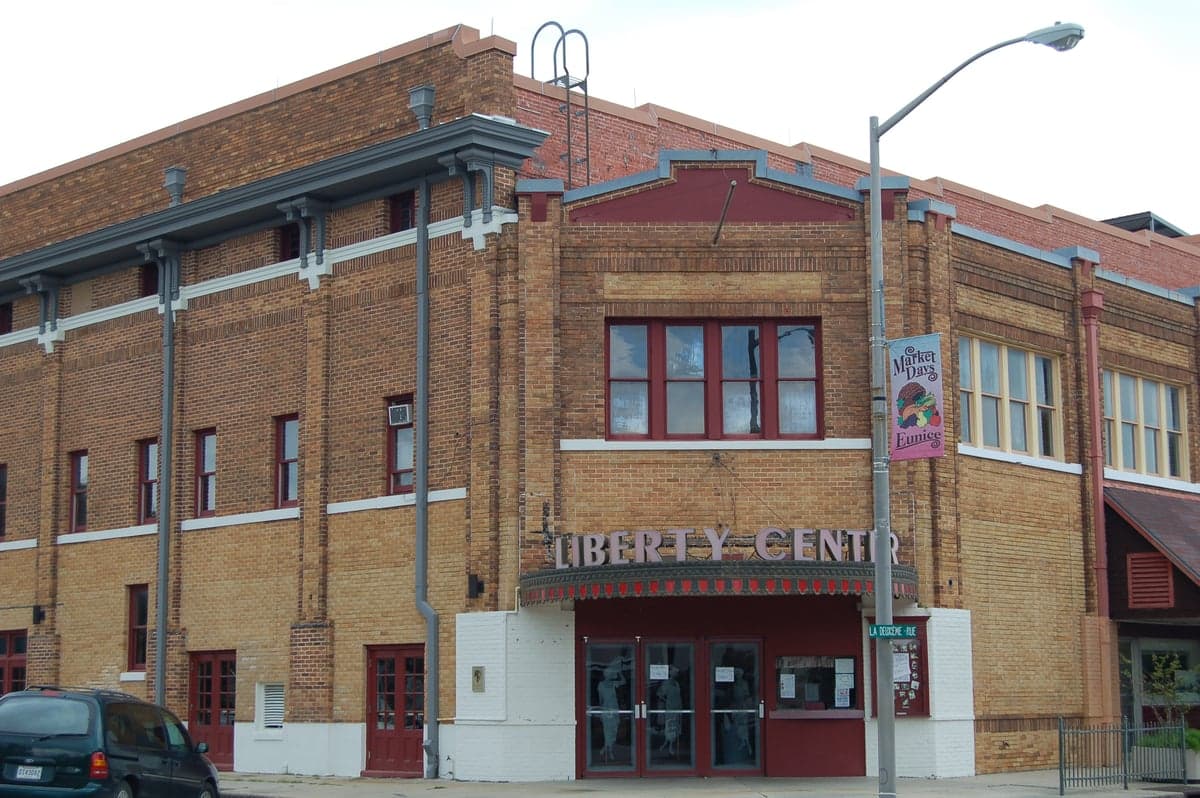
Photo: Wikipedia
Strategic Assessment of Eunice, LA
Meaningful friction. Expect exposure to either population pressure, blast zones, or natural disaster risk. Consider buying a retreat property.
What does the Strategic Assessment tell us?
Our Strategic Assessment grades tactical survivability of an area. Major population centers, military targets, fallout zones, natural disasters, and border exposure all drive risk — lower exposure means a more defensible position in a crisis.
This is heavily inspired by Joel Skousen's Strategic Relocation book. Highly recommended you checkout the book ($)What does this tell us?
Our Strategic Assessment grades tactical survivability of an area. Major population centers, military targets, fallout zones, natural disasters, and border exposure all drive risk — lower exposure means a more defensible position in a crisis.
This is heavily inspired by Joel Skousen's Strategic Relocation book. Highly recommended you checkout the book ($)Strategic Pillars

Key Distances
Regional Safe Places
Below is our recommended "safe zones" in Louisiana and the surrounding area based on our strategic heuristics. For most people, it's unrealistic to live in a “safe zone” full-time due to work, family or other personal reasons. They tend to be more rural. However, many of these areas are perfect for second homes and retreat properties that double as a vacation home or even a short-term rental.

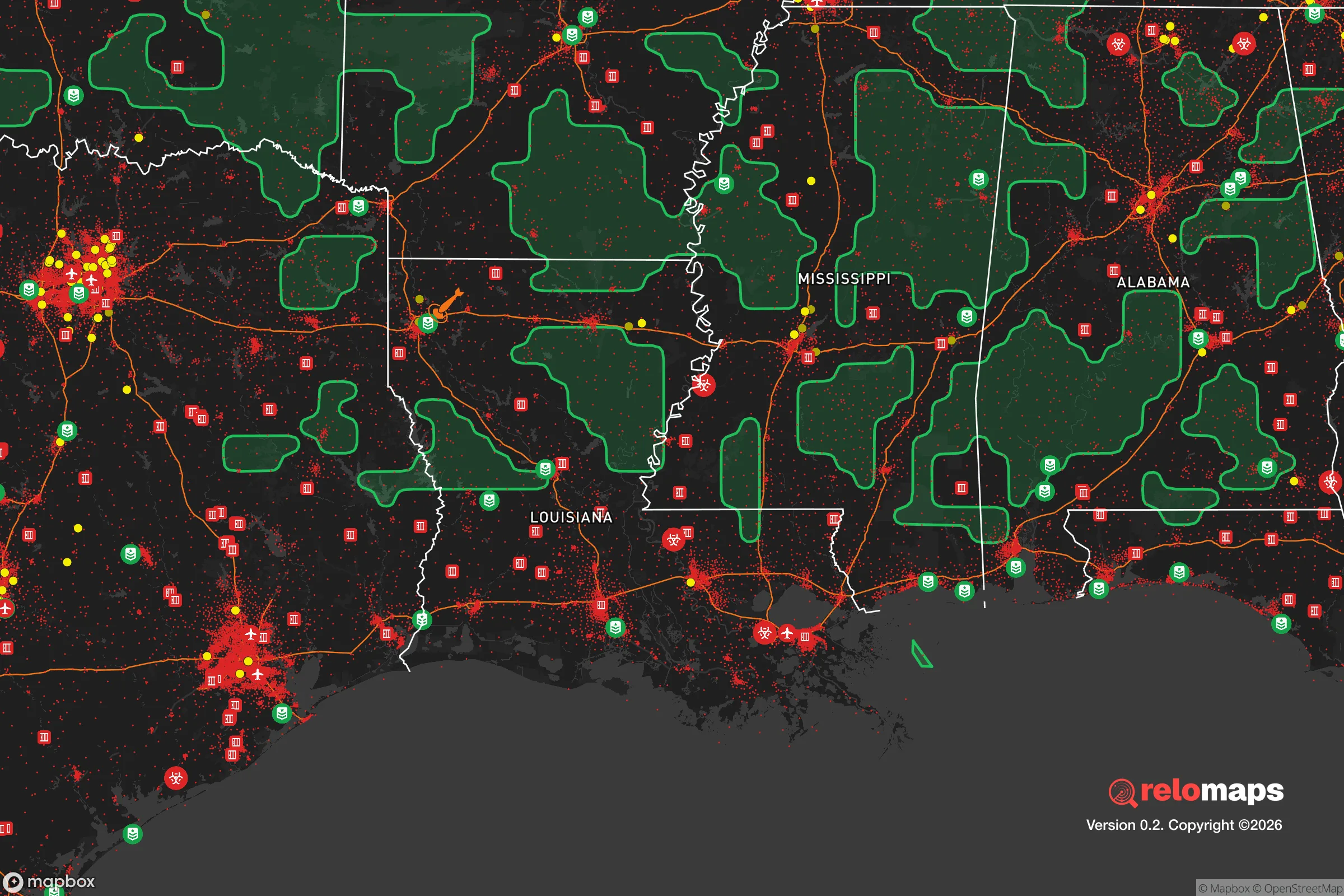


Important Note: For informational purposes only. This does not mean nothing bad ever happens in the green zones. Please use common sense. This is based on public data and modeled with AI. We tried to take a conservative approach but mistakes happen. We update this regularly as new information becomes available.
Solar Generator Recommendations
Backup power matters more here than in safer locations. We've picked three solar generators across budgets and capacity tiers — start with the budget unit if you only need a few essentials, or step up if you want to run a fridge and HVAC for days at a time.

Jackery Portable Power Station Explorer 300
Budget OptionPower on the Go: Weighing only 11 lbs, it's convenient to set up and store with book-sized foldable solar panels

BLUETTI Portable Power Station AC180
Designed for both indoor and outdoor scenarios, AC180 is highly capable as it has a robost capacity and continuous output power.

EF ECOFLOW DELTA Pro Ultra Power Station
Upgraded PickEcoFlow DELTA Pro Ultra is a whole-home energy system designed to grow with your family. Integrated with the Smart Home Panel 2, it scales to meet your evolving energy needs — keeping your home powered, intelligent, and secure through every stage of life.
We earn a commission, at no additional cost to you.
Strategic Assessment Analysis
Eunice, Louisiana, sits in a sweet spot for those thinking long-term about resilience: far enough from the major hurricane zones of the coast, close enough to the agricultural heartland of Acadiana, and just outside the immediate fallout radius of any major metropolitan target. This small city of roughly 10,000 people in St. Landry and Acadia parishes offers a strategic base for someone who wants to be prepared for civic unrest, supply chain disruptions, or larger-scale disasters without living completely off-grid. The area’s combination of flat, fertile land, a strong local food economy, and a low population density makes it a viable option for a relocator who values self-sufficiency and community cohesion over urban convenience.
Geographic position and natural advantages for long-term security
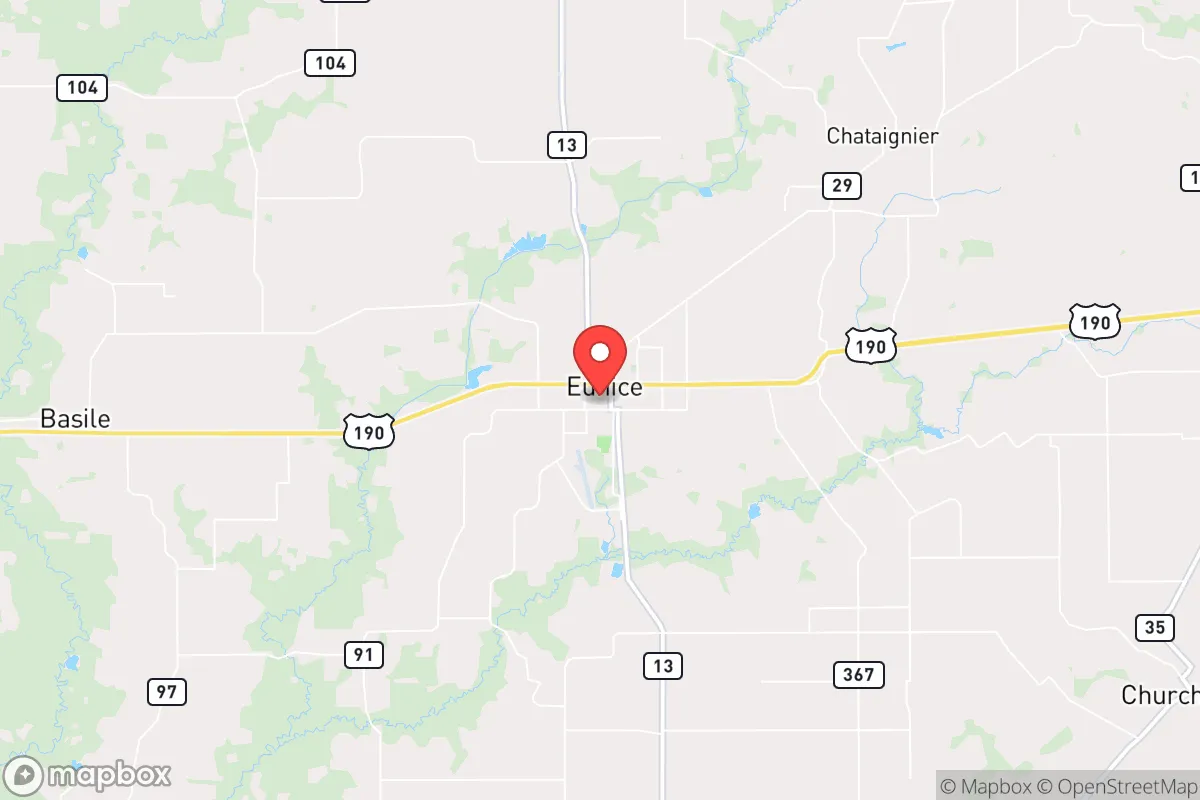
Eunice’s location is its primary strategic asset. It sits roughly 50 miles northwest of Lafayette and about 100 miles west of Baton Rouge, placing it well outside the blast radius or immediate secondary effects of any attack on those cities. The area is part of the Cajun Prairie, a region of flat, fertile soil that historically supported rice, crawfish, and cattle farming. This means the local water table is high—most homes have shallow wells—and the land is arable for small-scale food production. The climate is humid subtropical, with a long growing season of roughly 250 days, allowing for year-round gardening with proper planning. The area is also far enough inland (about 60 miles from the Gulf) to avoid the worst of storm surge, though it still gets heavy rain and occasional hurricane-force winds. For a prepper, the key takeaway is that Eunice offers a defensible position with access to fresh water, fertile soil, and a local population that still knows how to hunt, fish, and farm—skills that are increasingly rare in suburban America.
Risks, exposures, and proximity to fallout-relevant landmarks
No location is risk-free, and Eunice has its own set of vulnerabilities. The most immediate natural threat is flooding. The area is flat and drains slowly; heavy rain events, especially from stalled tropical systems, can cause widespread street flooding and standing water in low-lying areas. The 2016 floods in nearby Baton Rouge and Lafayette are a reminder that even inland Louisiana can see catastrophic water. Additionally, the region is prone to tornadoes, though they are typically EF-0 to EF-2 and not the kind that level entire towns. From a man-made risk perspective, Eunice is far from the obvious targets—no major military bases, no nuclear plants, no major ports within 50 miles. The closest significant infrastructure is the Cheniere Energy LNG terminal near Cameron, about 90 miles south, and the Port of Lake Charles, about 60 miles west. Neither is a primary target in a conflict scenario, but both could be secondary concerns. The bigger risk is proximity to the I-10 corridor, which runs through Lafayette and Baton Rouge. In a mass evacuation scenario, that highway becomes a choke point, and Eunice could see a surge of refugees from the coast. The local police force is small, and the parish sheriff’s office would be stretched thin in a crisis. For a relocator, the lesson is to have a plan for self-defense and community security, not to rely on outside help.
Practical resilience for a relocator: food, water, energy, and defensibility
Eunice scores well on the practical checklist for a prepper. Water is abundant and accessible—the Chicot Aquifer underlies the region, and most rural properties have wells that produce clean water at depths of 100-200 feet. Municipal water is treated and reliable, but a well with a hand pump or solar-powered pump is a realistic backup. Food security is strong. The area is surrounded by rice fields, crawfish ponds, and cattle pastures. Local farmers markets operate year-round, and the Cajun tradition of hunting (deer, duck, wild hog) and fishing (catfish, bass, sac-a-lait) is alive and well. A relocator with basic gardening skills can grow tomatoes, peppers, okra, squash, and greens from March through November. Energy is a mixed bag. The grid is served by Cleco and Entergy, both of which have had reliability issues during storms. However, natural gas is widely available, and many homes already have gas stoves, water heaters, and generators. Solar is viable, though the frequent cloud cover from Gulf moisture means you need more panels than in the desert Southwest. Defensibility is moderate. The terrain is flat, with few natural chokepoints, but the rural layout means most homes have good sightlines and are separated by fields or bayous. The local culture is heavily gun-friendly—Louisiana has some of the most permissive firearm laws in the country, including constitutional carry—and the community is generally self-reliant. The biggest weakness is the lack of a strong local medical infrastructure. The nearest hospital with a trauma center is in Lafayette, 50 minutes away. In a prolonged crisis, a serious injury could be a death sentence. A relocator should bring their own medical supplies and training.
The overall strategic picture for a conservative relocator
Eunice is not a prepper fantasy—it’s a real, working-class town with real challenges. The economy is based on agriculture, oilfield services, and healthcare, and the median household income is around $35,000, which means the area is affordable but not wealthy. The population is aging, and many young people leave for larger cities. That said, for a conservative-minded individual or family looking to get out of the urban rat race and into a place where you can actually own land, grow food, and know your neighbors, Eunice offers a solid foundation. The political climate is deeply conservative—St. Landry Parish voted 68% for Trump in 2020—and the local culture values self-reliance, faith, and community. The downsides are real: the heat and humidity are oppressive for half the year, the mosquitoes are relentless, and the schools are mediocre. But if your priority is strategic resilience—being in a place that can feed itself, that has water, that is far from the bullseye, and where people still know how to handle a firearm and a fishing rod—Eunice deserves a serious look. It’s not a bunker; it’s a base. And in a world that feels increasingly unstable, a base is exactly what you need.

* Values derived from national, state, county, city and local statistics and may differ in a specific area. Last updated: 2026-05-01T08:40:52.000Z
Narrative content on this page is AI-generated and may contain mistakes. Verify any details that matter before acting on them.
ReloMaps may earn a commission from affiliate links at no extra cost to you.

