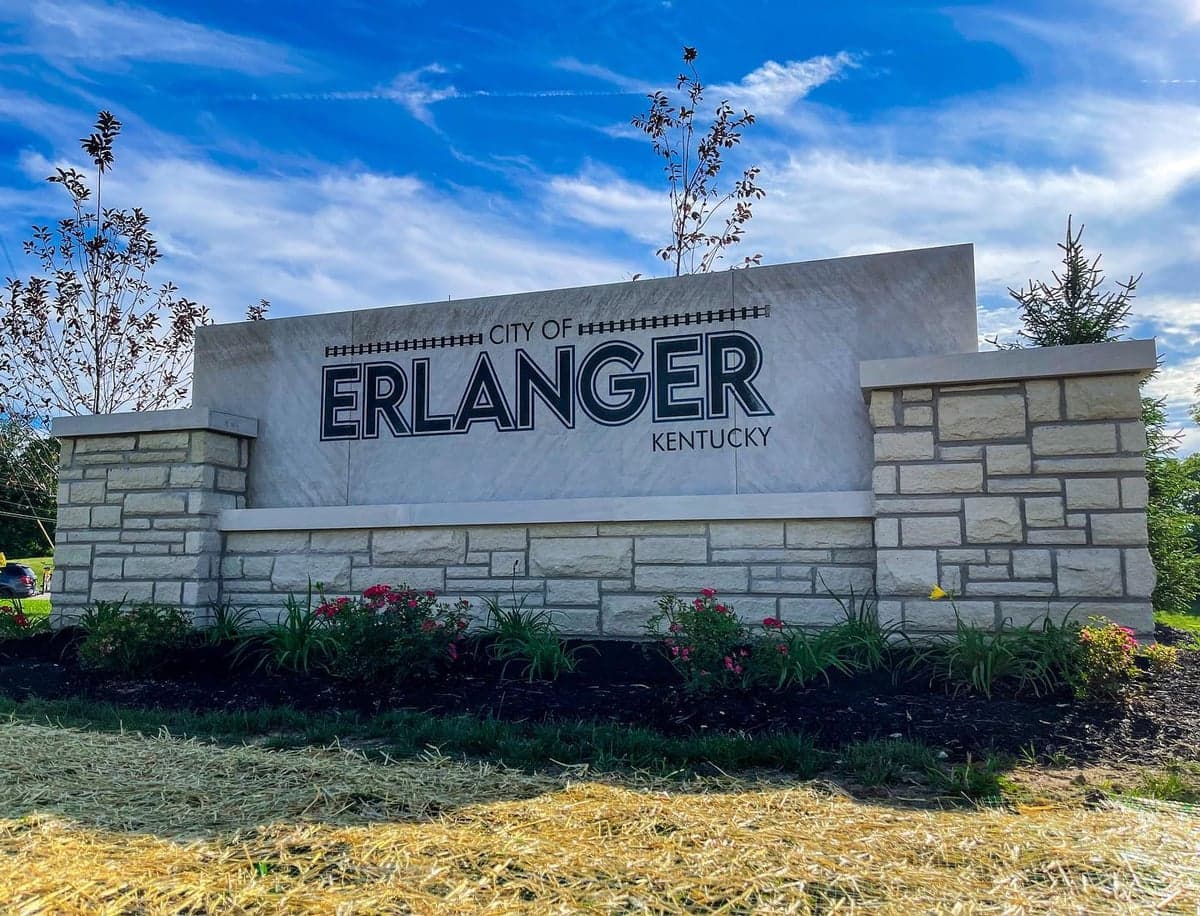
Photo: Wikipedia
Personal Sovereignty in Erlanger, KY
Viable for self-reliance. Generally workable, though some barriers may limit total independence.
What does Personal Sovereignty tell us?
Personal Sovereignty measures your capacity for self-reliance and independence with minimal government friction. Higher scores mean fewer barriers between you and the way you want to live... but it assumes you have the space you need and good neighbors.
What does this tell us?
Personal Sovereignty measures your capacity for self-reliance and independence with minimal government friction. Higher scores mean fewer barriers between you and the way you want to live... but it assumes you have the space you need and good neighbors.
State Policy
Energy independence: Importer (60% of energy produced in-state)
Personal Liberty
Homesteading

Personal Liberty Analysis
Erlanger, Kentucky, offers a notably high degree of personal sovereignty compared to many suburban enclaves, largely due to Kentucky’s status as a Dillon’s Rule state with a strong constitutional tradition of limiting local government overreach. While no location is a libertarian utopia, Erlanger’s legal and regulatory environment provides a solid foundation for individuals and families seeking to minimize state interference in their daily lives, finances, and personal choices. The city’s position within Boone County, a reliably conservative jurisdiction, further reinforces a culture where self-reliance and personal responsibility are the expected norms, not exceptions.
Tax burden and regulatory posture: How Kentucky’s flat tax and limited local rules affect your wallet
Kentucky’s shift to a flat individual income tax rate of 4.5% (as of 2026, with a scheduled path to 4% by 2027) is a significant advantage for earners who want to keep more of their money out of government hands. This is a single-rate system with no progressive brackets, meaning your marginal rate is your effective rate—no hidden penalties for earning more. Property taxes in Boone County are among the lowest in the region, with a real estate tax rate of roughly 0.86% of assessed value, and the state does not tax personal property like vehicles or boats. Sales tax is a flat 6% on goods, but groceries and prescription drugs are exempt. From a regulatory standpoint, Kentucky is a right-to-work state with minimal business licensing hurdles, and Erlanger itself does not impose additional city-level income taxes beyond the state’s. This creates a low-friction environment for starting a side business, running a home-based trade, or simply keeping more of your paycheck without layers of local bureaucracy.
Self-defense and gun law specifics: Constitutional carry and the castle doctrine in practice
For those prioritizing the right to self-defense, Erlanger sits in one of the most firearm-friendly states in the nation. Kentucky is a constitutional carry state—no permit is required to carry a concealed firearm for any law-abiding adult 21 or older. There is no state-level registry, no waiting period for purchases, and no ban on standard-capacity magazines or commonly owned rifle platforms like the AR-15. The state’s Castle Doctrine is robust: there is no duty to retreat in your home, vehicle, or place of business, and the law presumes a reasonable fear of death or great bodily harm if an intruder unlawfully enters. Stand Your Ground protections extend to any place you are lawfully present. Local law enforcement in Boone County is generally supportive of Second Amendment rights, and there are no county-level gun control ordinances that supersede state preemption. For a prepper or survivalist, this means your defensive tools are legally unencumbered, and the legal framework backs your right to use them when necessary.
Self-reliance and homesteading viability: Lot sizes, zoning, and off-grid feasibility in Erlanger
Erlanger is a suburban city, so don’t expect wide-open acreage within its limits, but the surrounding unincorporated areas of Boone County offer a different story. Within Erlanger proper, typical residential lot sizes range from 0.2 to 0.5 acres, which is enough for a substantial vegetable garden, a small orchard, or a few chickens (subject to local ordinances—hens are generally allowed with a permit, but roosters are not). Zoning is fairly permissive for accessory structures like sheds, greenhouses, and detached workshops, though building permits are required for anything over 200 square feet. For those seeking true homesteading potential, the rural areas just south and west of Erlanger—toward Union, Verona, and Walton—offer parcels of 2 to 10 acres at prices far below comparable land in Ohio or Indiana. Off-grid feasibility is mixed: Kentucky has no state law prohibiting rainwater collection, and solar panels are widely permitted, but the county requires connection to the electrical grid for new construction. Well water and septic systems are standard in rural zones, and burning regulations are minimal outside city limits. For a serious self-reliance strategy, the best play is to live in Erlanger for its job access and schools while owning a small rural tract nearby for extended projects.
Personal liberties: Parental rights, medical autonomy, speech, and property protections
Kentucky has been a battleground for parental rights, and the current legal climate strongly favors family autonomy. The state’s Parental Bill of Rights (enacted in 2022) affirms that parents have the fundamental right to direct the upbringing, education, and healthcare of their children. This includes the right to opt out of any school curriculum or activity without penalty, and schools are required to obtain parental consent before administering any medical or mental health services. Medical autonomy for adults is less clear-cut: Kentucky has strict laws regarding vaccine mandates (no state-level mandate for adults, but private employers can require them), and the state does not have a right-to-try law for experimental treatments, though it does allow for medical cannabis use under a limited program. Free speech protections are robust, with no state-level hate speech laws that chill expression, and property rights are strongly defended—eminent domain is rarely used for private development, and the state’s agricultural districts offer tax incentives for keeping land in productive use. For those concerned about government overreach into family and medical decisions, Erlanger’s legal environment provides a meaningful buffer against federal or corporate mandates.
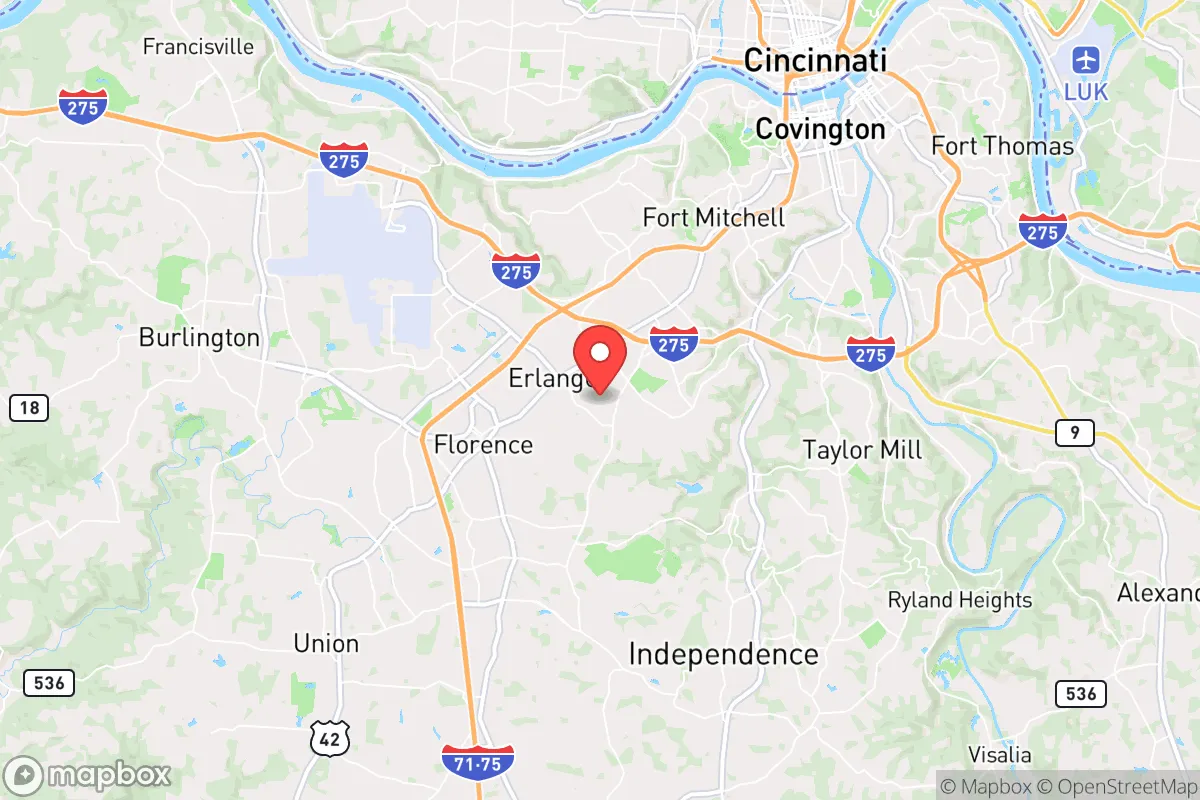
In the broader context of the Ohio River Valley, Erlanger stands out as a jurisdiction where personal sovereignty is not just tolerated but structurally supported. Compared to neighboring Cincinnati (just 10 miles north, but in Ohio with its higher taxes, stricter gun laws, and more aggressive local health mandates), Erlanger offers a clear alternative for those who value keeping government at arm’s length. The trade-off is that you are still in a suburban setting with some HOAs and city codes, but the state-level framework—low taxes, constitutional carry, parental rights, and minimal business regulation—gives you a strong base to build a self-determined life. For a single individual or a family with a survivalist mindset, Erlanger is a pragmatic choice: close enough to urban resources for work and supply runs, but legally and culturally aligned with the principle that your life is your own to manage.

* Values derived from national, state, county, city and local statistics and may differ in a specific area. Last updated: 2026-04-21T09:45:34.000Z
Narrative content on this page is AI-generated and may contain mistakes. Verify any details that matter before acting on them.
ReloMaps may earn a commission from affiliate links at no extra cost to you.

