
Photo by Joris Beugels on Unsplash
Strategic Assessment of Emmonak, AK
Strong survivability profile. Good buffer from population centers, with manageable environmental and tactical risks.
What does the Strategic Assessment tell us?
Our Strategic Assessment grades tactical survivability of an area. Major population centers, military targets, fallout zones, natural disasters, and border exposure all drive risk — lower exposure means a more defensible position in a crisis.
This is heavily inspired by Joel Skousen's Strategic Relocation book. Highly recommended you checkout the book ($)What does this tell us?
Our Strategic Assessment grades tactical survivability of an area. Major population centers, military targets, fallout zones, natural disasters, and border exposure all drive risk — lower exposure means a more defensible position in a crisis.
This is heavily inspired by Joel Skousen's Strategic Relocation book. Highly recommended you checkout the book ($)Strategic Pillars

Key Distances
Regional Safe Places
Below is our recommended "safe zones" in Alaska and the surrounding area based on our strategic heuristics. For most people, it's unrealistic to live in a “safe zone” full-time due to work, family or other personal reasons. They tend to be more rural. However, many of these areas are perfect for second homes and retreat properties that double as a vacation home or even a short-term rental.
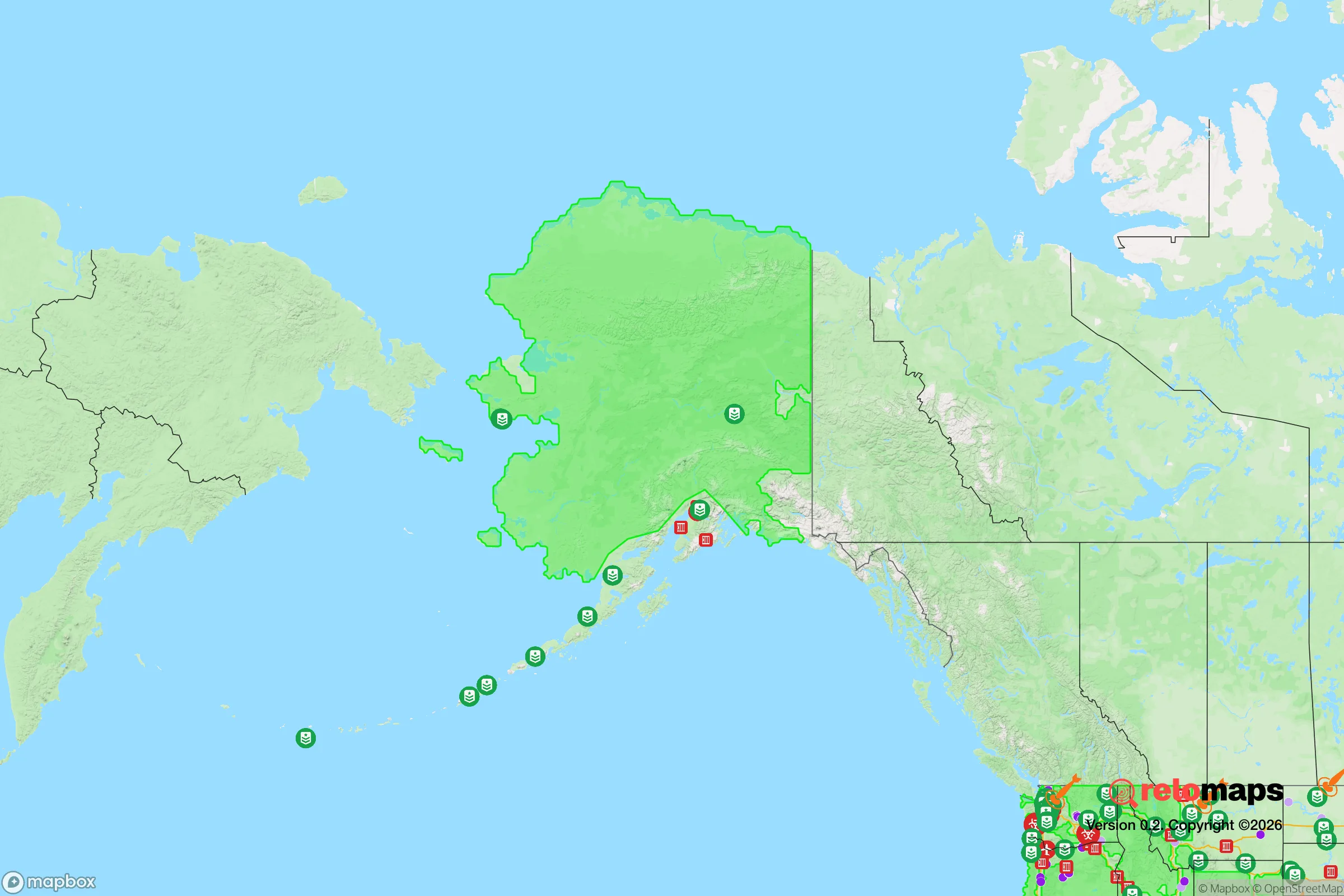


Important Note: For informational purposes only. This does not mean nothing bad ever happens in the green zones. Please use common sense. This is based on public data and modeled with AI. We tried to take a conservative approach but mistakes happen. We update this regularly as new information becomes available.
Solar Generator Recommendations
Backup power matters more here than in safer locations. We've picked three solar generators across budgets and capacity tiers — start with the budget unit if you only need a few essentials, or step up if you want to run a fridge and HVAC for days at a time.

Jackery Portable Power Station Explorer 300
Budget OptionPower on the Go: Weighing only 11 lbs, it's convenient to set up and store with book-sized foldable solar panels

BLUETTI Portable Power Station AC180
Designed for both indoor and outdoor scenarios, AC180 is highly capable as it has a robost capacity and continuous output power.

EF ECOFLOW DELTA Pro Ultra Power Station
Upgraded PickEcoFlow DELTA Pro Ultra is a whole-home energy system designed to grow with your family. Integrated with the Smart Home Panel 2, it scales to meet your evolving energy needs — keeping your home powered, intelligent, and secure through every stage of life.
We earn a commission, at no additional cost to you.
Strategic Assessment Analysis
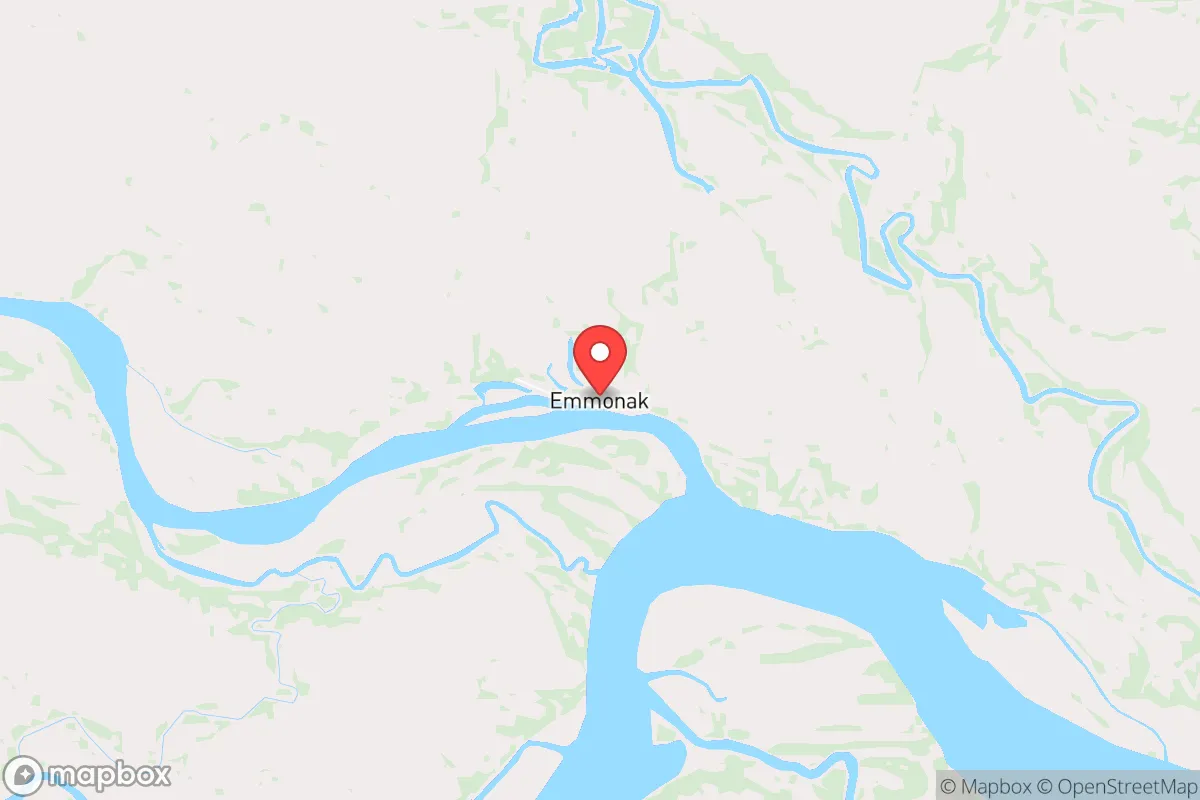
Emmonak, Alaska, is a remote Yukon-Kuskokwim Delta village that offers a unique strategic profile for those prioritizing physical isolation and community-scale resilience over economic convenience. Located roughly 450 air miles west of Anchorage and 130 miles from the Bering Sea coast, this community of approximately 800 residents sits at the confluence of the Yukon and Kuskokwim rivers, providing natural barriers and a logistical footprint that makes large-scale disruption unlikely. For a relocator with a survivalist mindset, Emmonak’s primary advantage is its extreme separation from the Lower 48’s population centers, infrastructure grids, and political volatility, but this comes with severe trade-offs in supply chain dependency, climate, and access to modern amenities.
Geographic isolation and natural defensive advantages
Emmonak’s location is defined by its inaccessibility. There are no roads connecting it to any other community—access is exclusively by air, river barge in summer, or snowmachine in winter. This effectively eliminates the risk of mass migration, civil unrest spillover, or refugee flows that could overwhelm a more connected location. The surrounding terrain is flat, marshy tundra interspersed with countless lakes and sloughs, making overland approach difficult for anyone unfamiliar with the area. The Yukon River itself acts as a natural moat on the community’s southern edge, while the vast, uninhabited Yukon Delta National Wildlife Refuge surrounds it on all other sides. For someone concerned about proximity to fallout-relevant landmarks, Emmonak is about as far as you can get within Alaska from any strategic target: the nearest military installation is Joint Base Elmendorf-Richardson near Anchorage, over 400 miles away, and there are no nuclear power plants, major industrial facilities, or population centers within hundreds of miles. The nearest city of any size is Bethel, 130 miles upriver, which itself is a small regional hub of about 6,000 people. In a scenario involving widespread societal collapse or nuclear exchange, Emmonak’s isolation would be its strongest asset—no one is coming here unless they have a plane or a boat, and those are easily monitored.
Risks, exposures, and proximity to fallout-relevant landmarks
While Emmonak avoids the dangers of urban proximity, it faces its own set of environmental and logistical vulnerabilities. The community sits on permafrost and is subject to severe flooding, erosion, and storm surges from the Bering Sea, which is only 15 miles downstream. In 2023, the village experienced significant flooding from the Yukon River breakup, and the long-term viability of the current site is questionable due to climate-driven coastal erosion. For a prepper, this means any long-term investment in infrastructure must account for potential relocation of the entire village within a generation. Additionally, Emmonak is entirely dependent on external supply chains for fuel, food, and manufactured goods. The airport, a single gravel airstrip, is the lifeline—if air traffic ceases due to fuel shortages, civil unrest in Anchorage, or a pandemic, the community would be cut off for months until river travel resumes in late spring. There are no roads, no rail, and no alternative overland routes. The nearest fallout-relevant landmarks are the aforementioned Anchorage military bases and the Port of Dutch Harbor, a strategic shipping hub 600 miles southwest, but the prevailing winds and distances make direct fallout contamination unlikely. The real risk is not fallout but supply chain collapse: Emmonak’s residents rely on store-bought goods and government-subsidized fuel for heat and electricity, and a prolonged disruption would force a rapid return to subsistence hunting and fishing, which the local population already practices but at a scale insufficient for a sudden influx of outsiders.
Practical resilience for a relocator: food, water, energy, and defensibility
For a relocator arriving without existing local knowledge or kinship ties, Emmonak presents a steep learning curve. Food security is theoretically high due to the abundance of salmon, moose, caribou, waterfowl, and berries, but harvesting these requires skill, equipment (boats, nets, firearms, freezers), and community permission—subsistence rights are tightly regulated by Alaska Department of Fish and Game and local tribal councils. Water is plentiful from the Yukon River and local lakes, but must be treated or boiled due to naturally occurring bacteria and parasites; there is no municipal water treatment plant in the village. Energy is the critical weak point: nearly all homes rely on diesel generators or heating oil, both of which are flown or barged in at high cost. Solar panels are impractical for much of the year due to extreme winter darkness and cloud cover, and wind power is viable but requires maintenance expertise. Defensibility is excellent in the sense that the village is small, everyone knows everyone, and strangers are immediately noticed. The community is tight-knit, with strong Yup’ik cultural traditions, and an outsider would need to build trust over years, not weeks. There is no local police force—the Alaska State Troopers are based in Bethel and fly in periodically—so self-defense and community security are de facto handled by residents. For a single individual or family willing to integrate, learn subsistence skills, and accept a dramatically lower standard of living in exchange for near-total isolation, Emmonak offers a defensible, low-profile redoubt. But it is not a place for someone expecting to maintain a modern prepper setup with stockpiles and fortified structures—the logistics of bringing in supplies are prohibitive, and the climate is brutal, with winter temperatures frequently dropping below -40°F and 20 hours of darkness.
Overall, Emmonak is a strategic option only for the most hardcore isolationists who are prepared to abandon virtually all modern conveniences and become fully self-reliant within a subsistence-based indigenous community. It scores extremely high on remoteness and low on target value, but equally low on ease of resupply, climate comfort, and infrastructure redundancy. For someone whose primary concern is being far from the chaos of the Lower 48 and willing to trade away everything else, it is a viable long-term hideout. For anyone who wants to maintain a semblance of modern preparedness—stockpiles, medical access, communications, or the ability to bug out quickly—Emmonak is a logistical dead end. The strategic calculus here is simple: if you believe the worst-case scenario involves nationwide grid collapse and you want to be in a place where nobody will bother you, Emmonak works. If you think you might need to leave, resupply, or communicate with the outside world, look elsewhere.

* Values derived from national, state, county, city and local statistics and may differ in a specific area. Last updated: 2026-04-19T19:19:11.000Z
Narrative content on this page is AI-generated and may contain mistakes. Verify any details that matter before acting on them.
ReloMaps may earn a commission from affiliate links at no extra cost to you.

