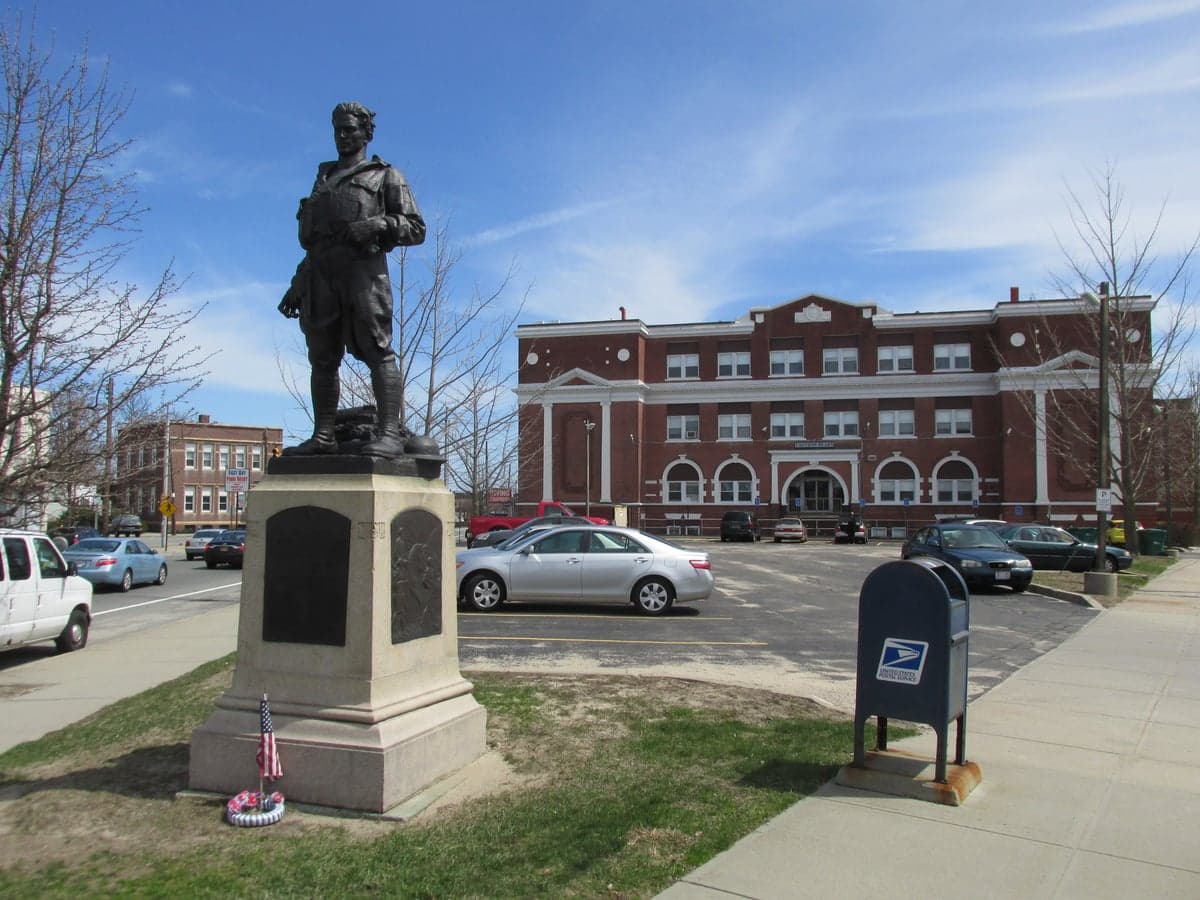
Photo: Wikipedia
Political ClimatePolitical Climate in East Providence, RI
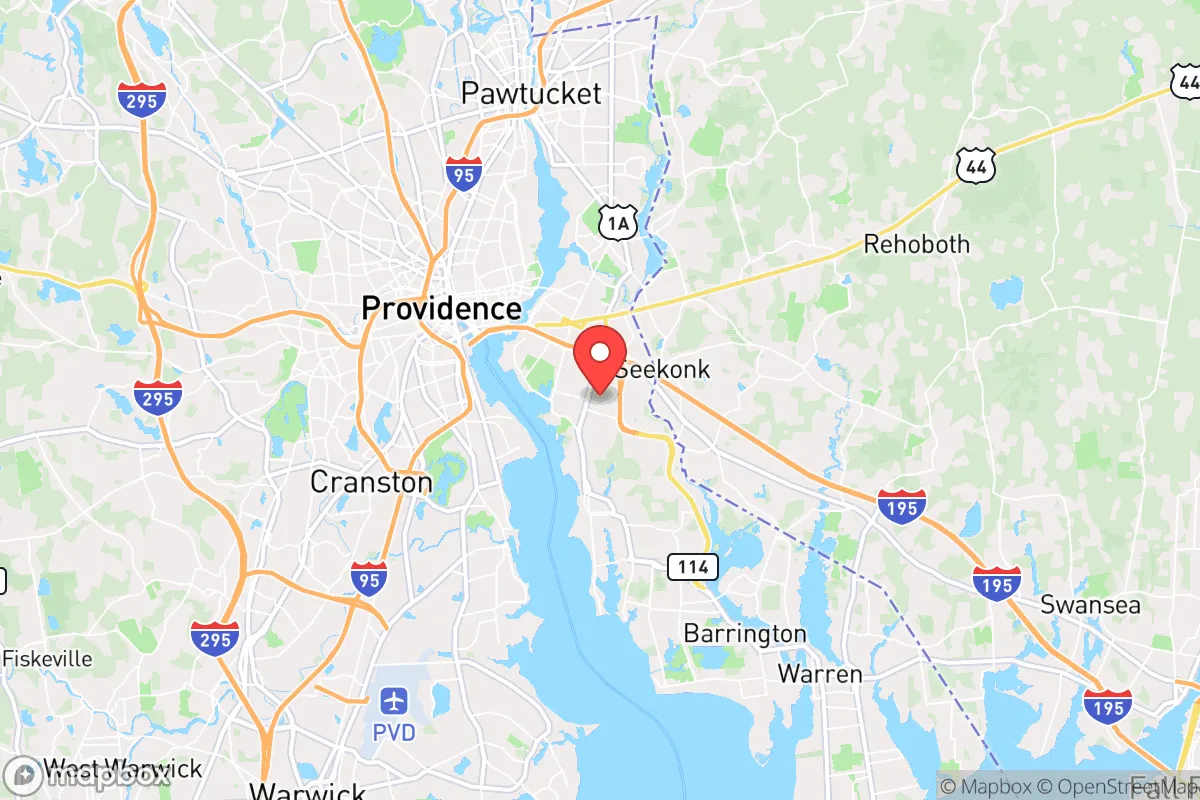
District shown is the primary district for this city’s centroid. Cities may span multiple districts.
Local Political AnalysisPolitical Analysis of East Providence, RI
East Providence has long been a reliably blue city, but the political climate here isn't as simple as the D+12 Cook PVI suggests. For decades, this was a working-class, union-heavy town where Democrats won by huge margins, but the party itself was more moderate—fiscally cautious, socially traditional, and deeply skeptical of Boston-style liberalism. Today, that old-school Democratic identity is fading fast, replaced by a younger, more progressive wave that’s pushing policies a lot of us lifelong residents find heavy-handed. The shift isn’t just about who wins elections; it’s about how much government is willing to insert itself into your daily life, your property, and your choices.
How it compares
Drive ten minutes west into Providence proper, and you’ll find a city that’s fully embraced progressive governance—rent control, sanctuary city policies, and a mayor who’s openly socialist-adjacent. East Providence used to be the sensible cousin across the river, but that gap is narrowing. Head east into Seekonk or Rehoboth, Massachusetts, and you hit towns that vote reliably red or purple, with lower taxes, fewer zoning restrictions, and a general “leave us alone” attitude. The contrast is stark: in Seekonk, you can run a small business out of your garage without a zoning board hearing; in East Providence, the city council is debating new rental inspection ordinances that treat landlords like potential slumlords before they’ve done anything wrong. The old political buffer between East Providence and its neighbors is eroding, and not in a way that favors personal freedom.
What this means for residents
For folks who value keeping government out of their wallets and off their property, the trend lines are concerning. The city has adopted a “complete streets” policy that prioritizes bike lanes and bus pull-offs over car traffic—fine in theory, but it’s led to narrower lanes and longer commute times for the vast majority who still drive. Property taxes have crept up faster than inflation, and there’s talk of a local sales tax option that would make shopping in town more expensive than crossing into Massachusetts. The school board has shifted left, pushing diversity, equity, and inclusion training that some parents feel prioritizes ideology over reading and math scores. If you’re a gun owner, you’ve noticed the city council’s quiet support for state-level magazine bans and “red flag” laws that can strip your rights without a criminal conviction. None of this is apocalyptic yet, but it’s a slow, steady squeeze on the kind of personal autonomy that used to be taken for granted here.
Culturally, East Providence still has pockets of the old Rhode Island—the Portuguese bakeries, the VFW halls, the guys who’ve worked at the same machine shop for thirty years. But the city’s leadership is increasingly drawn from the activist class: young transplants from Providence, college-educated professionals who see government as a tool for social engineering rather than basic services. The annual Heritage Days festival still draws a crowd, but the city’s official social media now spends more time promoting climate action plans and “equity audits” than celebrating local traditions. Long-term, if the current trajectory holds, East Providence will look more like a suburb of Providence than a distinct community with its own character. For anyone who moved here to escape the city’s politics, that’s a real loss.

State Political ClimatePolitical Climate in Rhode Island
State Political AnalysisPolitical Environment in the State
Rhode Island has long been a one-party Democratic stronghold, but the picture is more complicated than a simple blue label. The state’s overall partisan lean is solidly Democratic — President Biden won it by over 20 points in 2020 — but that top-line number masks a deep and growing urban-rural split, a powerful legacy of machine politics, and a recent trajectory that has seen the state lurch leftward on social and economic policy. Over the last 10-20 years, the dominant coalition has been a mix of organized labor, public-sector unions, and coastal progressives from Providence and Newport, while the state’s western and southern towns have become increasingly Republican. The result is a state where a conservative-leaning newcomer will find some welcoming pockets but must navigate a policy environment that is increasingly hostile to personal freedom and economic liberty.
Urban vs. rural divide
The political map of Rhode Island is a tale of two worlds. The urban core — Providence, Pawtucket, Central Falls, and Newport — drives the state’s Democratic dominance. These cities are home to dense populations of public-sector workers, union households, and a growing number of out-of-state transplants drawn to the arts and academic scenes. Providence alone accounts for nearly a third of the state’s vote, and its city council and school board are firmly progressive. In contrast, the western and southern parts of the state — East Greenwich, North Kingstown, South Kingstown, and the rural towns of Foster, Scituate, and Burrillville — have been trending redder. In 2024, Donald Trump won several of these towns outright, a shift that would have been unthinkable 20 years ago. The divide is not just about party registration; it’s about culture. In the rural west, you’ll find more gun owners, more small business owners, and a deep skepticism of the Providence-centric political machine. The suburbs of Warwick and Cranston are the true battlegrounds — they’re moderate, blue-collar, and increasingly swingy, often deciding statewide races.
Policy environment
For a conservative, the policy environment in Rhode Island is a mixed bag, but the trend is concerning. The state has one of the highest combined state and local tax burdens in the nation, with a progressive income tax that tops out at 5.99% and property taxes that are among the highest in New England. The regulatory posture is heavy — starting a business here means navigating layers of permitting and environmental review that can take months. On education, the state has embraced progressive reforms, including a shift toward equity-based funding that often shortchanges rural districts. The Rhode Island Department of Education (RIDE) has been aggressive in pushing critical race theory and LGBTQ+ curriculum mandates, which has sparked backlash in towns like East Greenwich and North Kingstown. Healthcare is dominated by the state’s Medicaid expansion and a strong push for single-payer-style regulation. Election laws are a bright spot for conservatives: Rhode Island has same-day voter registration and no-excuse mail voting, but also requires voter ID at the polls — a compromise that has held for years. The state’s gun laws, however, are among the strictest in the nation, including a ban on “assault weapons” and high-capacity magazines, as well as a red flag law that has been used aggressively.
Trajectory & freedom
Rhode Island is becoming less free by nearly any measure. The most visible flashpoint is the 2022 “Rhode Island Right to Read Act”, which mandated that all public school curricula be “culturally responsive” — a term that has been used to push critical race theory into elementary classrooms. Parental rights took a hit in 2023 when the state legislature passed a law allowing minors as young as 14 to consent to gender-affirming care without parental notification. On the Second Amendment front, the 2023 “Safe Schools and Communities Act” expanded the state’s red flag law to allow family members and school officials to petition for gun removal, and it banned the open carry of long guns in public. Property rights have been eroded by the state’s aggressive use of eminent domain for economic development projects, particularly in Providence. The only area where freedom has expanded is in medical autonomy: Rhode Island was one of the first states to legalize recreational marijuana in 2022, though the regulatory framework is so onerous that many small growers have been priced out. The overall trajectory is clear: the state government is expanding its reach into education, healthcare, and personal choices, and there is little appetite in the General Assembly to reverse course.
Civil unrest & political movements
Rhode Island has seen its share of political flashpoints. The 2020 Black Lives Matter protests in Providence were large and occasionally violent, leading to property damage and a lasting tension between the city’s police union and progressive activists. The state’s sanctuary policy — Governor Dan McKee’s 2021 executive order limiting cooperation with ICE — has made Rhode Island a destination for illegal immigrants, and the resulting strain on social services has been a hot-button issue in working-class towns like Warwick and Cranston. On the right, the Rhode Island Republican Party has been revitalized by grassroots groups like the RI Right to Life and the RI Firearms Coalition, which have successfully flipped several local school committees and town councils. Election integrity has been a persistent concern: the state’s use of universal mail-in ballots in 2020 and 2022 led to a series of lawsuits and a legislative battle over signature verification. The most visible political movement is the “School Choice RI” coalition, which has been fighting for education savings accounts and charter school expansion, facing fierce opposition from the teachers’ unions. A new resident will notice that political signs are rare in Providence but common in the western suburbs, and that conversations about politics can quickly turn heated, especially around the dinner table.
Projection
Over the next 5-10 years, Rhode Island is likely to become more progressive on social issues and more economically constrained. The in-migration pattern is telling: the state is losing native-born residents to Florida, Texas, and the Carolinas, while gaining out-of-state transplants from Massachusetts and New York who are more liberal and wealthier. This demographic shift will likely push the state further left on housing policy (rent control, inclusionary zoning), energy (a 100% renewable mandate by 2033 is already law), and education (more CRT mandates, less parental control). The rural and suburban towns will continue to resist, but they are losing population and political power. The wild card is the state’s fiscal health: Rhode Island has one of the highest unfunded pension liabilities per capita in the country, and a future fiscal crisis could force a reckoning with the state’s tax and spending policies. For a conservative moving in now, the realistic expectation is that the state will become a less hospitable place for traditional values and economic freedom, but that the western and southern towns will remain viable enclaves for those willing to fight for local control.
Bottom line for a new resident: If you’re a conservative considering Rhode Island, you’re not moving to a red state — you’re moving to a blue state with a few red pockets. The best bet is to settle in a town like East Greenwich, North Kingstown, or Foster, where you’ll find like-minded neighbors and a local government that still respects property rights and parental authority. But be prepared for a constant political fight at the state level, especially on education, taxes, and gun rights. The state’s natural beauty and coastal lifestyle are undeniable, but the cost — both financial and cultural — is high. If you value personal freedom and limited government, you’ll need to be active, vocal, and patient. Rhode Island is not lost, but it is in a long, slow retreat from the principles that made it a great place to raise a family.
* Values derived from national, state, county, city and local statistics and may differ in a specific area. Last updated: 2026-04-22T04:57:26.000Z
Narrative content on this page is AI-generated and may contain mistakes. Verify any details that matter before acting on them.
ReloMaps may earn a commission from affiliate links at no extra cost to you.

