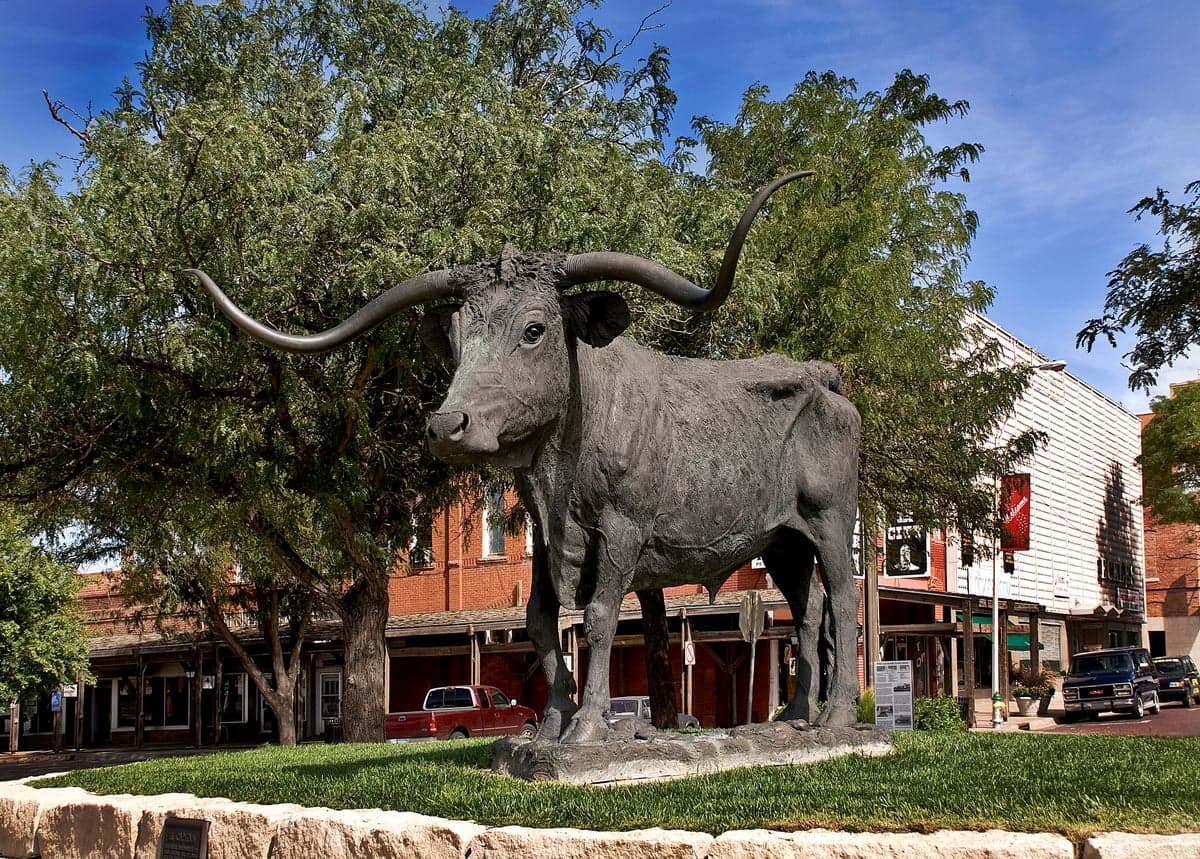
Photo: Wikipedia
Demographics of Dodge City, KS
Affluence Level in Dodge City, KS
A below-average socioeconomic profile. Incomes, home values, and educational attainment trail the U.S., with higher poverty and unemployment.
People of Dodge City, KS
Dodge City, Kansas, is a community of 27,652 residents defined by a strong Hispanic majority (66.4%) and a significant foreign-born population (16.5%), creating a distinctive bicultural identity rooted in the cattle and meatpacking industries. The city’s white population stands at 27.7%, with small Black (2.8%) and East/Southeast Asian (0.5%) communities, and no measurable Indian subcontinent population. This is a working-class, family-oriented city where Spanish is widely spoken, and the cultural rhythm is shaped by both its Wild West heritage and its modern role as a gateway for immigrant labor. The population is younger than the national median, with a lower college attainment rate (19.7%), reflecting an economy built on physical labor rather than white-collar professions.
How the city was settled and grew
Dodge City was founded in 1872 as a railroad town on the Atchison, Topeka and Santa Fe line, immediately becoming a hub for buffalo hunting and, later, the cattle drive trade. The original population was overwhelmingly Anglo-American and male, drawn by the promise of work in the stockyards and saloons that lined Front Street, the historic commercial district. By the 1880s, a small but visible Black community had formed, concentrated in the area around Second Avenue and the railroad tracks, working as porters, cooks, and laborers. The city’s first major demographic shift came with the expansion of the beef packing industry in the early 20th century, which attracted a wave of German and Irish immigrants who settled in the West End neighborhood, building modest frame houses near the packing plants. The Dust Bowl and Great Depression slowed growth, but the post-World War II era brought a modest influx of white families from rural Kansas, who populated the new subdivisions of South Dodge along the Arkansas River.
Modern era (post-1965)
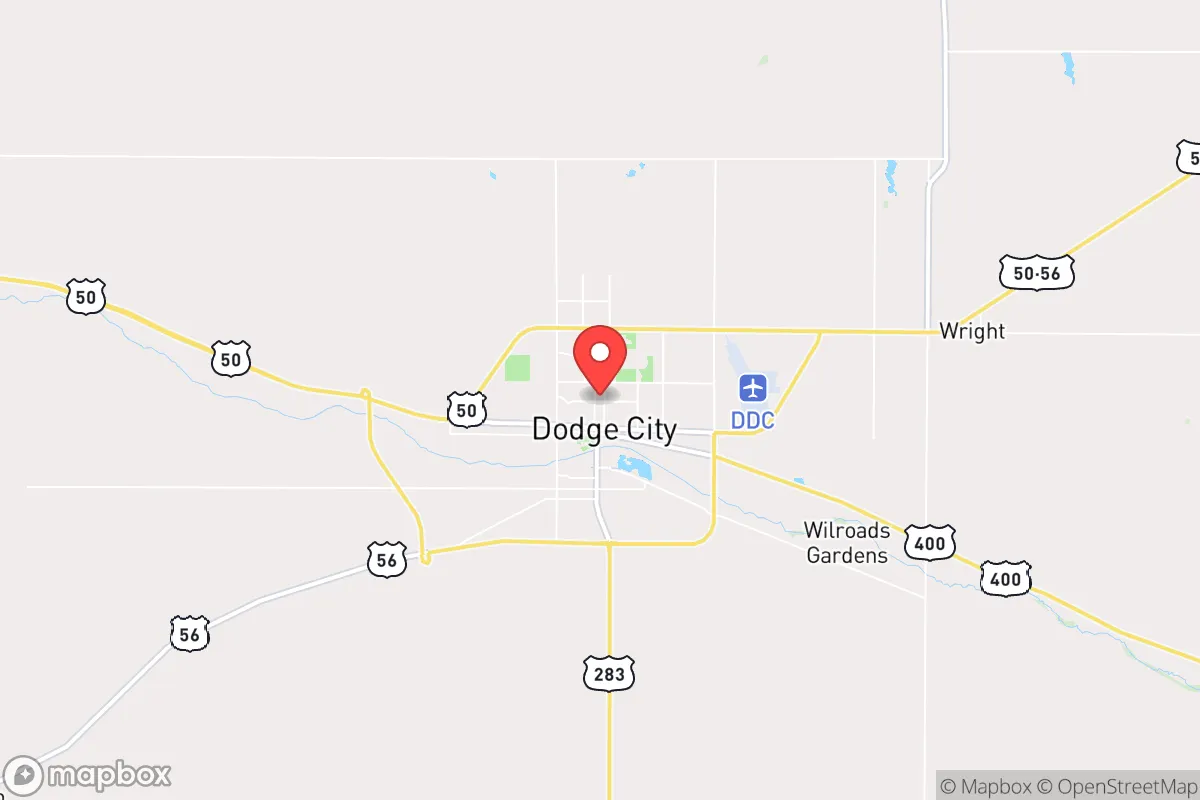
The 1965 Immigration and Nationality Act, combined with the expansion of the IBP (now Tyson Foods) beef plant in the 1970s, fundamentally reshaped Dodge City’s population. The meatpacking industry actively recruited workers from Mexico and Central America, and by the 1990s, the Hispanic share of the population had surged past 50%. These new arrivals concentrated in the North Dodge neighborhood, near the plant, where dense clusters of rental housing and mobile home parks formed. The white population, which had dominated since the city’s founding, began a slow decline as younger families moved to larger Kansas cities or out of state. The Black community, never large, remained stable but geographically dispersed, with no single concentrated neighborhood. The East/Southeast Asian population (0.5%) is tiny and scattered, largely composed of Vietnamese and Filipino families who arrived in the 1980s and 1990s, often working in the packing plants or in healthcare. The city’s foreign-born share (16.5%) is nearly triple the national average, and Spanish-language media, churches, and businesses now dominate the commercial corridors of Wyatt Earp Boulevard and Trail Street.
The future
Dodge City’s population is projected to remain stable or grow slowly, with the Hispanic majority continuing to increase as a share of the total. The white population is aging and declining, while the foreign-born population is likely to remain high due to ongoing labor demand in meatpacking and agriculture. New residential development is occurring on the city’s eastern edge, near US-50, where newer subdivisions are attracting a mix of Hispanic and white families seeking larger lots and newer homes. The city’s cultural identity is evolving into a fully bilingual, bicultural community, with local government and schools increasingly operating in both English and Spanish. The small Black and Asian communities are not expected to grow significantly, as Dodge City lacks the professional job base or university presence that typically attracts these groups. The next 10-20 years will likely see a continued consolidation of Hispanic political and economic influence, with the city’s Anglo heritage preserved as a tourist attraction rather than a living demographic reality.
For someone moving to Dodge City now, the city offers a stable, family-oriented environment with a low cost of living and a strong sense of community, but it is a place where Spanish fluency and comfort with Hispanic culture are increasingly essential for daily life. The population is becoming more homogeneous in ethnic terms, even as it remains diverse in immigrant origins, and the city’s future is tied to the fortunes of the meatpacking industry. New residents should expect a working-class, religious, and politically conservative community where the old frontier identity coexists with a modern immigrant story.

* Values derived from national, state, county, city and local statistics and may differ in a specific area. Last updated: 2026-06-13T20:05:25.000Z
Narrative content on this page is AI-generated and may contain mistakes. Verify any details that matter before acting on them.
ReloMaps may earn a commission from affiliate links at no extra cost to you.

