 Popular
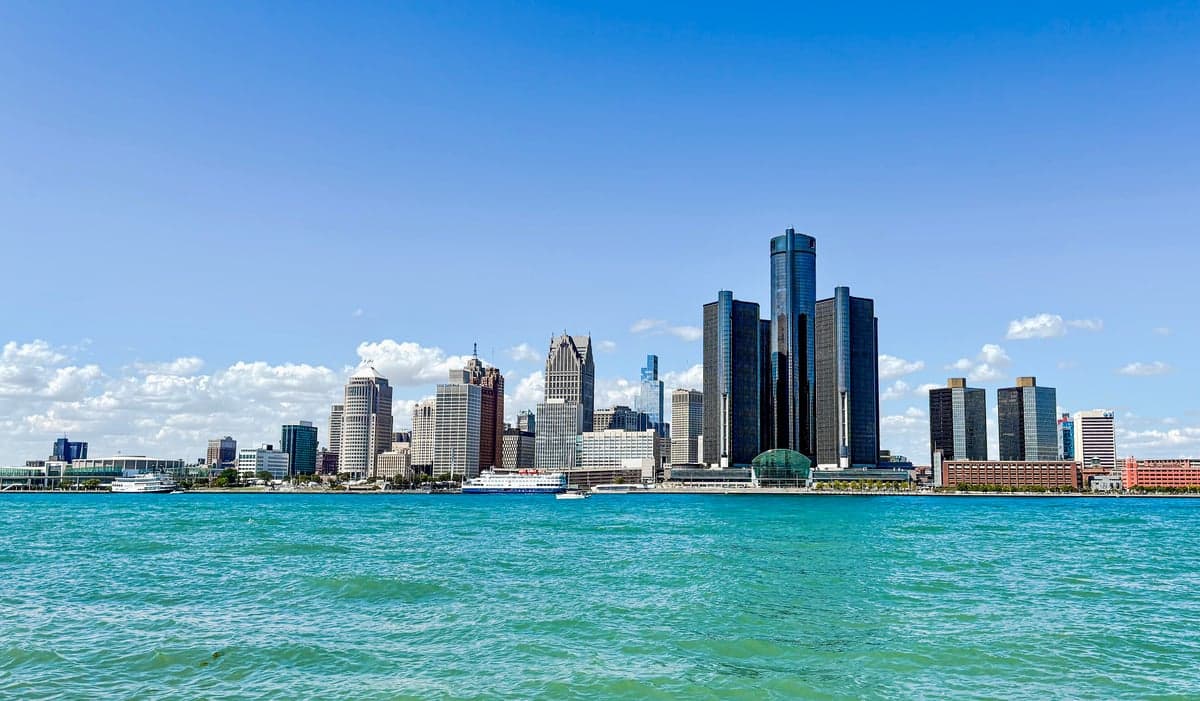
Photo: Wikipedia
Political ClimatePolitical Climate in Detroit, MI
District shown is the primary district for this city’s centroid. Cities may span multiple districts.
Local Political AnalysisPolitical Analysis of Detroit, MI
Look, I've been around Detroit my whole life, and I've watched this city's politics shift from a kind of old-school, union-heavy Democratic machine into something far more ideologically rigid. The Cook PVI of D+22 tells you the headline: this is one of the most lopsidedly Democratic major cities in the country. But the real story is how that lockstep control has changed what daily life feels like. It wasn't always this way. You used to have a real debate between moderate Democrats and a few Republicans in city council races. Now, the primary is the only election that matters, and the winner is almost always the candidate who runs furthest to the left. The trajectory is clear: we're moving away from any kind of political balance, and the consequences are showing up in your wallet and your freedoms.
How it compares
If you drive just 20 minutes out to places like Macomb Township or Shelby Township, you'll find a completely different world. Those areas vote reliably Republican, and the local governments there tend to be much more hands-off on things like business regulations and property rights. The contrast is stark. In Detroit, the city council and mayor's office are all Democrats, often pushing policies that feel like they're designed to manage your life rather than let you live it. Compare that to Grosse Pointe Park, which is right next door but has a more moderate, fiscally conservative streak in its local politics. The difference isn't just in who wins elections—it's in how the tax dollars are spent and how much say you have in your own neighborhood. Out in the suburbs, you still have a fighting chance to push back against a zoning change or a new tax. In Detroit, the machine tends to roll right over you.
What this means for residents
For the average person living here, the one-party rule means you have very little leverage when the government decides to get involved in your life. Property taxes are a prime example. The city's assessment system has been a mess for years, and because there's no real political opposition, there's little incentive to fix it. You're often left fighting a bureaucratic battle on your own. Then there's the issue of personal freedoms. The city council has been aggressive on things like business licensing, noise ordinances, and even what kind of signs you can put up on your own property. It feels like there's a new regulation every month that tells you what you can't do. The progressive agenda here isn't just about social issues—it's about a general belief that the government knows better than you do. That's a tough way to live if you value your independence.
On the cultural side, Detroit has always prided itself on being a tough, self-reliant city. But the current political climate is eroding that. There's a push for things like "equity" policies that often end up picking winners and losers based on group identity rather than individual merit. The city's leadership seems more focused on national progressive trends than on the basic services that make a city livable—like reliable police response times and filling potholes. I worry we're losing the gritty, no-nonsense character that made Detroit special. In the long term, if this trajectory holds, I see more people with the means to leave heading for the suburbs or even out of state. The city will become a place where only those who can't afford to leave or those who are deeply invested in the political machine remain. That's not a recipe for a healthy, free community.

State Political ClimatePolitical Climate in Michigan
State Political AnalysisPolitical Environment in the State
Michigan has shifted from a classic battleground state to a reliably blue state in presidential elections, with Democrats winning the last four cycles by margins of 3-11 points, but the state remains deeply split between its urban strongholds and a vast, increasingly red rural and exurban landscape. The dominant coalition is a union-heavy, metro-Detroit voting bloc combined with college towns like Ann Arbor and Lansing, while the rest of the state—from the Thumb to the Upper Peninsula—has trended sharply rightward over the past decade. This 20-year arc has seen the state flip from a Bush-leaning toss-up in 2004 to a state where Republicans now hold only the state House (barely) and a single U.S. House seat out of 14, yet local county-level GOP margins in places like Lapeer and Livingston have grown to 30-40 points.
Urban vs. rural divide
The political map of Michigan is a tale of two peninsulas. The Detroit tri-county area (Wayne, Oakland, Macomb) delivers roughly 40% of the state's vote, with Wayne County alone providing a 300,000-vote Democratic cushion that Republicans can never overcome. Ann Arbor (Washtenaw County) is the state's most liberal enclave, voting 80% Democratic, while Grand Rapids (Kent County) has flipped from red to purple over the past decade as the city's population has grown younger and more diverse. The rural divide is stark: the Upper Peninsula, once a Democratic stronghold due to mining unions, has swung hard right—Gogebic County voted for Trump by 20 points in 2024 after backing Obama by 18 in 2012. The Thumb region (Huron, Sanilac, Tuscola counties) and the west-central lakeshore (Mason, Oceana counties) are now reliably Republican, with local officials openly defying state mandates. The suburbs of Grand Rapids—like Byron Center and Caledonia—are growing fast and remain deeply conservative, while Detroit's northern suburbs like Rochester Hills and Novi have shifted leftward as professionals move in.
Policy environment
Michigan's policy climate has become a battleground for competing visions. The state income tax is a flat 4.25%, but the corporate tax rate is 6% and the state has a complex personal property tax on business equipment that many conservatives want to repeal. Governor Gretchen Whitmer and the Democratic legislature (2023-2024) repealed the state's right-to-work law, a major blow to labor freedom, and reinstated prevailing wage requirements on state construction projects. Education policy is a flashpoint: the state's school choice program is robust (charter schools and inter-district open enrollment), but the Detroit Public Schools Community District remains under state oversight and is perennially troubled. The state has no school voucher program, though a 2024 ballot initiative to create education savings accounts failed. Healthcare is dominated by Blue Cross Blue Shield of Michigan, and the state expanded Medicaid under the Affordable Care Act in 2014. Election laws have tightened: Michigan now requires voter ID (with a free ID option), but also has no-excuse absentee voting and same-day voter registration, which conservatives argue opens the door to fraud. The state's gun laws are a mixed bag: it has a universal background check law and a red flag law (passed in 2023), but no permit requirement for concealed carry (shall-issue) and no magazine capacity limit.
Trajectory & freedom
Michigan is becoming less free by most conservative measures, especially since Democrats took full control of state government in 2023. The most alarming trend for liberty-minded residents is the erosion of Second Amendment rights: the 2023 red flag law (HB 4146) allows courts to seize firearms without a criminal conviction, based solely on a petition from family or police. The same session repealed the state's preemption law, meaning cities like Ann Arbor and Detroit can now pass their own gun restrictions—Detroit immediately banned open carry. Parental rights took a hit with the 2023 repeal of the state's school mask mandate ban and the passage of a law requiring schools to adopt "inclusive" curricula that some parents say undermines their authority. Medical autonomy is under pressure: the state legalized recreational marijuana in 2018 (a rare bright spot for personal freedom), but the regulatory framework is heavy, with high licensing fees that keep small growers out. Property rights are threatened by the state's aggressive use of brownfield redevelopment zones and the expansion of the state's "community benefits" ordinances, which can force developers to negotiate with activist groups. On the positive side, Michigan has no state-level rent control and no statewide zoning preemption, leaving local control largely intact—though that cuts both ways.
Civil unrest & political movements
Michigan has been a flashpoint for political activism on both sides. The 2020 lockdown protests at the state capitol in Lansing—where armed demonstrators entered the building—became a national symbol of resistance to government overreach. The "Wolverine Watchmen" militia plot to kidnap Governor Whitmer in 2020 remains a raw wound, with many conservatives viewing the subsequent prosecutions as politically motivated. On the left, the "Stand Up Michigan" movement has organized massive protests against the state's 2023 abortion law changes and the repeal of right-to-work. Immigration politics are less visible than in border states, but the city of Detroit has a "Welcoming City" ordinance that limits cooperation with ICE, and the state's agricultural sector relies heavily on migrant labor. Election integrity remains a live issue: the 2020 election in Michigan saw widespread allegations of irregularities in Detroit's absentee ballot counting, and while multiple audits found no fraud, the distrust persists. The "Secure MI Vote" ballot initiative (2022) that would have tightened voter ID requirements was defeated by a well-funded opposition campaign. The Upper Peninsula has seen a small but vocal "Lake Superior Republic" secession movement, though it's mostly symbolic.
Projection
Over the next 5-10 years, Michigan is likely to become more Democratic and less free for conservatives. The demographic trends are clear: the Detroit suburbs are diversifying and moving left, while the rural areas are aging and shrinking. The state's population growth is concentrated in the liberal-leaning Grand Rapids area and the Ann Arbor corridor, while the Upper Peninsula and northern Lower Peninsula continue to lose residents. The 2024 election saw Democrats win the state by 5 points, and the state House is likely to flip back to Democratic control in 2026. The policy trajectory is toward more regulation: expect a state-level carbon tax or cap-and-trade system, further restrictions on gun ownership (possibly a magazine ban), and a push for single-payer healthcare. The state's school choice system is under constant attack from the teachers' unions, and a future Democratic supermajority could gut charter schools. The one wild card is the state's growing Hispanic population in southwest Michigan (around Holland and Benton Harbor), which is more conservative than the national average and could shift the balance in a few key districts. For now, the state's political future looks like a slow-motion version of Illinois: a blue metro core dominating a red rural hinterland, with freedom eroding year by year.
Bottom line for a conservative moving to Michigan: You'll find strong communities and low taxes in the rural and exurban areas, but you'll be fighting an uphill battle against a state government that is increasingly hostile to your values. The best bets are the western suburbs of Grand Rapids (like Byron Center or Rockford), the northern Oakland County exurbs (Oxford, Lake Orion), or the Upper Peninsula if you can handle the winters. Avoid Detroit, Ann Arbor, and the immediate Lansing area unless you're prepared for a blue political environment. Your vote will matter in local races, but the statewide trend is not in your favor. If you value gun rights, school choice, and low taxes, Michigan is still better than Illinois or California, but it's moving in the wrong direction.
* Values derived from national, state, county, city and local statistics and may differ in a specific area. Last updated: 2026-04-30T00:21:54.000Z
Narrative content on this page is AI-generated and may contain mistakes. Verify any details that matter before acting on them.
ReloMaps may earn a commission from affiliate links at no extra cost to you.

