 Popular
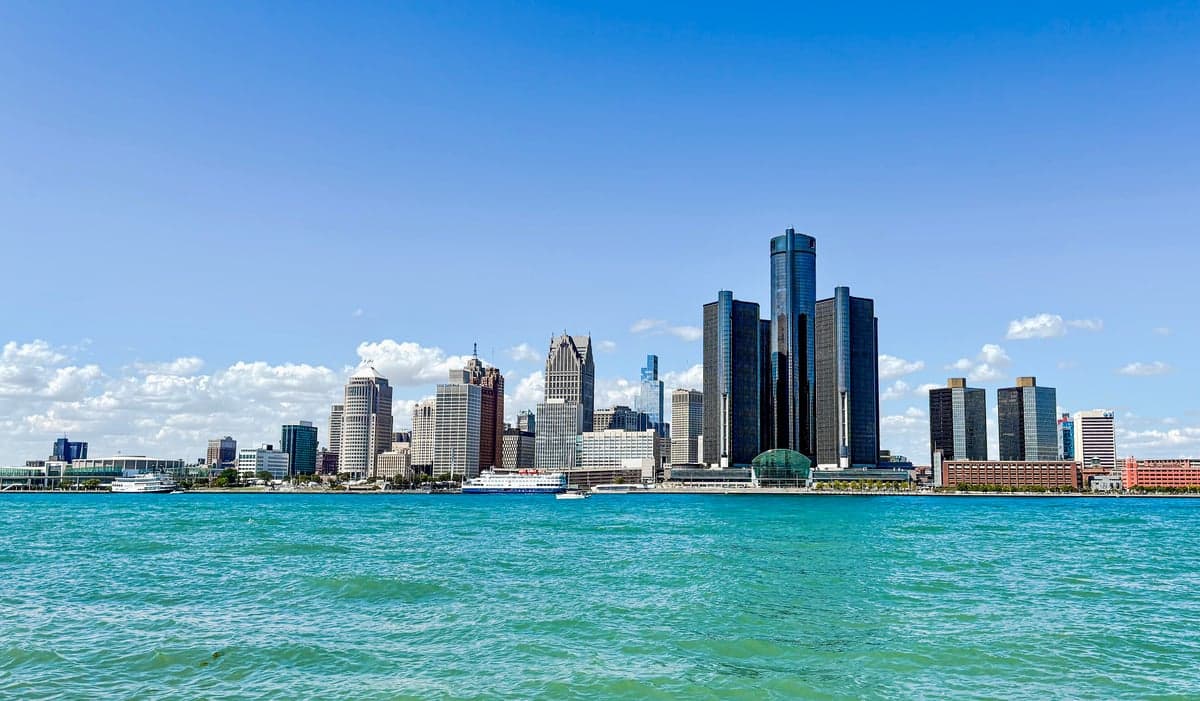
Photo: Wikipedia
Demographics of Detroit, MI
Affluence Level in Detroit, MI
A low-income area with significant economic hardship. Household wealth and educational attainment are well below national averages.
People of Detroit, MI
Detroit today is a city of 636,644 residents defined by its stark racial and economic contours: 76.4% Black, 10.3% White, 8.0% Hispanic, and a foreign-born share of just 3.3% — one of the lowest among major U.S. cities. It is a majority-Black, majority-working-class city with a college attainment rate of 17.6%, reflecting decades of industrial decline and middle-class flight. The city's identity is rooted in resilience and cultural pride, but its population has shrunk by over 60% since its 1950 peak, leaving vast stretches of vacant land and a concentrated core of long-term residents and new arrivals seeking opportunity in a post-industrial landscape.
How the city was settled and grew
Detroit was founded in 1701 by French colonists as a fur-trading outpost, but its explosive growth began in the late 19th and early 20th centuries with the rise of the automobile industry. The city's population surged from 285,704 in 1900 to 1.85 million by 1950, driven by massive domestic migration. The Great Migration (1910–1970) brought hundreds of thousands of Black Americans from the rural South to work in auto plants, settling in neighborhoods like Black Bottom and Paradise Valley on the near east side — vibrant, self-contained communities that were later demolished for urban renewal and freeway construction. European immigrants — Poles, Germans, Italians, and Irish — arrived in waves before 1920, forming ethnic enclaves in Hamtramck (Polish) and Delray (Hungarian and Polish). By 1950, Detroit was 83.6% White and 16.2% Black, with a small but growing Arab population in the Dearborn border area. The auto industry drew workers from Appalachia and Mexico as well, with Mexican immigrants settling in Mexicantown (southwest Detroit) beginning in the 1920s.
Modern era (post-1965)
The post-1965 period saw Detroit's population collapse and racial transformation. The 1967 riot accelerated White flight to the suburbs, and by 1980 the city was 63% Black and 34% White. The 1970s oil crisis and deindustrialization shrank the auto workforce, triggering a downward spiral of job loss, crime, and depopulation. The 2020 census showed Detroit at 76.4% Black, 10.3% White, and 8.0% Hispanic — a dramatic shift from its 1950 composition. The Hispanic population, concentrated in Southwest Detroit (including Mexicantown and Springwells), has grown steadily through both immigration and higher birth rates, while the Black population has aged and declined due to out-migration to suburbs and the South. The White population, though small, has seen a modest uptick since 2010, driven by young professionals and artists moving into Midtown, Corktown, and Eastern Market — neighborhoods that have experienced gentrification and new investment. The foreign-born share remains low at 3.3%, with the largest immigrant groups being Yemeni Arabs (concentrated in Hamtramck and the east side), Bangladeshi Indians (also in Hamtramck), and smaller East/Southeast Asian communities (0.6%) scattered across the city. The Indian-subcontinent population (1.0%) is largely Bangladeshi and Pakistani, distinct from the broader Asian category.
The future
Detroit's population is projected to stabilize or decline slowly, with no major reversal of the 60% loss since 1950. The city is not homogenizing but rather tribalizing into distinct enclaves: the Black majority is aging and suburbanizing, while the Hispanic share is growing through natural increase and immigration, particularly in Southwest Detroit. The White population is increasing in a few core neighborhoods but remains a small fraction of the total. The foreign-born share, though low, is rising slowly, driven by Arab and Indian (Bangladeshi) immigration to Hamtramck and the east side. The city's low college attainment rate (17.6%) and high poverty rate suggest that the next decade will see continued economic stratification: a small, educated, largely White and Asian core in Midtown and Corktown, surrounded by a larger, less-educated, majority-Black and Hispanic population in the rest of the city. The auto industry's shift to electric vehicles may bring some manufacturing jobs back, but automation means fewer jobs per plant. The city's population will likely remain below 700,000 for the foreseeable future, with growth concentrated in a few revitalized corridors.
For someone moving to Detroit now, the city offers a low cost of living and a rich cultural history, but the demographic reality is one of deep racial and economic divides. The city is becoming more Hispanic and slightly more White in a few neighborhoods, while the Black majority continues to shrink. The low foreign-born share means limited ethnic diversity outside of Southwest Detroit and Hamtramck. New arrivals should expect a city that is still recovering from its industrial collapse, with a population that is older, poorer, and less educated than the national average, but with pockets of revitalization and community resilience.

* Values derived from national, state, county, city and local statistics and may differ in a specific area. Last updated: 2026-04-30T00:21:54.000Z
Narrative content on this page is AI-generated and may contain mistakes. Verify any details that matter before acting on them.
ReloMaps may earn a commission from affiliate links at no extra cost to you.

