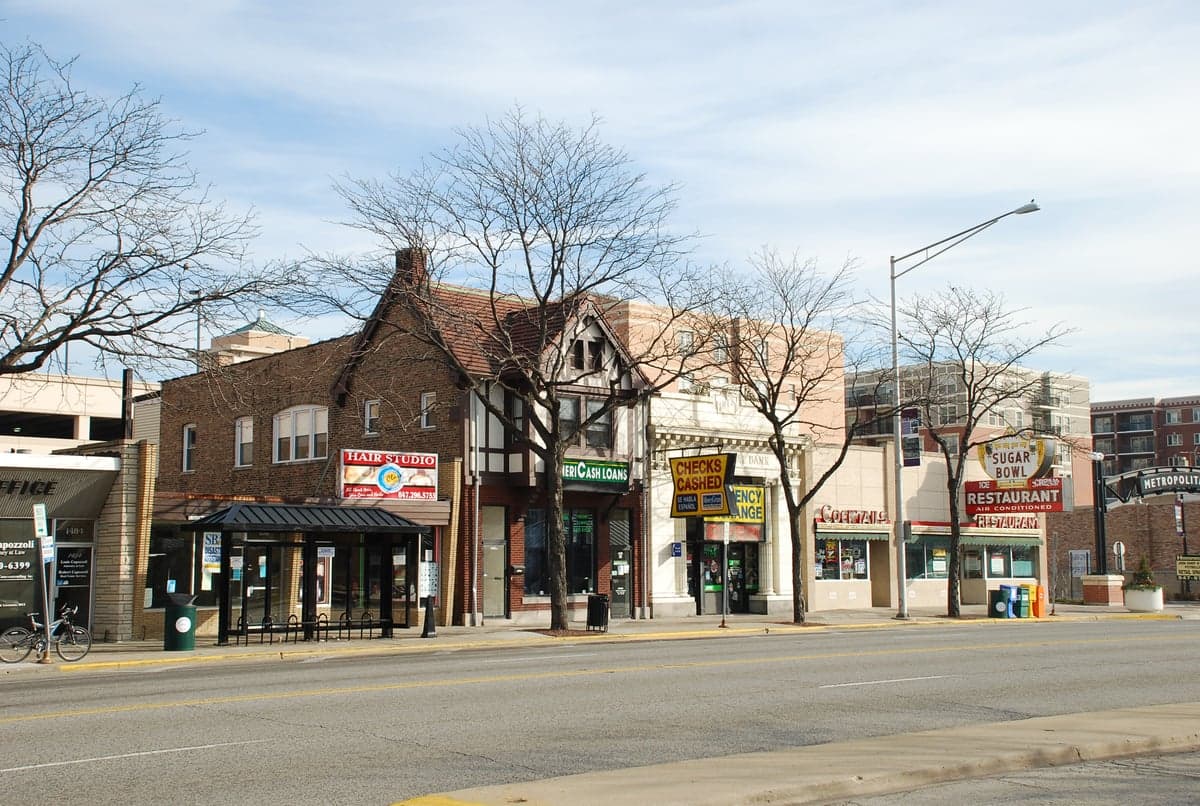
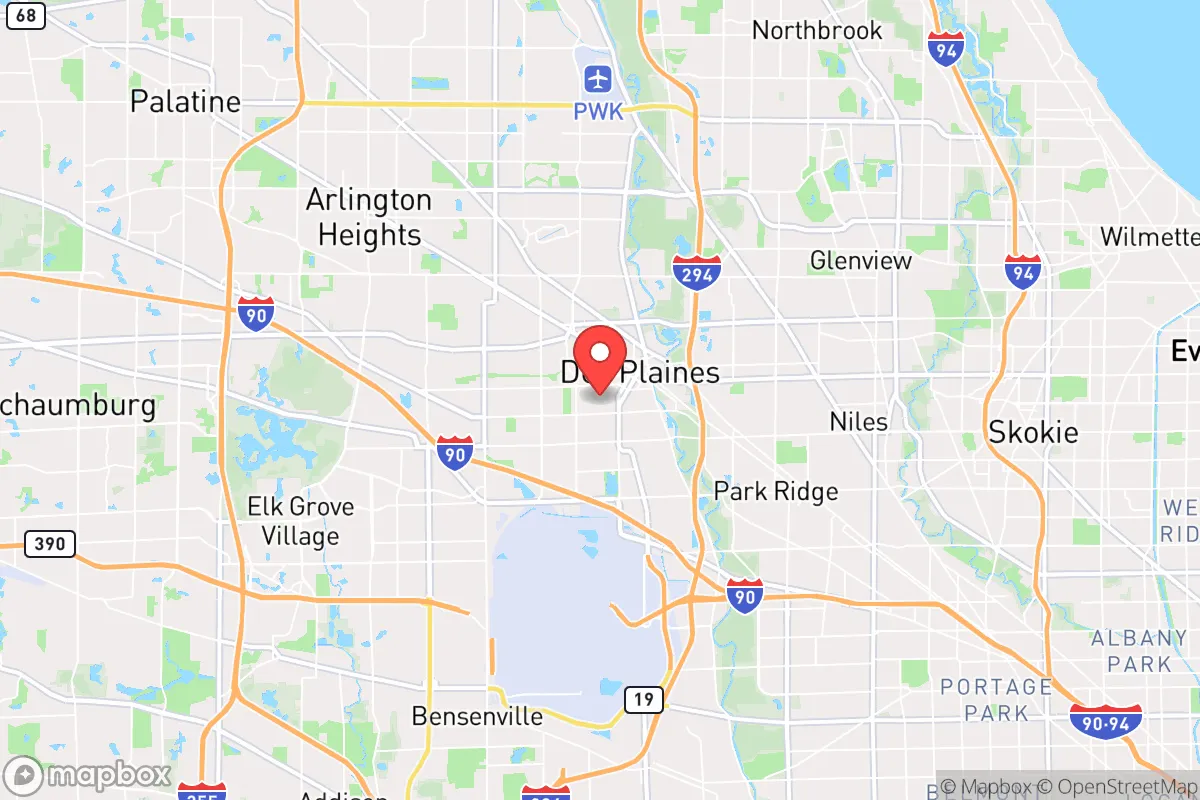
Photo: Wikipedia
Quality of Life in Des Plaines, IL
A high quality of life with strong walkability, manageable living costs, healthy neighborhood signals, and solid amenity access.
What does Quality of Life tell us?
Quality of Life blends cost of living, nearby amenities, socioeconomic signals, and neighborhood character. City-level scores represent the whole municipality; individual neighborhoods can differ.
What does this tell us?
Quality of Life blends cost of living, nearby amenities, socioeconomic signals, and neighborhood character. City-level scores represent the whole municipality; individual neighborhoods can differ.
Cost of Living
19% above national average
The Real Cost of Living in Des Plaines, IL for 2026
| Tier | Individual | Family (4) |
|---|---|---|
| Survival | $23k | $43k |
| Comfortable | $62k | $91k |
| Luxury | $141k+ | $219k+ |
| Elite (Top 5%) | $166k+ | $257k+ |
104%
The Area Signal
A metric tracking the socioeconomic signals of the area.
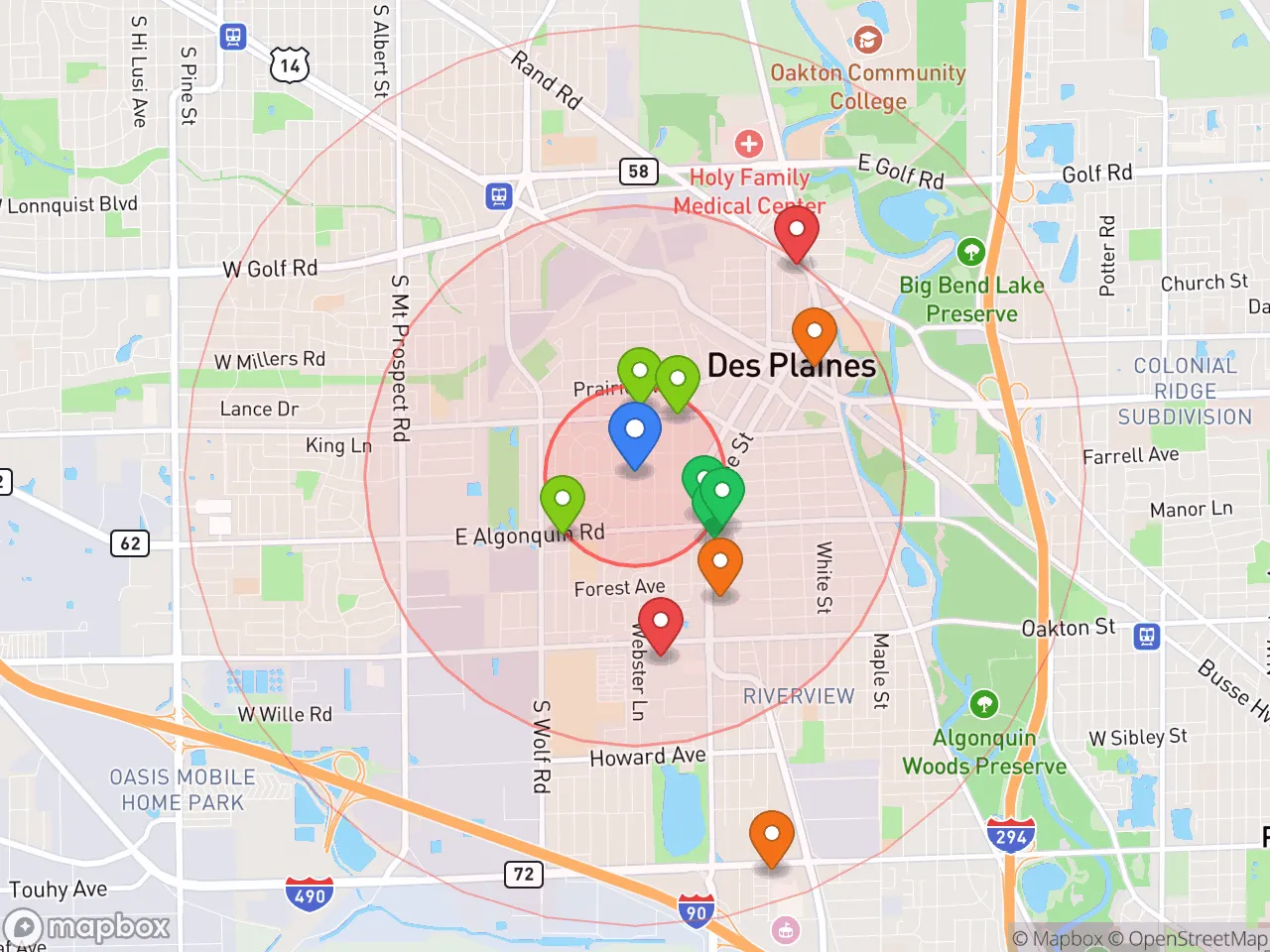
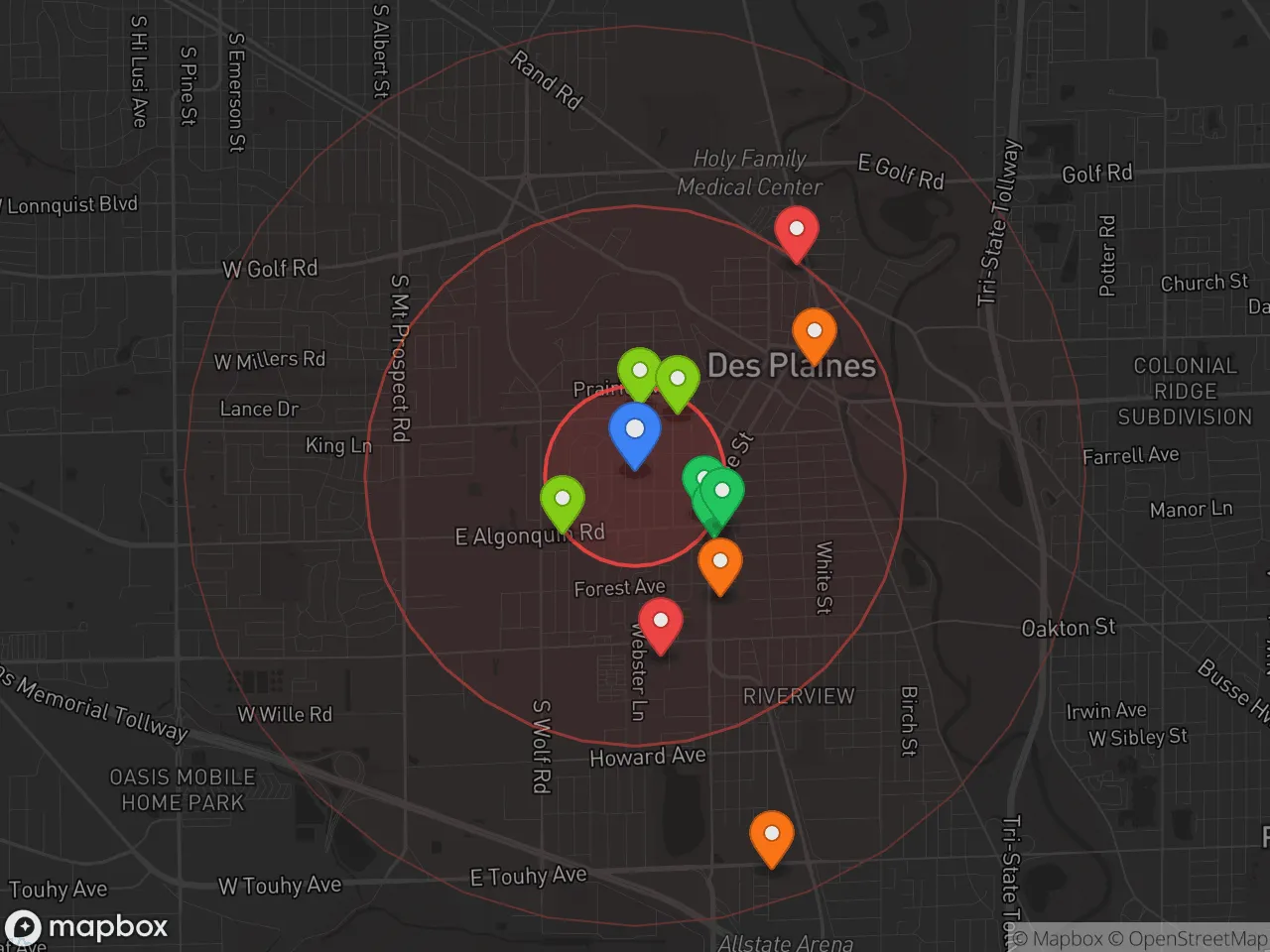
Hobbies
Explore the areaGroceries
7 within 10 miles
Gas
20 within 10 miles
Hospital
20 within 20 miles
Airport
ORD — O'Hare International
Post Office
USPS — Des Plaines, IL
Critical Amenities
Quality-of-Life Analysis
Des Plaines, Illinois, presents a distinctly middle-to-upper-middle-class quality of life, anchored by a Cost of Living Index of 119 (19% above the U.S. average). The city attracts a mix of established families, young professionals commuting to Chicago, and a substantial Polish- and Hispanic-heritage population, creating a stable, family-oriented community with a strong sense of local identity. Its affluence is moderate compared to pricier North Shore suburbs, yet it offers a more suburban, less transient feel than neighboring O'Hare-adjacent areas like Rosemont.
Cost of living, housing affordability, and value compared to nearby suburbs
While Des Plaines is pricier than the national norm, it remains a relative bargain within the competitive Chicago suburban market. The median home value of $318,200 is significantly lower than in affluent North Shore communities like Glenview or Park Ridge, where median values often exceed $450,000. This makes Des Plaines a practical entry point for buyers seeking a detached single-family home within a reasonable distance of the city. Renters face a median rent of $1,435, which is notably below the Chicago metro average and offers better value than comparable units in Arlington Heights or Mount Prospect. The primary trade-off is property taxes: Cook County levies are high, and the effective rate in Des Plaines can approach 2.5% of assessed value, a factor that directly impacts monthly housing costs for homeowners. For commuters, the average travel time of 28.4 minutes is manageable, with the Des Plaines Metra station on the Union Pacific Northwest Line providing direct service to Chicago's Ogilvie Transportation Center in about 35–45 minutes, a key advantage over suburbs without rail access.
Schools, parks, and the daily rhythm of life in Des Plaines
Daily life in Des Plaines is defined by its robust public amenities and a slower, more residential pace than the immediate O'Hare corridor. The city is served by Community Consolidated School District 62 and Maine Township High School District 207, with Maine West High School earning consistent recognition for its academic programs and extracurricular breadth. The Des Plaines Park District maintains over 40 parks, including the expansive Lake Park with its fishing lagoon and walking trails, and the popular Prairie Lakes Community Center with an indoor water park. The downtown area along Miner Street and Lee Street has seen revitalization, with independent restaurants, a farmers market, and the historic Des Plaines Theatre hosting live performances. For daily errands, the city is well-served by grocery stores and retail along Golf Road and Rand Road, though residents often drive to nearby Woodfield Mall in Schaumburg for major shopping. The presence of O'Hare International Airport means constant air traffic noise in some neighborhoods, particularly south of Oakton Street, which is a consistent quality-of-life consideration for homebuyers.
Des Plaines is best suited for buyers and renters who prioritize affordable suburban space, reliable transit access to Chicago, and a strong community infrastructure over the prestige of pricier North Shore suburbs. Families will find good public schools and ample recreation, while professionals will appreciate the commute and lower rent burden. Those sensitive to aircraft noise or seeking a vibrant nightlife scene should look elsewhere, but for anyone wanting a stable, well-equipped, and reasonably priced base in the Chicago metro, Des Plaines delivers a solid, unflashy quality of life.

Crime in Des Plaines, IL
Lower crime rates than 85% of comparable U.S. locations.
Violent CrimeViolent Crime Analysis
Property CrimeProperty Crime Analysis
Crime Analysis
Des Plaines, Illinois, presents a mixed safety profile that requires careful examination. The city’s violent crime rate of 106.1 incidents per 100,000 residents is notably lower than both the Illinois state average and the national median, placing it in a relatively safer tier for a Chicago suburb. However, the property crime rate of 778.6 per 100,000 is a more significant concern, exceeding the national average and indicating a higher risk for theft, burglary, and vehicle-related crimes. Prospective residents should weigh these figures against the broader context of Cook County’s criminal justice policies, which can influence local enforcement and recidivism.
Crime in context
When compared to state and national benchmarks, Des Plaines’ violent crime rate is roughly one-third lower than the Illinois average and well below the U.S. median of approximately 380 per 100,000. This is a positive indicator for personal safety. Conversely, the property crime rate sits about 15% above the national average, a figure that aligns with many suburban communities near a major metropolitan hub. A critical factor for readers to understand is the legal environment in Cook County. The region is known for progressive prosecutors and judges who often prioritize diversion programs and reduced sentencing for non-violent offenders. While intended to reduce incarceration, this approach can result in repeat property offenders cycling back onto the streets more quickly, directly increasing the likelihood of thefts and burglaries in communities like Des Plaines. This systemic leniency is a legitimate concern for anyone prioritizing long-term neighborhood security.
What residents experience
Daily life in Des Plaines for most residents is characterized by a low risk of violent confrontation. The city’s violent crime is largely concentrated in isolated incidents rather than random attacks, and the presence of the Des Plaines Police Department is generally visible and responsive. The more tangible day-to-day safety issue is property crime. Residents commonly report package thefts from porches, unlocked vehicle entries, and occasional garage burglaries. These crimes are often opportunistic, and the local police advise that proactive measures—such as security cameras, neighborhood watch participation, and locking vehicles—are essential. The progressive justice policies at the county level mean that even when property criminals are caught, they may face minimal jail time, which can embolden repeat offenses and frustrate victims seeking accountability.
Neighborhood-level variation in Des Plaines is notable. Areas closer to the O’Hare International Airport corridor and along major thoroughfares like Golf Road and Mannheim Road tend to see higher property crime due to transient traffic and commercial density. In contrast, the residential neighborhoods east of the Des Plaines River, particularly around the Golf-Maine Park area and the historic downtown, generally report lower crime rates and stronger community cohesion. Prospective renters and buyers should examine block-level crime maps and speak with local precinct officers, as the difference in safety between a quiet cul-de-sac and a busy arterial street can be substantial. The overarching takeaway is that Des Plaines offers a relatively safe environment for violent crime, but the property crime risk—exacerbated by Cook County’s lenient judicial philosophy—demands vigilance and practical security investments.
* Values derived from national, state, county, city and local statistics and may differ in a specific area. Last updated: 2026-04-23T09:59:48.000Z
Narrative content on this page is AI-generated and may contain mistakes. Verify any details that matter before acting on them.
ReloMaps may earn a commission from affiliate links at no extra cost to you.

