
Photo: Wikipedia
Political ClimatePolitical Climate in Delmar, DE
District shown is the primary district for this city’s centroid. Cities may span multiple districts.
Inherited from parent state — no local data available.
Local Political AnalysisPolitical Analysis of Delmar, DE
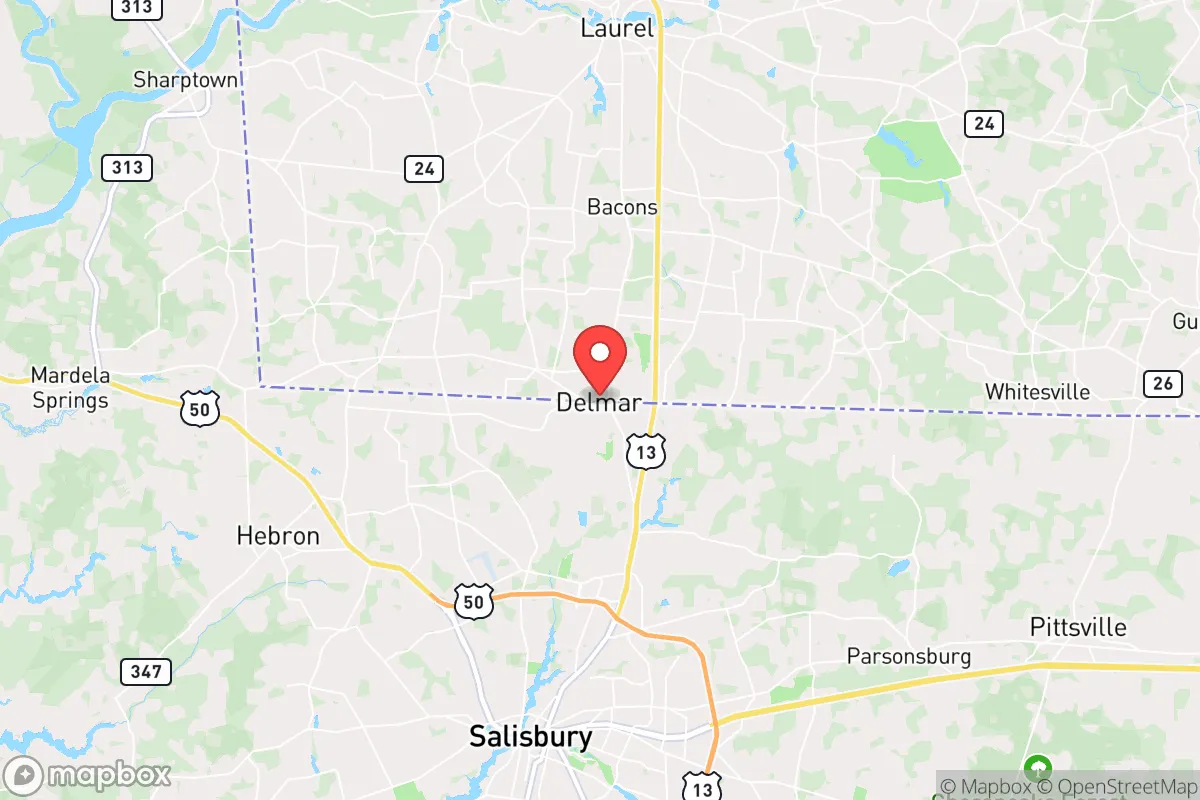
Delmar, Delaware, sits in a peculiar political spot—technically a D+8 district according to the Cook Partisan Voting Index, which sounds like a solidly blue area on paper, but the reality on the ground is a lot more complicated. The town itself, straddling the Delaware-Maryland line, has historically been a quiet, conservative-leaning community where folks value their privacy, their guns, and their right to live without a bunch of government telling them what to do. Over the last decade or so, though, you’ve seen a slow creep of progressive policies coming out of Dover and even from Sussex County’s more liberal pockets, like Rehoboth Beach and Lewes, which are pushing an agenda that doesn’t always sit well with the old-timers and the working families here. The trajectory feels like a tug-of-war: the D+8 rating masks a deep undercurrent of frustration with overreach, and if you talk to anyone who’s been here longer than twenty years, they’ll tell you the place isn’t what it used to be.
How it compares
Drive ten miles north to Georgetown, and you’ll find a similar small-town vibe, but it’s still more reliably red than Delmar—Georgetown’s county seat status keeps it grounded in traditional values. Head east toward the coast, and places like Bethany Beach or Fenwick Island are a whole different world, where vacation-home money and out-of-state transplants have flipped the script toward progressive environmental regulations and social policies that feel foreign to Delmar’s farming and blue-collar roots. Even nearby Salisbury, Maryland, just a few miles south, leans more moderate, but Delmar’s unique position as a border town means it gets pulled in two directions: Maryland’s Annapolis crowd pushes left, while Delaware’s General Assembly, especially under recent leadership, has been churning out laws on gun control and energy mandates that make locals nervous. The contrast is stark—Delmar’s neighbors in rural Sussex County voted heavily for Trump in 2020 and 2024, yet the town itself gets lumped into a D+8 district thanks to gerrymandering and the influence of transient populations near the university in Newark. It’s a classic case of the map not matching the people.
What this means for residents
For the folks who actually live here year-round, the political climate means you’re constantly watching your back. The push for stricter gun laws out of Dover—like the permit-to-purchase requirement passed in 2022—feels like a direct slap to the Second Amendment rights that many here hold sacred. You’ve also got the state’s aggressive clean energy mandates, which are jacking up utility costs for families who are already stretched thin, all while the government tells you it’s for the greater good. That D+8 rating might make Delmar look like a safe bet for progressive candidates, but in practice, it means residents have to fight harder to keep local schools from adopting woke curricula or to stop county zoning boards from imposing rules that limit property rights. The long-term trend is concerning: if the coastal influence keeps spreading inland, you could see more taxes, more regulations, and less freedom to live your life without a bureaucrat’s permission. A lot of us are already looking at moving a few miles west into Maryland’s Wicomico County, where the politics are a bit more sane.
Culturally, Delmar still holds onto its small-town charm—the annual Delmarva Chicken Festival and the volunteer fire department are big deals here—but there’s a growing divide between the old guard and the newcomers who commute to jobs in Salisbury or even Wilmington. The policy distinctions that stand out are the state-level battles: Delaware’s lack of a sales tax is nice, but the income tax and property tax creep are real, and the state’s push for electric vehicle mandates feels like a solution in search of a problem for a town where most folks drive pickups. If you value personal freedom and want to keep government out of your backyard, Delmar’s still a decent spot, but you’ll need to stay engaged and vote like your rights depend on it—because they do.

State Political ClimatePolitical Climate in Delaware
State Political AnalysisPolitical Environment in the State
Delaware, despite its small size, is a state with a surprisingly entrenched political identity. For decades, it has been a reliable blue state in presidential elections, but that label masks a deep and growing urban-rural split. The northern counties, particularly New Castle County, are the engine of the state’s Democratic majority, while the southern counties of Kent and Sussex have become increasingly Republican strongholds. Over the last 10-20 years, the state has drifted leftward on social and economic policy, driven by the Wilmington metro area and the rapid growth of government and corporate sectors, but the conservative base in the southern half has been fighting back, making Delaware a state of two very different political realities.
Urban vs. rural divide
The political map of Delaware is a study in contrasts. New Castle County, home to Wilmington and the suburbs of Newark and Bear, is the Democratic heartland. This area is dominated by the financial, legal, and pharmaceutical industries, with a large population of government employees and professionals who lean heavily progressive. Wilmington itself is a deep blue city, but the surrounding suburbs are where the real power lies. In contrast, Kent County (Dover) and Sussex County (Georgetown, Lewes, Rehoboth Beach) are the Republican strongholds. Sussex County, in particular, has seen explosive growth from retirees and families fleeing higher-tax states, and it has flipped from a purple county to a solid red one. The rural areas around Middletown and Odessa are also becoming more conservative as new development brings in families looking for more space and lower taxes. The divide is stark: drive 20 minutes south of the C&D Canal, and you’ll feel like you’re in a different state entirely.
Policy environment
Delaware’s policy environment is a mixed bag for conservatives. On the plus side, the state has no sales tax, which is a major draw for families and retirees. Property taxes are also relatively low compared to neighboring states like Maryland and Pennsylvania. However, the income tax is progressive and can be steep, with a top marginal rate of 6.6% that kicks in at $60,000 for single filers. The regulatory posture is decidedly pro-business in the corporate law sector—Delaware is the legal home for over 60% of Fortune 500 companies—but for small businesses and individuals, the state is increasingly burdensome. Education policy is a flashpoint: the state has a strong teachers’ union and has resisted school choice and charter school expansion, which frustrates many parents. Healthcare is heavily regulated, with a state-run exchange and mandates that drive up costs. On election law, Delaware has universal mail-in voting and same-day registration, which conservatives view as a vulnerability. The state also has a strict gun control regime, including a ban on "assault weapons" and high-capacity magazines passed in 2022, which was a major blow to Second Amendment advocates.
Trajectory & freedom
Over the past five years, Delaware has been moving decisively in the direction of less personal freedom. The most concerning trend for conservatives is the erosion of parental rights. In 2021, the state passed a law that effectively stripped parents of the right to opt their children out of LGBTQ-inclusive curriculum in public schools, a move that sparked massive backlash. The gun rights situation has deteriorated rapidly: the 2022 "assault weapons" ban and the 2023 law raising the minimum age to purchase a firearm to 21 have made Delaware one of the most restrictive states in the region for gun owners. On medical autonomy, the state has expanded Medicaid and mandates vaccine coverage for schoolchildren, but it has also passed a law protecting abortion access, which is a double-edged sword for those who value both life and liberty. The tax burden is creeping upward, with the state legislature consistently voting for new fees and spending programs. The overall trajectory is clear: the state is becoming more centralized, more regulated, and less tolerant of individual choice, especially in the northern counties where the political power is concentrated.
Civil unrest & political movements
Delaware has seen its share of political flashpoints. The parental rights movement has been particularly active, with large protests at the state capitol in Dover in 2022 and 2023 over the curriculum opt-out law. These protests were organized by groups like the Delaware Family Alliance and drew thousands of families from across the state. On the left, the Black Lives Matter protests in Wilmington in 2020 were large and occasionally violent, leading to property damage and a heavy police presence. The state has a sanctuary city policy in Wilmington, which has become a point of contention, especially as immigration enforcement becomes a national issue. There have also been election integrity concerns, with the 2020 and 2022 cycles seeing allegations of irregularities in mail-in ballot processing, though no major court cases have overturned results. The most visible political movement is the growing conservative grassroots in Sussex County, where groups like the Sussex County Republican Committee have become highly organized and effective at turning out voters. You’ll see more "Don’t Tread on Me" flags in Georgetown than in any other part of the state.
Projection
Looking ahead 5-10 years, the demographic trends are working against conservatives in Delaware. The northern suburbs are growing faster than the southern rural areas, and the influx of remote workers from Washington D.C. and Philadelphia is bringing more progressive voters into New Castle County. The retiree migration to Sussex County is slowing as housing costs rise, and the state’s tax burden is starting to push some families to consider moving to Florida or Texas. The political trajectory is likely to continue leftward at the state level, with more gun control, higher taxes, and expanded government programs. However, the conservative base in Kent and Sussex counties is not going away—it’s getting more organized and more vocal. The wildcard is the Middletown area, which is growing rapidly and could become a swing district if enough conservative families move in. For a new resident, the realistic expectation is that Delaware will remain a blue state with a strong red minority, and the cultural and policy battles will only intensify.
Bottom line for a new resident: If you’re a conservative looking to move to Delaware, you need to be strategic. The southern counties—Sussex and Kent—offer a much more aligned political and cultural environment, with lower taxes and a stronger sense of community. The northern counties, especially New Castle, will feel like an extension of the Northeast corridor, with all the progressive policies that come with it. You’ll find your people in places like Georgetown or Middletown, but you’ll have to accept that the state government in Dover will likely be working against your values. The trade-off is a low property tax and no sales tax, but you’ll pay for it in income taxes and regulatory headaches. Delaware is not a lost cause, but it’s a state where you have to pick your battles and your neighborhood carefully.
* Values derived from national, state, county, city and local statistics and may differ in a specific area. Last updated: 2026-10-10T16:27:15.000Z
Narrative content on this page is AI-generated and may contain mistakes. Verify any details that matter before acting on them.
ReloMaps may earn a commission from affiliate links at no extra cost to you.

