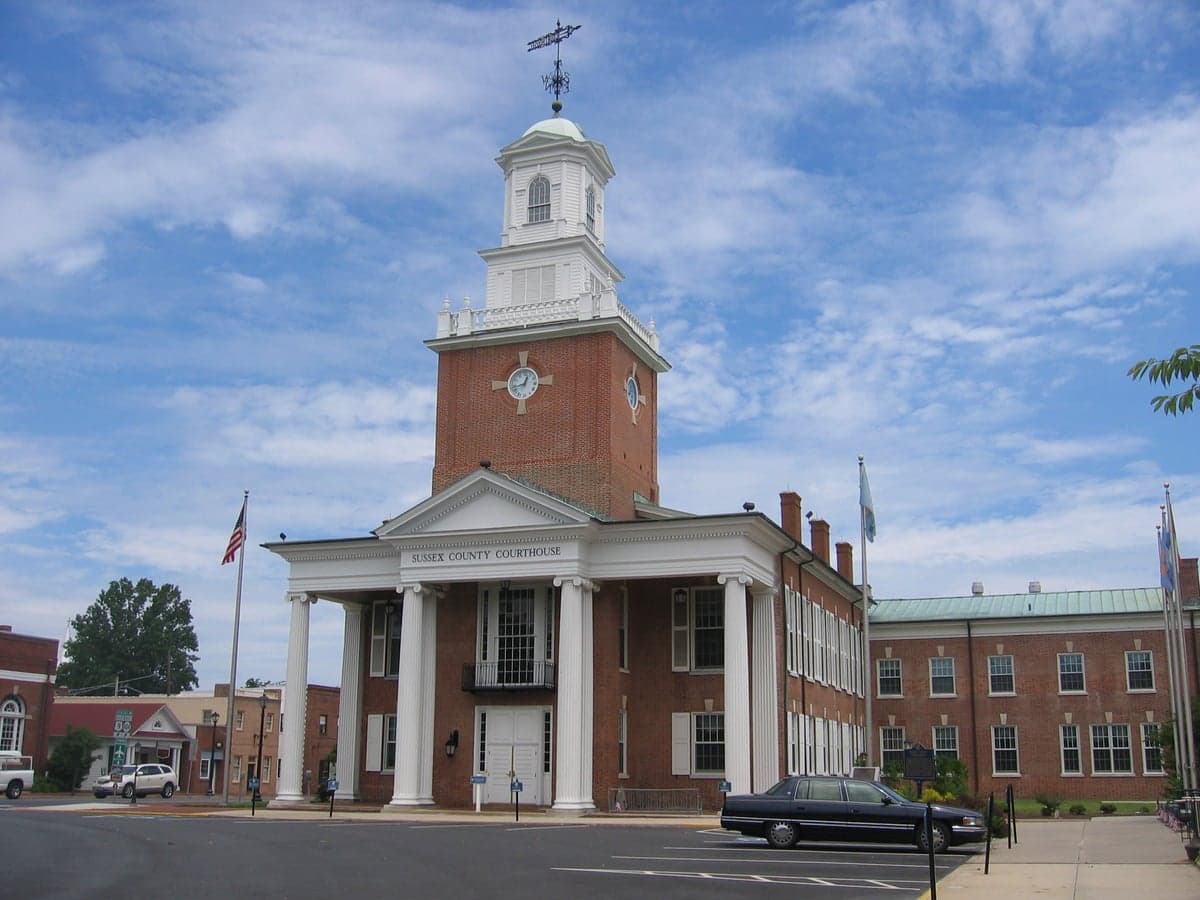
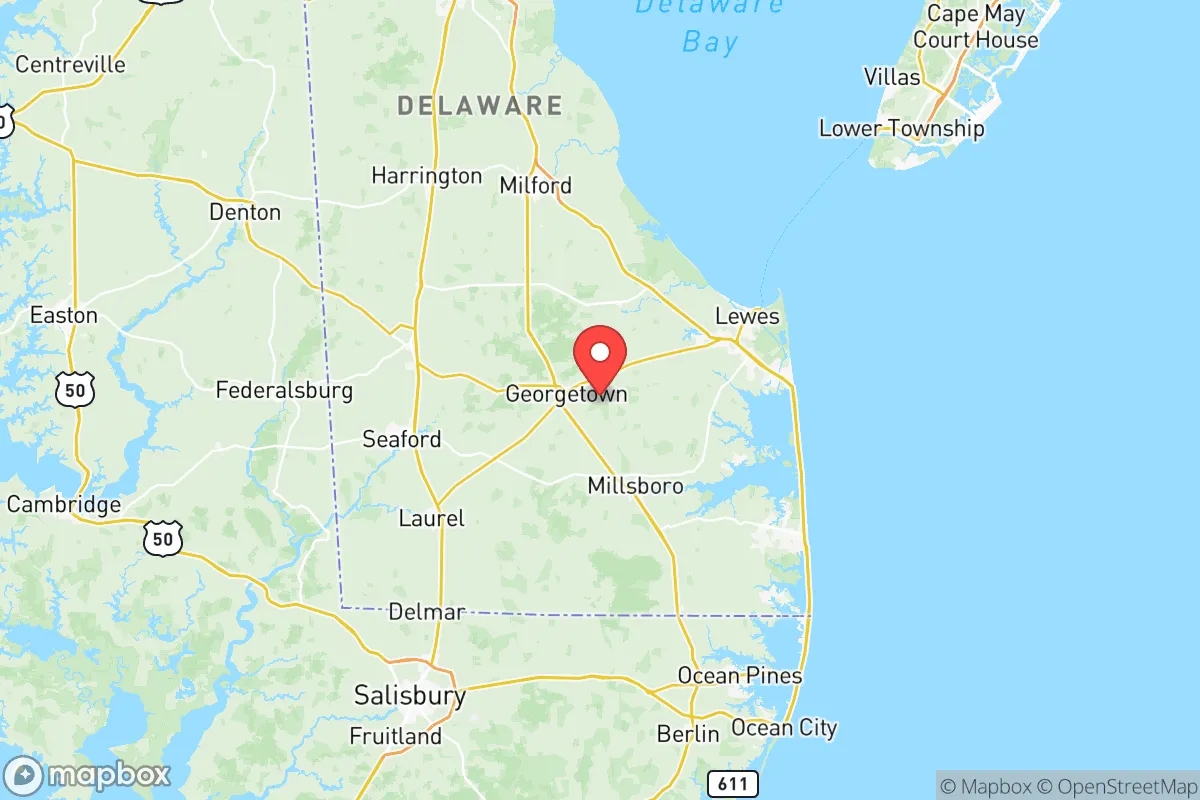
Photo: Wikipedia
Demographics of Sussex County
Affluence Level in Sussex County
A middle-class area roughly in line with national averages across income, home values, education, and employment.
People of Sussex County
The people of Sussex County, Delaware today are predominantly white, native-born, and politically conservative, with a growing Hispanic population reshaping parts of the county's rural and coastal landscape. At 247,799 residents, the county remains less dense than its northern neighbors, with a character defined by agricultural roots, beach tourism, and a steady influx of retirees and remote workers from the Mid-Atlantic and Northeast. Distinctive identity markers include a strong local pride in hunting and fishing traditions, a significant Amish and Mennonite presence in the western farmlands, and a rapidly diversifying coastal corridor from Lewes to Bethany Beach.
Settlement & growth (pre-1960)
The original inhabitants of Sussex County were the Nanticoke and Lenape peoples, who lived along the rivers and bays for thousands of years before European contact. The first European settlers were English colonists from the neighboring Eastern Shore of Maryland and Virginia, who began arriving in the 1660s under the authority of the Duke of York. These early settlers established small tobacco and corn farms along the Nanticoke River and the Atlantic coast, founding the towns of Lewes (1631, as the short-lived Zwaanendael colony by the Dutch, then permanently settled by the English in the 1670s) and Georgetown (1791, as the county seat).
Throughout the 18th and 19th centuries, the population grew slowly, driven by natural increase and a trickle of Scots-Irish and German immigrants who moved south from Pennsylvania and New Jersey. The Scots-Irish settled primarily in the northern part of the county, around Millsboro and Laurel, where they worked as tenant farmers and later as laborers in the region's small iron forges and grist mills. German immigrants, including a significant number of Amish and Mennonites, began arriving in the mid-19th century, drawn by cheap, fertile land in the western part of the county. They established tight-knit farming communities around Bridgeville and Greenwood, where their descendants remain today, maintaining traditional agricultural practices and a distinct cultural identity.
The post-Civil War period brought a small but notable wave of freed African Americans, who settled in rural enclaves and founded communities like Harmony and Oak Orchard. These families worked as sharecroppers, farm laborers, and later in the region's growing poultry industry. By 1900, Sussex County was overwhelmingly rural, with a population of about 35,000, nearly all of whom were native-born whites or African Americans. The early 20th century saw the rise of the poultry industry, which transformed the local economy and attracted a modest number of white migrants from the Delmarva Peninsula and southern Maryland. The construction of the Chesapeake & Delaware Canal and the expansion of the railroad through Seaford and Georgetown spurred small-scale industrial growth, but the county remained largely agricultural until after World War II.
Modern era (post-1965)
The 1965 Hart-Cellar Act had a limited direct impact on Sussex County compared to urban areas, but its indirect effects are now visible. The county's foreign-born population remains low at 4.6%, well below the national average, but that share has more than doubled since 2000. The primary driver of demographic change since the 1970s has been domestic migration: retirees and second-home buyers from the Washington, D.C., Baltimore, and Philadelphia metropolitan areas, drawn by the beaches, lower taxes, and slower pace of life. This wave has concentrated along the coast, transforming Rehoboth Beach, Bethany Beach, and Fenwick Island from quiet seasonal towns into year-round communities with a significant population of affluent, older residents.
Hispanic growth is the most notable ethnic shift. The Hispanic share of the population is now 11.2%, up from less than 2% in 1990. This growth is driven primarily by Mexican and Central American immigrants who arrived to work in the poultry processing plants in Millsboro, Georgetown, and Seaford. These workers have established small but growing enclaves, with Spanish-language churches, tiendas, and community organizations. The Black population, at 10.2%, is stable and historically rooted, concentrated in the older rural communities and in the towns of Laurel and Seaford. East and Southeast Asian communities (0.8%) and Indian subcontinent communities (0.4%) are very small, mostly professionals and business owners in the coastal resort areas and in Georgetown. The white population, at 72.8%, remains the overwhelming majority, but its share is slowly declining as the county diversifies.
Suburbanization has been a defining trend since the 1990s. The area around Georgetown and the corridor along Route 1 between Lewes and Fenwick Island have seen rapid residential development, with large subdivisions and shopping centers replacing farmland. This growth has brought a more politically moderate and culturally diverse population, but the inland agricultural areas remain deeply conservative and homogeneous.
The future
The population of Sussex County is projected to continue growing, driven by domestic in-migration from the Northeast and Mid-Atlantic, as well as natural increase among the Hispanic community. The county is not homogenizing; rather, it is tribalizing into distinct geographic and cultural zones. The coastal strip is becoming more affluent, older, and politically mixed, while the inland agricultural areas remain white, conservative, and traditional. The Hispanic population is growing steadily and is likely to become a larger share, particularly in the poultry-processing towns, but it is also assimilating into the broader culture, with second-generation children increasingly speaking English and attending college.
The immigrant communities are growing but from a very small base. The East/Southeast Asian and Indian populations are likely to remain small, as the county lacks the professional job base and ethnic infrastructure to attract large numbers. The Amish and Mennonite population is stable, with high birth rates offsetting some out-migration to other rural areas. The biggest wild card is the pace of coastal development: if housing costs continue to rise, the retiree influx may slow, and younger families may be priced out, leading to a more age-segregated population.
For someone moving in now, Sussex County offers a choice between two distinct worlds: the dynamic, growing, and increasingly diverse coastal corridor, or the quiet, traditional, and homogeneous inland farm country. The county is becoming more suburban and more connected to the broader Mid-Atlantic economy, but it retains a strong local identity rooted in agriculture, hunting, and a conservative social ethos. The next decade will likely see continued growth, modest diversification, and a deepening divide between the coast and the countryside.

* Values derived from national, state, county, city and local statistics and may differ in a specific area. Last updated: 2026-05-12T06:25:49.000Z
Narrative content on this page is AI-generated and may contain mistakes. Verify any details that matter before acting on them.
ReloMaps may earn a commission from affiliate links at no extra cost to you.

