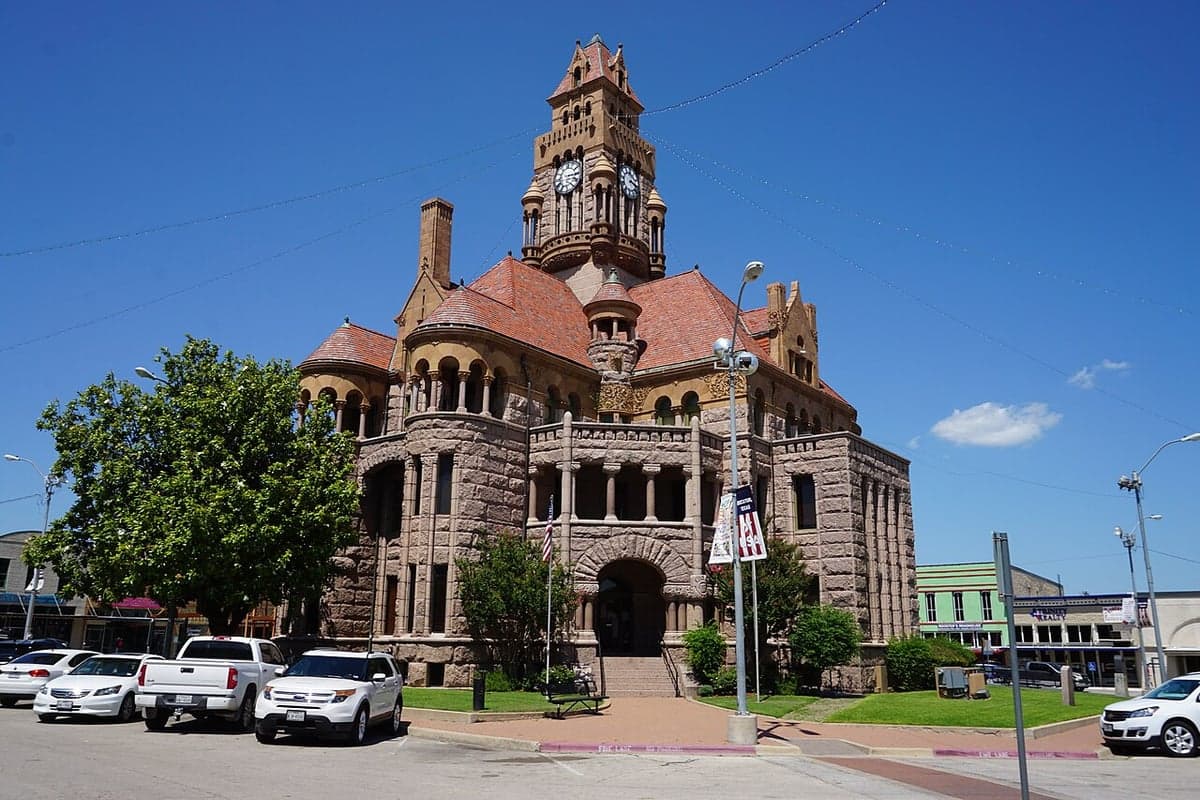
Photo: Wikipedia
Quality of Life in Decatur, TX
A high quality of life with strong walkability, manageable living costs, healthy neighborhood signals, and solid amenity access.
What does Quality of Life tell us?
Quality of Life blends cost of living, nearby amenities, socioeconomic signals, and neighborhood character. City-level scores represent the whole municipality; individual neighborhoods can differ.
What does this tell us?
Quality of Life blends cost of living, nearby amenities, socioeconomic signals, and neighborhood character. City-level scores represent the whole municipality; individual neighborhoods can differ.
Cost of Living
9% below national average
The Real Cost of Living in Decatur, TX for 2026
| Tier | Individual | Family (4) |
|---|---|---|
| Survival | $17k | $33k |
| Comfortable | $47k | $69k |
| Luxury | $122k+ | $190k+ |
| Elite (Top 5%) | $144k+ | $223k+ |
104%
The Area Signal
A metric tracking the socioeconomic signals of the area.
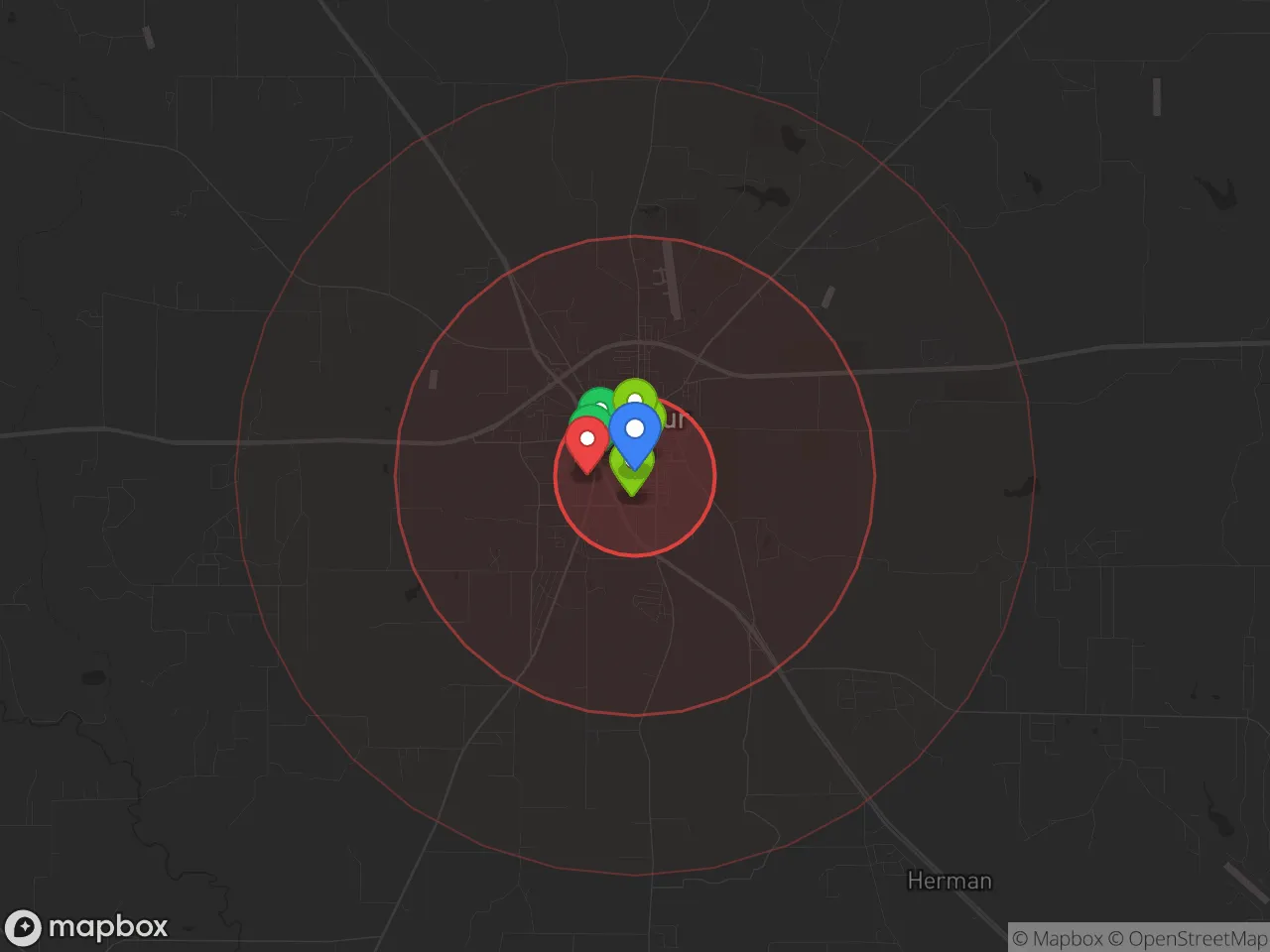
Hobbies
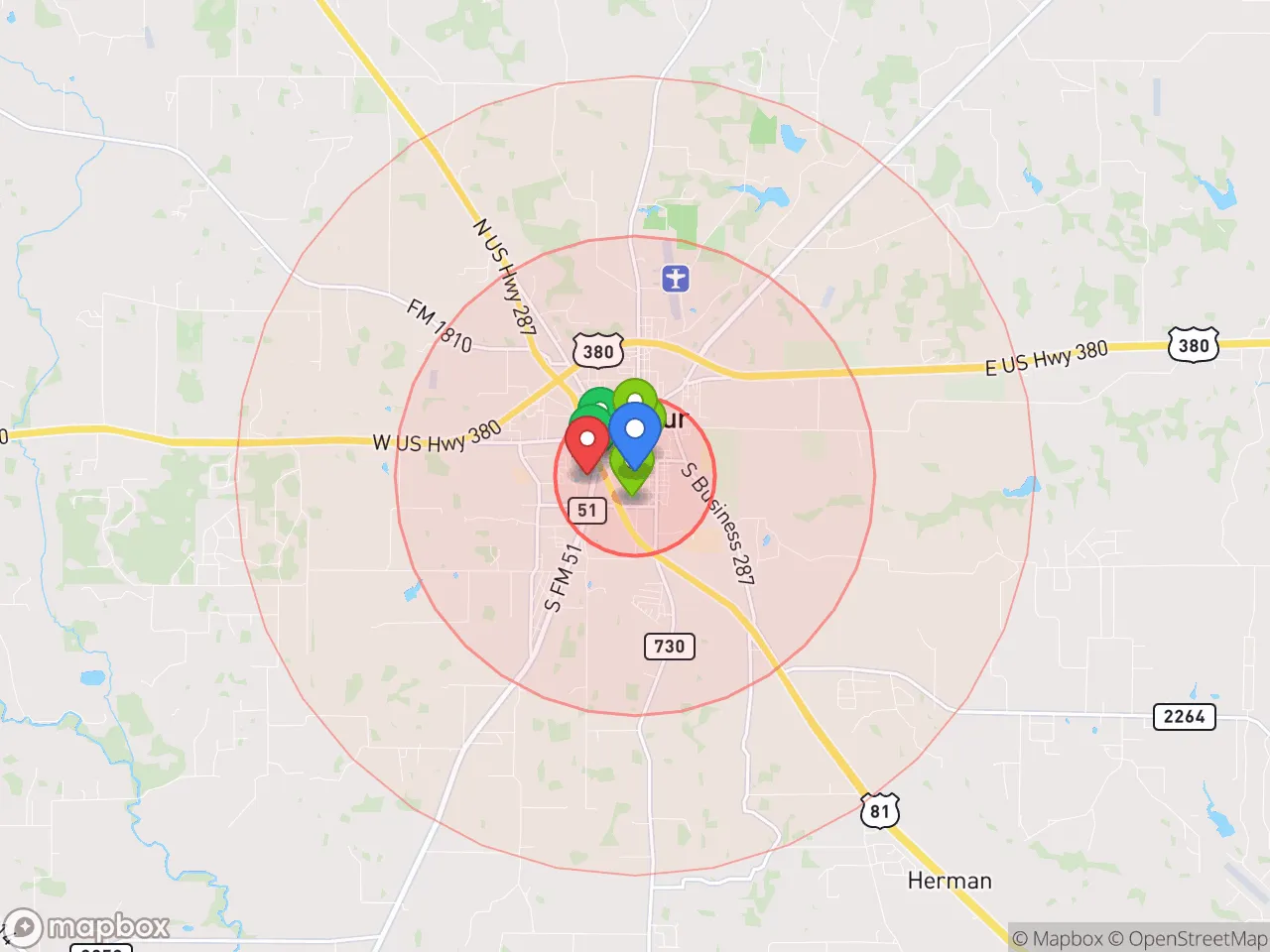
Explore the areaGroceries
2 within 10 miles
Gas
18 within 10 miles
Hospital
2 within 20 miles
Airport
DFW — Dallas/Fort Worth International
Post Office
USPS — Decatur, TX
Critical Amenities
Quality-of-Life Analysis
Decatur, Texas, presents a quality of life defined by small-town affordability within commuting distance of the Dallas-Fort Worth metroplex, attracting a mix of young families, oil-and-gas workers, and retirees seeking lower costs without sacrificing access to urban amenities. With a cost of living index of 91—9% below the national average—and a median home value of $242,200, the town offers a tangible financial advantage over nearby cities like Denton or Fort Worth, where comparable homes often exceed $350,000. The population skews slightly younger and more family-oriented than the state average, with a median age around 35, and the local economy is anchored by the Eagle Ford Shale energy sector, manufacturing, and a growing service industry.
Cost of living, housing, and affordability compared to DFW suburbs
Decatur’s affordability is its strongest draw for quality of life. The overall cost of living index of 91 is driven primarily by housing: the median home value of $242,200 is roughly 30% lower than the Dallas-Fort Worth metro average of $345,000, while the median rent of $1,089 is about $200 less per month than in Denton. Property taxes in Wise County average 2.1% of assessed value, slightly above the state median, but the lower purchase price keeps monthly payments manageable. Utilities and groceries are near the national average, though transportation costs are higher due to the average commute of 26.7 minutes—longer than Decatur’s small-town feel might suggest, as many residents drive to jobs in Fort Worth (30 miles south) or the AllianceTexas corridor. For renters, the vacancy rate hovers around 6%, meaning options are limited but not scarce; newer apartment complexes near US-81/287 offer two-bedroom units starting at $1,050. Compared to the booming suburbs of Frisco or McKinney, where median home values exceed $500,000, Decatur provides a clear path to homeownership for middle-income households earning $60,000–$80,000 annually.
Local amenities, schools, and what daily life feels like
Daily life in Decatur centers on a walkable historic square with locally owned shops, restaurants like the Sweetwater Grill, and seasonal events such as the Decatur Arts Festival and the Wise County Old Settlers Reunion. The Decatur Independent School District serves about 3,500 students and is rated B+ by Niche, with Decatur High School offering dual-credit programs through Weatherford College and a strong agricultural science track. For outdoor recreation, the 1,800-acre Lyndon B. Johnson National Grassland is a 20-minute drive north, offering hiking, fishing, and primitive camping, while Lake Bridgeport (15 miles west) provides boating and swimming. Healthcare is handled by Wise Health System, a 100-bed hospital with an emergency room and specialty clinics, though residents needing advanced care typically drive to Fort Worth’s medical district. The town’s rhythm is slower than the suburbs: traffic is minimal outside of school drop-off hours, and the biggest daily complaint is the lack of late-night dining or entertainment options beyond the square. Commuters spend about 45 minutes round-trip on average, but many report that the trade-off of a quieter home life and lower housing costs is worth the drive.
Decatur is best suited for those who prioritize affordability and a tight-knit community over urban nightlife or high-end shopping. Young families will find good schools and safe neighborhoods (violent crime rates are about 40% below the national average), while remote workers and retirees benefit from the low cost of living and proximity to DFW’s airports and medical centers. The town is less ideal for singles seeking a vibrant social scene or for professionals who need a short commute to downtown Fort Worth. Overall, Decatur offers a stable, budget-friendly quality of life that rewards those willing to trade a longer drive for more space and lower expenses.

Crime in Decatur, TX
Lower crime rates than 80% of comparable U.S. locations.
Violent CrimeViolent Crime Analysis
Property CrimeProperty Crime Analysis
Crime Analysis
Decatur, Texas, presents a mixed safety profile that is notably safer than many national benchmarks but requires careful attention to property crime. The city’s violent crime rate of 160.4 incidents per 100,000 residents is significantly lower than the U.S. average, while its property crime rate of 1,306.3 per 100,000 sits above the national median. As a small city in the Dallas-Fort Worth metroplex, Decatur benefits from a more conservative local justice system compared to larger, progressive urban centers, which often correlates with stricter enforcement and fewer repeat offenders on the street.
Crime in context
Decatur’s violent crime rate is roughly 55% lower than the national average of about 380 per 100,000, and well below the Texas state average of approximately 440 per 100,000. This places the city in a favorable position for safety-conscious movers. However, the property crime rate is about 10% higher than the U.S. average of roughly 1,190 per 100,000, driven largely by theft and vehicle break-ins. For context, nearby progressive-led cities like Dallas (violent crime rate near 700 per 100,000) and Fort Worth (near 600 per 100,000) experience far higher violent crime, reflecting the broader trend where liberal district attorney policies—such as reduced bail requirements and diversion programs—can lead to more offenders cycling back onto the streets. Decatur’s location in Wise County, which leans conservative, means its judicial approach prioritizes public safety and victim accountability over offender leniency.
What residents experience
Residents of Decatur generally report feeling safe in their neighborhoods, with violent crime being rare and often isolated to specific incidents rather than random attacks. The most common concerns are property-related: theft from vehicles, burglary of sheds or garages, and occasional package theft. The Decatur Police Department maintains a visible presence, and community policing efforts are active. Because the city is small (population roughly 6,500), most crime is concentrated along the U.S. 81/287 corridor and near commercial areas like the downtown square. Schools and residential subdivisions see very low crime. For families and retirees, the primary risk is property crime, which can be mitigated with basic precautions like locking vehicles and installing outdoor lighting.
Neighborhood-level variation is modest but worth noting. The historic downtown area and newer subdivisions on the south and west sides of town experience the lowest crime rates. Older rental properties near the railroad tracks and the industrial zone east of Highway 287 see slightly higher property crime. Overall, Decatur offers a safe environment compared to larger DFW suburbs, especially those in counties with progressive prosecutors who often release nonviolent offenders without meaningful consequences. The city’s conservative legal framework provides an added layer of reassurance for those prioritizing public safety.
* Values derived from national, state, county, city and local statistics and may differ in a specific area. Last updated: 2026-04-28T21:27:44.000Z
Narrative content on this page is AI-generated and may contain mistakes. Verify any details that matter before acting on them.
ReloMaps may earn a commission from affiliate links at no extra cost to you.

