Photo: Wikipedia
Political ClimatePolitical Climate in Decatur, TX
District shown is the primary district for this city’s centroid. Cities may span multiple districts.
Local Political AnalysisPolitical Analysis of Decatur, TX
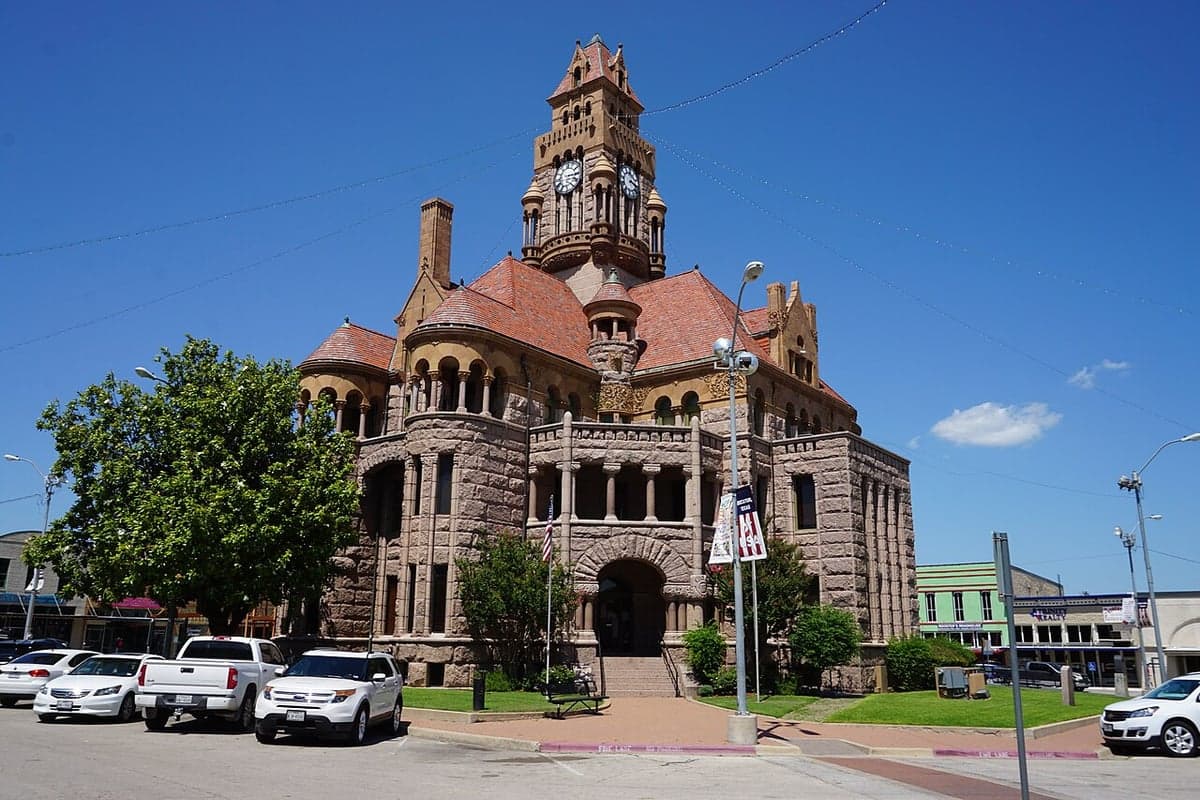
Decatur, Texas, sits in Wise County, and its political climate is about as reliably conservative as they come, with a Cook PVI of R+11 that tells you the area leans solidly Republican. For decades, this has been a place where folks value personal responsibility, limited government, and the freedom to live without a lot of bureaucratic interference. While the core of the community remains deeply rooted in those principles, you can feel a subtle shift as the Dallas-Fort Worth metroplex creeps closer, bringing new residents and, with them, some progressive ideas that would have been unthinkable here twenty years ago. The long-term trajectory is a quiet but real concern for those of us who remember when local politics were simpler and the biggest debate was over the county road budget.
How it compares
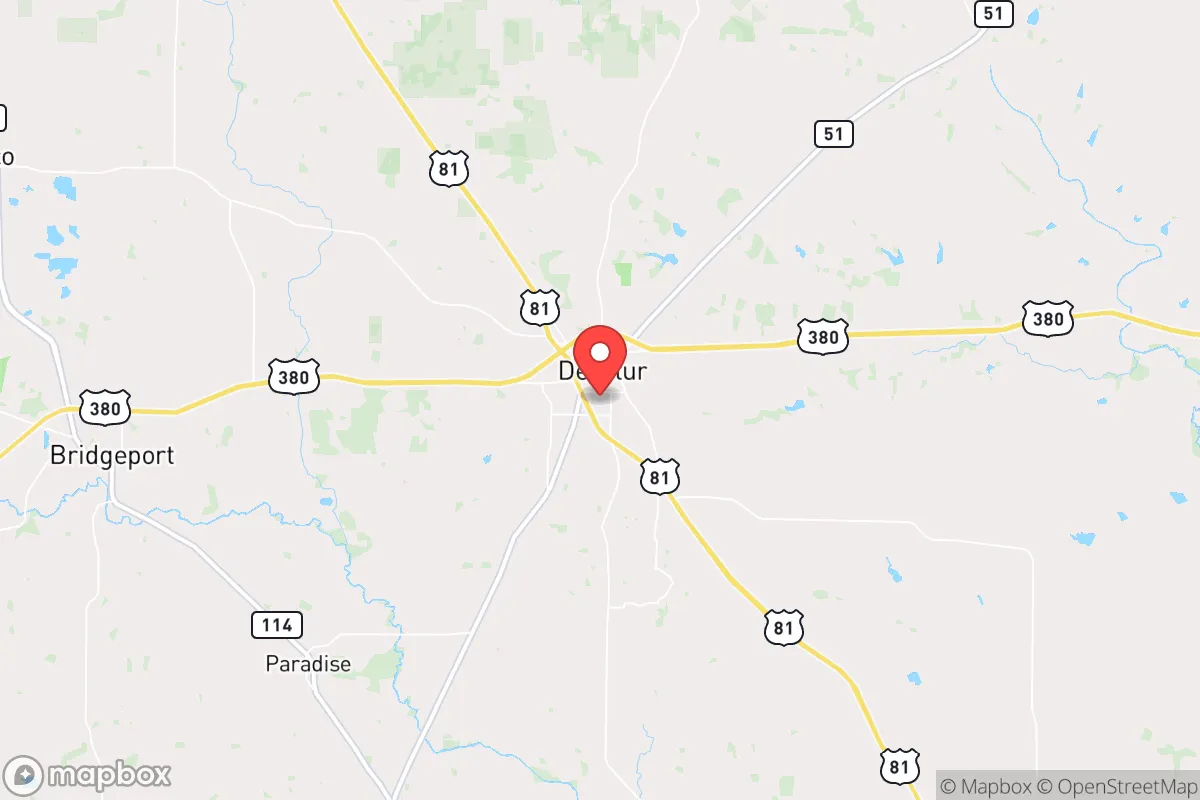
Drive just 30 miles south to Denton, and you’re in a completely different world—a college town that votes blue and has embraced all the progressive policies that make many of us in Decatur shake our heads. The contrast is stark: Denton’s city council debates things like sanctuary city status and green new deal resolutions, while Decatur’s leaders are still focused on keeping property taxes low and making sure the sheriff’s department has the resources it needs. To the east, places like Roanoke and Trophy Club have seen an influx of corporate transplants, diluting their conservative base with a more suburban, moderate-leaning crowd. Decatur, for now, remains a stronghold, but the pressure is mounting. You can see it in the local school board meetings, where a few vocal parents are pushing for curriculum changes that sound an awful lot like the stuff coming out of Austin, and that’s a red flag for anyone who values local control over what our kids are taught.
What this means for residents
For the average person living here, the political climate means you can still enjoy a lot of personal freedoms that are getting squeezed out in other parts of the state. There’s no city ordinance telling you what kind of fence you can build or what time you can water your lawn. The county sheriff runs his department without a lot of second-guessing from politicians who’ve never worn a badge. But the warning signs are there. As the DFW sprawl pushes north, we’re seeing more zoning proposals and talk of “smart growth” initiatives that sound an awful lot like government overreach dressed up in fancy language. The real concern is that if we’re not careful, Decatur could end up like so many other small Texas towns that got swallowed by the metroplex—losing its identity, its independence, and the sense that your voice actually matters at city hall. The next few election cycles will tell us a lot about whether we can hold the line or if we’re headed down a path of more regulation and less freedom.
Culturally, Decatur still holds onto its ranching and oil-and-gas roots, and that shows in the local policy priorities. The county commission fights hard to keep mineral rights in private hands, and there’s a general distrust of any state or federal program that comes with strings attached. You won’t find a mask mandate or a vaccine passport requirement here, and that’s by design. The local paper still runs letters to the editor complaining about property taxes and federal overreach, which feels like a dying art in most of the country. But the long-term outlook is uncertain. If the growth continues at this pace, and if the newcomers bring their big-city voting habits with them, Decatur could look very different in ten years. For now, it’s still a place where a handshake means something and the government stays out of your business—but keeping it that way is going to take some work.

State Political ClimatePolitical Climate in Texas
State Political AnalysisPolitical Environment in the State
Texas remains a solidly Republican state, but the margin has tightened noticeably over the past two decades. In 2004, George W. Bush carried the state by 23 points; by 2024, Donald Trump’s margin had shrunk to roughly 9 points. The dominant coalition is still conservative — built on rural voters, suburban families, and the oil-and-gas economy — but explosive growth in the blue-leaning metros of Austin, Dallas, Houston, and San Antonio is slowly reshaping the map. For a conservative looking to relocate, Texas still offers a far friendlier political climate than most of the country, but the trajectory demands a close look at where the state is headed.
Urban vs. rural divide
The political geography of Texas is stark. The vast rural and exurban areas — the Panhandle, West Texas, East Texas, and the Hill Country — vote overwhelmingly Republican. Lubbock, Midland, and Tyler are deep-red strongholds where Democrats rarely break 30%. Meanwhile, the state’s four largest metros tell a more complicated story. Dallas-Fort Worth remains a Republican-leaning region overall, but the suburbs are shifting: Collin County, once a GOP fortress, voted for Trump by only 7 points in 2024, down from 22 points in 2016. Houston’s Harris County flipped to Biden in 2020 and stayed blue in 2024, driven by a diverse, growing population. San Antonio’s Bexar County is reliably Democratic. And Austin’s Travis County is one of the most liberal urban counties in the South, with a political culture that rivals Portland or Seattle. The key battlegrounds are the fast-growing suburban counties — Montgomery, Fort Bend, Denton, and Williamson — where the GOP still holds an edge, but the margin is shrinking with each election cycle.
Policy environment
Texas’s policy environment is a major draw for conservatives. There is no state income tax, a fact that anchors the state’s low-tax reputation. Property taxes are high — among the top ten in the nation — but the Texas Legislature has passed multiple rounds of compression and appraisal caps, most notably Senate Bill 2 (2023), which sent $12.7 billion to buy down school tax rates. The regulatory posture is famously business-friendly: no state-level occupational licensing for dozens of trades, weak union influence, and a tort-reform system that caps non-economic damages in medical malpractice cases. On education, Texas has a robust school choice program through charter schools and education savings accounts (the Texas Education Savings Account program, passed in 2023, allows families to use state funds for private school tuition). Healthcare policy is mixed: Texas did not expand Medicaid under the ACA, keeping government involvement low, but the state also has the highest uninsured rate in the country. Election laws tightened after 2020 with Senate Bill 1 (2021), which banned 24-hour and drive-through voting, imposed new ID requirements for mail ballots, and gave partisan poll watchers more access. For a conservative, the policy environment is still among the most favorable in the nation — but the property tax burden and the growing Medicaid gap are real concerns.
Trajectory & freedom
The trajectory of freedom in Texas is a mixed bag. On the positive side for conservatives, the state has aggressively expanded Second Amendment rights: constitutional carry (permitless carry) became law in 2021, allowing any law-abiding adult to carry a handgun without a license. Parental rights were strengthened with the Parental Bill of Rights (2023), which requires schools to notify parents of curriculum changes and medical services offered to minors. On medical autonomy, Texas banned nearly all abortions after a heartbeat is detected (the Texas Heartbeat Act, 2021) and later enacted a near-total ban (trigger law, 2022). However, there are worrying signs of government overreach: the state’s COVID-19 emergency powers were used to shut down businesses and mandate masks in 2020, though Governor Abbott later banned vaccine mandates by private employers. Property rights took a hit with the Texas Railroad Commission’s aggressive permitting for carbon capture pipelines, which can use eminent domain for private projects. And the Texas Privacy Act (2023), while well-intentioned, created a new state bureaucracy to enforce data rights. Overall, Texas is still moving in a freer direction on guns, life, and parental authority, but the state’s willingness to use government power — especially during emergencies — should give any liberty-minded resident pause.
Civil unrest & political movements
Texas has seen its share of political flashpoints. The 2020 protests in Austin over George Floyd’s death turned into weeks of nightly demonstrations, with the Austin Police Department facing heavy criticism from the city council, which later cut the police budget by $150 million. That decision was partially reversed after a public backlash and a rise in violent crime. Immigration politics are a constant source of tension: the state launched Operation Lone Star in 2021, deploying Texas Department of Public Safety troopers and National Guard soldiers to the border, and busing migrants to New York, Chicago, and Denver. The program has been controversial — costing over $10 billion — but remains popular with the GOP base. There is a small but vocal secessionist movement, the Texas Nationalist Movement, which advocates for independence, though it has no serious political power. Election integrity remains a hot-button issue: after the 2020 election, Texas Republicans pushed through SB 1, and there have been ongoing disputes over voter roll maintenance and the accuracy of the state’s voter registration database. A new resident will notice the heavy law enforcement presence in border towns like Eagle Pass and El Paso, and the political signs along rural highways that read “Keep Texas Red.”
Projection
Over the next 5-10 years, Texas is likely to become more competitive at the statewide level, but not necessarily blue. The in-migration pattern is key: most new residents are coming from California, New York, and Illinois — states with higher taxes and more progressive politics. However, many of these transplants are conservatives or libertarians fleeing those policies, not progressives. The real demographic shift is in the suburbs: as Collin, Denton, and Williamson counties become more diverse and more educated, they will continue to drift toward the center. The rural vote will remain deeply red, but it will shrink as a share of the total electorate. The Texas GOP will likely face internal battles between the establishment and the more populist, liberty-oriented wing — the Texas Freedom Caucus has already become a powerful force in the legislature. On policy, expect continued fights over school choice, property tax reform, and border security. The biggest wildcard is the state’s power grid: the 2021 winter storm and subsequent blackouts created a political crisis that could erode trust in the state government. A conservative moving to Texas now should expect a state that remains Republican but is no longer a safe bet for the most hardline policies — and one where the urban-rural divide will only grow sharper.
For a new resident, the bottom line is this: Texas still offers a lower-tax, less-regulated, and more culturally conservative environment than most of the country. You will find like-minded neighbors in the suburbs and small towns, and the state government is generally on your side on guns, life, and parental rights. But the freedom is not absolute — property taxes are high, the government has shown it can wield emergency powers aggressively, and the political landscape is shifting. If you are moving to Fort Worth or Katy, you will feel at home. If you are moving to Austin or Dallas, you will need to be more engaged to protect the values that brought you here. Texas is still worth the move — just keep your eyes open.
* Values derived from national, state, county, city and local statistics and may differ in a specific area. Last updated: 2026-04-28T21:27:44.000Z
Narrative content on this page is AI-generated and may contain mistakes. Verify any details that matter before acting on them.
ReloMaps may earn a commission from affiliate links at no extra cost to you.

