 Popular
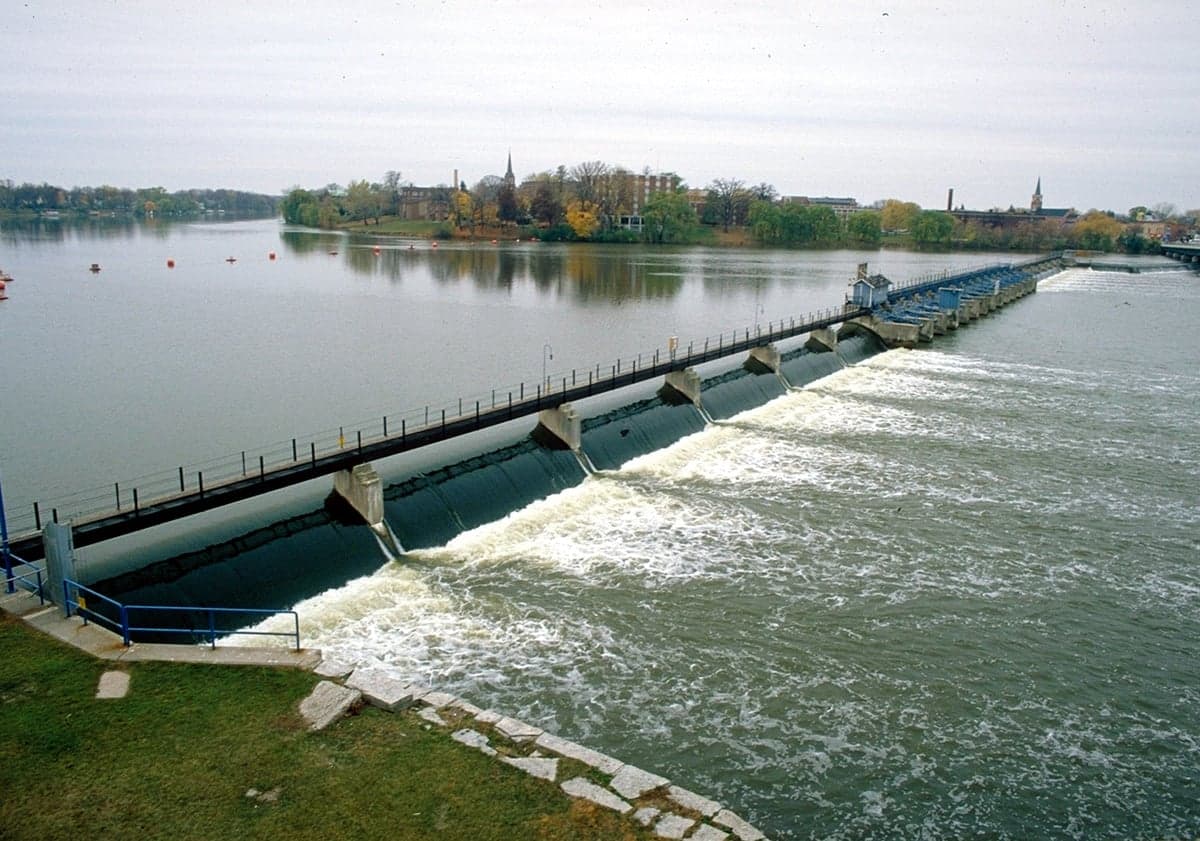
Photo: Wikipedia
Personal Sovereignty in De Pere, WI
Moderate friction. Expect trade-offs in some aspect of personal liberty and independence.
What does Personal Sovereignty tell us?
Personal Sovereignty measures your capacity for self-reliance and independence with minimal government friction. Higher scores mean fewer barriers between you and the way you want to live... but it assumes you have the space you need and good neighbors.
What does this tell us?
Personal Sovereignty measures your capacity for self-reliance and independence with minimal government friction. Higher scores mean fewer barriers between you and the way you want to live... but it assumes you have the space you need and good neighbors.
State Policy
Energy independence: Importer (15% of energy produced in-state)
Personal Liberty
Homesteading

Personal Liberty Analysis
De Pere, Wisconsin, offers a surprisingly robust environment for personal sovereignty when measured against the national baseline, though it operates within the constraints of a blue-state legal framework that demands vigilance. The city’s local governance leans pragmatic and less intrusive than its neighbors in Brown County, but residents must navigate state-level preemption battles on everything from firearms to pandemic mandates. For the survivalist or prepper, De Pere represents a calculated trade-off: strong community self-reliance and low property crime are offset by a tax burden that funds a state government increasingly hostile to individual autonomy. The key is understanding where local control ends and Madison’s overreach begins.
Tax burden and regulatory posture: how Wisconsin’s fiscal policies affect your autonomy
Wisconsin’s tax structure is a double-edged sword for the sovereignty-minded. The state levies a progressive income tax with rates from 3.54% to 7.65% (2025), and De Pere residents pay a combined state and local sales tax of 5.5% — lower than neighboring Illinois but higher than many Sun Belt alternatives. Property taxes are the real concern: Brown County’s effective rate hovers around 1.8% of assessed value, which on a $350,000 home means roughly $6,300 annually. That money funds a school district that, while academically strong, mandates curriculum compliance with state DEI initiatives that many conservative parents find intrusive. On the regulatory front, De Pere’s city council has resisted some of the more aggressive zoning overhauls seen in Green Bay, but building permits still require multiple inspections and fees that can delay a homestead project by weeks. The state’s Department of Natural Resources (DNR) maintains strict oversight on well drilling and septic systems, making off-grid water independence a bureaucratic hurdle rather than a simple DIY project. For the prepper calculating long-term carrying costs, the tax burden here is moderate — not oppressive like California or New York, but enough to fund a state government that has shown willingness to limit personal choices during emergencies.
Self-defense and gun law specifics: what Wisconsin’s preemption battles mean for De Pere
Wisconsin is a “shall issue” state for concealed carry, and De Pere residents can obtain a permit with a 30-day processing window and no local restrictions beyond state law. The city itself has not passed any local gun ordinances that exceed state preemption, a fact that separates it from more restrictive municipalities like Madison or Milwaukee. Open carry is legal without a permit, though local law enforcement has been known to make contact with open carriers — a nuisance but not a legal barrier. Magazine capacity is unrestricted, and the state has no registry or “red flag” law as of 2026, though such legislation has been introduced in every session since 2020. The real concern for the survivalist is the state’s preemption statute: while it prohibits local governments from enacting their own gun laws, the Wisconsin Supreme Court has shown willingness to carve out exceptions for “sensitive places” like public transit and government buildings. De Pere’s city council has not tested these boundaries, but the political climate in Brown County is shifting — the county voted +14 for Trump in 2024, but the city itself is more purple, with a growing progressive activist presence. For the prepper, the practical takeaway is that gun rights are currently secure but require active defense at the ballot box. Castle doctrine is strong, with no duty to retreat in one’s home or vehicle, but the state’s self-defense laws have not been tested in a high-profile case since the 2020 Kenosha shooting, leaving some ambiguity around “provocation” clauses.
Self-reliance and homesteading viability: lot sizes, zoning, and off-grid feasibility in De Pere
De Pere’s zoning code is a mixed bag for the homesteader. The city’s older neighborhoods, particularly around the historic downtown, feature lots as small as 6,000 square feet with strict setback requirements that limit gardening and animal husbandry. However, the city’s extraterritorial zoning jurisdiction extends into the surrounding town of De Pere, where agricultural zoning allows for larger parcels — typically 2 to 5 acres — with fewer restrictions on outbuildings, chicken coops, and even small livestock. The catch is that any new well or septic system must meet Wisconsin DNR standards, which effectively prohibit the kind of off-grid water and waste systems common in more rural states. Rainwater collection is legal but limited to 10,000 gallons of storage without a permit, and solar panel installation requires a city electrical permit and interconnection agreement with Wisconsin Public Service, the local utility. For the serious prepper looking to establish a self-sufficient homestead, the best bet is to buy outside city limits in the town of De Pere or neighboring Lawrence, where zoning is more permissive and property taxes are lower (around 1.4% effective rate). The Fox River provides a reliable water source for those willing to invest in filtration, but the DNR’s riparian buffer rules restrict how close you can build to the water’s edge. In short, De Pere offers a viable path to semi-self-reliance, but full off-grid independence requires navigating a regulatory maze that Madison has no interest in simplifying.
Personal liberties: parental rights, medical autonomy, speech, and property protections
Parental rights in Wisconsin have been a battleground since the pandemic. The state’s 2023 “Parental Bill of Rights” law guarantees parents access to curriculum materials and the right to opt children out of sex education, but De Pere’s school board has been slow to implement these provisions, with some parents reporting pushback on opt-out requests. Medical autonomy is more concerning: Wisconsin’s emergency powers law allows the governor to mandate vaccines and treatments during a declared public health emergency, and the 2020-2021 period saw the state enforce mask mandates and business closures that many residents viewed as overreach. The current governor (Tony Evers, Democrat) has not signaled a change in philosophy, meaning a future pandemic could see similar restrictions. On speech and assembly, De Pere has no local ordinances restricting political expression, and the city’s parks are open for public gatherings without a permit for groups under 50. Property rights are generally strong, with no rent control and minimal eminent domain activity, but the city’s historic preservation commission has authority to delay or deny exterior modifications to buildings in the downtown historic district — a potential headache for property owners wanting to install security features or off-grid infrastructure. The overall picture is one of guarded optimism: De Pere respects personal liberties in day-to-day life, but the state-level legal framework leaves the door open for significant government overreach during crises.
Compared to other Midwestern cities of similar size, De Pere ranks favorably for personal sovereignty — ahead of liberal strongholds like Ann Arbor or Madison, but behind more rural redoubts like Wausau or the Driftless Region. The city’s low crime rate (violent crime at 1.2 per 1,000 residents in 2024) and strong community networks provide a foundation for self-reliance that many urban areas lack. However, the survivalist must remain politically engaged and legally prepared, as the state’s blue tilt means that rights secured today could be challenged tomorrow. For those willing to work within the system while building parallel structures of community defense and mutual aid, De Pere offers a viable base of operations — just keep one eye on Madison and a plan for the next emergency declaration.

* Values derived from national, state, county, city and local statistics and may differ in a specific area. Last updated: 2026-04-21T10:18:26.000Z
Narrative content on this page is AI-generated and may contain mistakes. Verify any details that matter before acting on them.
ReloMaps may earn a commission from affiliate links at no extra cost to you.

