 Popular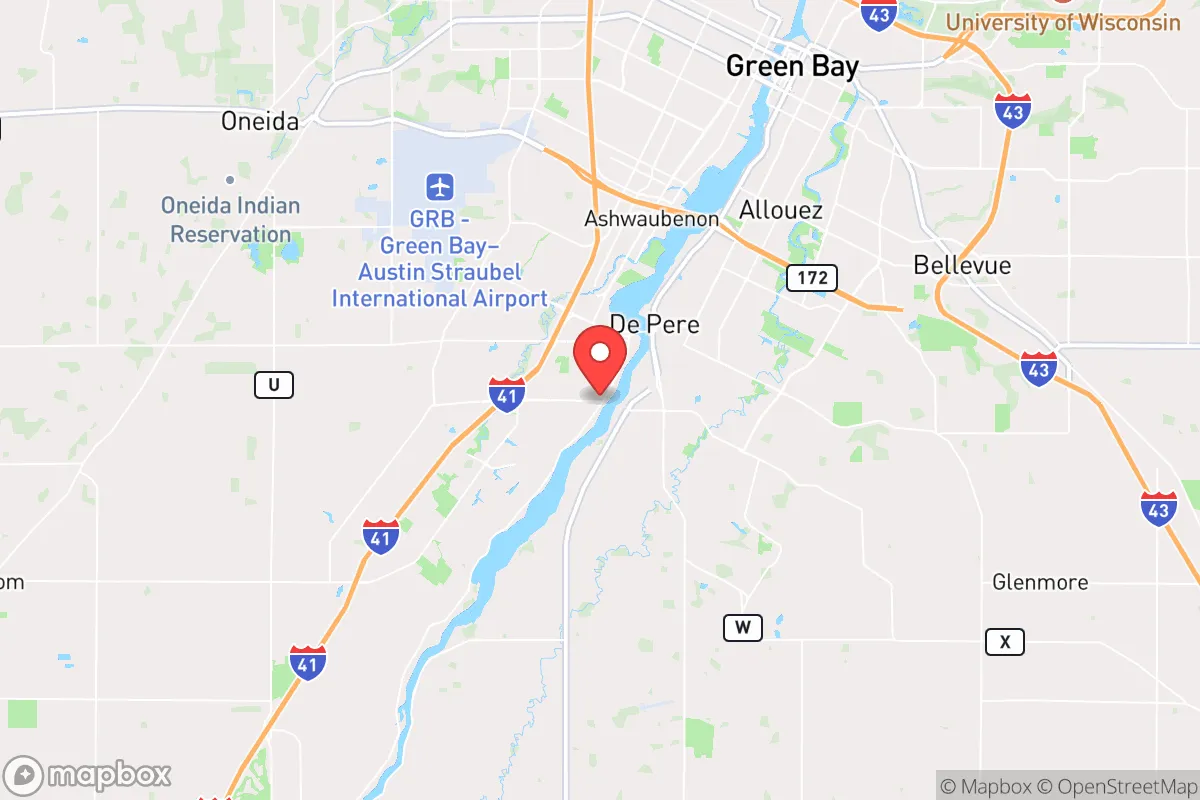
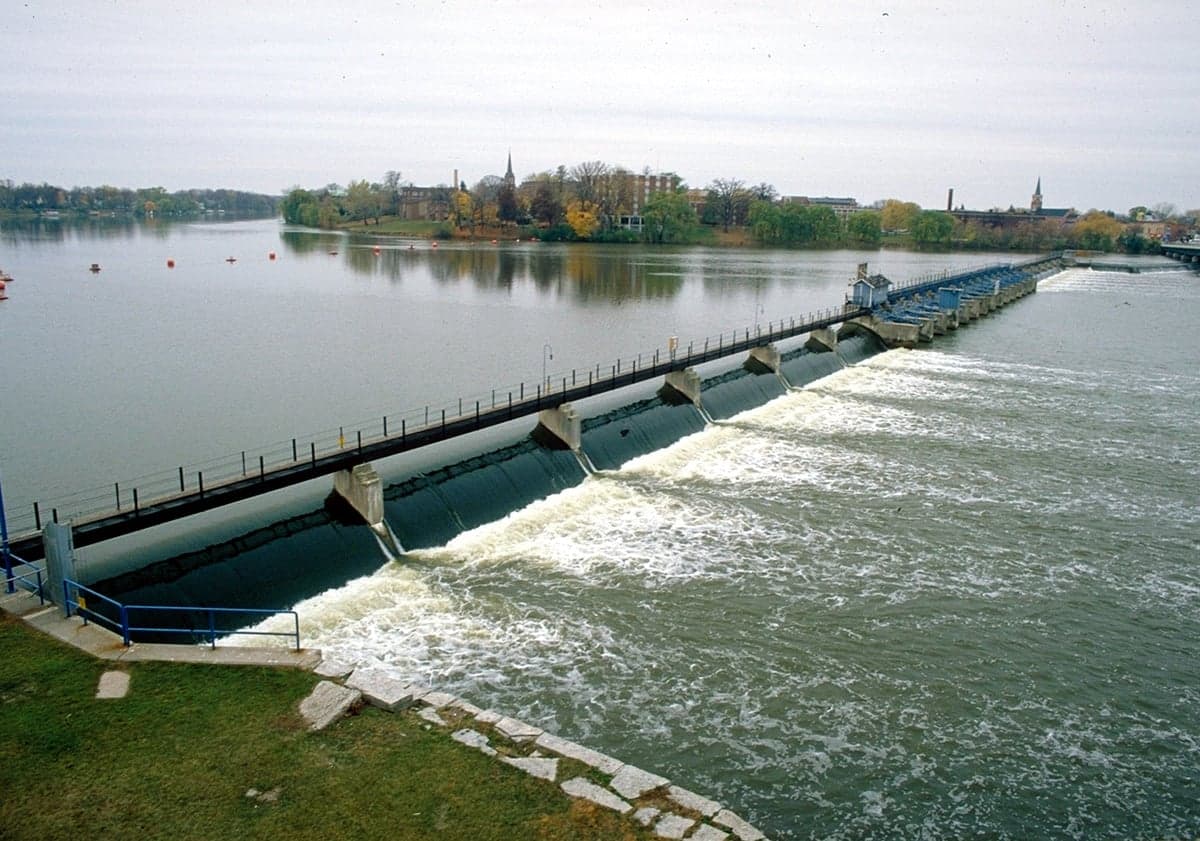
Photo: Wikipedia
Demographics of De Pere, WI
Affluence Level in De Pere, WI
A middle-class area roughly in line with national averages across income, home values, education, and employment.
People of De Pere, WI
The people of De Pere, Wisconsin, today number 25,368 and form a predominantly white (87.6%), college-educated (36.5%) community with a notably low foreign-born share of just 1.7%. The city’s identity is shaped by its historic Fox River milltown roots, a strong Catholic and Dutch Reformed religious heritage, and a modern character as a quiet, family-oriented suburb of Green Bay. Residents are concentrated in distinct older neighborhoods along the river and newer subdivisions on the city’s west side, creating a community that feels both historic and suburban.
How the city was settled and grew
De Pere’s human history begins with the Menominee and Ho-Chunk peoples, who used the Fox River rapids as a fishing and portage site. French Jesuit missionaries established a mission at the rapids in the 1670s, giving the area its name (“De Pere” meaning “of the father”). Permanent Euro-American settlement began in the 1830s with Yankee and Irish laborers drawn to the river’s water power. The key industrial catalyst was the De Pere Dam and the establishment of paper mills and a woolen mill along the river in the 1850s and 1860s. These mills attracted waves of Belgian, German, and Dutch immigrants who built the city’s core neighborhoods. The Historic Third Ward (east of the river, near the dam) became the working-class heart of the city, settled by millworkers, many of Belgian and German descent. Across the river, the Heritage Hill area (near the present-day Heritage Hill State Park) developed as a mixed residential zone for tradesmen and small business owners. By 1900, De Pere was a compact, ethnically European mill town of about 4,000 people, overwhelmingly Catholic and Lutheran, with a strong sense of local identity separate from Green Bay.
Modern era (post-1965)
The post-1965 period brought suburbanization rather than new immigration. The 1960s and 1970s saw the construction of West De Pere (the area west of the Fox River, including the Ledgeview subdivision and the Voyageur Park district), which absorbed middle-class families moving from Green Bay and older De Pere neighborhoods. This westward expansion was driven by the construction of Highway 41 and the growth of St. Norbert College as a regional employer. The city’s racial composition remained overwhelmingly white through this period; the 1980 census showed De Pere at 98% white. The modest Hispanic population (4.7% today) began arriving in the 1990s and 2000s, primarily as service and construction workers, settling in the East De Pere neighborhoods near the river and along Main Avenue. The small East/Southeast Asian community (1.8%) and Indian-subcontinent community (1.1%) are largely tied to St. Norbert College and the medical sector at Bellin Health and HSHS St. Vincent Hospital in nearby Green Bay, with families concentrated in the newer Westwood subdivision and the Riverside area near the college. The Black population (1.5%) remains very small and is dispersed, with no single ethnic enclave. The foreign-born share (1.7%) is among the lowest in Brown County, reflecting the city’s limited industrial diversification and its character as a stable, long-settled community.
The future
De Pere’s population is slowly homogenizing in terms of race but diversifying in terms of age and household type. The city’s growth rate has been modest (roughly 5% over the past decade), and projections suggest continued slow growth as Green Bay’s suburban sprawl pushes westward. The Hispanic share is likely to grow gradually, reaching perhaps 7-8% by 2040, driven by service-sector employment and lower housing costs in East De Pere. The East/Southeast Asian and Indian communities are expected to remain small but stable, tied to college and healthcare employment. The white share will likely decline slowly from 87.6% as the city ages and younger, more diverse families move into newer subdivisions. The city is not tribalizing into distinct ethnic enclaves; rather, it is experiencing a slow, steady assimilation of minority groups into predominantly white neighborhoods. The most significant demographic shift is the aging of the population: the median age has risen to 38.5, and the share of residents over 65 is growing, particularly in the Historic Third Ward and Heritage Hill areas, where longtime residents are aging in place.
For someone moving to De Pere now, the city offers a stable, safe, and family-oriented environment with strong schools and a low crime rate, but with very limited ethnic diversity and a population that is aging in place. The city is becoming a quieter, more suburban version of its historic mill-town self, with growth concentrated in west-side subdivisions and little change in the older riverfront neighborhoods. New residents will find a community that values its history and traditions, but one that is slowly and quietly diversifying along the edges.

* Values derived from national, state, county, city and local statistics and may differ in a specific area. Last updated: 2026-04-21T10:18:26.000Z
Narrative content on this page is AI-generated and may contain mistakes. Verify any details that matter before acting on them.
ReloMaps may earn a commission from affiliate links at no extra cost to you.

