Photo: Wikipedia
Demographics of Dandridge, TN
Affluence Level in Dandridge, TN
A middle-class area roughly in line with national averages across income, home values, education, and employment.
People of Dandridge, TN
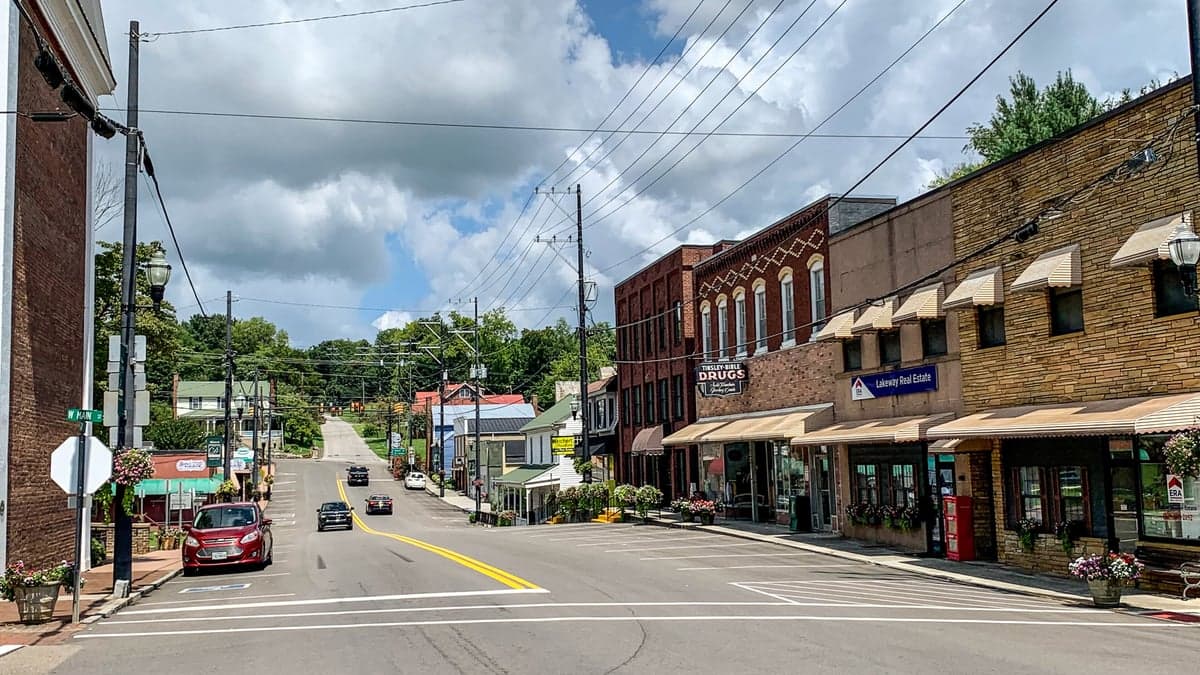
The people of Dandridge, Tennessee, today number 3,426, forming a small, predominantly white community with a distinctly rural character. The population is notably less diverse than the national average, with 79.6% identifying as white, 6.0% as Hispanic, and 5.1% as Black, while the foreign-born share sits at just 1.0%. A low college attainment rate of 12.6% reflects a workforce rooted in local manufacturing, tourism, and service industries rather than professional or tech sectors. The town’s identity is shaped by its location on Douglas Lake, its historic courthouse square, and a quiet, family-oriented pace of life that appeals to those seeking an affordable, low-crime alternative to nearby Knoxville.
How the city was settled and grew
Dandridge was founded in 1783 as the seat of the newly formed Jefferson County, named after Martha Dandridge Washington. The original settlers were primarily Scots-Irish and English farmers who moved into the Tennessee Valley via the Great Valley Road, drawn by fertile bottomlands and land grants offered to veterans of the American Revolution. The town grew slowly as a market and legal hub for the surrounding agricultural economy, with tobacco and livestock as early mainstays. The arrival of the railroad in the late 19th century connected Dandridge to regional markets, but the town remained small and overwhelmingly white through the early 1900s. The historic Downtown Dandridge district, centered on the 1845 courthouse, was built by these early families and retains much of its original architecture. A small Black community, descended from enslaved laborers and post-Civil War freedmen, historically concentrated in the Shady Grove area south of the town center, though its population has dwindled significantly since the mid-20th century.
Modern era (post-1965)
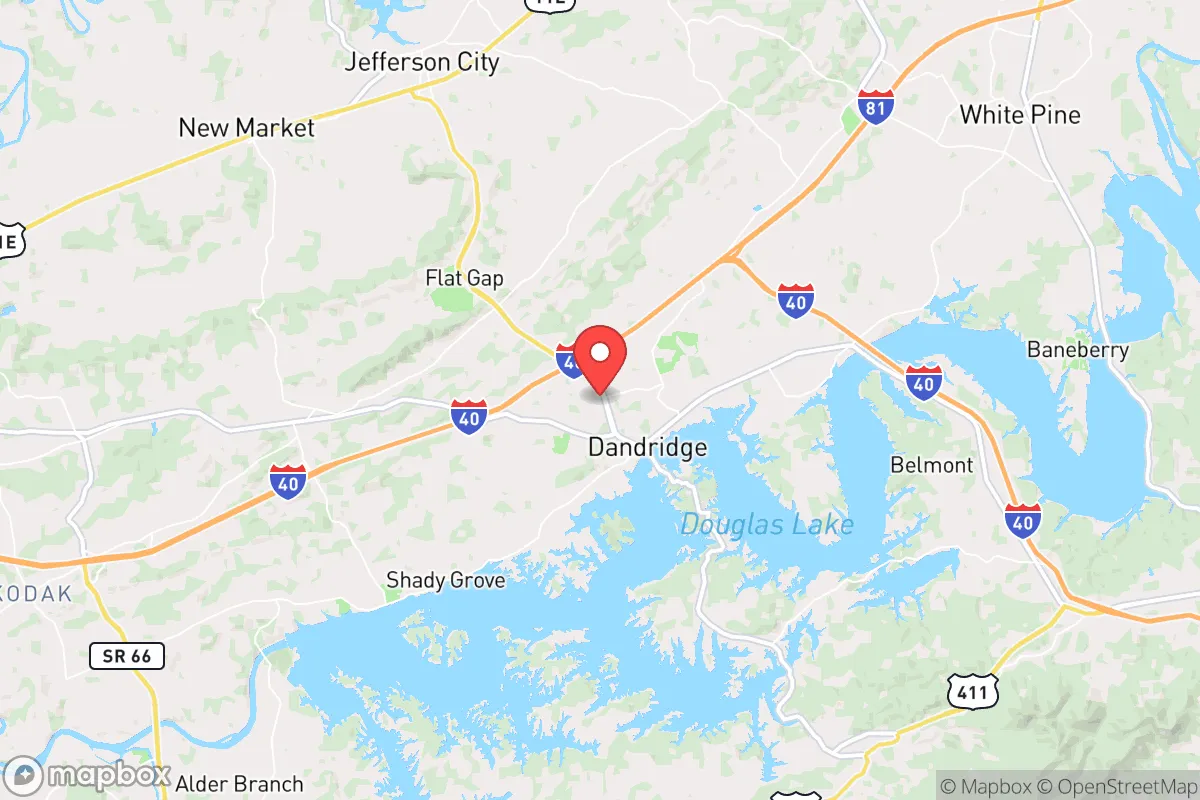
The 1960s and 1970s brought two transformative changes: the completion of Interstate 40 in the early 1970s and the impoundment of the French Broad River to create Douglas Lake in 1963. The interstate made Dandridge a viable bedroom community for Knoxville, 35 miles west, while the lake spurred a tourism and second-home economy. These shifts attracted a wave of domestic in-migrants — primarily white retirees and families from the Midwest and Northeast seeking lower taxes and a slower pace. New subdivisions like Hickory Hills and Lakeview Estates were developed along the lakefront and on the town’s western edge, absorbing most of this growth. The Hispanic population, now 6.0%, began arriving in the 1990s and 2000s, drawn by agricultural and construction jobs; many settled in the North Highway 92 corridor, where mobile home parks and rental duplexes offered affordable entry points. The Black population, which was likely higher in the Jim Crow era, has declined to 5.1%, with most remaining families living in the Shady Grove and Bellewood areas. East/Southeast Asian residents (0.2%) and Indian-subcontinent residents (0.3%) are present in very small numbers, typically professionals or business owners in the medical and hospitality sectors, and are dispersed rather than concentrated in any single neighborhood.
The future
Dandridge’s population is projected to grow modestly, driven by continued domestic migration from higher-cost states and the expansion of remote work. The town’s low cost of living and lake amenities are likely to attract more retirees and families, particularly to newer developments like Douglas Lake Shores and infill lots near the interstate exit. The Hispanic share is expected to rise gradually, as younger families move into service and construction roles, but the foreign-born percentage will likely remain below 3% for the foreseeable future. The white share, while still dominant, will edge downward as the town diversifies slowly. The college-educated share may increase slightly as remote workers and retirees with higher education levels relocate to the area, but Dandridge is unlikely to become a knowledge-economy hub. The cultural identity will remain conservative and family-oriented, with growth concentrated in lakefront and suburban-style subdivisions rather than the historic core.
For someone moving in now, Dandridge offers a stable, affordable, and safe small-town environment with a clear trajectory: slow growth, modest diversification, and a continued reliance on nearby Knoxville for employment and services. The town is becoming slightly more diverse and slightly more connected, but its essential character — white, rural, and rooted in lake-country living — will persist for at least another generation.

* Values derived from national, state, county, city and local statistics and may differ in a specific area. Last updated: 2026-08-29T15:32:15.000Z
Narrative content on this page is AI-generated and may contain mistakes. Verify any details that matter before acting on them.
ReloMaps may earn a commission from affiliate links at no extra cost to you.

