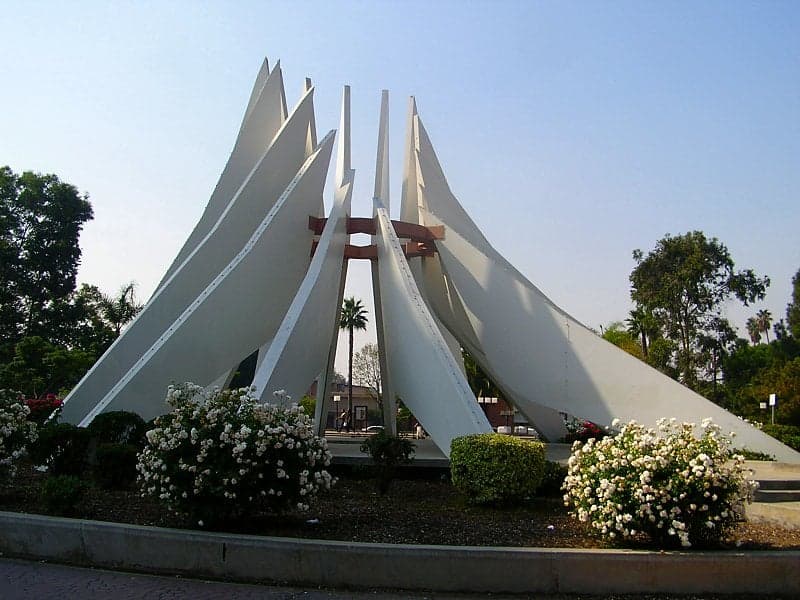
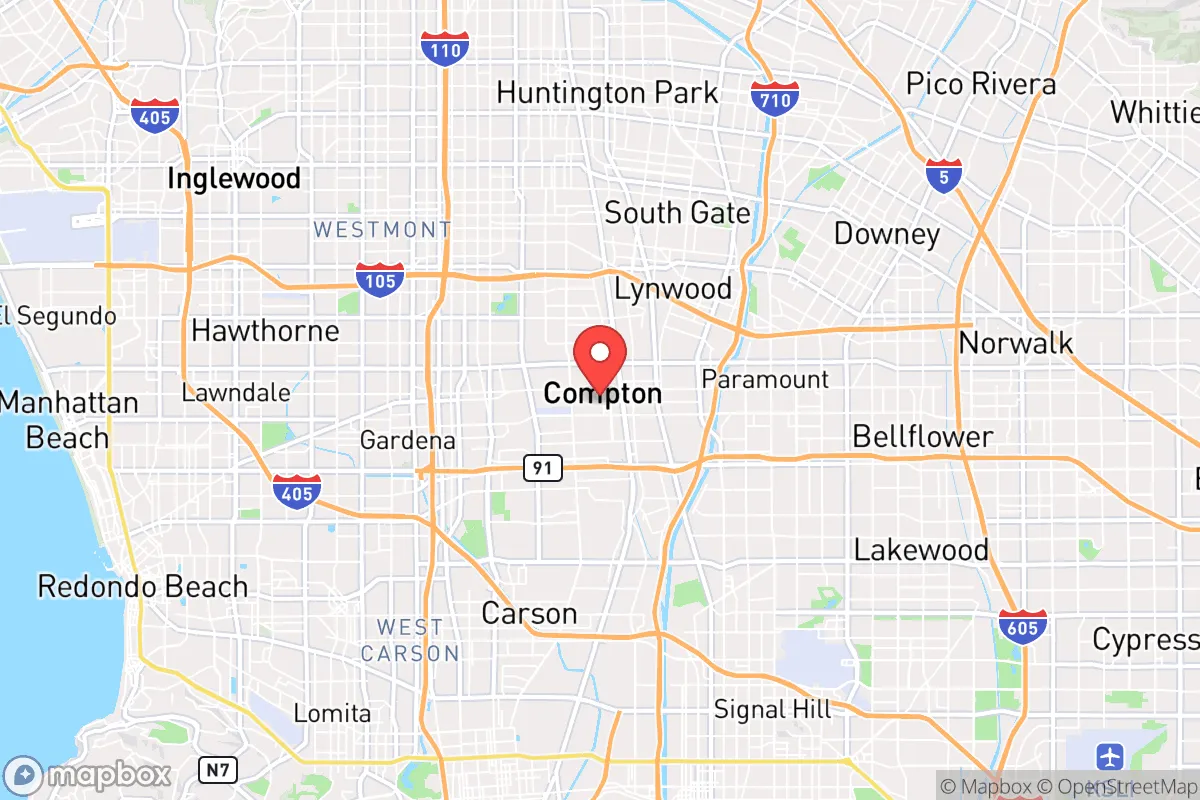
Photo: Wikipedia
Strategic Assessment of Compton, CA
High tactical risk. This location is likely close to major population centers, strategic targets, or sits in a high-disaster corridor. A retreat property and careful exit planning is required.
What does the Strategic Assessment tell us?
Our Strategic Assessment grades tactical survivability of an area. Major population centers, military targets, fallout zones, natural disasters, and border exposure all drive risk — lower exposure means a more defensible position in a crisis.
This is heavily inspired by Joel Skousen's Strategic Relocation book. Highly recommended you checkout the book ($)What does this tell us?
Our Strategic Assessment grades tactical survivability of an area. Major population centers, military targets, fallout zones, natural disasters, and border exposure all drive risk — lower exposure means a more defensible position in a crisis.
This is heavily inspired by Joel Skousen's Strategic Relocation book. Highly recommended you checkout the book ($)Strategic Pillars

Key Distances
Regional Safe Places
Below is our recommended "safe zones" in California and the surrounding area based on our strategic heuristics. For most people, it's unrealistic to live in a “safe zone” full-time due to work, family or other personal reasons. They tend to be more rural. However, many of these areas are perfect for second homes and retreat properties that double as a vacation home or even a short-term rental.

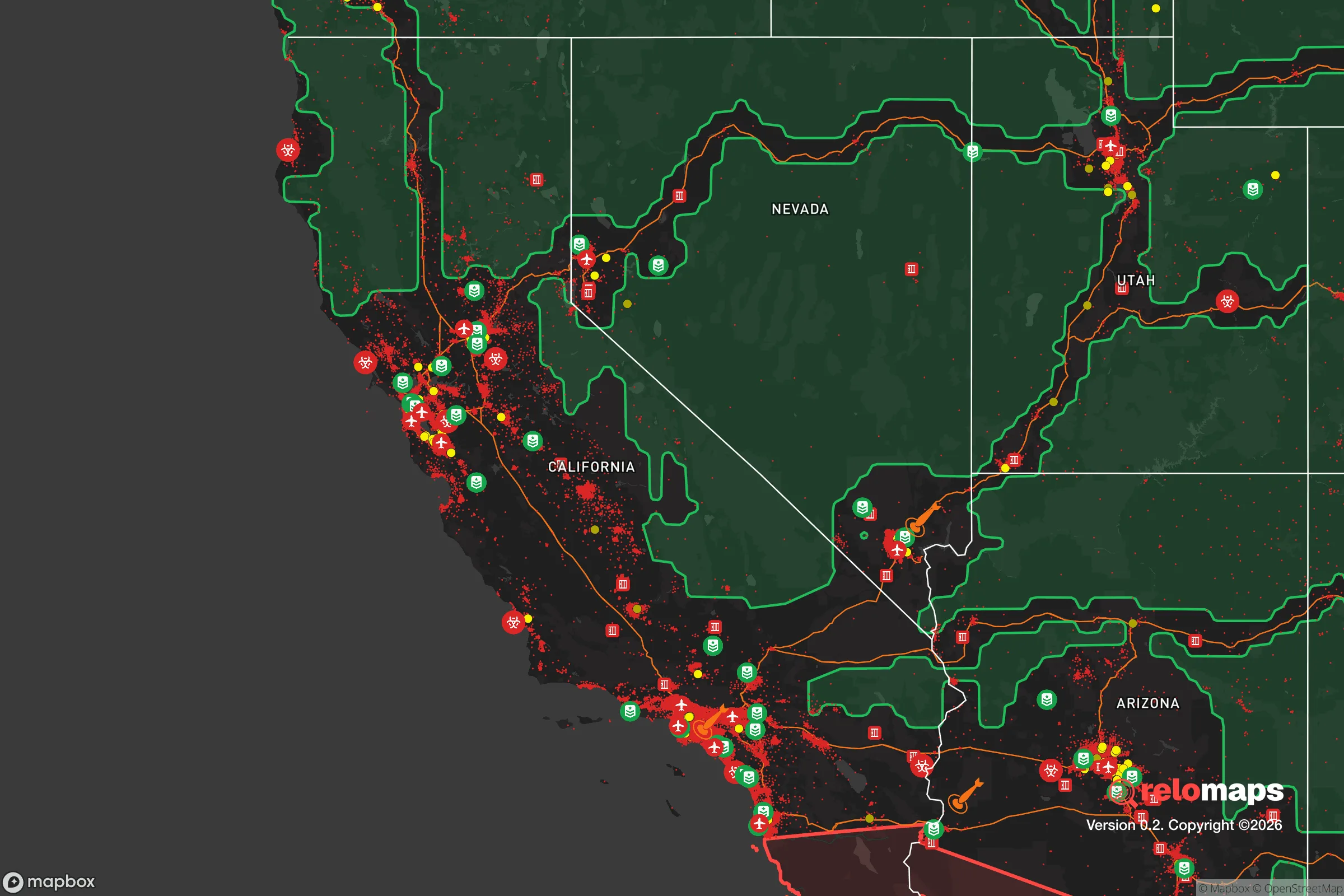


Important Note: For informational purposes only. This does not mean nothing bad ever happens in the green zones. Please use common sense. This is based on public data and modeled with AI. We tried to take a conservative approach but mistakes happen. We update this regularly as new information becomes available.
Solar Generator Recommendations
Backup power matters more here than in safer locations. We've picked three solar generators across budgets and capacity tiers — start with the budget unit if you only need a few essentials, or step up if you want to run a fridge and HVAC for days at a time.

Jackery Portable Power Station Explorer 300
Budget OptionPower on the Go: Weighing only 11 lbs, it's convenient to set up and store with book-sized foldable solar panels

BLUETTI Portable Power Station AC180
Designed for both indoor and outdoor scenarios, AC180 is highly capable as it has a robost capacity and continuous output power.

EF ECOFLOW DELTA Pro Ultra Power Station
Upgraded PickEcoFlow DELTA Pro Ultra is a whole-home energy system designed to grow with your family. Integrated with the Smart Home Panel 2, it scales to meet your evolving energy needs — keeping your home powered, intelligent, and secure through every stage of life.
We earn a commission, at no additional cost to you.
Strategic Assessment Analysis
Compton, California, presents a complex strategic picture for the relocation-minded individual or family prioritizing disaster readiness and self-sufficiency. While its location within the Los Angeles metropolitan area offers undeniable economic and logistical advantages, this same proximity to a dense urban core, critical infrastructure, and high-value targets introduces significant vulnerabilities that must be weighed carefully. For the serious prepper or resilience-focused relocator, Compton’s value lies not in its inherent defensibility, but in its potential as a staging ground or a short-term base with access to regional resources, provided one has a clear-eyed understanding of the risks and a robust plan for contingencies.
Geographic position and natural advantages for self-sufficiency
Compton sits on the Los Angeles coastal plain, roughly 15 miles south of downtown Los Angeles and a similar distance from the Pacific Ocean. Its flat terrain is a double-edged sword: it simplifies construction and gardening projects but offers no natural defensive high ground. The area benefits from a Mediterranean climate with over 280 sunny days per year, allowing for year-round food production if water is secured. The soil is primarily sandy loam, which drains well but requires amendment for intensive agriculture. The nearby Los Angeles River, though heavily channelized, represents a potential water source in a grid-down scenario, though it requires significant treatment. The San Gabriel Mountains to the north and the Palos Verdes Peninsula to the southwest provide some natural barriers against certain weather events, but they do little to mitigate the primary risks associated with urban proximity.
Risks, exposures, and proximity to fallout-relevant landmarks
The most significant strategic liability for Compton is its location within the bullseye of Southern California's critical infrastructure. The area is within a 10-mile radius of the Port of Los Angeles and Port of Long Beach, the busiest container port complex in the Western Hemisphere, making it a prime target for both conventional and asymmetric threats. The nearby Los Angeles International Airport (LAX) and several major freeway interchanges (I-105, I-110, I-710) create chokepoints that would become impassable during an evacuation. Compton is also situated near the Wilmington oil field and multiple refineries in Carson and Torrance, which present both a target risk and a hazardous material exposure concern. In a nuclear event, the prevailing westerly winds would carry fallout from strikes on downtown LA or the port complex directly over the area. The population density of roughly 3,800 people per square mile means that any large-scale emergency would trigger immediate resource competition and civil unrest. Earthquake risk is moderate but real, with the nearby Newport-Inglewood Fault capable of producing a 7.0+ magnitude event that would devastate the region's already aging infrastructure.
Practical resilience for a relocator: food, water, energy, and defensibility
For the individual or family looking to establish a resilient homestead, Compton presents significant challenges. The typical residential lot size is small, often under 5,000 square feet, limiting space for substantial food production. Community gardens exist but are few and heavily utilized. Water security is the most pressing concern: the area relies entirely on imported water from the State Water Project and the Colorado River Aqueduct, both of which are vulnerable to earthquake disruption and long-term drought. A private well is not a viable option due to groundwater contamination from decades of industrial activity. Rainwater catchment is possible but yields only about 12 inches annually, requiring large storage capacity to be meaningful. Solar energy is viable given the abundant sunshine, but most homes are not pre-wired for off-grid systems, and HOA or city permitting can be restrictive. Natural gas is the primary heating fuel, which would become unavailable during a prolonged grid outage. Defensibility is poor: the flat, grid-like street pattern offers no tactical advantage, and the high density of neighboring structures means that a single compromised property can threaten an entire block. The Compton Police Department is responsive but under-resourced, with response times that would lengthen dramatically during a widespread event. The best strategy for a relocator is to treat Compton as a base for building skills and networks while maintaining a secondary retreat location in a more defensible rural area within a two-hour drive, such as the Tehachapi Mountains or the eastern Sierra foothills.
In the final strategic assessment, Compton offers a low barrier to entry for those who need to be near Los Angeles for work or family obligations, but it demands a high level of preparedness and a realistic understanding of its limitations. The area's resilience is not inherent; it must be built through deliberate investment in redundant systems, community relationships, and a clear evacuation plan. For the single individual or family willing to invest significant time and resources into hardening a property and building local networks, Compton can serve as a functional base of operations. However, for those whose primary goal is long-term self-sufficiency and security, the trade-offs of urban proximity—density, infrastructure vulnerability, and target risk—likely outweigh the benefits. The prudent relocator will view Compton not as a final destination, but as a strategic stepping stone to a more defensible and resource-secure location.

* Values derived from national, state, county, city and local statistics and may differ in a specific area. Last updated: 2026-08-13T19:15:11.000Z
Narrative content on this page is AI-generated and may contain mistakes. Verify any details that matter before acting on them.
ReloMaps may earn a commission from affiliate links at no extra cost to you.

