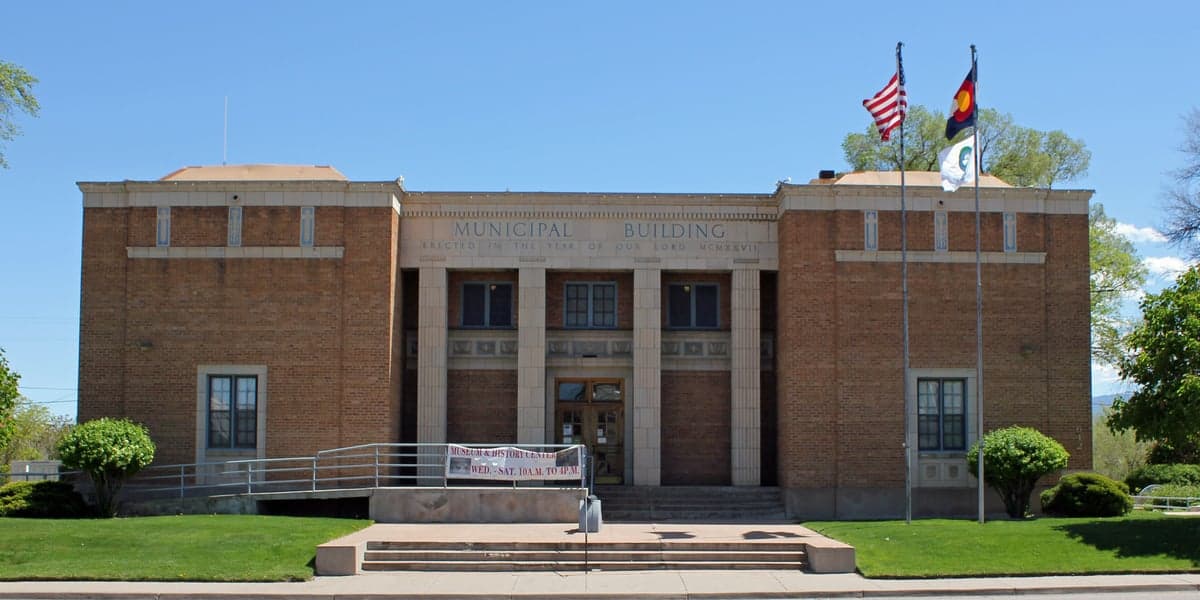
Photo: Wikipedia
Political ClimatePolitical Climate in Fremont County
Showing district-level results — no local-only data available.
Local Political AnalysisPolitical Analysis of Fremont County
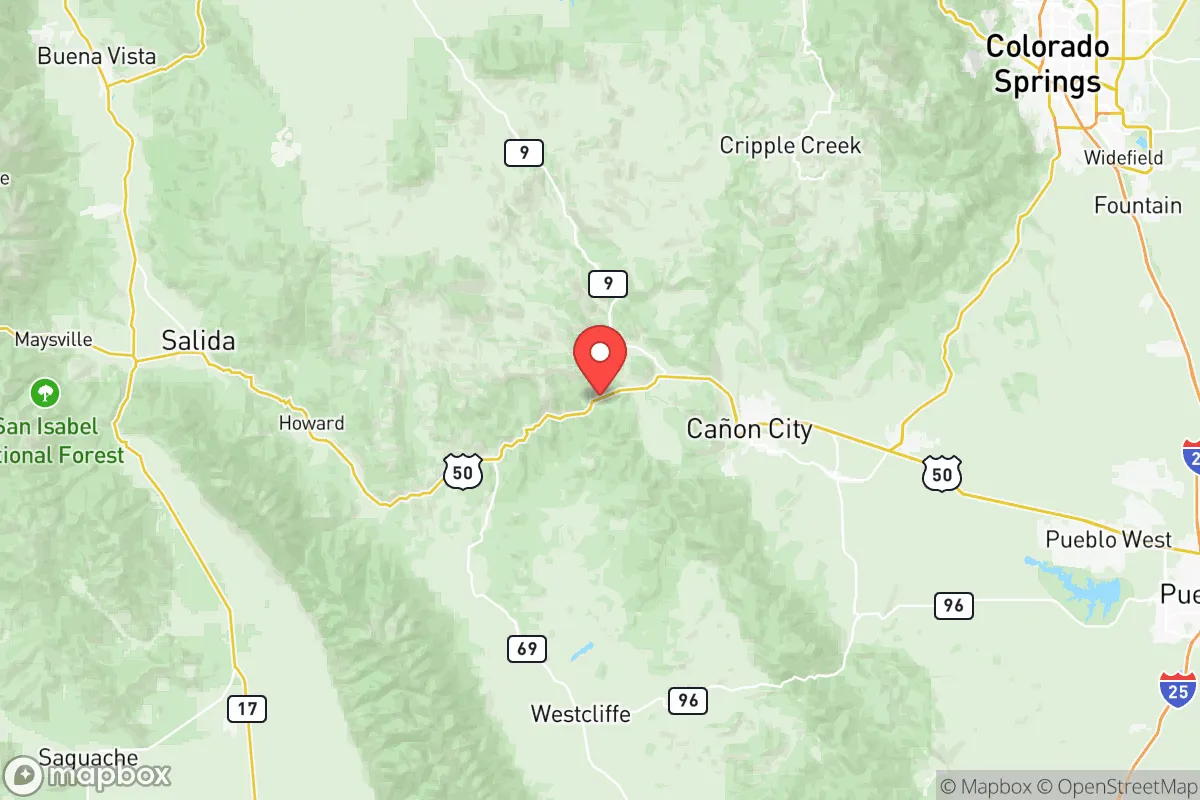
Fremont County, Colorado, leans reliably Democratic with a Cook PVI of D+8, making it more liberal than the state as a whole, which sits at D+6. This isn't a uniform blue wall, though—the county's politics are a patchwork, with the city of Cañon City acting as the Democratic stronghold, while outlying towns like Florence and Penrose lean more conservative, and the rural precincts around Cotopaxi and Wetmore can swing either way depending on the election cycle. The trajectory has been steadily bluer over the past decade, driven by an influx of remote workers and retirees from the Front Range, but the shift is slower than in neighboring counties like Pueblo or El Paso.
How it compares
Compared to Colorado's overall D+6 lean, Fremont County's D+8 is a noticeable but not radical difference. The county's Democratic edge is largely concentrated in Cañon City, where the prison economy (the Colorado Department of Corrections headquarters and several facilities) creates a stable, union-friendly workforce that votes reliably blue. In contrast, Florence and Penrose show a more mixed pattern—Florence's historic downtown and growing arts scene have attracted some liberal newcomers, but its longtime ranching families keep it competitive for Republicans. The swing precincts around the Royal Gorge region and the Arkansas River corridor are where elections are decided; these areas tend to vote for the winner of the national popular vote, making them a microcosm of the state's broader purple-to-blue shift. The county's PVI is also slightly more Democratic than the national average (D+8 vs. D+0), which means national Democratic candidates typically outperform here by a few points compared to the rest of the country.
What this means for residents
For conservative residents, the D+8 lean means their votes are often outnumbered in countywide races, but they still hold sway in local school board and city council elections in Florence and Penrose. The county commission has remained more balanced than the PVI suggests, with Republicans occasionally winning seats by focusing on water rights, land use, and opposition to state-level gun control measures. For liberal residents, the Democratic tilt means Cañon City feels like a safe space for progressive organizing, with active groups like the Fremont County Democrats and a growing number of LGBTQ+ friendly businesses. However, the county's rural character means that even in blue precincts, issues like wildfire mitigation, drought management, and maintaining rural healthcare access transcend party lines—most residents, regardless of affiliation, prioritize practical solutions over ideological purity.
Culturally, Fremont County stands apart from Colorado's Front Range urban centers. The county's politics are shaped by its identity as a corrections hub and a gateway to the Arkansas River recreation economy, not by the tech or tourism booms that define Boulder or Denver. This creates a distinct policy landscape: you'll see more bipartisan support for prison reform and criminal justice reinvestment, alongside fierce debates over water rights and mineral extraction. The county's slower growth compared to the Front Range means housing affordability is less of a flashpoint, but the tension between preserving rural character and accommodating new residents is a constant undercurrent. For both conservatives and liberals, the practical takeaway is that Fremont County's politics are less about national culture wars and more about local trade-offs—how to balance economic development with environmental stewardship, and how to maintain community ties in a place that's changing, but not as fast as the rest of Colorado.

State Political ClimatePolitical Climate in Colorado
State Political AnalysisPolitical Environment in the State
Colorado has shifted from a classic purple swing state to a solidly blue-leaning one over the past two decades, carrying a Cook PVI of D+6. The transformation has been driven by explosive growth in the Denver metro and Front Range corridor, which now overwhelms the state's historically conservative rural and mountain regions. For a conservative-leaning relocator, the state presents a complex picture: a state government that has moved decisively left on most social and environmental issues, but one that still retains a strong libertarian streak on certain economic and personal freedoms, particularly outside the urban core.
Urban vs. rural divide
The political geography of Colorado is a tale of two states. The urban crescent stretching from Fort Collins down through Denver, Aurora, and Boulder to Colorado Springs holds the vast majority of the population and votes overwhelmingly Democratic. Boulder County is one of the most liberal jurisdictions in the nation, while Denver and Adams Counties reliably deliver massive Democratic margins. In contrast, the Eastern Plains, the Western Slope, and the San Luis Valley remain deeply conservative. El Paso County, home to Colorado Springs, is the state's largest reliably Republican stronghold, though even there, the margin has been shrinking as the city's tech and military population diversifies. The mountain resort counties—Summit, Eagle, and Pitkin—have flipped from red to blue over the last 15 years, driven by an influx of wealthy, environmentally-conscious newcomers. The result is a state where statewide races are decided in the Denver suburbs, while the rest of Colorado feels increasingly disconnected from the political center of gravity.
Policy environment
Colorado's state-level policy environment is now firmly progressive on most fronts. The state has a flat income tax rate of 4.4%, which is relatively low by national standards, but property taxes are also among the lowest in the country, a legacy of the Taxpayer's Bill of Rights (TABOR). TABOR still constrains state spending growth, but voters have repeatedly approved time-limited tax increases for education and transportation. On social policy, Colorado has expanded Medicaid, enacted universal background checks for gun purchases, and codified abortion rights into state law. The state is a leader in renewable energy mandates and electric vehicle incentives. Election laws are among the most accessible in the nation, with universal mail-in voting and same-day registration. For a conservative resident, the policy environment can feel like a constant headwind, particularly on gun rights and energy development, but the low tax burden and TABOR protections provide a meaningful counterbalance.
Recent policy direction
The last five years have seen Colorado accelerate its leftward trajectory. In 2023, the legislature passed a package of gun control measures including a three-day waiting period and raising the purchase age to 21, which were signed by Governor Jared Polis. The same session saw the passage of the "Family Leave Insurance" program, funded by payroll deductions. On education, the state has moved to expand school choice, but also increased funding for public schools through a 2020 ballot measure that raised taxes on high-income earners. On property rights, the state has tightened oil and gas regulations, including setback requirements that effectively ban new drilling in many residential areas. Medical and bodily autonomy have been broadly protected, with a 2024 ballot measure enshrining abortion rights in the state constitution. For a conservative relocator, the most tangible recent shift is on energy: the state has set a goal of 100% renewable electricity by 2040, which has created friction with the traditional oil and gas economy on the Western Slope and the Eastern Plains. The overall direction is clear: Colorado is becoming more regulated, more expensive, and more aligned with West Coast policy norms, even as it retains some of its Western libertarian character.
Civil unrest & political movements
Colorado has seen its share of political flashpoints. The 2020 protests in Denver were large and occasionally violent, leading to debates about public safety and policing that continue to shape local elections. The state has also been a battleground over immigration: Denver has declared itself a sanctuary city, and the state has limited cooperation with federal immigration enforcement, which has become a major point of contention with rural counties. On the right, the "Colorado Project" and other grassroots movements have organized around election integrity and parental rights in schools, particularly in suburban districts like Douglas County and Jefferson County. The 2022 recall of a district attorney in Boulder County over progressive criminal justice policies showed that the leftward drift is not without pushback. A new resident will notice that political bumper stickers and yard signs are common, and that conversations about politics can become heated, especially around water rights, energy development, and growth management. The state's independent streak means that third-party and unaffiliated voters are a significant force, and many residents pride themselves on being "Colorado first" rather than strictly partisan.
Projection
Looking ahead five to ten years, Colorado's Democratic lean is likely to deepen, but not without friction. The Front Range will continue to grow, driven by tech, aerospace, and remote workers, while rural counties will continue to lose population and political influence. The state's Hispanic population, concentrated in the San Luis Valley and along the Front Range, is growing and leans Democratic, though not as overwhelmingly as national trends might suggest. The biggest wild card is housing affordability: as Denver and Boulder become prohibitively expensive, more conservative-leaning families are moving to exurbs like Pueblo and Colorado Springs, which could slow the leftward shift in those areas. The state's energy transition will remain a flashpoint, with rural communities fighting for economic survival as coal and oil jobs decline. A conservative moving to Colorado now should expect a state that will continue to pass progressive legislation on guns, energy, and social issues, but one where local control and TABOR still provide meaningful checks on state power. The political environment will feel increasingly like a coastal blue state, but with a Western independence that can still surprise.
For a new resident, the bottom line is that Colorado offers a high quality of life with low taxes and abundant outdoor recreation, but at the cost of living in a state where your vote on most statewide issues will be in the minority if you lean conservative. The practical takeaway is to choose your county carefully: El Paso County and Douglas County offer a more conservative local environment, while Boulder and Denver are solidly progressive. The state's political trajectory is set, but the experience of living here varies dramatically depending on where you put down roots.
* Values derived from national, state, county, city and local statistics and may differ in a specific area. Last updated: 2026-07-22T21:38:56.000Z
Narrative content on this page is AI-generated and may contain mistakes. Verify any details that matter before acting on them.
ReloMaps may earn a commission from affiliate links at no extra cost to you.

