Photo: Wikipedia
Demographics of Clear Creek County
Affluence Level in Clear Creek County
An upper-middle-class area. Household wealth, education levels, and homeownership run ahead of national benchmarks.
People of Clear Creek County
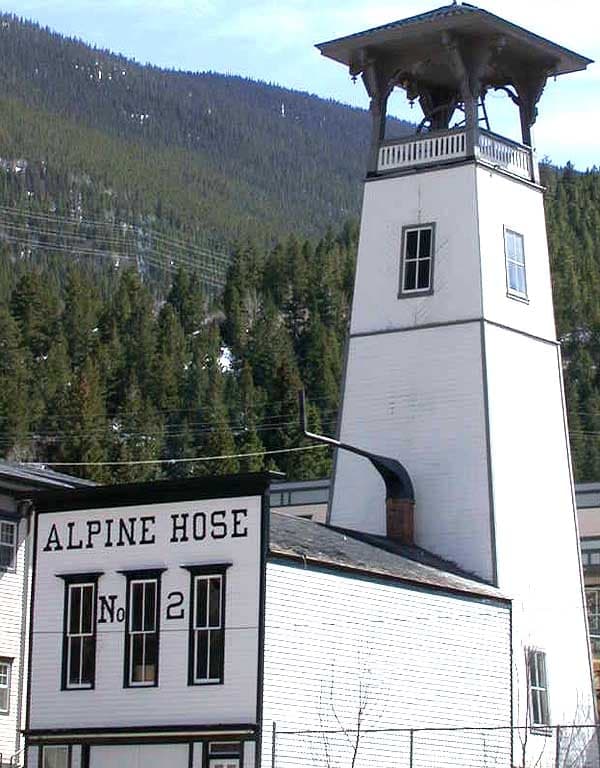
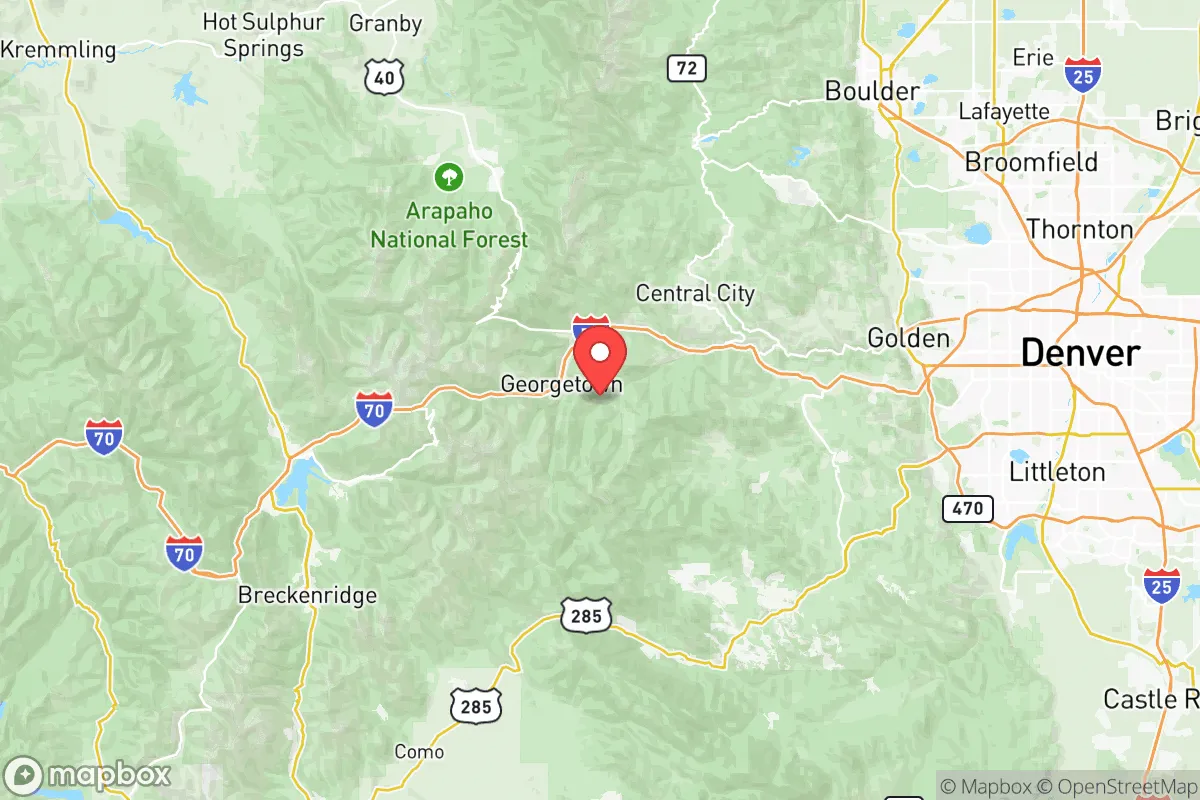
Clear Creek County, Colorado, is a high-altitude mountain community of 9,358 residents that blends a historic mining past with a modern outdoor-recreation identity. The county is notably less diverse than the Denver metro area it borders, with a population that is 86.4% white and only 0.8% foreign-born, yet it carries a distinctive character shaped by successive waves of hard-rock miners, railroad builders, and second-home owners. Today, its residents are among the most educated in the state—56.3% hold a college degree—and the county's identity is defined less by ethnic enclaves than by a shared culture of mountain living, small-town independence, and proximity to Denver's urban economy.
Settlement & growth (pre-1960)
The Ute people, specifically the Uintah and Uncompahgre bands, used the high valleys of what is now Clear Creek County as seasonal hunting and travel corridors, but they established no permanent villages in the steep, mineral-rich terrain. The 1859 Pikes Peak Gold Rush brought the first sustained non-Native settlement, when prospectors discovered placer gold in Clear Creek itself. Within months, the towns of Idaho Springs (founded 1859), Georgetown (1859), and Silver Plume (1869) sprang up as rough-and-tumble mining camps, drawing a wave of Cornish miners from England, Irish laborers, and German immigrants who brought hard-rock mining expertise from European mines. The county's population surged past 10,000 by the 1870s, making it one of Colorado's most populous areas during the territorial period.
The completion of the Georgetown Loop Railroad in 1884 connected the county's silver mines to national markets and triggered a second wave of immigration. Central City and Black Hawk, technically in adjacent Gilpin County but economically tied to Clear Creek, saw an influx of Italian and Eastern European miners, while Chinese laborers—who had built much of the transcontinental railroad—found work in the county's ore-processing mills. By 1890, Clear Creek County's population peaked at roughly 15,000, with a polyglot mining workforce that included Cornish, Irish, German, Italian, and Chinese residents, though the county remained overwhelmingly white and native-born by national standards.
The collapse of silver prices in 1893 triggered a long, slow decline. Mining continued but at reduced scale, and the county's population fell to 8,000 by 1910 and to just 4,000 by 1930. The Great Depression accelerated outmigration, and the post-World War II era saw the county's population bottom out at roughly 3,000 in 1950. The Interstate Highway System—specifically I-70, completed through the county in the 1960s—reversed the decline by making the county accessible as a Denver bedroom community and second-home destination. The old mining towns of Empire and Dumont, nearly ghost towns by 1950, began to see new construction as ski resorts and summer tourism revived the local economy.
Modern era (post-1965)
The 1965 Hart-Cellar Act had minimal direct impact on Clear Creek County, as the county's foreign-born population today is just 0.8%—far below the Colorado average of 7.5%. Instead, the county's modern demographic story is one of domestic migration: urban professionals and retirees from the Denver-Boulder corridor seeking mountain property, and second-home buyers from Texas, California, and the Midwest. The county's population grew from 4,000 in 1970 to 9,000 by 2000, driven almost entirely by white, college-educated newcomers. The Hispanic share of the population, at 7.6%, is the county's largest minority group and is concentrated in Idaho Springs, where a small but established Latino community traces its roots to Mexican-American railroad workers and agricultural laborers who arrived in the 1940s and 1950s.
The Asian population (East and Southeast Asian) stands at 1.1%, and the Black population at 1.1%, both reflecting the county's limited appeal to non-white populations compared to the Denver metro area. The Indian-subcontinent population is effectively zero. The county's racial homogeneity is partly a function of housing costs—the median home value in Clear Creek County exceeds $600,000—and partly a function of its economic base: the county has few entry-level service jobs and no major employers outside of tourism, small-scale mining, and remote work. The towns of Georgetown and Silver Plume have become historic preservation districts, attracting affluent retirees and vacation-home owners, while Idaho Springs retains a more working-class character with a mix of mining-adjacent businesses and tourist services along I-70.
Suburbanization has been limited by the county's steep terrain and national-forest boundaries. Unlike the sprawling subdivisions of Douglas or Weld counties, Clear Creek County's development is constrained to narrow valley bottoms, and roughly 80% of the county's land is publicly owned (Arapaho and Pike-San Isabel National Forests). This has preserved the county's small-town feel but also limited housing supply, pushing prices upward and accelerating the displacement of long-term, lower-income residents—including many of the county's Hispanic families—to more affordable areas in nearby Jefferson County or the eastern plains.
The future
Clear Creek County is likely to become slightly more diverse over the next 10-20 years, but the change will be gradual and driven primarily by the growth of the Hispanic population, which is projected to reach 10-12% of the county by 2040. The white, non-Hispanic share will decline slowly from its current 86.4% as older residents age in place and younger, more diverse households move in from the Denver metro area. The Asian and Black populations will remain small but may grow modestly as remote work allows more professionals to relocate from coastal cities, though high housing costs will limit this trend to higher-income households.
The county's cultural identity will continue to evolve from a mining-and-tourism economy toward a recreation-and-remote-work economy, with implications for who moves in. The towns of Georgetown and Silver Plume will likely become even more oriented toward historic preservation and high-end tourism, while Idaho Springs may see more working-class and Hispanic growth as it remains the county's most affordable and accessible community. The county's population is projected to grow slowly—perhaps reaching 10,500 by 2040—constrained by water availability, wildfire risk, and limited developable land.
For someone moving in now, Clear Creek County offers a predominantly white, highly educated, politically moderate-to-conservative mountain community with strong ties to Denver's economy but a distinct small-town identity. The county is becoming more expensive and more oriented toward recreation and remote work, but it remains a place where the legacy of hard-rock mining and the culture of mountain independence still shape daily life. New residents should expect a community that values self-reliance, outdoor access, and historic preservation, and one where demographic change is slow enough that the county's character will feel familiar for decades to come.

* Values derived from national, state, county, city and local statistics and may differ in a specific area. Last updated: 2026-10-23T20:57:17.000Z
Narrative content on this page is AI-generated and may contain mistakes. Verify any details that matter before acting on them.
ReloMaps may earn a commission from affiliate links at no extra cost to you.

