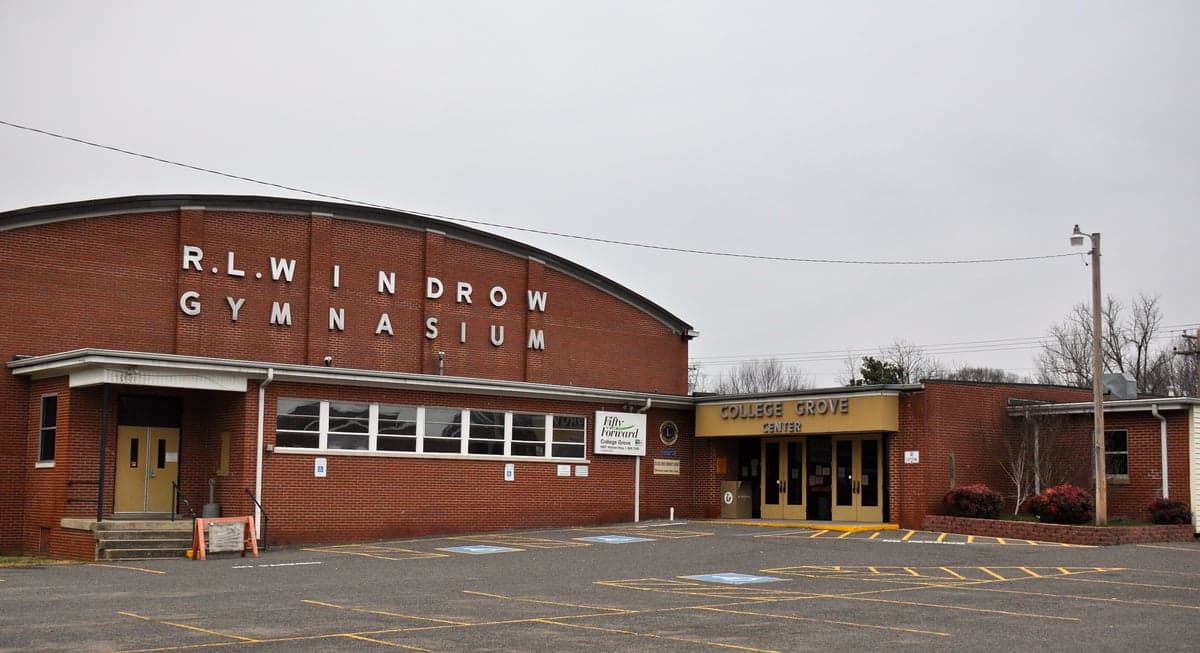
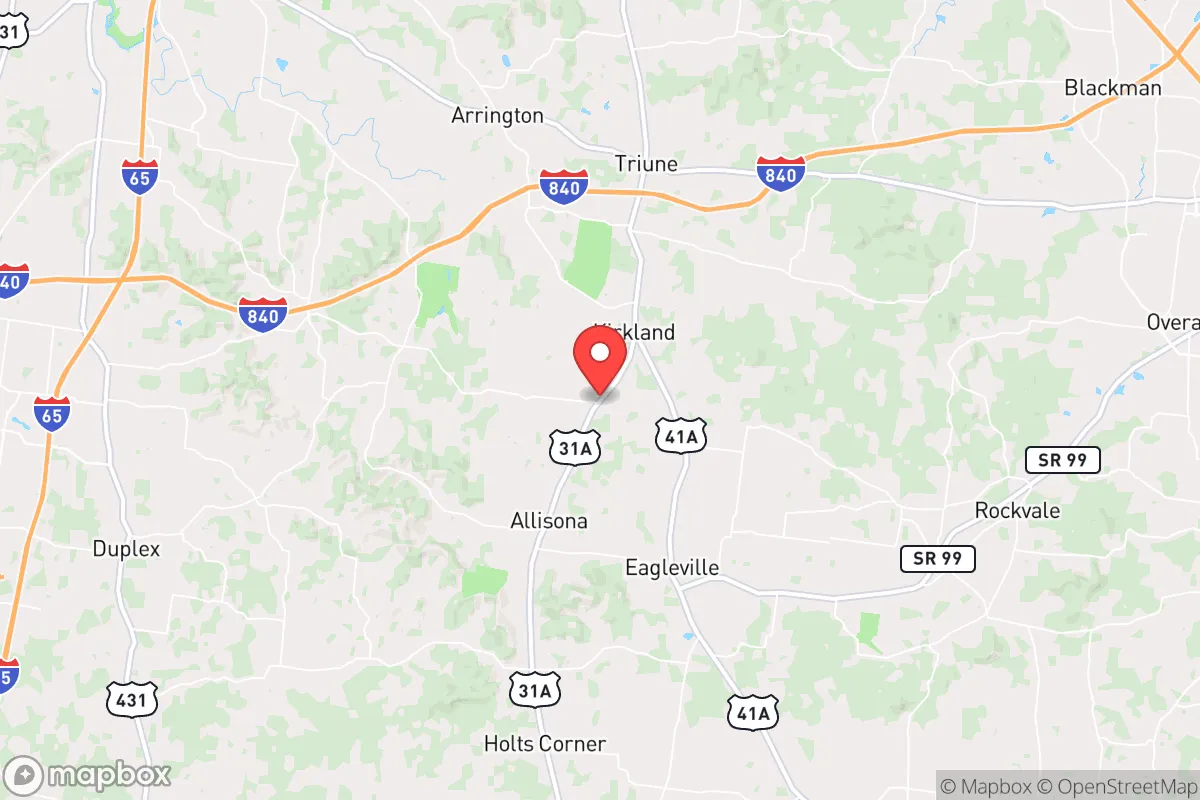
Photo: Wikipedia
Personal Sovereignty in College Grove, TN
Moderate friction. Expect trade-offs in some aspect of personal liberty and independence.
What does Personal Sovereignty tell us?
Personal Sovereignty measures your capacity for self-reliance and independence with minimal government friction. Higher scores mean fewer barriers between you and the way you want to live... but it assumes you have the space you need and good neighbors.
What does this tell us?
Personal Sovereignty measures your capacity for self-reliance and independence with minimal government friction. Higher scores mean fewer barriers between you and the way you want to live... but it assumes you have the space you need and good neighbors.
State Policy
Energy independence: Importer (21% of energy produced in-state)
Personal Liberty
Homesteading

Personal Liberty Analysis
College Grove, Tennessee, offers a notably high degree of personal sovereignty, rooted in Tennessee’s strong state-level protections for individual rights and a deeply rural, low-regulation local culture. For residents prioritizing autonomy, the area provides a legal and practical environment where self-reliance is not just permitted but actively supported by state law and local norms. The combination of no state income tax, broad self-defense rights, and permissive land-use policies creates a foundation for personal freedom that is increasingly rare in suburbanizing Middle Tennessee.
Tax burden and regulatory posture: How Tennessee’s fiscal policies support independence
Tennessee’s tax structure is a cornerstone of personal sovereignty in College Grove. The state imposes no personal income tax on wages, and while the Hall Tax on investment income was fully phased out by 2021, residents keep 100% of their earnings and capital gains. Property taxes in Williamson County, where most of College Grove lies, are moderate—the county’s effective rate is approximately 0.58% of assessed value, well below the national average of roughly 1.1%. This low burden is paired with a state sales tax of 7%, which is high but applies uniformly, and local sales taxes bring the total to about 9.75% in Williamson County. The regulatory posture is equally light: Tennessee is a right-to-work state with minimal business licensing requirements, and Williamson County’s zoning in unincorporated areas like College Grove is generally permissive for agricultural and residential uses. There are no county-level building codes for most rural residential construction, though septic and well permits are required. The state’s limited government philosophy means fewer layers of bureaucracy for everything from starting a home business to building a workshop, directly supporting a self-reliant lifestyle.
Self-defense and gun law specifics: What the Second Amendment looks like in practice
College Grove sits in a state with some of the strongest firearm protections in the nation. Tennessee enacted permitless carry (constitutional carry) for handguns in 2021, allowing any law-abiding adult 21 or older to carry a concealed or open firearm without a permit. For those who still want a permit for reciprocity purposes, the state issues enhanced handgun carry permits with a training requirement. The legal framework is reinforced by Tennessee’s Stand Your Ground law, which removes any duty to retreat before using deadly force in self-defense, and a Castle Doctrine that extends to vehicles and occupied structures. Local law enforcement in Williamson County is generally supportive of gun rights, and there are no county-level restrictions beyond state law. The rural nature of College Grove means that firearm ownership for hunting and personal protection is the norm, not the exception. For residents, this translates to a high degree of personal security autonomy—you are legally empowered to defend yourself and your property without seeking permission from the state.
Self-reliance and homesteading viability: Lot sizes, zoning, and off-grid feasibility
College Grove’s rural zoning and large lot sizes make it a prime location for homesteading and self-reliant living. The minimum lot size in the area’s agricultural-residential zones is typically 1 to 5 acres, with many properties ranging from 2 to 10 acres or more. This allows for substantial gardening, small-scale livestock (chickens, goats, and even a cow or two), and the construction of outbuildings like barns, workshops, and greenhouses without special permits. Williamson County’s zoning code explicitly permits agricultural uses on parcels of 2 acres or more, including the keeping of horses, cattle, and poultry. Off-grid feasibility is high: while the county requires a septic system and a well for potable water, there are no mandates to connect to municipal water or sewer. Solar panels are permitted without special restrictions, and many residents use them to supplement or replace grid power. Rainwater collection is legal and encouraged for non-potable uses. The main regulatory hurdle is the requirement for a building permit for any new structure over 200 square feet, but inspections are minimal for rural residential projects. For those seeking true self-sufficiency, College Grove offers one of the most permissive environments in Middle Tennessee.
Personal liberties: Parental rights, medical autonomy, speech, and property
Tennessee law provides strong protections for personal liberties that directly affect daily life in College Grove. Parental rights are explicitly protected under state law, with a 2023 statute affirming that parents have the fundamental right to direct the upbringing, education, and healthcare of their children. This includes the ability to opt children out of school curricula or medical treatments without state interference. Medical autonomy is similarly robust: Tennessee has no state-level vaccine mandate for adults, and while COVID-era restrictions existed, they were lifted early and have not been reinstated. The state’s religious freedom protections are broad, and there are no local ordinances restricting speech or assembly. Property rights are strongly defended—Tennessee is a “property rights” state with a strong eminent domain statute that requires just compensation and public use, and Williamson County has no rent control or landlord-tenant regulations beyond state law. The combination of these protections means that residents of College Grove can largely live according to their own values without fear of government overreach, whether that involves homeschooling, refusing medical treatments, or building a private shooting range on their own land.
Overall, College Grove ranks among the most sovereignty-friendly communities in the Nashville metropolitan area, offering a level of personal freedom that is difficult to find in more densely populated or heavily regulated parts of the country. The absence of income tax, the strong self-defense laws, the permissive zoning for homesteading, and the robust protections for parental and medical autonomy create an environment where individuals and families can exercise genuine control over their lives. While the area is not entirely free of regulation—septic and well permits, building permits for larger structures, and state sales tax are all present—the overall burden is light compared to most suburban or urban alternatives. For a reader who prioritizes personal sovereignty, College Grove represents a practical and legally supported choice for a self-reliant lifestyle in Middle Tennessee.

* Values derived from national, state, county, city and local statistics and may differ in a specific area. Last updated: 2026-11-18T06:20:25.000Z
Narrative content on this page is AI-generated and may contain mistakes. Verify any details that matter before acting on them.
ReloMaps may earn a commission from affiliate links at no extra cost to you.

