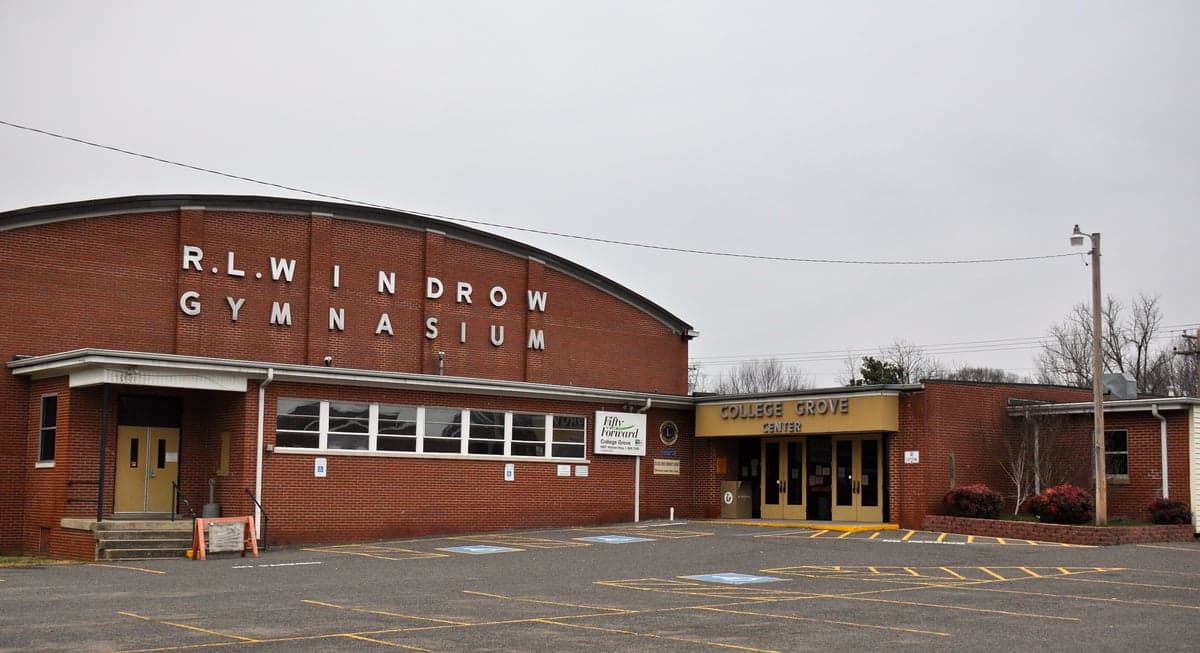
Photo: Wikipedia
Demographics of College Grove, TN
Affluence Level in College Grove, TN
A middle-class area roughly in line with national averages across income, home values, education, and employment.
People of College Grove, TN
College Grove, Tennessee, is a small, tight-knit community of 934 residents that remains overwhelmingly white (90.7%) and native-born (99.4% U.S.-born), with a distinctly rural character that sets it apart from the fast-growing suburbs of nearby Franklin and Murfreesboro. The population is notably well-educated, with 38.1% holding a college degree, yet the town retains a working-landscape identity rooted in its agricultural past. Hispanic residents make up 5.7% of the population, while Black residents account for 2.7%, and East/Southeast Asian communities represent 0.3%, reflecting modest but recent diversification. For those moving in now, College Grove offers a quiet, family-oriented lifestyle where generational ties to the land remain strong, though new subdivisions are beginning to reshape its edges.
How the city was settled and grew
College Grove’s human history begins in the early 19th century, when European-American settlers—primarily of English, Scots-Irish, and German stock—moved into the fertile rolling hills of southern Williamson County. The area was originally part of land grants awarded to veterans of the Revolutionary War and the War of 1812, and these early families established subsistence farms and small plantations. The community’s name derives from a short-lived college founded in the 1850s, which drew a handful of educated families to the area. The College Grove Historic District, centered around the intersection of Horton Highway and Arno Road, contains the original 19th-century homes, general store, and church that served these early settlers. A second wave of agricultural families arrived after the Civil War, taking advantage of the region’s rich limestone soil for tobacco and livestock farming. These post-war families settled along Arno Road and Bethesda Road, establishing the dispersed rural homestead pattern that still defines much of the community today. Through the early 20th century, College Grove remained a small crossroads hamlet, with population growth limited by its distance from major rail lines and the later interstate system.
Modern era (post-1965)
The post-1965 period brought only gradual change to College Grove, as the town remained largely insulated from the suburban boom that transformed nearby Franklin and Brentwood. The 1965 Immigration and Nationality Act had negligible impact here; the foreign-born population today is just 0.6%, and the town saw no significant influx from Asia, Latin America, or the Indian subcontinent during the late 20th century. Instead, the most notable demographic shift was domestic: a slow trickle of families from Nashville and Williamson County seeking larger lots and lower property taxes. These newcomers built homes in newer subdivisions such as Grove Park and Horton Farms, which began appearing in the 1990s and 2000s along Horton Highway. The Hispanic population, now 5.7%, grew primarily through agricultural labor and construction work tied to the broader Williamson County building boom, with many families renting homes in the College Grove Village area. The Black population, at 2.7%, includes both descendants of families who worked the area’s farms and a small number of professionals drawn by the rural setting. East/Southeast Asian residents (0.3%) are almost entirely recent arrivals employed in tech or healthcare in the Nashville metro area, choosing College Grove for its lower home prices relative to Franklin.
The future
College Grove’s population is poised for modest growth, driven primarily by spillover from Williamson County’s explosive development. The town’s location along the planned widening of State Route 840 and its proximity to the new Amazon distribution center in nearby Nolensville are attracting developers, with several large-lot subdivisions in the approval pipeline. The population is expected to become slightly more diverse, though the white share will likely remain above 85% for the foreseeable future. The Hispanic share may grow to 8-10% as service-sector and construction jobs expand, while the Black and East/Southeast Asian shares will likely increase slowly as professionals seek affordable acreage. Newer developments such as Horton Creek and Arno Estates are attracting a mix of young families and remote workers, many of whom commute to Nashville or Franklin. The cultural identity of College Grove is evolving from a purely agricultural community to a bedroom suburb with a rural aesthetic, though longtime residents in the Historic District and along Bethesda Road continue to anchor the town’s traditional character. The next decade will likely see the population approach 1,200-1,500, with the most growth concentrated along the Horton Highway corridor.
College Grove is becoming a transitional community—still rural in feel and overwhelmingly white and native-born, but increasingly absorbing Nashville-area professionals who value space and quiet over urban amenities. For someone moving in now, the town offers a stable, family-oriented environment with strong schools and low crime, but with the understanding that development pressure will continue to reshape its landscape. The key question for newcomers is whether they seek the authentic small-town character of the historic core or the newer, more connected lifestyle of the developing subdivisions.

* Values derived from national, state, county, city and local statistics and may differ in a specific area. Last updated: 2026-11-18T06:20:25.000Z
Narrative content on this page is AI-generated and may contain mistakes. Verify any details that matter before acting on them.
ReloMaps may earn a commission from affiliate links at no extra cost to you.

