 Popular
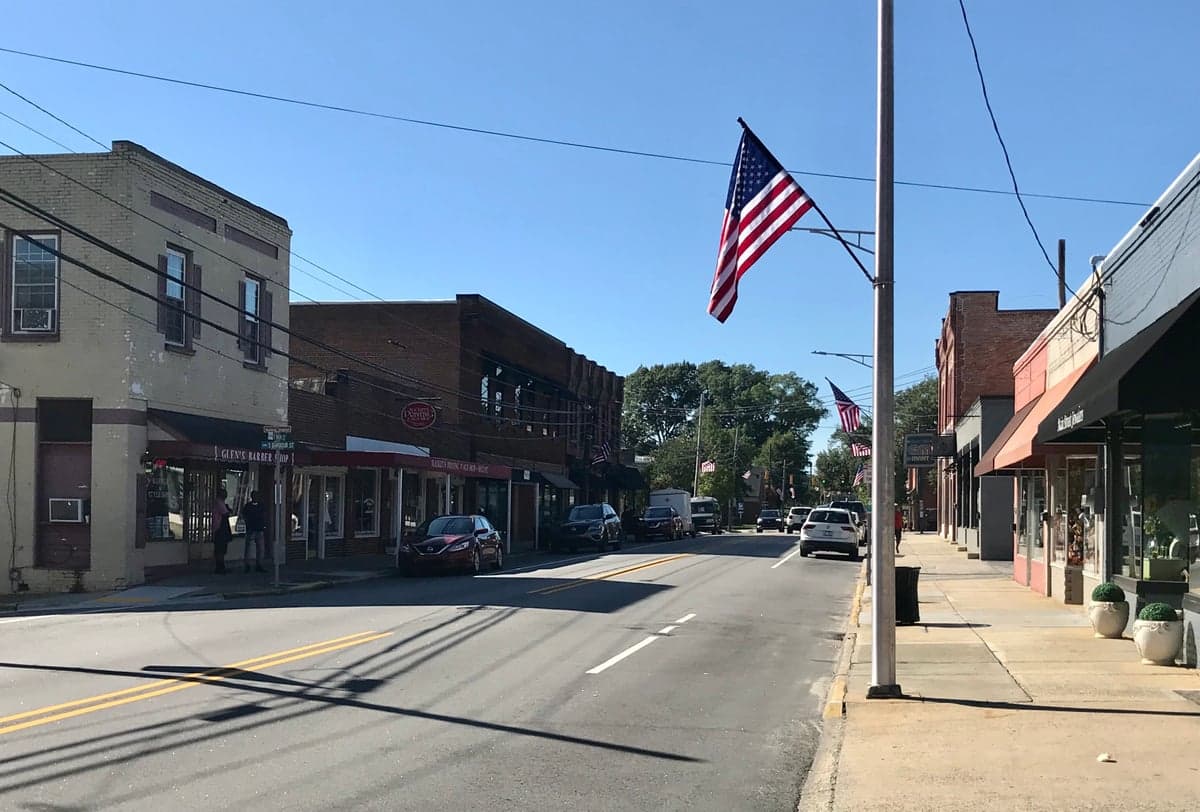
Photo: Wikipedia
Demographics of Clayton, NC
Affluence Level in Clayton, NC
A middle-class area roughly in line with national averages across income, home values, education, and employment.
People of Clayton, NC
The people of Clayton, North Carolina today form a predominantly native-born, family-oriented community of roughly 28,000, characterized by a strong Black and White base with a growing Hispanic presence. The city’s identity is rooted in its role as a suburban anchor for Johnston County, blending historic Southern traditions with the rapid expansion of the Raleigh-Durham metro area. With a median age near the national average and a college attainment rate of 35.6%, Clayton’s population is more working- and middle-class than its Wake County neighbors, yet increasingly diverse in its newer subdivisions. Distinctive markers include a high rate of homeownership, a visible military-affiliated population tied to nearby Seymour Johnson Air Force Base, and a civic life centered around the historic downtown and the Clayton Center.
How the city was settled and grew
Clayton’s original population was drawn by the promise of agriculture and the railroad. Founded in the 1860s as a stop on the North Carolina Railroad, the town attracted Anglo-American farmers and merchants who built the first homes along what is now Main Street and the Historic Downtown District. The arrival of the textile industry in the early 1900s—most notably the Clayton Cotton Mill—brought a wave of rural White families from across Johnston County into the Mill Village neighborhood, where company-owned houses still stand. Black families, many descended from enslaved people in the surrounding plantation economy, settled in the East Clayton area along U.S. 70 Business, establishing churches and schools that anchored the community through the Jim Crow era. By 1950, Clayton remained a small, segregated mill town of roughly 2,500, with the population overwhelmingly native-born and split roughly 60% White and 40% Black.
Modern era (post-1965)
The post-1965 era transformed Clayton from a sleepy mill town into a suburban bedroom community. The 1965 Hart-Cellar Act had minimal direct effect here—Clayton’s foreign-born population remains low at 5.3%—but domestic in-migration surged after the 1990s as Raleigh-Durham’s tech boom pushed families south along I-40. White families from Wake County and the Northeast moved into new subdivisions like Flowers Plantation and Riverwood Athletic Club, drawn by lower taxes and larger lots. Black residents, historically concentrated in East Clayton, began moving into newer developments such as Briarcliff and The Glen at Flowers, reflecting a gradual suburbanization of the African American middle class. The Hispanic population, now 13.7%, grew primarily through domestic migration from other U.S. states rather than direct immigration, settling in the West Clayton corridor near the Walmart and along N.C. 42. East/Southeast Asian residents (0.5%) and Indian-subcontinent residents (0.0%) remain negligible, a sharp contrast to the Raleigh tech hubs. The Black share (27.0%) has held steady since 2000, while the White share (54.2%) has declined from over 70% in 1990, driven entirely by Hispanic growth.
The future
Clayton’s population is heading toward greater Hispanic integration and continued suburban homogenization. The Hispanic share is projected to reach 18-20% by 2035, driven by second-generation families aging into homeownership in areas like West Clayton and Riverwood, rather than by new immigration. The Black and White shares are likely to converge near 25% and 50% respectively, as the city becomes more ethnically blended but less racially polarized than its past. The foreign-born share is expected to rise only modestly, to 7-8%, as Clayton lacks the high-skilled job base to attract significant Asian or Indian immigration. The city is not tribalizing into distinct enclaves—newer subdivisions are increasingly mixed—but historic neighborhoods like East Clayton and the Mill Village remain predominantly Black and White respectively. For someone moving in now, Clayton offers a stable, majority-native-born community where the population is diversifying slowly and organically, without the rapid ethnic churn seen in Wake County suburbs.
Clayton is becoming a more Hispanic-inclusive but still predominantly Black and White Southern suburb, where the population is growing through domestic relocation rather than international immigration. For a conservative-leaning family or individual, this means a community where English is the near-universal language, homeownership is the norm, and demographic change is gradual enough to preserve established institutions and neighborhood character.

* Values derived from national, state, county, city and local statistics and may differ in a specific area. Last updated: 2026-05-03T20:26:20.000Z
Narrative content on this page is AI-generated and may contain mistakes. Verify any details that matter before acting on them.
ReloMaps may earn a commission from affiliate links at no extra cost to you.

