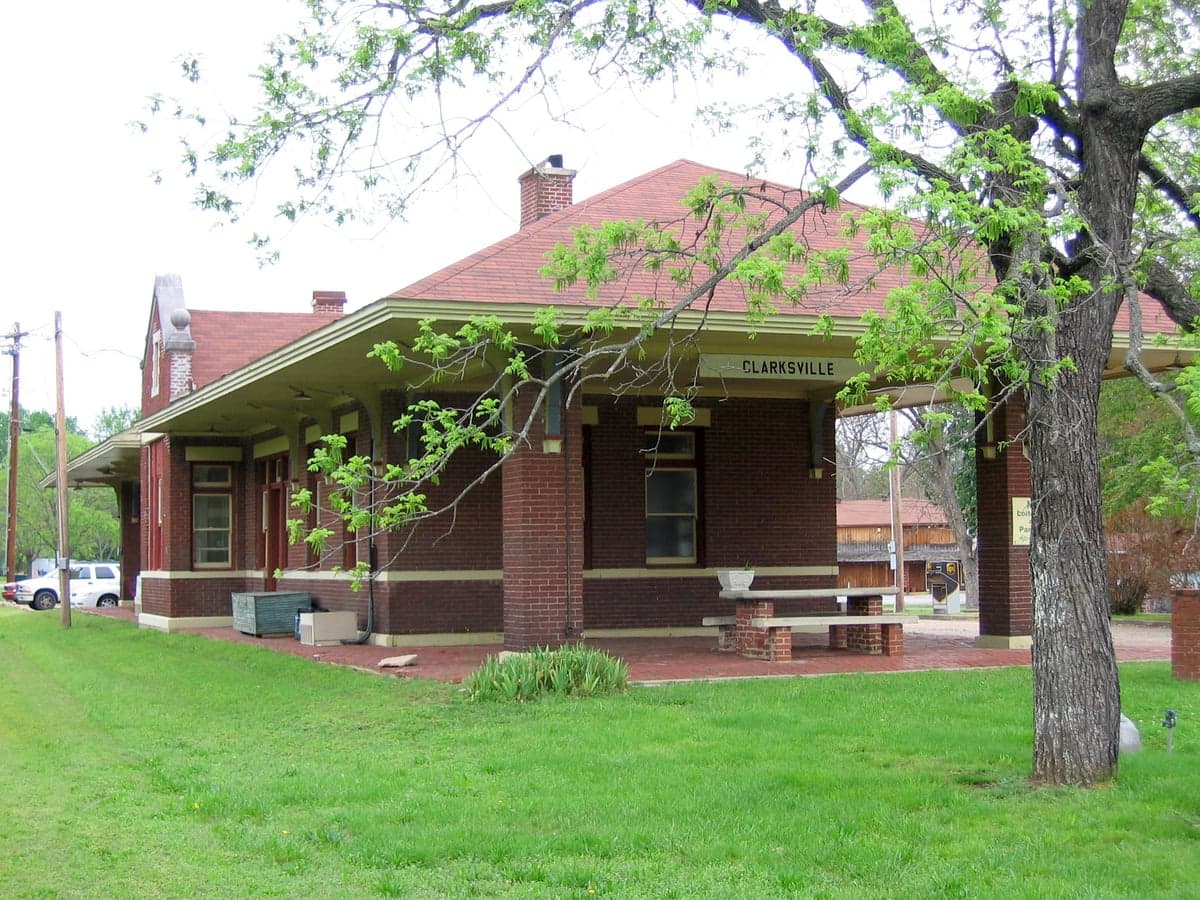
Photo: Wikipedia
Demographics of Clarksville, AR
Affluence Level in Clarksville, AR
A below-average socioeconomic profile. Incomes, home values, and educational attainment trail the U.S., with higher poverty and unemployment.
People of Clarksville, AR
The people of Clarksville, Arkansas, today number roughly 9,500, forming a community that is predominantly white (63.6%) with a substantial and growing Hispanic population (23.6%) and smaller but notable East and Southeast Asian (5.7%) and Black (3.4%) communities. The city’s character is defined by its role as a regional trade and education hub, anchored by the University of the Ozarks, and by a population that is younger and more diverse than the surrounding Johnson County countryside. With a foreign-born share of 12.5%—nearly triple the national average—Clarksville is one of the most ethnically diverse small cities in the Arkansas River Valley, a fact that shapes both its economy and its social fabric.
How the city was settled and grew
Clarksville’s original population was drawn by the promise of fertile bottomland along the Arkansas River and by the arrival of the Little Rock and Fort Smith Railroad in the 1870s. The town was formally incorporated in 1848, but its real growth began after the Civil War, when Anglo-American farmers from Tennessee and the Upper South moved in to cultivate cotton and corn. These early settlers built their homes in what is now the Historic Downtown district, centered around Main Street and the Johnson County Courthouse, and in the North Clarksville neighborhood, where modest frame houses still line the streets. By the early 1900s, a small Black community had formed in the South Clarksville area, near the railroad tracks, working as sharecroppers and domestic laborers. The first significant non-white wave came during the Great Migration, but Clarksville’s Black population never grew large; the 3.4% share today reflects that historic pattern of limited in-migration.
Modern era (post-1965)
The post-1965 Immigration and Nationality Act reshaped Clarksville’s demographics more dramatically than any event since the railroad. The most visible change came in the 1990s and 2000s, when Hispanic immigrants—primarily from Mexico and Central America—arrived to work in the region’s poultry processing plants and construction industry. They settled heavily in the West Clarksville neighborhood, near the industrial parks along Highway 64, and in the University Heights area around the University of the Ozarks, where many families sought better schools. Today, the Hispanic population of 23.6% is concentrated in these two areas, with Spanish-language signage and tiendas now common along the commercial corridors. A smaller but notable East and Southeast Asian community (5.7%)—largely Vietnamese and Filipino families—arrived in the same period, drawn by jobs at the Tyson Foods plant in nearby Scranton and by the university’s international student program. They are most visible in the East Clarksville neighborhood, near the Arkansas River bridge, where several Asian-owned grocery stores and restaurants have opened. The white population, while still the majority, has aged and suburbanized, with many families moving to newer subdivisions in the Lakeview Estates area on the city’s northern edge, creating a subtle but real pattern of ethnic clustering.
The future
Clarksville’s population is heading toward greater diversity, but not toward rapid homogenization. The Hispanic share is likely to continue growing, driven by both immigration and higher birth rates, and could approach 30% within a decade. The East and Southeast Asian community appears stable, sustained by university enrollment and family reunification, but not expanding quickly. The white population is slowly declining in absolute numbers as older residents move to retirement communities in larger cities and younger families choose the newer subdivisions. The city is not tribalizing into hostile enclaves—intermarriage between Hispanic and white residents is common—but distinct neighborhoods are likely to persist. The West Clarksville Hispanic corridor will probably become more established, with more bilingual services and businesses, while Lakeview Estates will remain predominantly white and English-dominant. The Black and Indian subcontinent populations (0.0%) are negligible and unlikely to change significantly without a major employer or refugee resettlement program.
For someone moving in now, Clarksville is becoming a small city where diversity is a fact of daily life, not a political abstraction. The schools are increasingly bilingual, the local economy depends on immigrant labor, and the social landscape is more layered than the county’s rural reputation suggests. A newcomer should expect a community that is conservative in its politics but pragmatic in its daily interactions—a place where the Hispanic bakery and the Southern Baptist church sit on the same block, and where the demographic future is already visible in the elementary school classrooms.

* Values derived from national, state, county, city and local statistics and may differ in a specific area. Last updated: 2026-04-30T01:06:46.000Z
Narrative content on this page is AI-generated and may contain mistakes. Verify any details that matter before acting on them.
ReloMaps may earn a commission from affiliate links at no extra cost to you.

