 Popular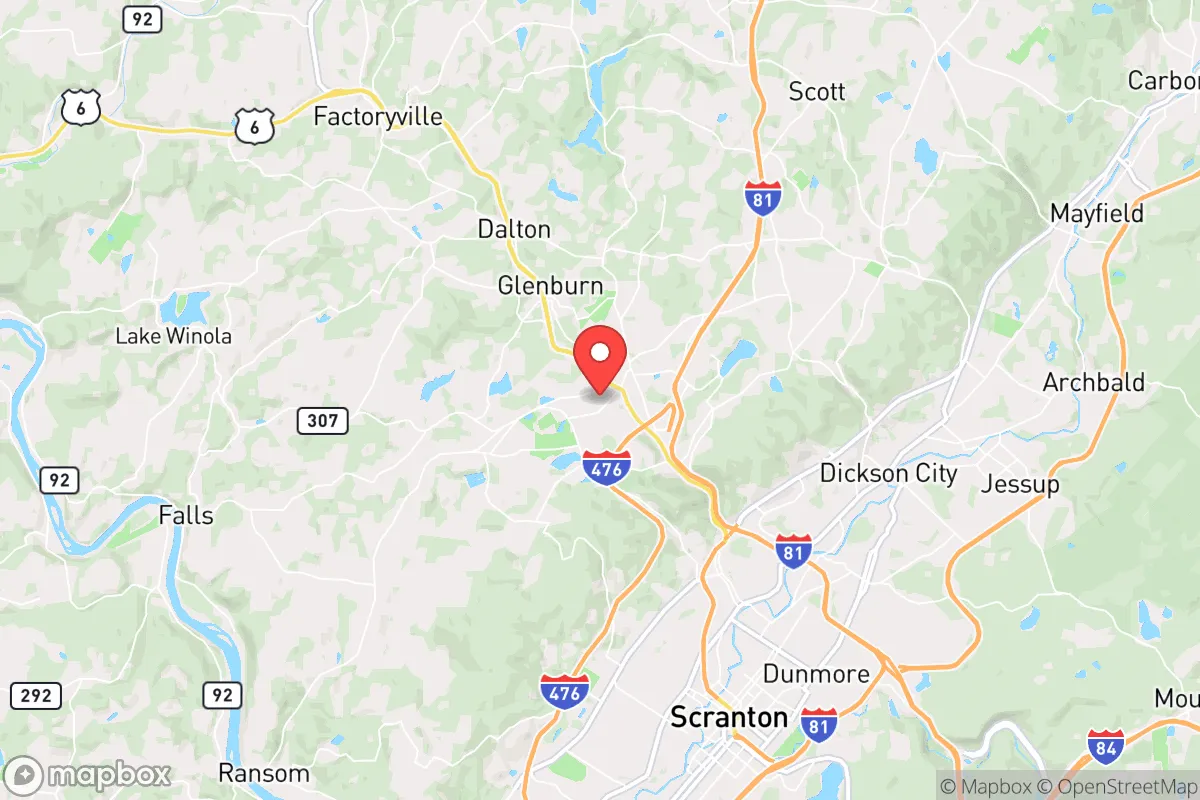
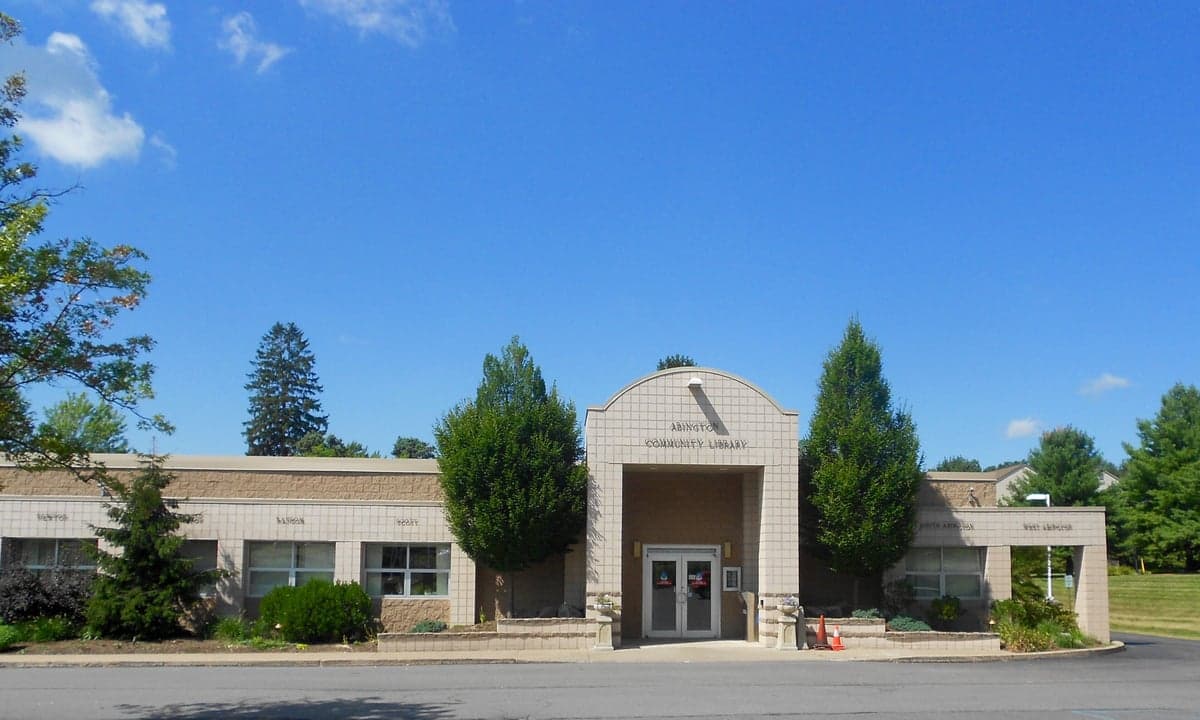
Photo: Wikipedia
Political ClimatePolitical Climate in Clarks Summit, PA
District shown is the primary district for this city’s centroid. Cities may span multiple districts.
Local Political AnalysisPolitical Analysis of Clarks Summit, PA
Clarks Summit leans reliably Republican, with a Cook PVI of R+4, meaning the area consistently votes about four points more conservative than the national average. This isn't a deep-red stronghold, but it's a solidly center-right community where Republicans have a clear edge in local and federal elections. The surrounding Lackawanna County has been trending more Democratic in recent cycles, but Clarks Summit itself—a small borough in the northern part of the county—has held its conservative character, partly due to its older, more established population and a strong base of small-business owners and professionals. The trajectory here is stable: no dramatic swing left or right, but a slow, steady alignment with the broader suburban Republican pattern seen across northeastern Pennsylvania.
How it compares
Pennsylvania as a whole is a true battleground state, with a Cook PVI of EVEN—perfectly split between the two parties. Clarks Summit’s R+4 lean is a meaningful contrast to the state’s overall neutrality. For context, the nearby city of Scranton, just a 10-minute drive south, leans Democratic by about D+10, while the rural townships to the north and west, like Dalton and Factoryville, are often R+6 or R+8. This makes Clarks Summit a kind of political middle ground within the region: more conservative than the urban core of Lackawanna County, but less intensely red than the deep rural areas. In state-level races, the borough often votes Republican by margins of 55-60%, while statewide Democrats like Josh Shapiro or Bob Casey can still pull 40-45% here, reflecting a pragmatic, not ideological, conservatism.
What this means for residents
For conservative residents, Clarks Summit offers a comfortable environment where their views are the norm. Local government, school board meetings, and civic organizations tend to reflect center-right priorities, like fiscal caution and support for law enforcement. Republican candidates can expect a friendly reception, and conservative social values are generally respected in public discourse. For liberal residents, the picture is more nuanced. You won’t feel isolated—there’s a visible Democratic minority, especially among younger families and professionals commuting to Scranton or Wilkes-Barre—but you’ll likely be in the minority in most neighborhood conversations. Progressive policy proposals, like rent control or defunding the police, get little traction here. That said, the area is not hostile; most political disagreements are handled with the polite, small-town civility typical of northeastern Pennsylvania. The practical effect is that both sides can live comfortably, but conservatives will find their voice carries more weight in local decisions.
Culturally, Clarks Summit distinguishes itself from the surrounding region by its strong sense of local identity and a slightly more affluent, educated demographic. The borough has a historic downtown with independent shops and a farmers market, which gives it a quasi-progressive vibe that doesn’t fully align with its voting record. Policy-wise, the area tends to prioritize property tax relief and school funding over social issues, reflecting a pragmatic, "live and let live" attitude. You won’t see the same level of culture-war intensity here as in more polarized parts of the state, like central Pennsylvania or the Philadelphia suburbs. Instead, the political climate is best described as steady, traditional, and quietly Republican—a place where the biggest political fights are more likely to be about zoning or road repairs than national controversies. That’s the Clarks Summit way: conservative, but not combative.

State Political ClimatePolitical Climate in Pennsylvania
State Political AnalysisPolitical Environment in the State
Pennsylvania is the ultimate swing state, with a Cook PVI of EVEN that perfectly captures its 50/50 split. Over the past 20 years, the state has shifted from a reliably blue-leaning battleground (voting for Democrats in every presidential election from 1992 to 2012) to a true toss-up, with Donald Trump winning it in 2016 by 44,000 votes and Joe Biden flipping it back in 2020 by just 80,000 votes. The dominant coalitions are a shrinking but still potent union-and-urban base in Philadelphia and Pittsburgh versus a growing, energized conservative coalition in the exurbs, small towns, and vast rural stretches. The trajectory is a slow, grinding realignment: the Philly suburbs are getting bluer, the rural interior is getting redder, and the old "blue dog" Democratic strongholds in places like Scranton and Erie are now hyper-competitive.
Urban vs. rural divide
The political map of Pennsylvania is a story of two states. The southeastern corner, anchored by Philadelphia and its inner-ring suburbs (Montgomery, Delaware, Chester counties), is the engine of the Democratic vote — Philadelphia alone delivers about 600,000 votes for the Democratic nominee. The Pittsburgh metro area, while historically union-Democratic, has shifted right in its outer suburbs (Westmoreland County went from blue to deep red), though Allegheny County itself remains solidly blue. The real action is in the "T" — the rural spine running from the New York border down through the center and west. Counties like Tioga, Bradford, and Bedford routinely vote 75%+ Republican. The critical swing zones are the northeastern and northwestern corners: Lackawanna County (Scranton) and Erie County are classic "blue wall" counties that flipped to Trump in 2016 and back to Biden in 2020. The fastest-growing conservative stronghold is the Lehigh Valley (Allentown, Bethlehem, Easton), where the suburbs are trending red while the cities stay blue, creating a microcosm of the state's overall split.
Policy environment
Pennsylvania's policy environment is a patchwork that reflects its divided government. The state has a flat income tax of 3.07% — one of the lowest flat rates in the country — and a sales tax of 6% (8% in Philadelphia and Pittsburgh). Property taxes are high, averaging about 1.5% of home value, and are a perennial political flashpoint. The state has no right-to-work law, and union influence remains strong in the public sector and construction trades. Education policy is locally controlled, with 500 school districts; the state's charter school law is among the most permissive in the Northeast, but funding equity is a constant legal battle. Healthcare is dominated by two large insurers (Highmark and UPMC), creating a quasi-monopoly in western PA. Election laws are moderately restrictive: no-excuse mail-in voting was enacted in 2019 (Act 77) but remains controversial, with no voter ID for in-person voting (though first-time voters must show ID). The state has no permitless carry for firearms, but it is a "shall issue" state for concealed carry permits with no discretionary denial.
Recent policy direction
Over the past five years, Pennsylvania has moved in a moderately conservative direction on fiscal issues but remains mixed on social and liberty-related policies. In 2022, the legislature passed and the governor signed Act 74, which eliminated the state's "gun show loophole" by requiring background checks on all private long-gun sales — a significant restriction that angered gun rights advocates. However, in 2023, the legislature overrode Governor Josh Shapiro's veto to pass HB 979, which allows school districts to employ armed school security officers without requiring them to be police officers. On education, the state enacted Act 55 of 2023, which expanded the Educational Improvement Tax Credit (EITC) program, funneling more money to private and parochial school scholarships. On parental rights, the state has no "Don't Say Gay" law, but several school boards in conservative counties have passed policies requiring parental notification for any changes to a student's gender identity. On medical freedom, Pennsylvania never enacted a COVID-19 vaccine mandate for state employees, and the legislature passed SB 618 in 2022, which prohibits employers from requiring a COVID vaccine as a condition of employment unless they offer a medical or religious exemption. On property rights, the state has no statewide rent control, though Philadelphia has its own ordinance. On voting, the legislature has repeatedly tried to tighten mail-in ballot rules (requiring a signature match, banning drop boxes), but Governor Shapiro has vetoed those bills, keeping the 2020-era rules in place.
Civil unrest & political movements
Pennsylvania has seen its share of political flashpoints. The 2020 election aftermath was particularly intense in Philadelphia, where the Republican City Committee and Trump campaign alleged irregularities at the city's convention center counting site, leading to protests and a heavy police presence. The state was ground zero for the "Stop the Steal" movement, with rallies at the state capitol in Harrisburg and at the Philadelphia counting site. On the left, the Black Lives Matter protests in Philadelphia in 2020 were among the largest in the country, with looting and property damage that led to a curfew and National Guard deployment. Immigration politics are relatively low-key compared to border states, but Philadelphia is a self-declared "sanctuary city" (Executive Order 5-17), limiting cooperation with ICE. The city of Lancaster has also adopted a "welcoming city" ordinance. On the right, the Pennsylvania Firearm Owners Association is one of the most active state-level gun rights groups in the country, regularly suing municipalities over local gun ordinances. There is no serious secession or nullification movement, but the rural-urban cultural divide is palpable — you'll see "FJB" flags on pickup trucks in York County and "Defund the Police" signs in Pittsburgh's East End within the same drive.
Projection
Over the next 5-10 years, Pennsylvania will likely remain a toss-up, but the demographic trends favor a slow shift toward the GOP in statewide races. The state is losing population in the rural north and west while gaining in the southeastern exurbs (Chester, Berks, Lehigh counties) and the Poconos (Monroe County), which are attracting New York and New Jersey transplants. These newcomers tend to be more moderate than the deep-blue Philly base but also less culturally conservative than native Pennsylvanians — they want low taxes and good schools but are socially liberal. The wild card is the I-81 corridor (Harrisburg to Scranton), which is seeing an influx of warehouse and logistics jobs and a younger, more diverse population that could shift the balance. The state's aging population (4th oldest in the nation) means the electorate will become more conservative on economic issues (property taxes, pensions) but may moderate on social issues as younger voters age in. Expect continued divided government: a Republican legislature and a Democratic governor through at least 2030, meaning gridlock on major policy shifts. A new resident moving in now should expect the same political whiplash they see nationally — close elections, constant campaign ads, and a state that feels like it's holding its breath every two years.
For a new resident, the bottom line is that Pennsylvania offers a genuine swing-state experience. If you're conservative, you'll find your people in the rural counties and exurbs, with a state legislature that reliably passes conservative bills (even if the governor vetoes them). If you're liberal, you'll find a deep bench of progressive activism in the cities and inner suburbs, with a governor who has veto power over the most aggressive legislation. The practical takeaway: your day-to-day life will be shaped more by your county and municipality than by the state as a whole. A conservative family moving to Franklin County (Chambersburg) will find a low-tax, gun-friendly, church-heavy community; a liberal family moving to Philadelphia's Mount Airy neighborhood will find a walkable, diverse, progressive enclave. The state's political climate is a mirror of the nation's — divided, passionate, and unpredictable — but with a distinct Pennsylvania flavor of hard-nosed pragmatism and a deep respect for local control.
* Values derived from national, state, county, city and local statistics and may differ in a specific area. Last updated: 2026-08-24T20:05:33.000Z
Narrative content on this page is AI-generated and may contain mistakes. Verify any details that matter before acting on them.
ReloMaps may earn a commission from affiliate links at no extra cost to you.

