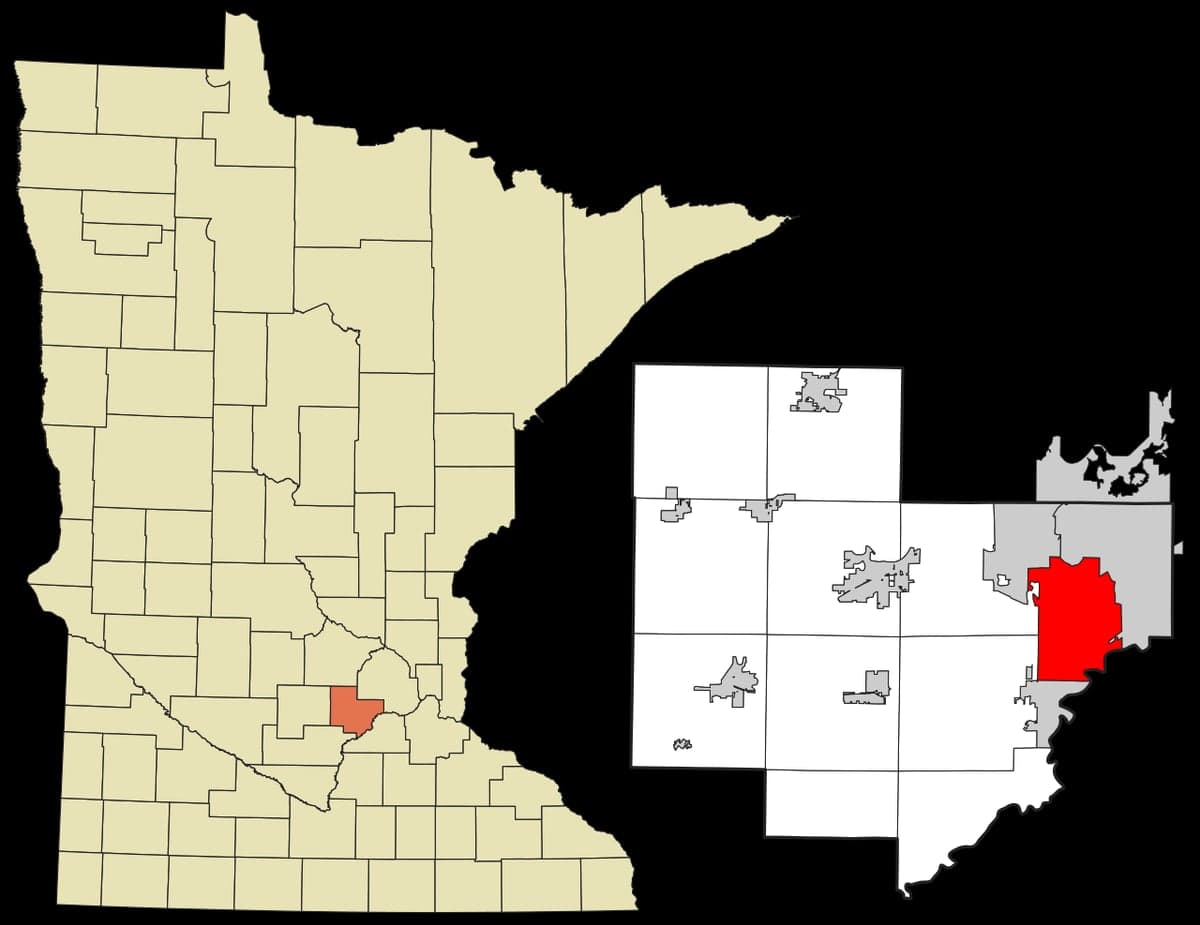
Photo: Wikipedia
Strategic Assessment of Chaska, MN
Meaningful friction. Expect exposure to either population pressure, blast zones, or natural disaster risk. Consider buying a retreat property.
What does the Strategic Assessment tell us?
Our Strategic Assessment grades tactical survivability of an area. Major population centers, military targets, fallout zones, natural disasters, and border exposure all drive risk — lower exposure means a more defensible position in a crisis.
This is heavily inspired by Joel Skousen's Strategic Relocation book. Highly recommended you checkout the book ($)What does this tell us?
Our Strategic Assessment grades tactical survivability of an area. Major population centers, military targets, fallout zones, natural disasters, and border exposure all drive risk — lower exposure means a more defensible position in a crisis.
This is heavily inspired by Joel Skousen's Strategic Relocation book. Highly recommended you checkout the book ($)Strategic Pillars

Key Distances
Regional Safe Places
Below is our recommended "safe zones" in Minnesota and the surrounding area based on our strategic heuristics. For most people, it's unrealistic to live in a “safe zone” full-time due to work, family or other personal reasons. They tend to be more rural. However, many of these areas are perfect for second homes and retreat properties that double as a vacation home or even a short-term rental.
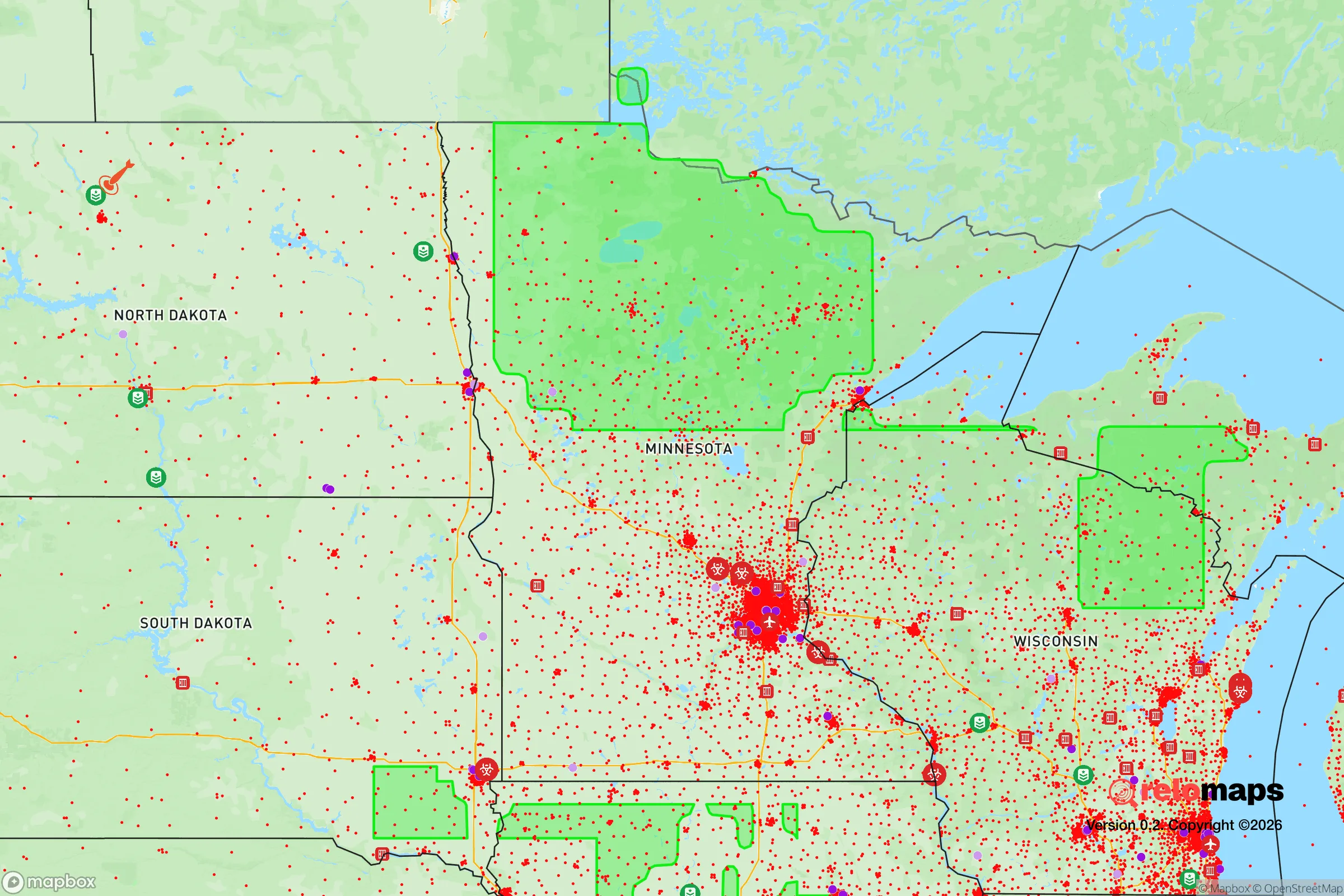
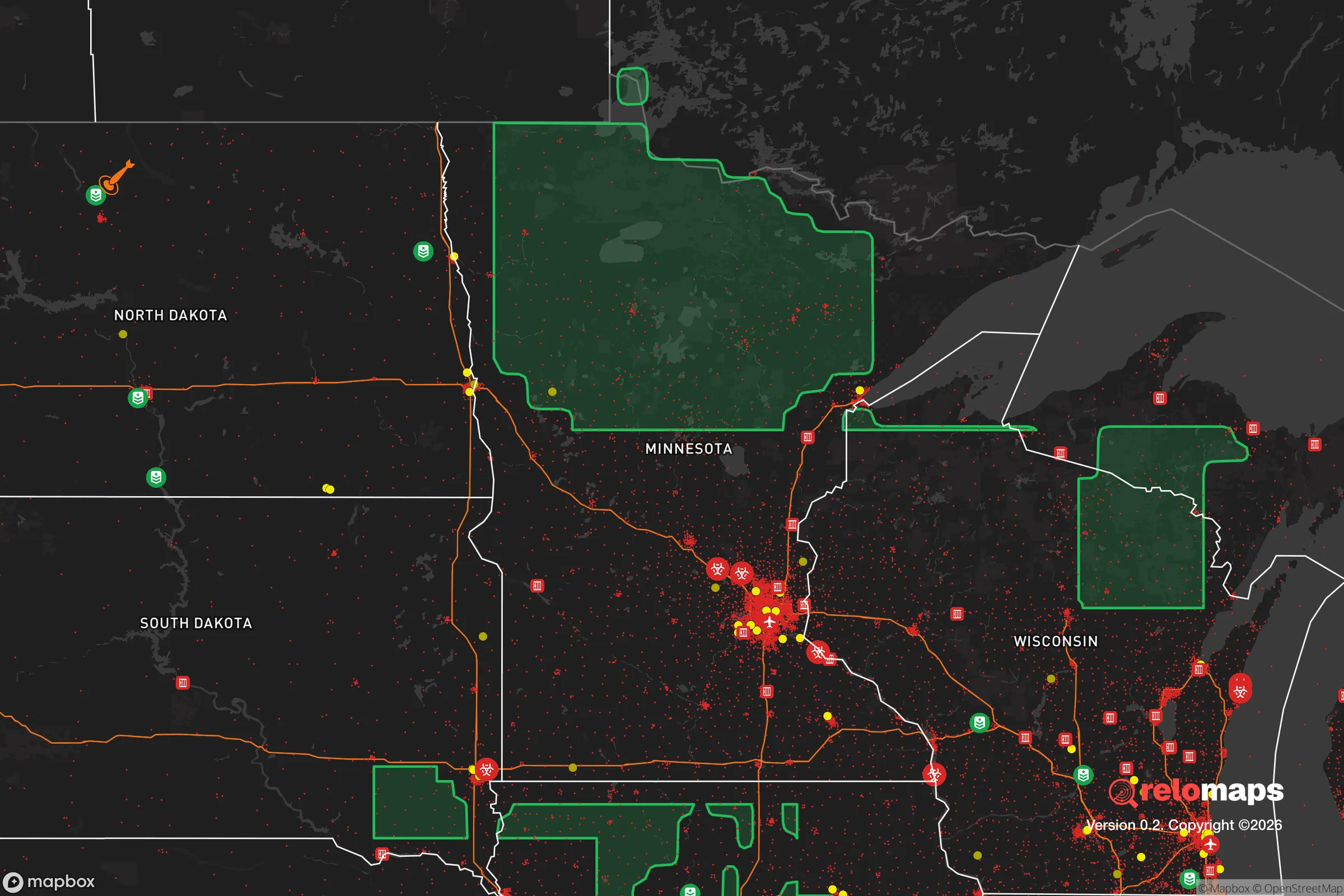


Important Note: For informational purposes only. This does not mean nothing bad ever happens in the green zones. Please use common sense. This is based on public data and modeled with AI. We tried to take a conservative approach but mistakes happen. We update this regularly as new information becomes available.
Solar Generator Recommendations
Backup power matters more here than in safer locations. We've picked three solar generators across budgets and capacity tiers — start with the budget unit if you only need a few essentials, or step up if you want to run a fridge and HVAC for days at a time.

Jackery Portable Power Station Explorer 300
Budget OptionPower on the Go: Weighing only 11 lbs, it's convenient to set up and store with book-sized foldable solar panels

BLUETTI Portable Power Station AC180
Designed for both indoor and outdoor scenarios, AC180 is highly capable as it has a robost capacity and continuous output power.

EF ECOFLOW DELTA Pro Ultra Power Station
Upgraded PickEcoFlow DELTA Pro Ultra is a whole-home energy system designed to grow with your family. Integrated with the Smart Home Panel 2, it scales to meet your evolving energy needs — keeping your home powered, intelligent, and secure through every stage of life.
We earn a commission, at no additional cost to you.
Strategic Assessment Analysis
Chaska, Minnesota, sits in a strategic sweet spot that many preppers overlook: close enough to the Twin Cities to access its resources, yet far enough to avoid the worst of a collapse scenario. The city’s position along the Minnesota River Valley provides natural defensibility and water access, while its status as a regional employment hub for companies like Beckman Coulter and Entegris means the local economy has real industrial backbone. For a conservative-leaning relocator weighing long-term resilience, Chaska offers a rare combination of suburban stability, rural adjacency, and infrastructure that could function independently during a crisis.
Geographic position and natural advantages for long-term survival
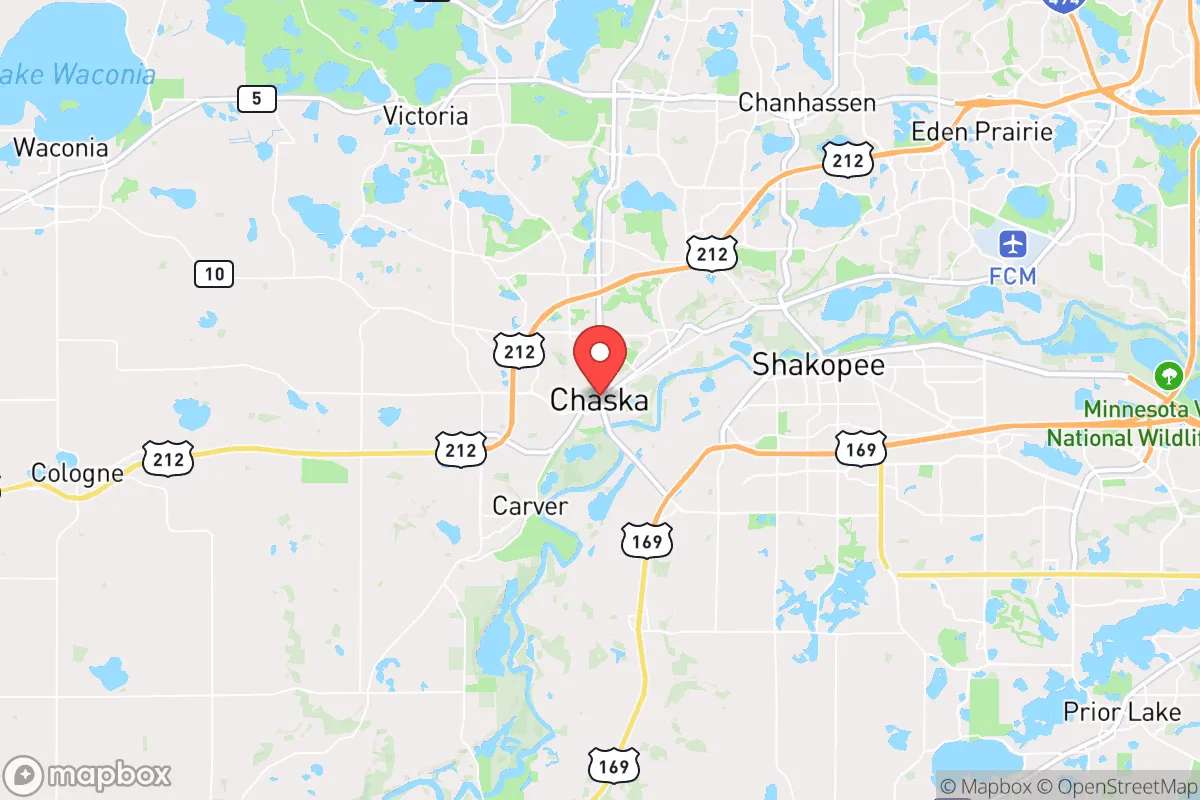
Chaska’s geography is its strongest card. The city sits on the south bank of the Minnesota River, with the Minnesota River Valley National Scenic Byway cutting through the area, providing both a natural barrier and a reliable water source. The surrounding Carver County is among the most productive agricultural counties in the state, with over 150,000 acres of cropland within a 20-mile radius. This means that even if supply chains break down, the local food production capacity is substantial. The terrain is gently rolling, with wooded bluffs and river bottoms that offer cover and concealment—useful for both hunting and avoiding unwanted attention. The area’s average annual rainfall of 30 inches and a growing season of roughly 150 days make it viable for subsistence farming, a key consideration for anyone planning to stay put through a prolonged disruption.
The city’s layout also favors defensibility. Chaska is not a sprawling suburb; it has a compact downtown core surrounded by rural buffers. The Minnesota River forms a natural moat to the north, while the Carver Park Reserve and Baylor Regional Park to the west and south provide thousands of acres of public land that could serve as a buffer zone or a source of game and forage. The US Highway 212 corridor runs east-west through town, but it’s a four-lane divided highway that can be easily monitored or blocked if needed. For a relocator, the key takeaway is that Chaska is not a choke point—it’s a place where you can see trouble coming and have options to move or hold.
Risks, exposures, and proximity to fallout-relevant landmarks
No location is perfect, and Chaska has its share of vulnerabilities. The most obvious is its proximity to the Twin Cities metropolitan area, roughly 25 miles northeast. In a scenario involving civil unrest, mass casualty events, or a coordinated attack, the Twin Cities would be a primary target. The Minneapolis-St. Paul International Airport, the Mall of America, and the University of Minnesota are all high-value symbolic and logistical targets. Chaska is far enough to avoid the immediate blast radius of a conventional attack, but it’s close enough that fallout, refugees, and secondary effects like power grid failures would reach it within hours.
There are also specific industrial risks. The Xcel Energy’s Blue Lake Generating Plant in Shakopee, just 10 miles east, is a natural gas facility that could be a target for sabotage. The 3M plant in Cottage Grove (about 30 miles east) handles hazardous chemicals. And the Monticello Nuclear Generating Plant, about 40 miles northwest, is a potential fallout source in a worst-case scenario. Prevailing winds in the region are from the northwest, meaning Chaska would be downwind of Monticello in a release event. That said, the plant’s containment structures are robust, and the risk is low-probability but high-consequence. For a prepper, this means having a fallout shelter plan and a stockpile of potassium iodide is not paranoid—it’s prudent.
On the social risk side, Carver County is overwhelmingly white (88%) and politically conservative relative to the state, with a median household income of $104,000. This demographic stability reduces the likelihood of localized civil unrest compared to more diverse and economically stressed areas. However, the county’s affluence also means that during a crisis, Chaska could become a target for looting from less-prepared populations in nearby cities like Shakopee or Prior Lake. The Carver County Sheriff’s Office is well-funded and professional, but in a widespread collapse, law enforcement would be stretched thin. A relocator should plan for self-defense and neighborhood mutual aid, not rely on official protection.
Practical resilience for a relocator: food, water, energy, and defensibility
Chaska’s practical resilience is above average for a suburb of its size. The city draws its water from the Prairie du Chien-Jordan aquifer, a deep, protected groundwater source that is less vulnerable to surface contamination than river-fed systems. The Chaska Water Treatment Plant has backup generators, but a relocator should still have a personal well or a means to purify surface water from the Minnesota River. The river itself is navigable by small boat, offering a secondary transport route if roads are blocked.
Food security is strong. The Chaska Farmers Market operates from May to October, and the surrounding area has numerous CSAs (community-supported agriculture) and u-pick farms. For long-term storage, the Carver County Extension Office offers canning and food preservation classes. The Chaska Cub Foods and Walmart are standard grocery outlets, but a prepper should establish relationships with local farmers directly—names like Schumacher’s Farm and Larson Farms are worth knowing. The Chaska Food Shelf is a resource for those in need, but in a crisis, barter networks and private stockpiles will matter more.
Energy resilience is a mixed bag. The local grid is served by Xcel Energy, which has a history of storm-related outages. The Chaska Public Works Department maintains a backup generator for critical infrastructure, but individual homes are not prioritized. Solar potential is moderate—Minnesota gets about 4.5 peak sun hours per day in summer, dropping to 1.5 in winter. A relocator should invest in a generator with a 200-amp transfer switch and a stockpile of propane or diesel. Wood heat is a viable backup, as the area has abundant hardwood forests, but burning without proper permits could attract attention.
Defensibility is where Chaska shines. The city’s layout, with its river to the north and parks to the west and south, creates natural chokepoints. The Chaska Police Department has about 25 sworn officers, but in a crisis, a well-organized neighborhood watch could cover the gaps. The Carver County Sheriff’s Office has a SWAT team and a drone unit, but these are assets for short-term emergencies, not long-term occupation. A relocator should identify a rally point—perhaps the Chaska Community Center or a private property near the river—and establish a communication plan with like-minded neighbors. The Minnesota Department of Natural Resources maintains the Minnesota River State Trail, which could serve as a patrol route or escape corridor.
The overall strategic picture for Chaska is one of calculated risk. It is not a remote bunker location, nor is it a high-risk urban center. It is a middle-ground option that offers a balance of resources, defensibility, and community stability. For a conservative relocator who wants to maintain a normal life while being prepared for the worst, Chaska provides a solid foundation. The key is to treat it as a base of operations, not a fortress—build local relationships, stockpile supplies, and have a plan for both staying and leaving. The Minnesota River Valley has been a corridor of human activity for millennia; with the right mindset, it can be a corridor of survival for you and your family.

* Values derived from national, state, county, city and local statistics and may differ in a specific area. Last updated: 2026-04-19T21:25:04.000Z
Narrative content on this page is AI-generated and may contain mistakes. Verify any details that matter before acting on them.
ReloMaps may earn a commission from affiliate links at no extra cost to you.

