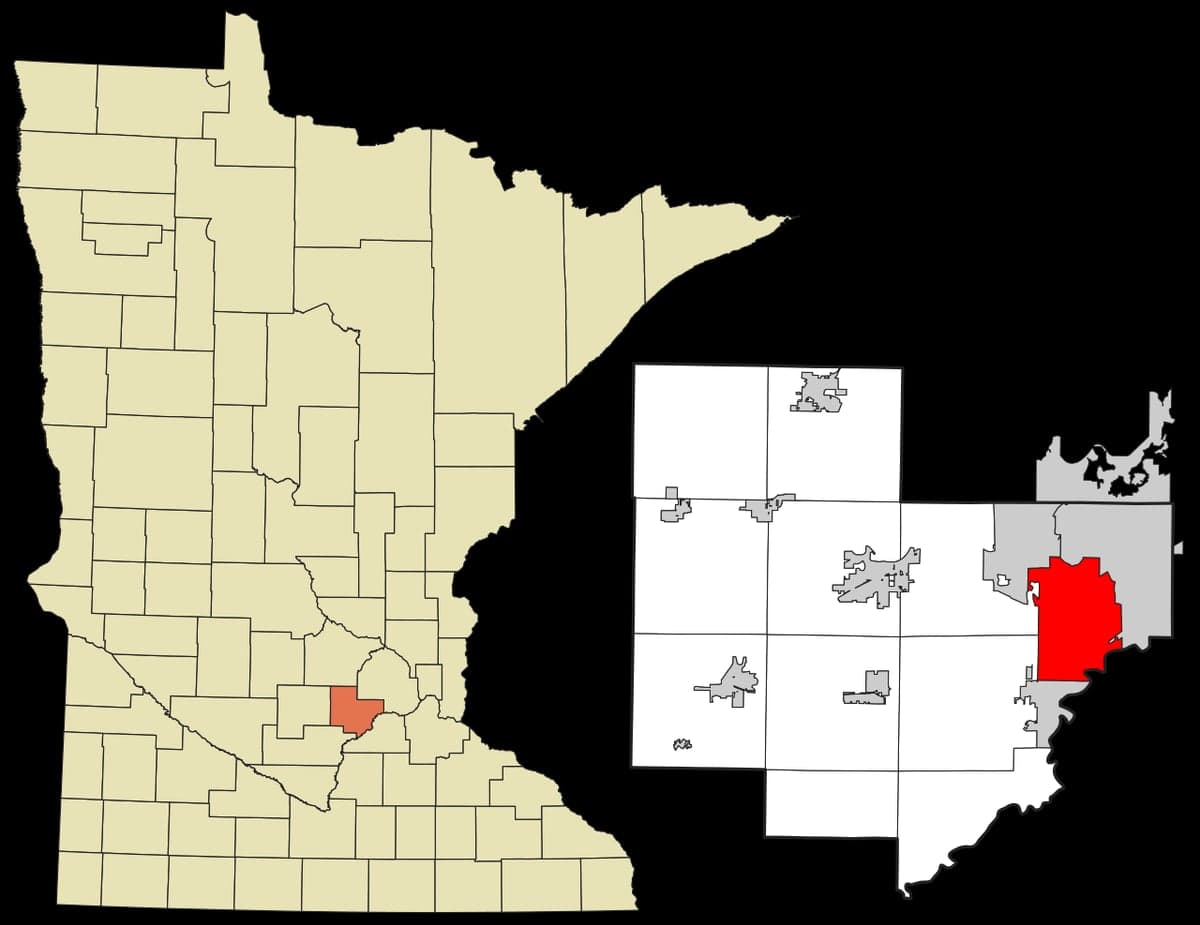
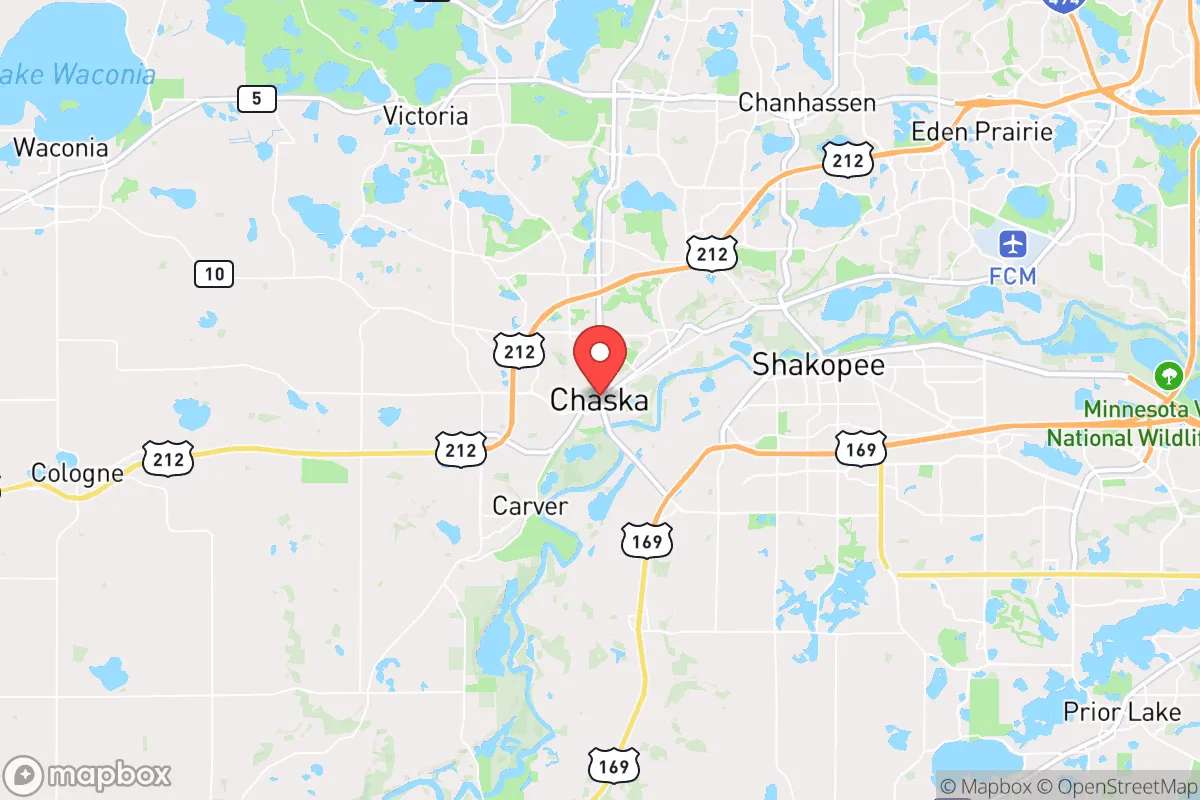
Photo: Wikipedia
Personal Sovereignty in Chaska, MN
Moderate friction. Expect trade-offs in some aspect of personal liberty and independence.
What does Personal Sovereignty tell us?
Personal Sovereignty measures your capacity for self-reliance and independence with minimal government friction. Higher scores mean fewer barriers between you and the way you want to live... but it assumes you have the space you need and good neighbors.
What does this tell us?
Personal Sovereignty measures your capacity for self-reliance and independence with minimal government friction. Higher scores mean fewer barriers between you and the way you want to live... but it assumes you have the space you need and good neighbors.
State Policy
Energy independence: Importer (20% of energy produced in-state)
Personal Liberty
Homesteading

Personal Liberty Analysis
Chaska, Minnesota, offers a mixed bag for those prioritizing personal sovereignty, where a strong local sense of self-reliance clashes with a state-level regulatory environment that leans progressive. While the city itself fosters a community-oriented, family-first atmosphere, residents must navigate Minnesota’s broader legal landscape, which includes relatively high taxes and a growing list of state mandates. For the strategic relocator—especially a prepper or conservative-minded individual—the key is understanding that Chaska provides a solid foundation for autonomy at the local level, but requires active engagement and legal awareness to shield against state overreach. The trade-off is a high quality of life and a like-minded community versus a state government that increasingly centralizes control over health, education, and property.
Tax burden and regulatory posture in Chaska and Carver County
Minnesota’s tax burden is among the highest in the nation, and Chaska residents feel this directly. The state’s progressive income tax tops out at 9.85%, and combined state and local sales tax in Carver County is around 7.775%. Property taxes in Chaska are moderate for the metro area, but still a significant annual expense, especially on larger lots. The regulatory posture is similarly top-heavy: Minnesota has strict environmental regulations, a robust state building code, and a Department of Revenue that aggressively pursues compliance. For a prepper, this means that any off-grid or self-sufficient project—like installing solar panels, rainwater collection, or a large garden—must be permitted and inspected, adding cost and bureaucracy. However, Carver County is generally more business-friendly and less restrictive than Hennepin or Ramsey counties, with a local government that tends to favor property rights and minimal interference in daily life. The real burden comes from St. Paul, not Chaska City Hall.
Self-defense and gun law specifics in Chaska and Minnesota
Minnesota is a “shall-issue” state for concealed carry permits, and Chaska has no additional local restrictions beyond state law. This means a law-abiding resident can obtain a permit to carry with a background check and training course, and the process is straightforward. However, the state has recently moved to expand background checks and implement a “red flag” law (Extreme Risk Protection Order), which allows courts to temporarily seize firearms from individuals deemed a risk. This is a significant concern for those who view self-defense as a fundamental right, as it creates a legal mechanism for disarmament without due process. Open carry is legal without a permit, but local law enforcement may view it with suspicion. For the prepper, the practical reality is that you can own and carry firearms in Chaska, but you must stay informed about evolving state laws and be prepared to defend your rights legally. The local sheriff’s office in Carver County is generally supportive of Second Amendment rights, but they are bound by state statutes.
Self-reliance and homesteading viability: lot sizes, zoning, and off-grid feasibility
Chaska’s zoning is a mixed picture for the serious homesteader. Within city limits, standard residential lots are typically one-quarter to one-half acre, which limits large-scale gardening, livestock, or significant off-grid infrastructure. The city code restricts chickens, bees, and other small livestock to specific zones and requires permits. True off-grid living—solar panels with battery storage, well water, septic—is effectively impossible within city limits due to building codes and utility connection requirements. However, the surrounding Carver County townships, just a few miles outside Chaska, offer a different story. There, you can find five-acre parcels with agricultural zoning, allowing for gardens, orchards, chickens, goats, and even a small horse. Off-grid solar is permitted with proper permitting, and rainwater collection for irrigation is generally allowed. For the prepper, the strategic move is to live in Chaska for community and schools, but buy land in the county for a retreat or serious homesteading operation. The city itself is not a self-sufficiency zone, but it’s a short drive from one.
Personal liberties: parental rights, medical autonomy, speech, and property
This is where Chaska and Minnesota diverge most sharply for the conservative relocator. Parental rights are under active debate in the state. Minnesota has a strong public school system, but the state Department of Education has pushed progressive curricula, including comprehensive sex education and LGBTQ+ inclusive policies, which may conflict with some families’ values. School choice exists via charter schools and open enrollment, but the state mandates certain health and vaccination requirements for school attendance. Medical autonomy is similarly constrained: Minnesota has strict vaccine mandates for schoolchildren (with limited exemptions) and a state-run health insurance exchange that limits private options. During the COVID-19 pandemic, the state imposed broad mandates and restrictions, which many viewed as overreach. Free speech is protected, but local ordinances on noise, signage, and public assembly are enforced. Property rights are generally respected, but the state’s environmental regulations can limit what you do on your land, especially near waterways or wetlands. The bottom line: Chaska offers a community where conservative values are common, but the legal framework is increasingly stacked against full personal autonomy. You can live freely here, but you must be vigilant and politically active to preserve that freedom.
Overall, Chaska provides a relatively high degree of personal sovereignty compared to the urban core of Minneapolis or St. Paul, but it is not a libertarian haven. The state of Minnesota exerts significant control over taxation, healthcare, education, and firearms, and those controls are likely to increase. For the survivalist or prepper, Chaska’s real value lies in its strong community ties, low crime, and proximity to rural land where true self-reliance is possible. It is a place where you can build a life of quiet independence, but only if you are willing to engage with the system, pay the taxes, and fight for your rights at the ballot box and in the courts. Compared to states like Texas, Idaho, or Montana, Minnesota is a more challenging environment for personal sovereignty. But compared to the coastal states or the inner cities, Chaska is a solid, defensible position. It is not a fortress, but it is a good base camp.

* Values derived from national, state, county, city and local statistics and may differ in a specific area. Last updated: 2026-04-19T21:25:04.000Z
Narrative content on this page is AI-generated and may contain mistakes. Verify any details that matter before acting on them.
ReloMaps may earn a commission from affiliate links at no extra cost to you.

