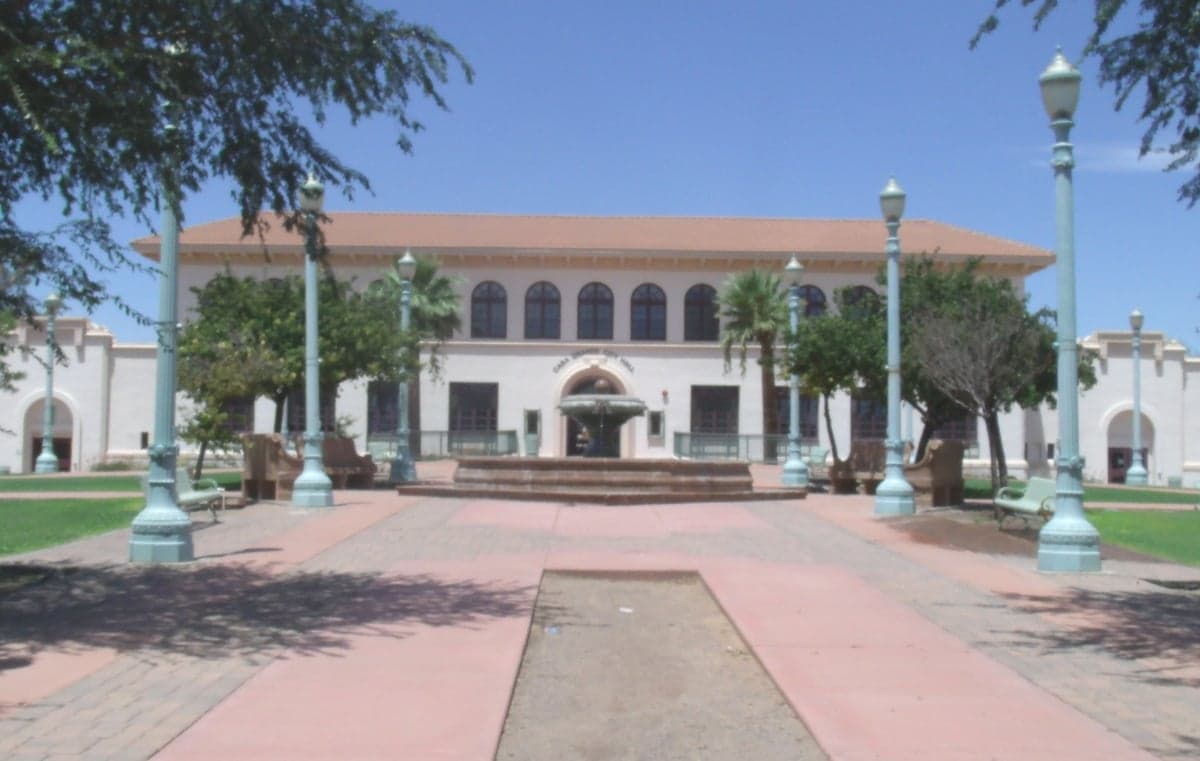
Photo: Wikipedia
Strategic Assessment of Casa Grande, AZ
Multiple tactical vulnerabilities. Population density, target proximity, or disaster risk are likely compounding. A retreat property and exit planning is required.
What does the Strategic Assessment tell us?
Our Strategic Assessment grades tactical survivability of an area. Major population centers, military targets, fallout zones, natural disasters, and border exposure all drive risk — lower exposure means a more defensible position in a crisis.
This is heavily inspired by Joel Skousen's Strategic Relocation book. Highly recommended you checkout the book ($)What does this tell us?
Our Strategic Assessment grades tactical survivability of an area. Major population centers, military targets, fallout zones, natural disasters, and border exposure all drive risk — lower exposure means a more defensible position in a crisis.
This is heavily inspired by Joel Skousen's Strategic Relocation book. Highly recommended you checkout the book ($)Strategic Pillars

Key Distances
Regional Safe Places
Below is our recommended "safe zones" in Arizona and the surrounding area based on our strategic heuristics. For most people, it's unrealistic to live in a “safe zone” full-time due to work, family or other personal reasons. They tend to be more rural. However, many of these areas are perfect for second homes and retreat properties that double as a vacation home or even a short-term rental.
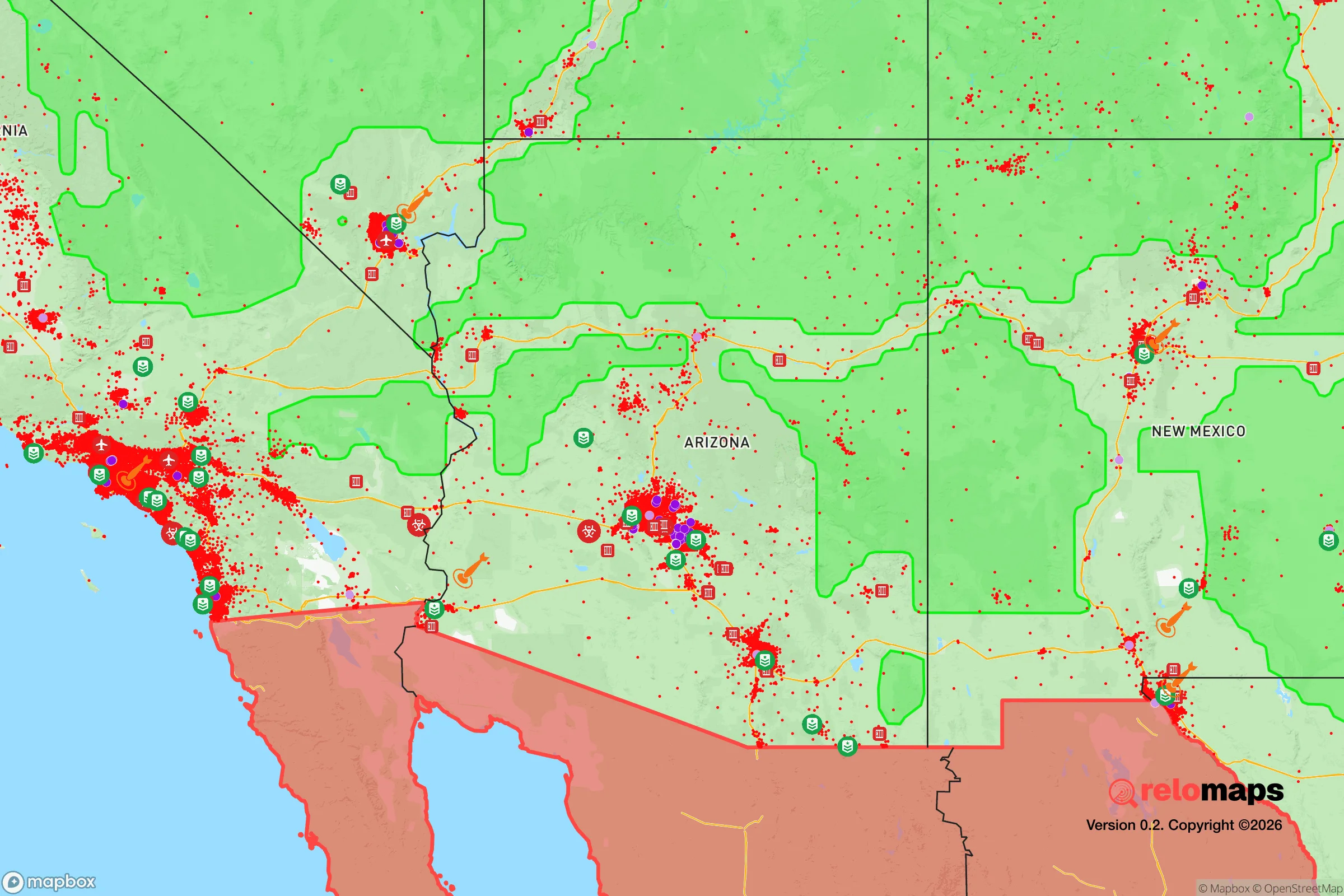
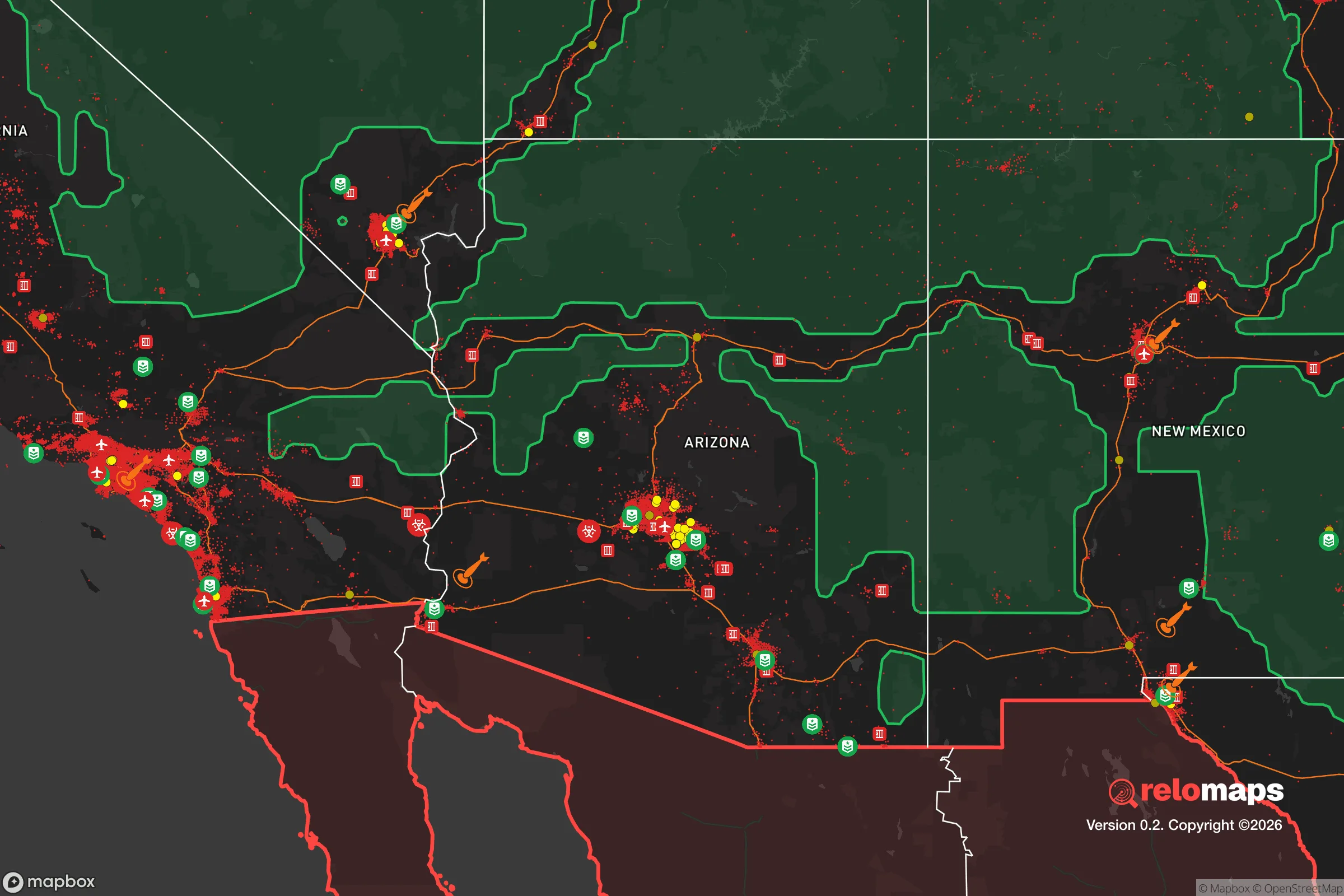


Important Note: For informational purposes only. This does not mean nothing bad ever happens in the green zones. Please use common sense. This is based on public data and modeled with AI. We tried to take a conservative approach but mistakes happen. We update this regularly as new information becomes available.
Solar Generator Recommendations
Backup power matters more here than in safer locations. We've picked three solar generators across budgets and capacity tiers — start with the budget unit if you only need a few essentials, or step up if you want to run a fridge and HVAC for days at a time.

Jackery Portable Power Station Explorer 300
Budget OptionPower on the Go: Weighing only 11 lbs, it's convenient to set up and store with book-sized foldable solar panels

BLUETTI Portable Power Station AC180
Designed for both indoor and outdoor scenarios, AC180 is highly capable as it has a robost capacity and continuous output power.

EF ECOFLOW DELTA Pro Ultra Power Station
Upgraded PickEcoFlow DELTA Pro Ultra is a whole-home energy system designed to grow with your family. Integrated with the Smart Home Panel 2, it scales to meet your evolving energy needs — keeping your home powered, intelligent, and secure through every stage of life.
We earn a commission, at no additional cost to you.
Strategic Assessment Analysis
Casa Grande, Arizona, sits in a geographic sweet spot that offers genuine strategic depth for those thinking seriously about resilience, but it’s not without its own set of exposures. Located roughly halfway between Phoenix and Tucson along the I-10 corridor, this city of about 60,000 provides a buffer from the immediate chaos of a major metropolitan collapse while still being close enough to access resources, medical care, and logistics if things hold together. The area’s position in the Sonoran Desert, with its dry climate and low population density relative to the urban cores, gives it a natural advantage for those looking to avoid the worst of civil unrest or mass casualty events that tend to concentrate in dense, politically fractured cities. For a conservative-leaning relocator—whether single or raising a family—Casa Grande offers a practical balance of isolation and connectivity, but the devil is in the details of what lies nearby and what the land itself provides.
Geographic position and natural advantages for long-term stability
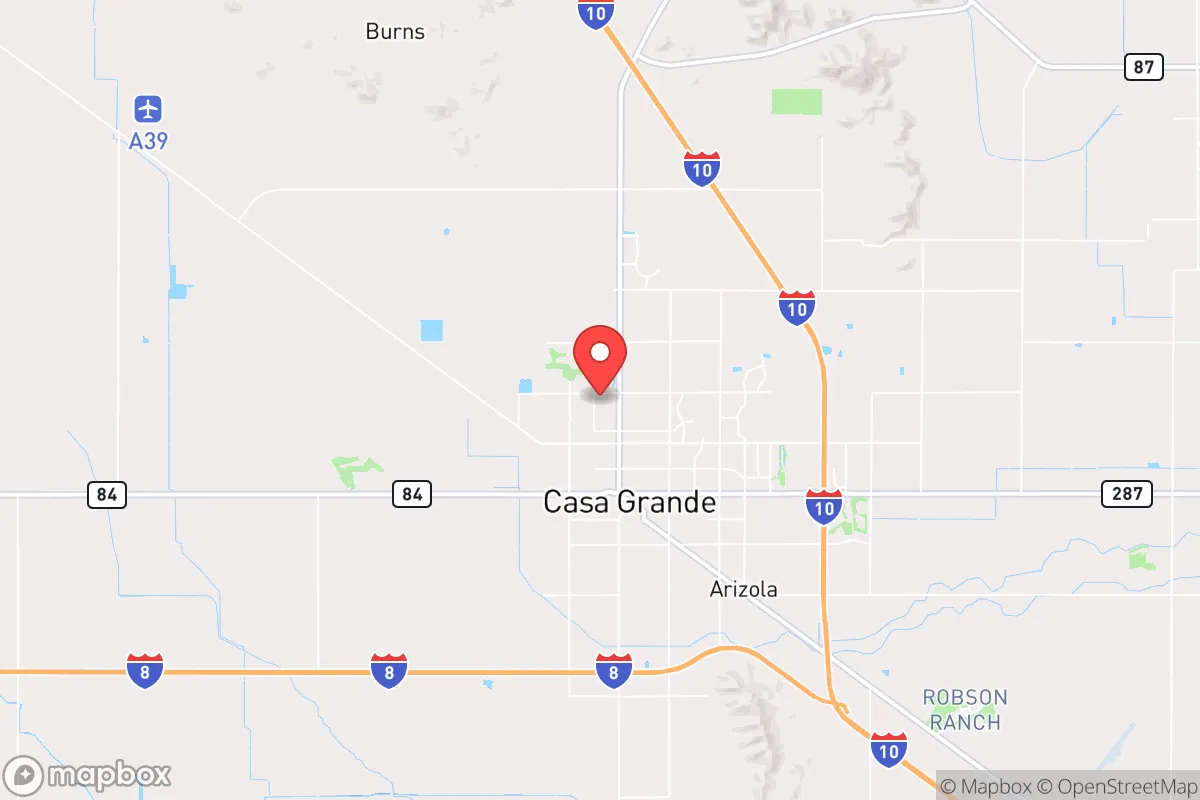
Casa Grande’s location is its strongest card. It sits at the intersection of I-10 and I-8, two major interstate arteries that connect the Southwest to California, Texas, and the Pacific coast. In a crisis scenario, this gives you options—evacuation routes north toward Flagstaff or east toward New Mexico, or the ability to receive supplies from multiple directions if one corridor is compromised. The city itself is surrounded by agricultural land, including cotton, alfalfa, and pecan farms, which means local food production is not just theoretical but actual. The Gila River runs through the region, and while surface water is limited, the area sits atop the Pinal Active Management Area, a groundwater basin that, while stressed, still provides a more reliable water source than many parts of the state. The terrain is flat and open, which limits ambush points and makes surveillance easier—a factor for those concerned with security during unrest. The dry air also means fewer mold and rot issues for stored supplies, and the low humidity extends the shelf life of food and gear. For a family looking to hunker down, the climate is harsh but predictable: hot summers, mild winters, and very few natural disasters like hurricanes, tornadoes, or earthquakes that could disrupt a prepared household.
Risks, exposures, and proximity to fallout-relevant landmarks
No strategic assessment is honest without addressing the liabilities, and Casa Grande has several that a prepper cannot ignore. The most obvious is its proximity to Phoenix—about 50 miles north—and Tucson about 60 miles southeast. In a mass casualty event, civil unrest, or a breakdown of order, those cities would become epicenters of violence, resource scarcity, and refugee flows. I-10 is a direct pipeline from Phoenix to Casa Grande, and in a crisis, that highway could become a chokepoint of desperate people moving south. The city itself is not defensible in the traditional sense; it’s spread out, with no natural barriers like mountains or rivers to funnel or block movement. There are also several high-value targets within a 100-mile radius: Davis-Monthan Air Force Base in Tucson, Luke Air Force Base west of Phoenix, and the Palo Verde Nuclear Generating Station about 70 miles west near Tonopah. While Casa Grande is not in the immediate blast or fallout zone of a nuclear incident at Palo Verde, prevailing winds could carry contamination southeast toward the area depending on the season. Additionally, the city’s water infrastructure is tied to the Central Arizona Project canal, which is a single point of failure—if that canal is disrupted by earthquake, sabotage, or conflict, the region’s water supply would be severely compromised. For a relocator, these risks mean that Casa Grande is a good secondary position—a place to stage supplies and maintain a low profile—but not a final redoubt.
Practical resilience for a relocator: food, water, energy, and defensibility
For someone serious about self-sufficiency, Casa Grande offers a mixed bag. On the positive side, the agricultural base means that with a little land—say 5 to 10 acres—you can grow your own food using desert-adapted techniques like drip irrigation and shade structures. The growing season is long, with over 300 days of sun per year, making solar power a no-brainer. A modest solar array with battery storage can keep a household running off-grid for extended periods, and the flat terrain makes installation straightforward. Water is the critical constraint. The city’s municipal supply comes from groundwater and the CAP canal, but for a rural property, you’ll need a well. Drilling depths in the Casa Grande area range from 200 to 600 feet, and water quality varies—some wells produce hard water high in minerals, which requires filtration. Rainwater harvesting is possible but yields are low; the area gets about 8 inches of rain annually, mostly during the monsoon season from July to September. For food storage, the dry climate is excellent for long-term pantry items, but you’ll need to plan for summer temperatures that can hit 115°F, which can degrade canned goods and batteries if not stored in a climate-controlled space. Defensibility is a challenge. The open terrain means you can see threats coming from a distance, but it also means you’re visible. A rural property with a good perimeter—fencing, clear sightlines, and a secure gate—is essential. The local population is generally conservative and rural-minded, which means you’re more likely to find like-minded neighbors than in a coastal city, but it also means that in a crisis, everyone will be looking out for their own. Building a mutual assistance network before things go sideways is not optional; it’s survival.
The overall strategic picture for Casa Grande is one of cautious viability for a relocator with a prepper mindset. It’s not a fortress, and it’s not a remote bunker in the mountains. What it offers is a workable base of operations in a region that still has functioning agriculture, decent water access if you plan ahead, and a population that, for the most part, shares the values of self-reliance and community that make resilience possible. The risks from Phoenix, Tucson, and the nuclear plant are real, but they are manageable with proper planning—staging supplies, having multiple evacuation routes, and maintaining a low profile. For a single individual or a family looking to get out of a high-risk urban area without going completely off-grid, Casa Grande is a solid middle ground. It’s not the end of the world, but it’s a place where you can build a life that’s prepared for it.

* Values derived from national, state, county, city and local statistics and may differ in a specific area. Last updated: 2026-04-21T18:25:23.000Z
Narrative content on this page is AI-generated and may contain mistakes. Verify any details that matter before acting on them.
ReloMaps may earn a commission from affiliate links at no extra cost to you.

