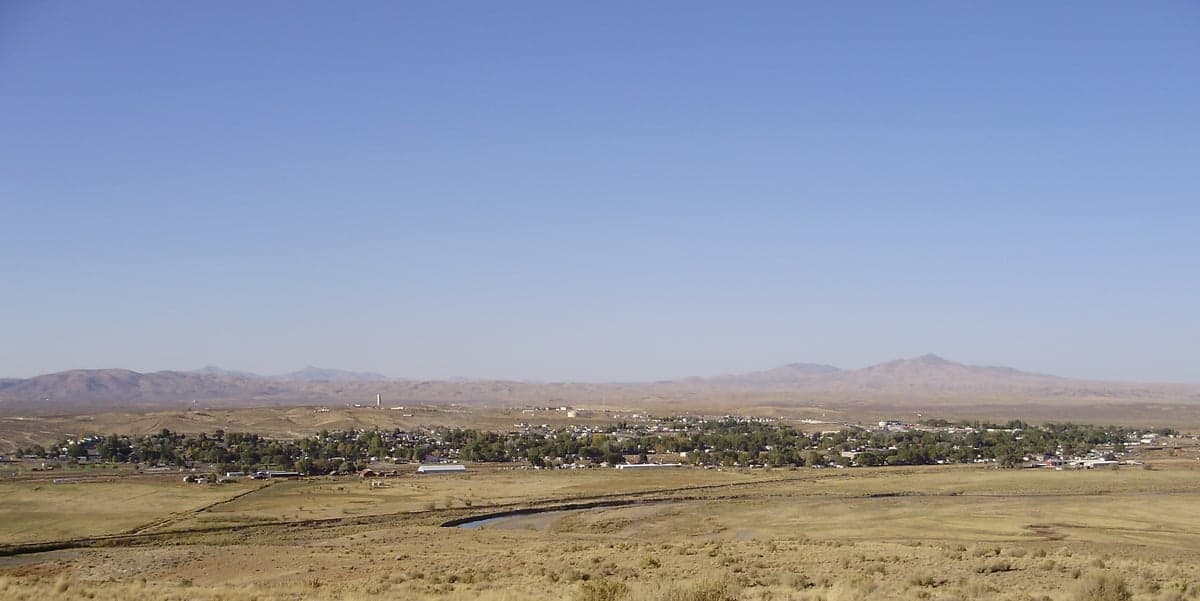
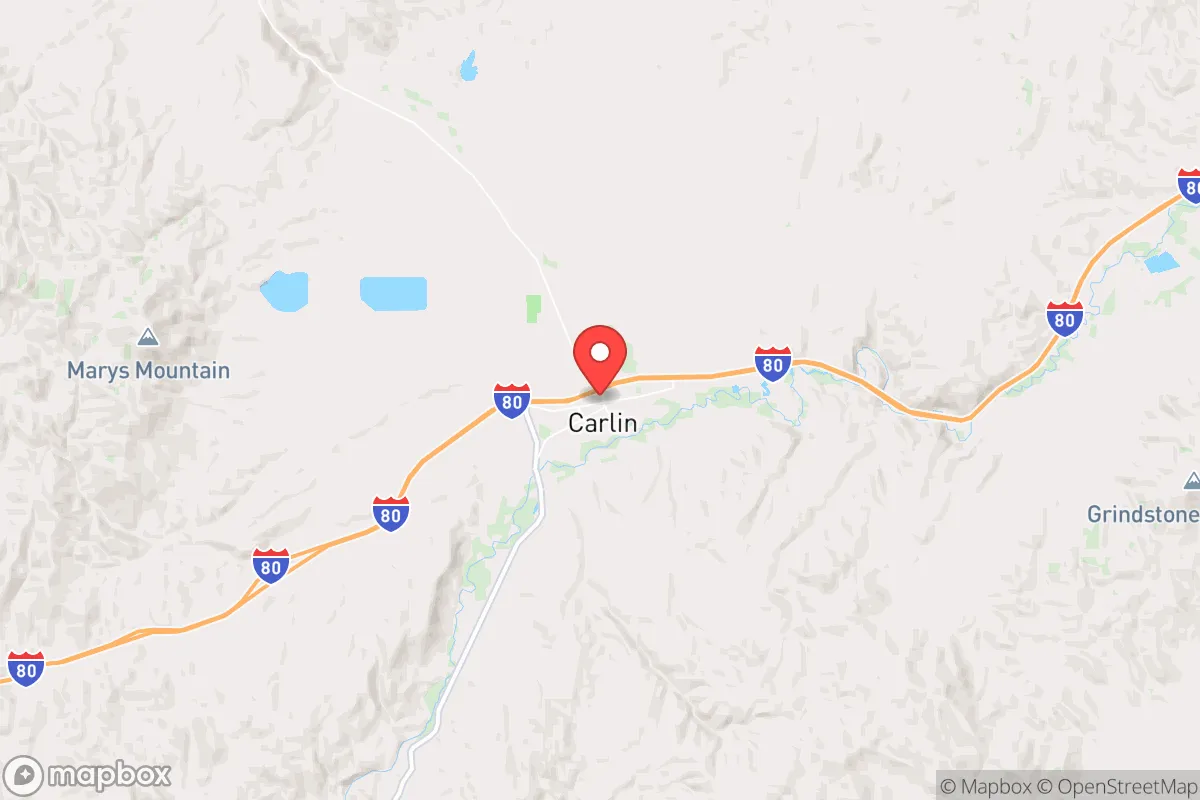
Photo: Wikipedia
Strategic Assessment of Carlin, NV
Workable tactical position. Some exposure to population density or targets, but generally defensible in a crisis.
What does the Strategic Assessment tell us?
Our Strategic Assessment grades tactical survivability of an area. Major population centers, military targets, fallout zones, natural disasters, and border exposure all drive risk — lower exposure means a more defensible position in a crisis.
This is heavily inspired by Joel Skousen's Strategic Relocation book. Highly recommended you checkout the book ($)What does this tell us?
Our Strategic Assessment grades tactical survivability of an area. Major population centers, military targets, fallout zones, natural disasters, and border exposure all drive risk — lower exposure means a more defensible position in a crisis.
This is heavily inspired by Joel Skousen's Strategic Relocation book. Highly recommended you checkout the book ($)Strategic Pillars

Key Distances
Regional Safe Places
Below is our recommended "safe zones" in Nevada and the surrounding area based on our strategic heuristics. For most people, it's unrealistic to live in a “safe zone” full-time due to work, family or other personal reasons. They tend to be more rural. However, many of these areas are perfect for second homes and retreat properties that double as a vacation home or even a short-term rental.
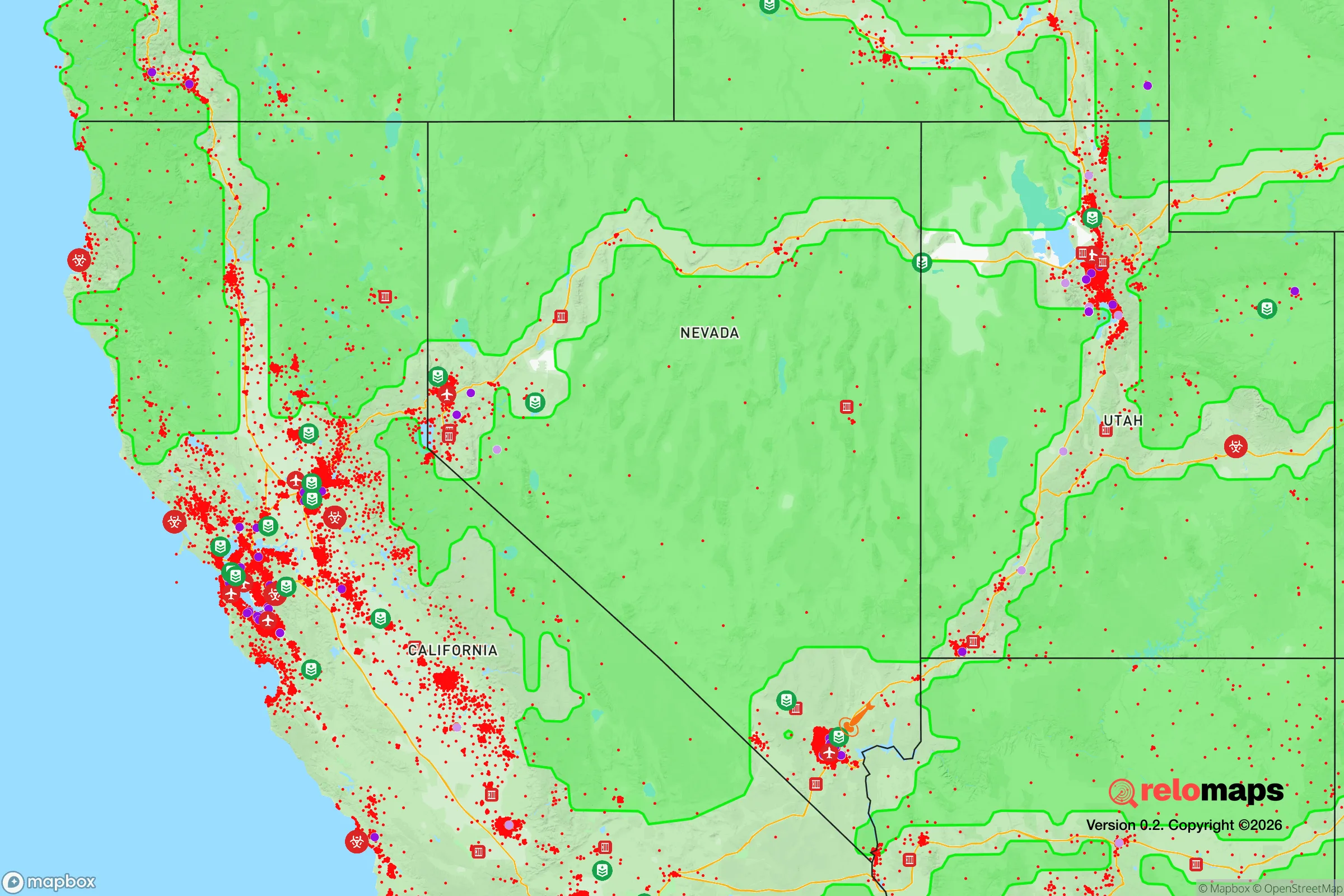
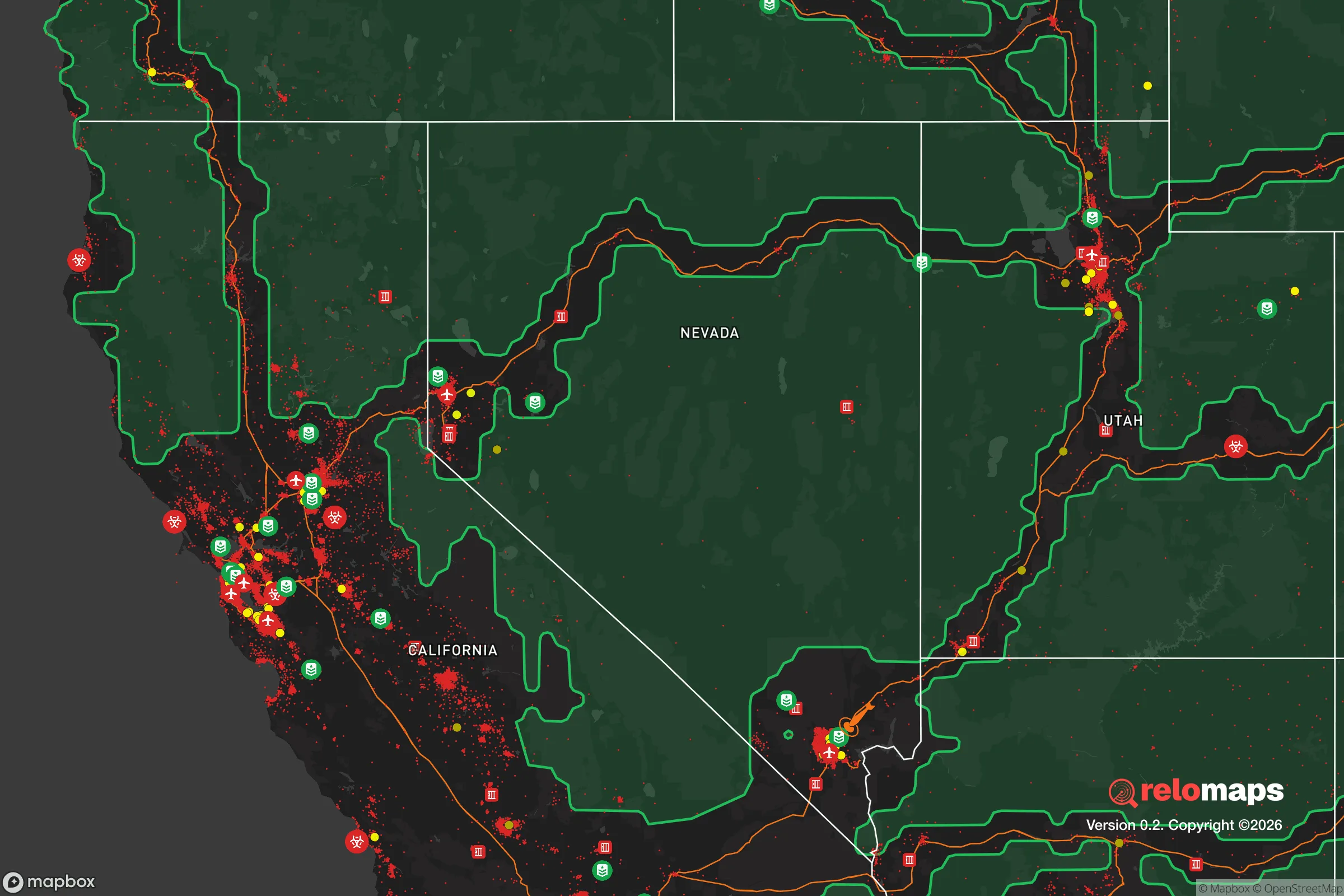


Important Note: For informational purposes only. This does not mean nothing bad ever happens in the green zones. Please use common sense. This is based on public data and modeled with AI. We tried to take a conservative approach but mistakes happen. We update this regularly as new information becomes available.
Solar Generator Recommendations
Backup power matters more here than in safer locations. We've picked three solar generators across budgets and capacity tiers — start with the budget unit if you only need a few essentials, or step up if you want to run a fridge and HVAC for days at a time.

Jackery Portable Power Station Explorer 300
Budget OptionPower on the Go: Weighing only 11 lbs, it's convenient to set up and store with book-sized foldable solar panels

BLUETTI Portable Power Station AC180
Designed for both indoor and outdoor scenarios, AC180 is highly capable as it has a robost capacity and continuous output power.

EF ECOFLOW DELTA Pro Ultra Power Station
Upgraded PickEcoFlow DELTA Pro Ultra is a whole-home energy system designed to grow with your family. Integrated with the Smart Home Panel 2, it scales to meet your evolving energy needs — keeping your home powered, intelligent, and secure through every stage of life.
We earn a commission, at no additional cost to you.
Strategic Assessment Analysis
Carlin, Nevada, sits as a small but strategically resilient node in the high desert of Elko County, offering a rare combination of geographic isolation, resource access, and community cohesion that appeals to those prioritizing long-term preparedness. With a population hovering around 2,300, this former railroad town has weathered economic shifts and remains a functional, low-profile base for individuals and families who want to be far from the chaos of coastal metros but still within reach of essential infrastructure. Its location along Interstate 80 and the Humboldt River provides both a lifeline and a buffer, making it a serious candidate for anyone assessing relocation through a survivalist or prepper lens.
Geographic position and natural advantages for long-term security
Carlin’s position in northeastern Nevada places it in a zone of low population density and high elevation, roughly 4,900 feet above sea level, which naturally discourages casual traffic and large-scale development. The surrounding landscape is a mix of sagebrush steppe and mountain ranges, offering multiple egress routes and natural cover for those who know how to use it. The Humboldt River runs directly through town, providing a perennial surface water source—a critical asset in an arid region where groundwater can be deep and expensive to access. The nearby Ruby Mountains and Jarbidge Wilderness offer hunting, foraging, and retreat options, while the vast BLM land surrounding Carlin means minimal neighbors and maximum operational freedom. For a relocator, this translates into a defensible position: limited entry points, clear sightlines, and the ability to live off-grid without immediate scrutiny.
Risks, exposures, and proximity to fallout-relevant landmarks
No strategic assessment is complete without acknowledging the liabilities. Carlin’s primary exposure comes from its proximity to Interstate 80, a major transcontinental corridor that could become a chokepoint or a target during civil unrest or mass casualty events. The town itself sits within 20 miles of the Newmont Mining Corporation’s Carlin Trend, one of the world’s largest gold mining operations. While this provides economic stability, it also introduces industrial hazards—chemical spills, blasting accidents, or potential sabotage—that could affect air and water quality. More critically, Carlin is roughly 200 miles from the Nevada National Security Site (formerly the Nevada Test Site) and 150 miles from the Utah Test and Training Range, both of which have historical ties to nuclear and conventional weapons testing. While direct fallout risk is low given prevailing wind patterns (eastward), any large-scale event in the Southwest could send particulate matter into the region. The town’s small size also means limited medical infrastructure; the nearest hospital with trauma capability is in Elko, 23 miles west, which could be overwhelmed during a crisis. For the prepper, these risks are manageable with proper planning—stockpiling water filtration, maintaining a bug-out vehicle, and establishing a network of local contacts—but they should not be ignored.
Practical resilience for a relocator: food, water, energy, and defensibility
Carlin’s practical resilience hinges on three pillars: water, energy, and community. The Humboldt River is a year-round water source, but it carries agricultural runoff and mining sediment, so a robust filtration system—think Berkey or reverse osmosis—is non-negotiable. The town’s municipal water comes from wells, but a private well on a few acres outside city limits offers true independence. For energy, the region averages over 300 sunny days per year, making solar a viable primary or backup source. Wind is also consistent in the passes, though small-scale turbines require careful siting to avoid noise and maintenance headaches. Natural gas is piped into town, but propane tanks are common for rural homes, and wood-burning stoves are a practical heat source given the surrounding forests. Food resilience is moderate: Carlin has a small grocery store, but serious stockpiling requires trips to Elko’s Walmart or WinCo. Local agriculture is limited to hay and cattle, so a greenhouse or hydroponic setup is advisable for fresh produce. Defensibility is strong due to the town’s layout—a compact grid with the river as a natural barrier on the south side and hills to the north. Most homes sit on lots large enough for perimeter fencing, and the low crime rate (Elko County’s violent crime rate is roughly half the national average) means you can build relationships with neighbors before a crisis hits. The local sheriff’s office is responsive but small; in a widespread event, you are largely on your own, which is exactly the mindset that draws people here.
The overall strategic picture for Carlin is one of calculated trade-offs. It offers genuine isolation from the coastal collapse zones, a reliable water source, and a community that still values self-reliance and mutual aid—traits that align with a conservative, prepared worldview. The downsides—industrial proximity, a single highway artery, and limited medical capacity—are real but can be mitigated with planning and investment. For a single individual or a family willing to put in the work, Carlin provides a solid foundation for weathering the uncertainties of the coming years, whether those take the form of economic disruption, civil unrest, or natural disaster. It is not a fortress, but it is a defensible outpost in a state that still respects the Second Amendment and local autonomy. If you are serious about relocation as a strategic move, Carlin deserves a hard look.

* Values derived from national, state, county, city and local statistics and may differ in a specific area. Last updated: 2026-04-30T00:47:43.000Z
Narrative content on this page is AI-generated and may contain mistakes. Verify any details that matter before acting on them.
ReloMaps may earn a commission from affiliate links at no extra cost to you.

