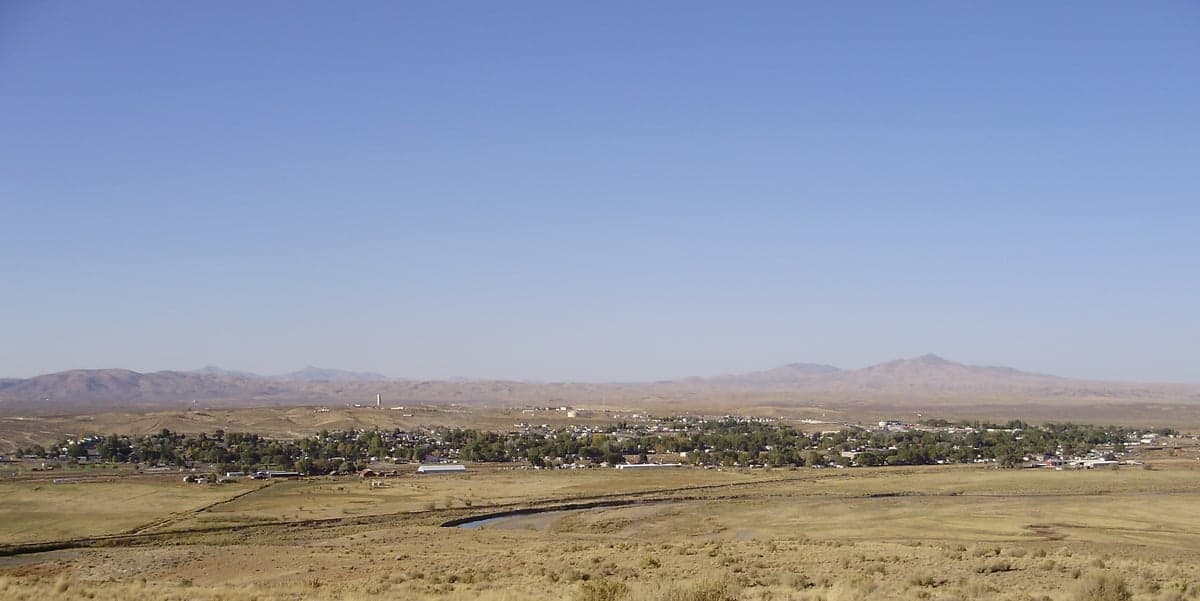
Photo: Wikipedia
Political ClimatePolitical Climate in Carlin, NV
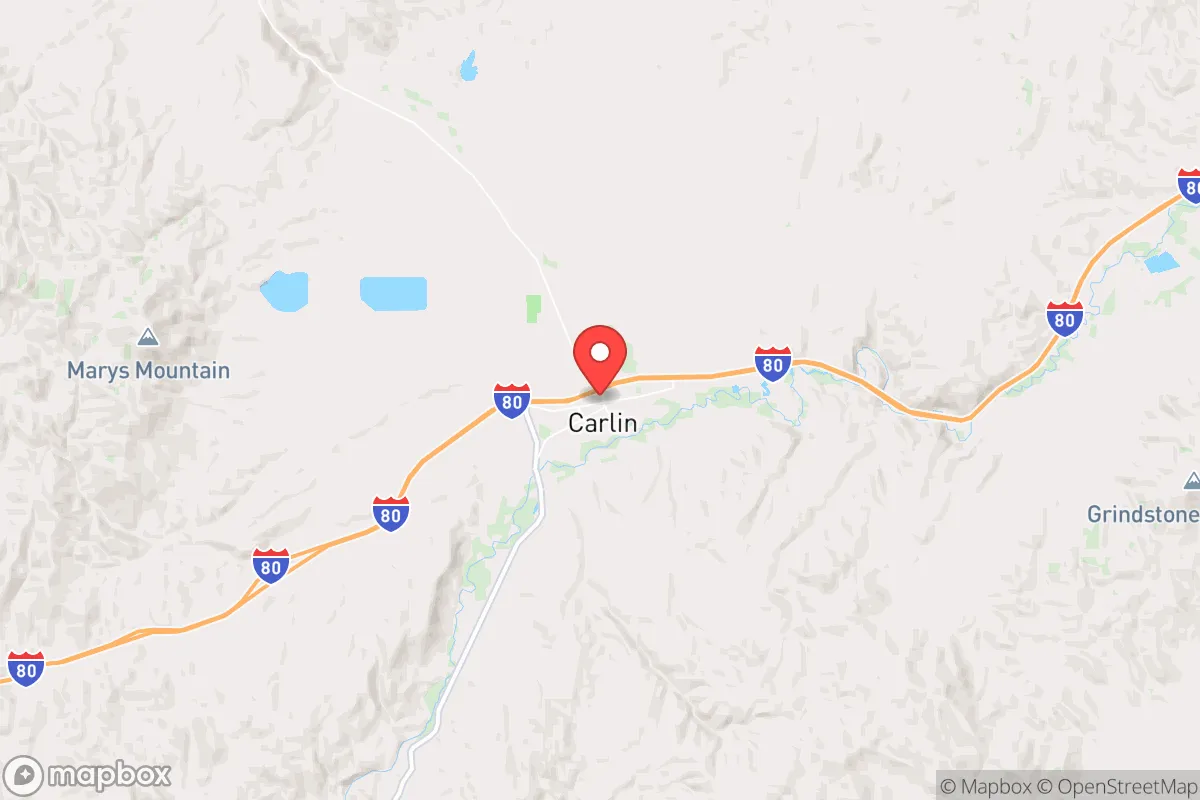
District shown is the primary district for this city’s centroid. Cities may span multiple districts.
Local Political AnalysisPolitical Analysis of Carlin, NV
Carlin, Nevada, sits deep in Elko County, and politically, it’s about as solidly conservative as you’ll find in the state. The Cook PVI of R+7 is a decent starting point, but it doesn’t fully capture the local reality—this area leans much harder right than that number suggests, especially when you look at how folks actually vote in local races. The trajectory here is one of steady, quiet conservatism, though there’s a growing unease about outside influences creeping in from the more progressive corners of the state, like Reno or Las Vegas. For a long-time resident, the feeling is that Carlin has held the line pretty well, but you can sense the pressure building as state-level policies start to feel more disconnected from what we value out here.
How it compares
If you drive an hour west to Elko, you’ll find a similar conservative vibe, though it’s a bit more moderate thanks to the bigger population and the mining companies’ corporate influence. Head south to Eureka, and it’s even more rural and libertarian-leaning—less government interference, more “leave us alone.” The real contrast is with places like Reno or Las Vegas, where the political climate is a whole different animal. Those areas have shifted noticeably left in recent years, with policies on taxes, land use, and even local ordinances that feel like they’re designed for a different country. Carlin, by comparison, is a place where people still believe in personal responsibility and limited government. The county commission and school board here are reliably conservative, and there’s a strong resistance to any progressive agenda items that try to sneak in from the state capital. It’s not a perfect bubble, but it’s a lot closer to what most of us remember from twenty years ago.
What this means for residents
For the people who live here, the political climate translates into a daily life that’s relatively free from the kind of government overreach you hear about in other parts of the country. Property taxes are low, zoning is minimal, and there’s a general understanding that the county sheriff and local officials aren’t looking to micromanage your business or your personal choices. That said, there’s a real concern about the long-term trend. State-level mandates on things like energy regulations, water rights, and even school curriculum are starting to feel like they’re written by people who’ve never spent a day in a rural Nevada town. If you value your Second Amendment rights, your ability to run a small business without a pile of permits, or just the freedom to live your life without a government official breathing down your neck, Carlin is still a good bet. But you’ve got to keep an eye on the ballot box, because the progressive shift in the state’s population centers is a real threat to the way of life out here.
Culturally, Carlin is a blue-collar, mining and railroad town, and that shapes the politics more than any party label. There’s a strong sense of self-reliance—people don’t look to the government for handouts, and they don’t appreciate being told how to live. The biggest policy distinctions you’ll notice are the lack of heavy-handed land-use restrictions and a general skepticism of any new tax or regulation that comes from Carson City. The local school board, for instance, has pushed back against state-mandated diversity initiatives, focusing instead on core academics and vocational training. It’s not a flashy political scene—no protests, no big rallies—just a quiet, stubborn commitment to the idea that the government that governs least governs best. If that sounds like your kind of place, Carlin’s still holding onto it, but you’d better get here before the tide turns any further.

State Political ClimatePolitical Climate in Nevada
State Political AnalysisPolitical Environment in the State
Nevada’s political climate is a fascinating, high-stakes battleground that has shifted from a reliably purple swing state to one that now leans blue at the statewide level, driven almost entirely by the explosive growth of Clark County (Las Vegas) and, to a lesser extent, Washoe County (Reno). Over the last 20 years, the state has moved from a libertarian-leaning, low-tax haven with a strong independent streak to a state where Democrats control the governorship, both legislative chambers, and the entire federal delegation, a trend that accelerated sharply after 2016. For a conservative considering relocation, the key takeaway is that while the state’s core identity—no income tax, limited government in theory—remains, the practical reality on the ground is increasingly defined by progressive policies from Carson City and a powerful, union-backed Democratic machine in Las Vegas.
Urban vs. rural divide
The political map of Nevada is a classic tale of two worlds. Clark County, home to nearly three-quarters of the state’s population, is the Democratic engine. Las Vegas, Henderson, and North Las Vegas deliver overwhelming margins for Democrats, fueled by a heavily unionized hospitality workforce, a large and growing Latino population, and a significant number of transplants from California and other blue states. In 2024, Clark County alone gave Kamala Harris a margin of over 100,000 votes, effectively deciding the state’s electoral votes before rural votes were even fully counted. Washoe County (Reno) is the perennial swing county, but it has trended blue in recent cycles, with the growing tech and logistics sectors in the Reno-Sparks area bringing in a more moderate-to-liberal workforce. The rest of the state—the vast, rural expanse of places like Elko, Ely, Winnemucca, and Pahrump—is deeply red. These counties vote Republican by margins of 70-80%, but their populations are too small to counterbalance the Las Vegas metro. A notable exception is Laughlin, a small Colorado River town that leans conservative but is dwarfed by its southern neighbor. The divide is stark: a conservative moving to rural Nevada will find a very different political environment than one moving to a Las Vegas suburb like Summerlin or Green Valley, which are more purple but still trending left.
Policy environment
Nevada’s policy environment is a mixed bag that reflects its libertarian roots and its recent progressive turn. The biggest draw for conservatives remains the absence of a state income tax, a constitutional protection that is unlikely to change. Property taxes are also relatively low, though they have been rising with home values. However, the state’s regulatory posture has become more burdensome. In 2023, the Democrat-controlled legislature passed a package of bills that expanded collective bargaining rights for state workers, mandated paid sick leave for most private-sector employees, and created a new state-run retirement savings program for workers without employer plans. Education policy is a major flashpoint. The state’s public schools consistently rank near the bottom nationally, and the powerful teachers’ union has successfully blocked most school choice expansion, including a 2024 effort to create a universal Education Savings Account program. Healthcare policy is heavily regulated, with a state-run insurance exchange and Medicaid expansion under the Affordable Care Act. On election law, Nevada has become one of the most progressive states, with automatic voter registration, same-day registration, and universal mail-in ballots sent to every active registered voter—a system that conservatives argue is vulnerable to fraud and reduces election integrity. The state also has a top-two primary system, which can sometimes dilute conservative influence in crowded races.
Trajectory & freedom
On the critical question of personal freedom, Nevada’s trajectory is concerning for conservatives. The state has lost much of its “live and let live” character. Gun rights have been under sustained attack. In 2023, the legislature passed a ban on “ghost guns” (unserialized firearms) and raised the age to purchase semiautomatic rifles from 18 to 21, a direct response to the 2017 Las Vegas shooting. A 2024 law also created a “red flag” law, allowing courts to temporarily confiscate firearms from individuals deemed a risk to themselves or others—a measure many conservatives see as a violation of due process. Parental rights have been eroded. The state passed a law in 2023 that prohibits schools from notifying parents if a child changes their gender identity or pronouns, overriding parental authority. On medical freedom, Nevada was an early adopter of broad vaccine mandates during the COVID-19 pandemic, and while those are gone, the state retains a powerful public health bureaucracy. Property rights are also under pressure from a growing regulatory state, including new energy efficiency mandates for new homes and a 2024 law that limits the ability of homeowners to rent out their properties on short-term platforms like Airbnb. The trend is clear: the state is moving from a low-regulation, high-freedom model to a more interventionist, progressive one.
Civil unrest & political movements
Nevada has seen its share of political flashpoints. The 2020 election was a major battleground, with the Trump campaign challenging the state’s universal mail-in ballot system and alleging irregularities in Clark County. The state’s election integrity remains a top concern for conservatives, with many feeling the system is not secure. Immigration politics are a constant undercurrent. Nevada has a large undocumented population, and while it is not a formal “sanctuary state,” the Las Vegas Metropolitan Police Department has a policy of not cooperating with federal immigration enforcement in most cases, a source of tension for those who prioritize border security. The “Battle Born” libertarian streak still exists, particularly in rural counties like Nye County and Lyon County, where there have been movements to assert local control and push back against Carson City mandates. In 2023, the Nye County Commission passed a resolution declaring itself a “Second Amendment Sanctuary County.” However, these efforts are largely symbolic and have little practical effect against state law. The most visible political movements are the powerful Culinary Union (which drives Democratic turnout) and the growing, but still outmatched, conservative grassroots groups focused on school board races and local elections.
Projection
Looking ahead 5-10 years, the trajectory is not favorable for conservatives. Demographic trends are the enemy of a red Nevada. The state continues to attract new residents from California, Oregon, and Washington, many of whom bring their progressive voting habits with them. The Latino population, which leans Democratic, is the fastest-growing demographic. The Las Vegas metro is expected to add another 500,000 people by 2035, almost all of whom will settle in Clark County, further cementing Democratic dominance. The rural counties will continue to shrink in relative political power. A conservative moving to Nevada now should expect to live in a state where Democrats control the levers of power for the foreseeable future. The best-case scenario is that the state’s libertarian streak and the practical realities of a tourism-based economy (which requires a certain level of freedom for visitors) will moderate the most extreme progressive impulses. But the trend is clear: Nevada is becoming a blue state, not a purple one.
Bottom line for a new resident: If you are a conservative looking for a low-tax environment and are willing to live in a state where your vote will likely be canceled out at the statewide level, Nevada can still work—especially if you choose a rural county like Elko or Lyon. But if you are moving to the Las Vegas or Reno suburbs expecting a friendly political climate, you will be disappointed. The state’s freedom index is declining, and the policy environment is becoming more hostile to conservative values on guns, education, and parental rights. It is no longer the libertarian paradise it once was. Come for the no income tax and the mountains, but be prepared to fight for every inch of ground on the cultural and political front.
* Values derived from national, state, county, city and local statistics and may differ in a specific area. Last updated: 2026-04-30T00:47:43.000Z
Narrative content on this page is AI-generated and may contain mistakes. Verify any details that matter before acting on them.
ReloMaps may earn a commission from affiliate links at no extra cost to you.

