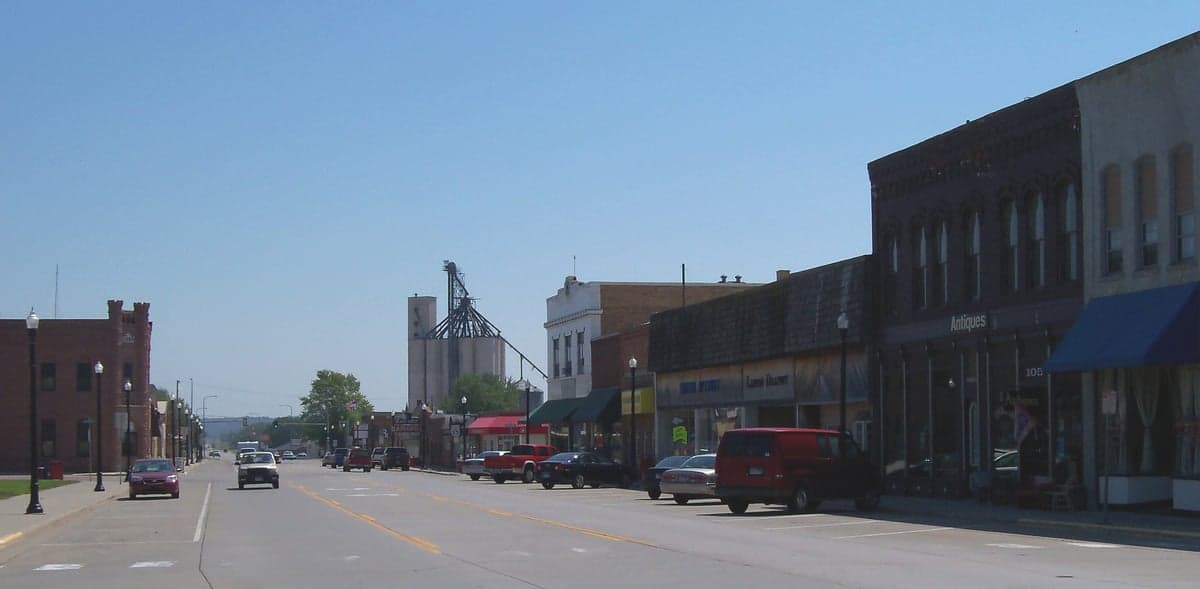
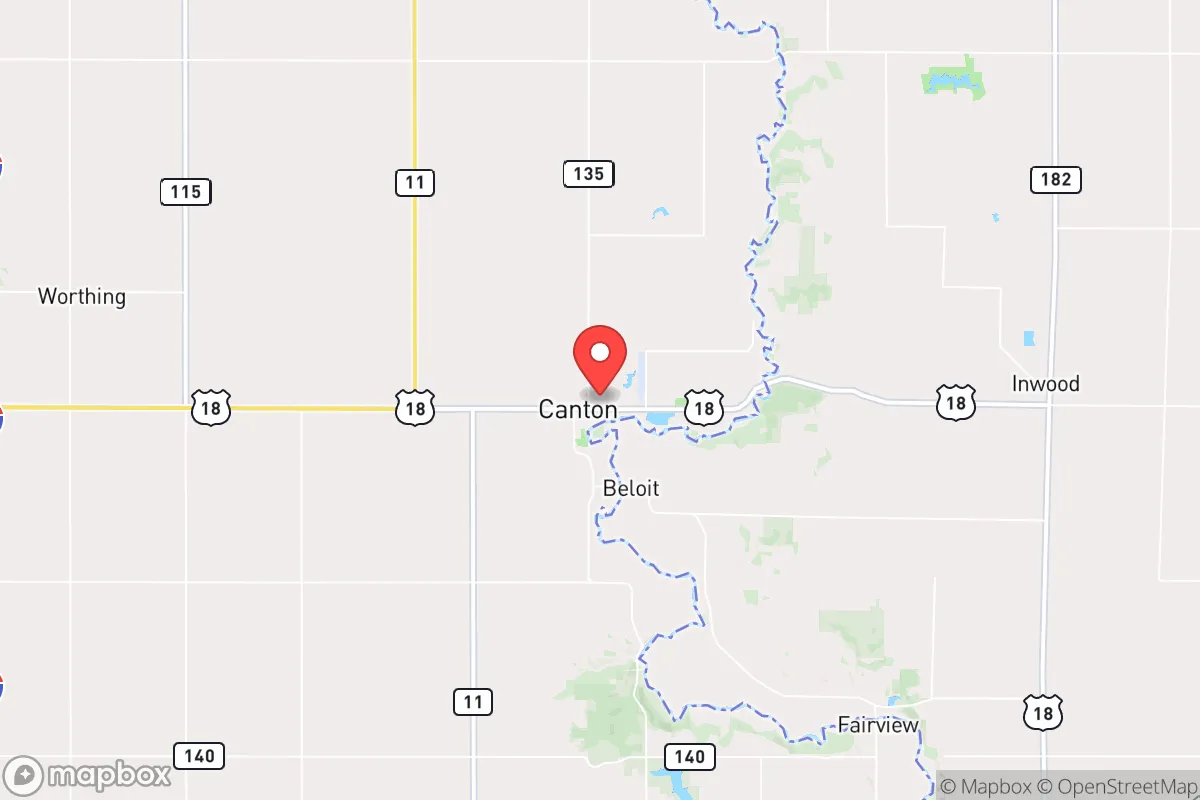
Photo: Wikipedia
Strategic Assessment of Canton, SD
Workable tactical position. Some exposure to population density or targets, but generally defensible in a crisis.
What does the Strategic Assessment tell us?
Our Strategic Assessment grades tactical survivability of an area. Major population centers, military targets, fallout zones, natural disasters, and border exposure all drive risk — lower exposure means a more defensible position in a crisis.
This is heavily inspired by Joel Skousen's Strategic Relocation book. Highly recommended you checkout the book ($)What does this tell us?
Our Strategic Assessment grades tactical survivability of an area. Major population centers, military targets, fallout zones, natural disasters, and border exposure all drive risk — lower exposure means a more defensible position in a crisis.
This is heavily inspired by Joel Skousen's Strategic Relocation book. Highly recommended you checkout the book ($)Strategic Pillars

Key Distances
Regional Safe Places
Below is our recommended "safe zones" in South Dakota and the surrounding area based on our strategic heuristics. For most people, it's unrealistic to live in a “safe zone” full-time due to work, family or other personal reasons. They tend to be more rural. However, many of these areas are perfect for second homes and retreat properties that double as a vacation home or even a short-term rental.
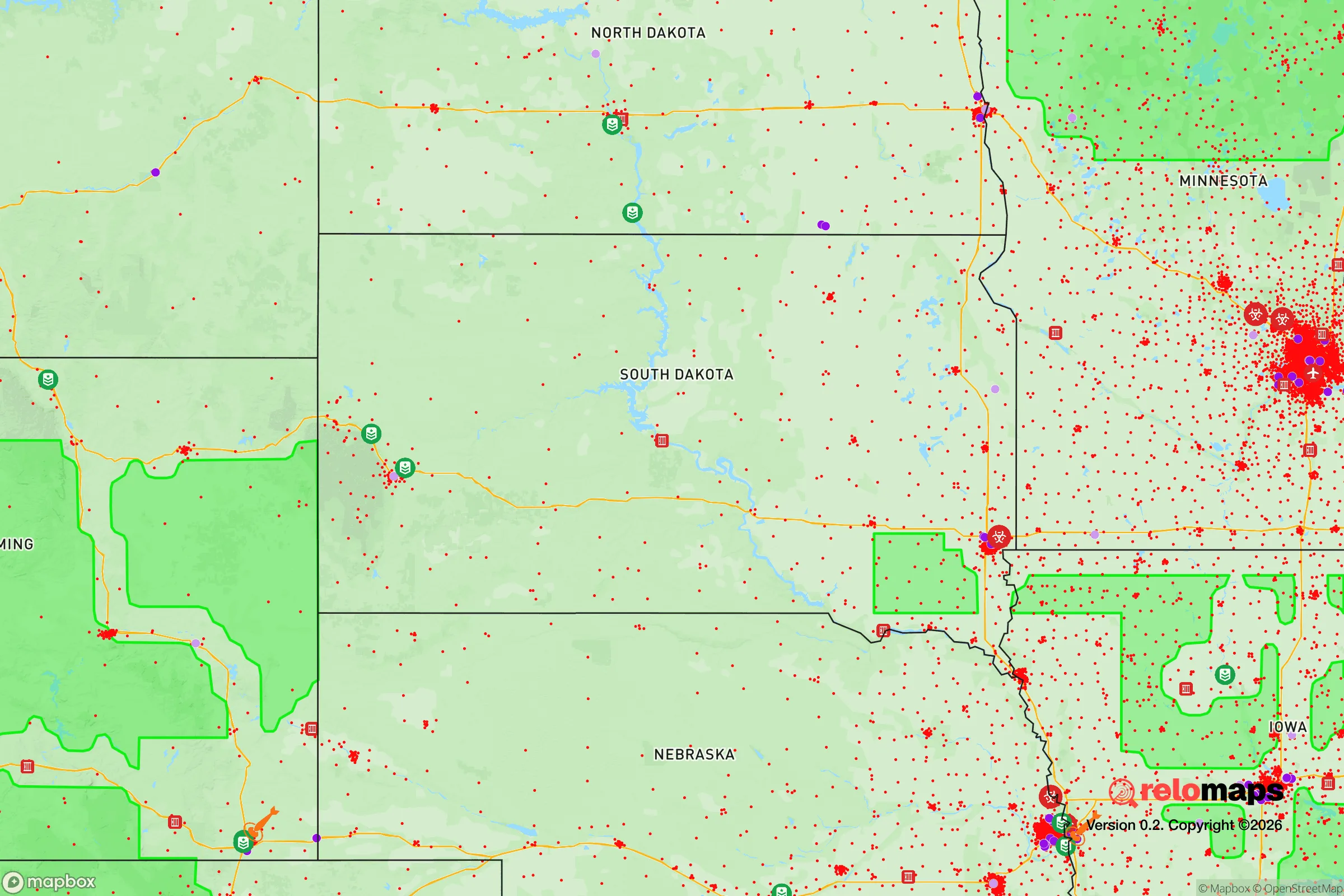


Important Note: For informational purposes only. This does not mean nothing bad ever happens in the green zones. Please use common sense. This is based on public data and modeled with AI. We tried to take a conservative approach but mistakes happen. We update this regularly as new information becomes available.
Solar Generator Recommendations
Backup power matters more here than in safer locations. We've picked three solar generators across budgets and capacity tiers — start with the budget unit if you only need a few essentials, or step up if you want to run a fridge and HVAC for days at a time.

Jackery Portable Power Station Explorer 300
Budget OptionPower on the Go: Weighing only 11 lbs, it's convenient to set up and store with book-sized foldable solar panels

BLUETTI Portable Power Station AC180
Designed for both indoor and outdoor scenarios, AC180 is highly capable as it has a robost capacity and continuous output power.

EF ECOFLOW DELTA Pro Ultra Power Station
Upgraded PickEcoFlow DELTA Pro Ultra is a whole-home energy system designed to grow with your family. Integrated with the Smart Home Panel 2, it scales to meet your evolving energy needs — keeping your home powered, intelligent, and secure through every stage of life.
We earn a commission, at no additional cost to you.
Strategic Assessment Analysis
Canton, South Dakota, presents a compelling case for the strategic relocator who prioritizes resilience over convenience. This small city of roughly 3,500 people, seated in Lincoln County, offers a blend of geographic isolation from major metropolitan chaos and practical proximity to essential infrastructure. Its position along the Big Sioux River and near the intersection of Interstate 29 and South Dakota Highway 18 provides a logistical backbone for supply movement and evacuation, while its distance from the densest population centers of Sioux Falls (roughly 25 miles north) and Sioux City, Iowa (about 30 miles south) creates a buffer zone that is increasingly valuable in an era of civic instability. For the prepper or survivalist, Canton is not a fortress, but it is a defensible, resource-rich staging ground that rewards preparation and local knowledge.
Geographic position and natural advantages for long-term security
Canton’s geographic placement is its primary strategic asset. It sits on the eastern edge of the Great Plains, where the rolling prairie meets the river valley of the Big Sioux. This location offers several natural advantages. The river provides a reliable freshwater source, though it is not a major navigable waterway—it is more of a linear resource for irrigation and small-scale hydropower potential. The surrounding terrain is open, with limited tree cover, which means long sightlines for observation and defense, but also limited natural concealment. The area’s agricultural base is a critical strength: Lincoln County is among the most productive corn and soybean regions in the state, with a strong livestock presence. For a relocator, this means local food production is not a theoretical possibility but an existing reality. The climate is continental, with cold winters and hot summers, which demands robust shelter and heating fuel storage, but the growing season (roughly 140 days) is sufficient for a serious garden or small farm operation. The lack of major geographical barriers—no mountains, no dense forests—means that movement is relatively easy, but it also means that a determined threat could approach from any direction. The key advantage is that Canton is far enough from the major fault lines of the country (both literal and figurative) to avoid the initial shockwaves of a crisis, yet close enough to Sioux Falls to access medical, logistical, and supply networks if they remain functional.
Risks, exposures, and proximity to fallout-relevant landmarks
No location is without risk, and Canton has specific exposures that a strategic relocator must weigh. The most significant is its proximity to Sioux Falls, the largest city in South Dakota with a metropolitan population over 265,000. In a scenario of mass civil unrest, economic collapse, or a major disaster, Sioux Falls would become a magnet for desperate populations, and Canton sits directly in the path of any southward exodus along I-29. The interstate itself is a double-edged sword: it enables rapid supply movement but also serves as a highway for refugees, looters, or hostile groups. The Big Sioux River is prone to flooding, particularly in spring, which could damage low-lying infrastructure and contaminate water supplies. Canton has experienced significant flood events in the past, including the 2019 floods that damaged roads and homes. Additionally, the area is within the fallout zone of the Minuteman III missile fields in western South Dakota and North Dakota, though the risk is low for a direct strike. More relevant is the proximity to Ellsworth Air Force Base near Rapid City (about 350 miles west), which could be a target in a major conflict, but Canton is far enough to avoid direct blast effects. The real danger is the potential for a cascading failure of the electrical grid—the region is served by a mix of coal, natural gas, and renewable sources, but the grid is aging and vulnerable to both cyberattack and physical sabotage. The Union County grain elevator and rail lines near Canton are potential choke points for supply chains, and a disruption there could affect local food distribution. For the prepper, the calculus is clear: Canton’s risks are manageable with preparation—flood-proofing, grid independence, and a solid perimeter plan—but the proximity to Sioux Falls means that early warning and a pre-planned evacuation route south or west are non-negotiable.
Practical resilience for a relocator: food, water, energy, and defensibility
For a single individual or family looking to establish a resilient homestead, Canton offers a practical foundation. Water security is the first priority. The Big Sioux River is a surface water source, but it requires filtration and treatment for potable use. Many rural properties in the area rely on private wells, which are generally reliable but can be compromised by power outages or contamination from agricultural runoff. A deep well with a hand pump or solar-powered pump is a wise investment. Food production is viable: the soil is fertile, and local farmers’ markets and co-ops exist, but a serious prepper should plan to grow a significant portion of their own calories. The growing season is short, so cold frames, greenhouses, and root cellars are essential for year-round food storage. Livestock—chickens, goats, or rabbits—are practical and legal within city limits with proper permits, and the surrounding rural areas have no restrictions. Energy independence is achievable. South Dakota has good wind resources, and solar panels are effective even in winter, though battery storage is necessary for grid-down scenarios. Wood heating is common, and the surrounding farmland provides ample biomass for fuel, though deforestation is not a concern given the open prairie. Defensibility is the weak point. Canton is a small town with a low crime rate, but it is not a gated community. The open terrain means that a determined group could approach from any direction. The local law enforcement presence is minimal—Lincoln County has a sheriff’s office with limited deputies—so self-defense capability and a neighborhood watch network are critical. The town’s layout, with a central square and residential streets, is not designed for siege, but a well-prepared property with reinforced doors, window shutters, and a clear field of fire can be made secure. The community itself is a mixed bag: many locals are conservative, self-reliant, and armed, but there is also a growing population of commuters to Sioux Falls who may not share the same survivalist mindset. Building relationships with like-minded neighbors is the single most important step for long-term security.
The overall strategic picture for Canton is one of cautious optimism for the prepared relocator. It is not a bug-out location in the wilderness—it is a small town with real infrastructure, real risks, and real opportunities. The proximity to Sioux Falls is a liability that must be actively managed, but the agricultural base, water resources, and relatively low population density provide a strong foundation for resilience. The key is to treat Canton as a base of operations, not a final redoubt. Have a plan for evacuation to more remote areas in the Black Hills or the Missouri River breaks if the situation deteriorates. Invest in grid independence, water purification, and food storage before the crisis hits. And most importantly, integrate into the local community—the people who have lived here for generations know the land, the weather, and the threats better than any outsider. Canton is a place where a serious prepper can build a sustainable life, but only if they approach it with clear eyes, a solid plan, and a willingness to work the land and the relationships that will sustain them when the world outside goes dark.

* Values derived from national, state, county, city and local statistics and may differ in a specific area. Last updated: 2026-04-23T09:18:02.000Z
Narrative content on this page is AI-generated and may contain mistakes. Verify any details that matter before acting on them.
ReloMaps may earn a commission from affiliate links at no extra cost to you.

