Photo: Wikipedia
Political ClimatePolitical Climate in Camden, NJ
District shown is the primary district for this city’s centroid. Cities may span multiple districts.
Local Political AnalysisPolitical Analysis of Camden, NJ
Look, I’ve lived in and around Camden my whole life, and I’ll tell you straight: this city is a one-party stronghold, and it’s been that way for decades. The Cook PVI sits at D+10, which means Democrats have a solid 10-point advantage over the national average in presidential elections. That’s not a lean—that’s a lock. In 2024, the city went something like 85% for the Democratic ticket, and you’d have to go back to the 1990s to find a Republican mayor. The real story isn’t the party label, though—it’s what that lock has meant for your personal freedoms and your wallet. The local machine has been running things with a heavy hand, and the progressive turn in the last ten years has made it worse.
How it compares
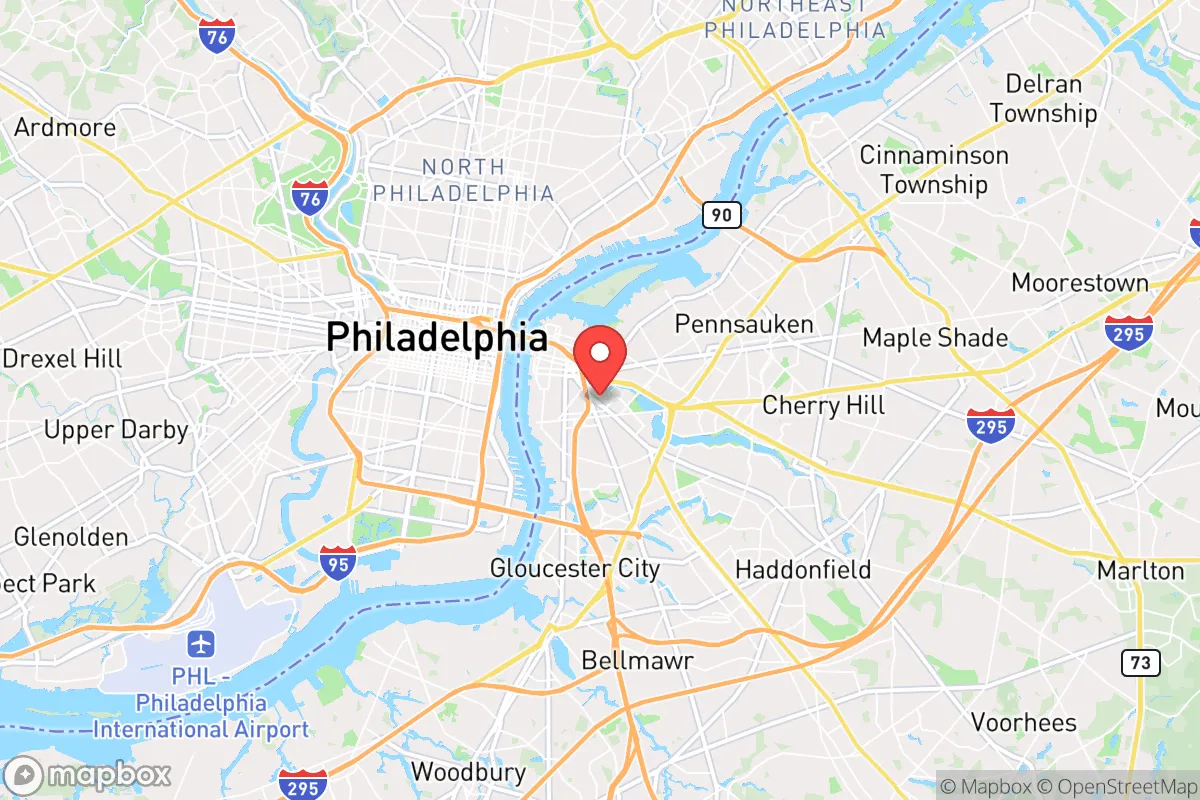
Drive ten minutes east to Cherry Hill, and you’re in a different world politically. Cherry Hill is still blue, but it’s a more moderate, suburban blue—think tax-conscious Democrats who actually push back on some of the spending. Head west across the river to Philadelphia, and you get a similar urban machine, but with more internal friction. The real contrast is north to places like Moorestown or Mount Laurel, where you start seeing split-ticket voters and even some Republican wins at the county level. Camden County itself is reliably Democratic, but the city of Camden is the engine of that machine. The surrounding towns have more political diversity, but Camden? It’s a one-party town, and that party has gotten more progressive every cycle. What used to be a pragmatic, union-focused Democratic operation has shifted into something that feels more like social engineering from the top down.
What this means for residents
For the average person living here, the political climate translates directly into daily life—and not always in a good way. The city council and county government have pushed through a series of “progressive” policies that sound nice on paper but land hard on your rights. We’re talking about strict rent control ordinances that make it harder for small landlords to stay in business, which actually reduces housing supply over time. There’s a push for “sanctuary city” policies that limit local police cooperation with federal immigration enforcement, which strains public safety resources. And the tax burden? It’s heavy. The combined state and local tax rate is among the highest in the nation, and the city’s school district has been under state control for years because of financial mismanagement. You don’t get a lot of choice in how your money is spent—the machine decides. If you value keeping more of what you earn or having a say in how your kids are educated, it’s frustrating.
One thing that really stands out is the cultural shift. Camden used to have a strong, blue-collar identity—factories, unions, neighborhood pride. That’s been replaced by a focus on “equity” initiatives and government-funded programs that often come with strings attached. There’s a lot of talk about “community input,” but the decisions are made by the same small group of political insiders. The police department, for example, has been under a federal consent decree since 2016, which means a federal judge is overseeing local law enforcement. That’s a massive loss of local control. If you’re someone who believes that the people closest to a problem should solve it, this place will test your patience. The long-term trajectory looks like more of the same: higher taxes, more mandates from Trenton and the county, and less room for individual freedom. It’s not a bad place to live if you align with the machine, but if you value independence and limited government, you’ll feel the squeeze every single day.

State Political ClimatePolitical Climate in New Jersey
State Political AnalysisPolitical Environment in the State
New Jersey has long been a Democratic stronghold, but its political landscape is more nuanced than the state’s overall blue tint suggests. Over the past 20 years, the state has shifted from a competitive purple battleground to a reliably Democratic state, with Democrats controlling both legislative chambers and the governorship for most of the last two decades. However, the margin of victory in presidential elections has narrowed slightly in recent cycles—from a 14-point Biden win in 2020 to a roughly 6-point Harris win in 2024—driven by suburban discontent with rising taxes and progressive social policies. The dominant coalition is a mix of urban progressives, union households, and affluent suburbanites, but a growing conservative minority is concentrated in the state’s rural and exurban areas.
Urban vs. rural divide
The political map of New Jersey is a tale of two states. The urban corridor—Newark, Jersey City, Paterson, and Trenton—is overwhelmingly Democratic, powered by dense minority populations, public-sector unions, and progressive activists. These cities reliably deliver 70-80% of their votes to Democratic candidates, effectively deciding statewide elections. In contrast, the rural and exurban regions—Sussex County, Warren County, and parts of Hunterdon and Salem counties—are deeply Republican, often voting 60-65% for GOP candidates. The real battleground is the suburbs, particularly in Bergen, Morris, and Monmouth counties, where affluent voters have historically been moderate but are increasingly drifting rightward over issues like school curriculum, property taxes, and crime. For example, Morris County flipped from a 5-point Democratic lean in 2020 to a 3-point Republican lean in 2024, driven by parental rights activism and tax fatigue. Meanwhile, Ocean County remains a GOP stronghold, with its large retirement and law enforcement populations voting +20 points Republican in recent cycles.
Policy environment
New Jersey’s policy environment is a cautionary tale for conservatives. The state has the highest property taxes in the nation, averaging over $9,500 annually, and a progressive income tax that tops out at 10.75% for earners over $1 million. The regulatory posture is heavy: the state has some of the strictest environmental rules, a $15 minimum wage, and a paid family leave program funded by payroll taxes. Education policy is dominated by the teachers’ union, with per-pupil spending exceeding $25,000—among the highest in the country—yet student outcomes are middling. Healthcare is heavily regulated, with a state-run insurance exchange and Medicaid expansion under the Affordable Care Act. Election laws are notably permissive: no-excuse mail-in voting, automatic voter registration, and same-day registration are all in place, which conservatives argue undermines election integrity. The state also has a “sanctuary” policy limiting cooperation with federal immigration enforcement, a flashpoint for many residents.
Trajectory & freedom
Over the past decade, New Jersey has become less free by most conservative measures. The state has expanded gun control significantly, passing a 2022 law requiring a “justifiable need” for a concealed carry permit—effectively a may-issue system—and banning magazines over 10 rounds. Parental rights have been eroded: the state’s 2020 “LGBTQ+ inclusive curriculum” mandate requires schools to teach about gender identity and sexual orientation from kindergarten, sparking widespread backlash. Medical autonomy took a hit with strict COVID-19 vaccine mandates for healthcare workers and school staff, which remain in place. Property rights are constrained by the state’s aggressive use of eminent domain and a notoriously slow permitting process for new construction. On the positive side for conservatives, the state did repeal its “blue laws” in some counties, allowing Sunday alcohol sales, and has seen a modest uptick in school choice through charter schools and inter-district choice programs. But the overall trajectory is toward more government control, not less.
Civil unrest & political movements
New Jersey has seen its share of political flashpoints. The 2020 Black Lives Matter protests in Newark and Trenton were large but largely peaceful, though they led to calls for defunding police that fizzled after crime spikes. The parental rights movement is arguably the most active conservative force today, with groups like “New Jersey Parents for Education” organizing school board takeovers in Morris and Monmouth counties over critical race theory and gender ideology in classrooms. Immigration politics are a constant source of tension: the state’s sanctuary policies have led to high-profile incidents, such as the 2023 release of an illegal immigrant charged with vehicular homicide in Elizabeth, which fueled outrage. Election integrity remains a hot-button issue, with Republicans pointing to the 2020 and 2024 mail-in ballot expansions as ripe for fraud, though no major scandals have been proven. Secession talk is minimal, but some rural counties have floated “joining Pennsylvania” in jest, reflecting deep frustration with one-party rule.
Projection
Over the next 5-10 years, New Jersey is likely to become more progressive demographically, driven by continued in-migration from New York City and international immigration, which tends to lean left. The state’s high cost of living and tax burden are pushing out middle-class families, many of whom are conservative-leaning, to Pennsylvania, Florida, and Texas. This “brain drain” of red-leaning voters will likely make the state even bluer at the statewide level, though suburban counties may continue to swing rightward on local issues. A new resident moving in now should expect a state where government plays a large role in daily life—from high taxes to strict regulations—and where conservative voices are increasingly marginalized in state policy. The GOP’s best hope is to win back the governor’s mansion in 2025, but even that would only slow, not reverse, the progressive tide.
For a conservative considering a move to New Jersey, the bottom line is this: you’ll find like-minded communities in the rural northwest and along the shore, but you’ll be fighting an uphill battle against a state government that is actively expanding its reach into your wallet, your children’s education, and your personal freedoms. If you value low taxes, school choice, and gun rights, this state will test your patience. But if you’re willing to pay a premium for proximity to New York City and the Jersey Shore, and you’re ready to engage in local activism to push back, there are still pockets where conservative values can thrive—just don’t expect the statehouse to have your back.
* Values derived from national, state, county, city and local statistics and may differ in a specific area. Last updated: 2026-04-29T21:12:32.000Z
Narrative content on this page is AI-generated and may contain mistakes. Verify any details that matter before acting on them.
ReloMaps may earn a commission from affiliate links at no extra cost to you.

