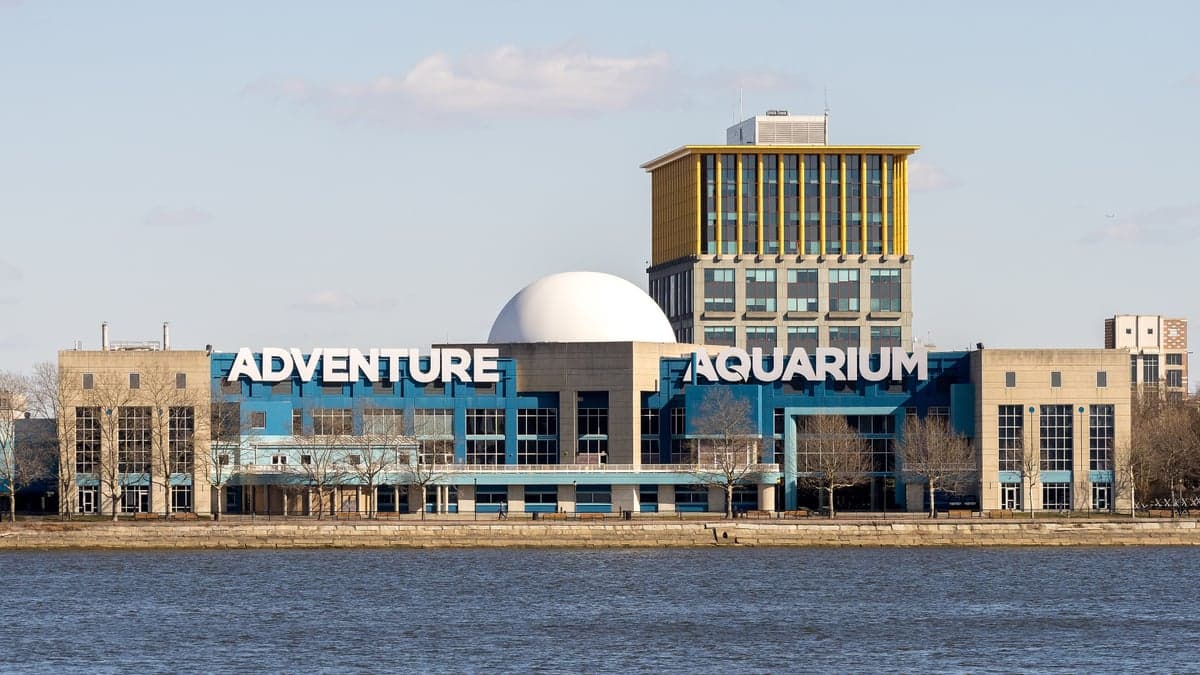
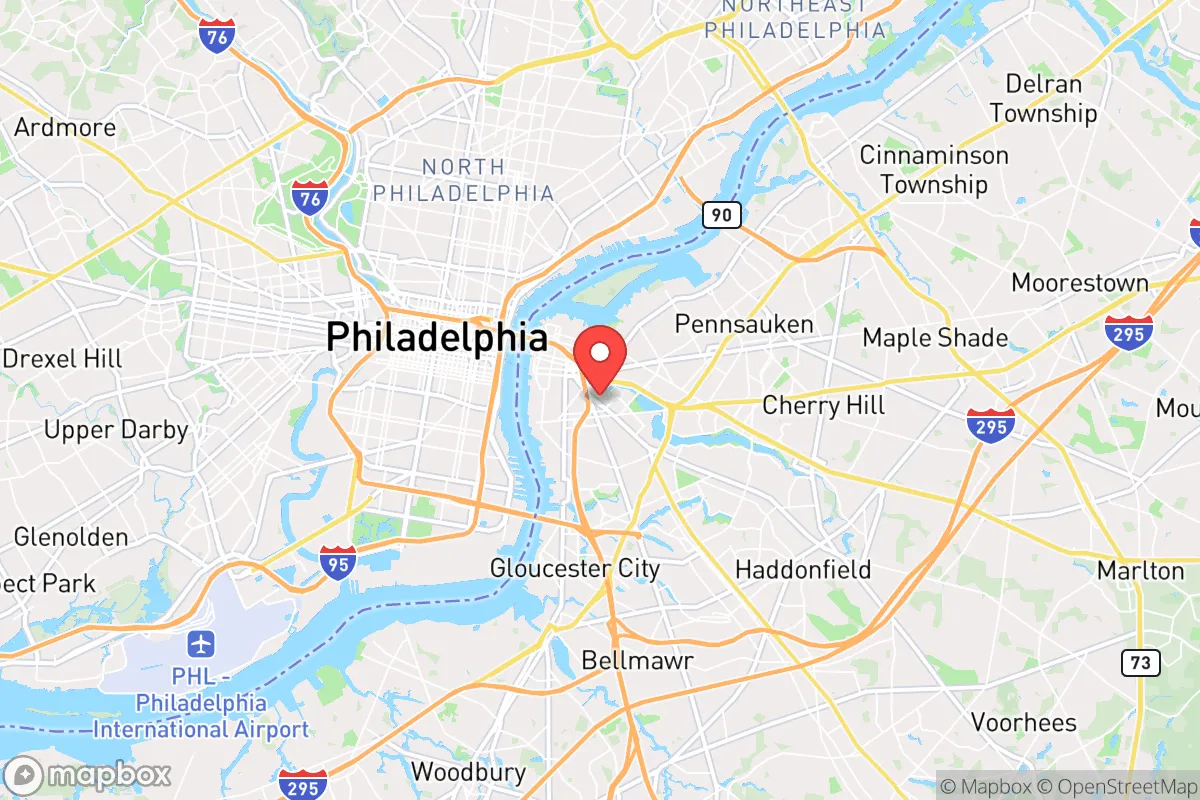
Photo: Wikipedia
Demographics of Camden, NJ
Affluence Level in Camden, NJ
A low-income area with significant economic hardship. Household wealth and educational attainment are well below national averages.
People of Camden, NJ
The people of Camden, New Jersey today form a dense, majority-minority city of 71,471 residents, characterized by a predominantly Hispanic (54.2%) and Black (37.7%) population, with a very small White non-Hispanic share of just 3.5%. The city is one of the most impoverished in the nation, with a median household income around $27,000 and a college attainment rate of only 9.6%, creating a distinctive identity shaped by resilience amid deindustrialization and concentrated poverty. A modest foreign-born population of 10.9% — largely from Puerto Rico and the Dominican Republic — adds a layer of cultural vibrancy, particularly in neighborhoods like Fairview and Waterfront South, while the city’s historic grid remains starkly divided by race and class.
How the city was settled and grew
Camden was founded in 1828 as a ferry and rail terminus opposite Philadelphia, drawing its earliest population of Irish and German laborers who built the docks and factories along the Delaware River. The city’s explosive growth came in the late 19th and early 20th centuries, fueled by the Campbell Soup Company, RCA Victor, and New York Shipbuilding, which attracted waves of Italian, Polish, and Jewish immigrants who settled in tight-knit row-house neighborhoods like Parkside and Cramer Hill. By 1950, Camden’s population peaked at 124,555, a mix of European ethnic whites and a growing Black community that had migrated from the South during the Great Migration, concentrating in Central Waterfront and Bergen Square. These groups built the city’s industrial backbone, but the seeds of decline were already visible as white flight began in the 1950s, accelerated by suburbanization and highway construction that carved up neighborhoods like Morgan Village.
Modern era (post-1965)
The post-1965 era brought dramatic demographic upheaval. The 1965 Hart-Cellar Act opened immigration from Latin America and Asia, but Camden’s foreign-born share remained modest compared to nearby suburbs; instead, the city became a destination for domestic migrants, particularly Puerto Ricans and later Dominicans, who settled in Fairview and Waterfront South, transforming those areas into Hispanic-majority enclaves. Simultaneously, the Black population grew from 23% in 1960 to 53% by 1990, as white residents fled to suburbs like Cherry Hill and Voorhees, leaving behind a hollowed-out city with a tax base in freefall. By 2020, the White non-Hispanic share had collapsed to 3.5%, while the Hispanic share rose to 54.2%, driven by higher birth rates and continued migration from Puerto Rico and Central America. The East/Southeast Asian population (1.6%) and Indian subcontinent population (0.1%) remain negligible, concentrated in small pockets near Rutgers-Camden and Cooper University Hospital. The city’s modern identity is thus a binary of Black and Hispanic residents, with little ethnic diversity beyond those two groups, and neighborhoods like Parkside and Cramer Hill now predominantly Black and Hispanic, respectively.
The future
Camden’s population trajectory points toward continued Hispanic growth and Black stagnation or decline. The Hispanic share is projected to approach 60% by 2035, driven by higher fertility rates and ongoing migration from Puerto Rico and the Dominican Republic, while the Black share is likely to shrink as younger Black residents leave for suburbs like Willingboro or Sicklerville. The city is not homogenizing into a single identity but tribalizing into distinct enclaves: Fairview and Waterfront South are becoming overwhelmingly Hispanic, while Central Waterfront and Bergen Square remain heavily Black. The foreign-born share (10.9%) is plateauing, as new immigration is offset by out-migration of native-born residents, and the East/Southeast Asian and Indian populations are too small to alter the city’s ethnic character. The next 10-20 years will likely see Camden remain a poor, majority-Hispanic city with a large Black minority, anchored by anchor institutions like Cooper University Hospital and Rutgers-Camden but struggling to retain middle-class families of any background.
For someone moving in now, Camden is a city of stark contrasts: a place where a small, revitalized downtown near the waterfront coexists with some of the highest crime and poverty rates in the nation. The population is becoming more Hispanic and less Black, but the city’s deep economic challenges mean that demographic shifts alone are unlikely to reverse decades of disinvestment. New residents should expect a dense, urban environment with limited amenities and a strong sense of community within specific ethnic enclaves, but little of the diversity found in larger gateway cities.

* Values derived from national, state, county, city and local statistics and may differ in a specific area. Last updated: 2026-04-29T21:12:32.000Z
Narrative content on this page is AI-generated and may contain mistakes. Verify any details that matter before acting on them.
ReloMaps may earn a commission from affiliate links at no extra cost to you.

